Auto insurance policies generally cover small claims, provided the damage results from a covered peril—such as a collision or theft—and the cost of repairs exceeds your chosen deductible. While coverage exists for minor issues like fender benders or cracked windshields, filing a claim may not always be financially advantageous once you account for potential premium surcharges and out-of-pocket deductible costs.
In the 2026 automotive landscape, the definition of a "small claim" has shifted significantly. With the ubiquity of Advanced Driver Assistance Systems (ADAS) and integrated sensors in even entry-level vehicles, what used to be a $500 bumper repair frequently exceeds $2,500 due to calibration requirements. Understanding the nuances of your policy is essential before deciding whether to involve your insurer in minor repairs.
Understanding What Constitutes a "Small Claim"
In the insurance industry, a "small claim" typically refers to physical damage or liability incidents where the financial loss is relatively low—often between $500 and $2,500. These are usually non-catastrophic events that do not involve significant bodily injury.
Common examples of small claims include:
- Minor Fender Benders: Low-speed impacts that result in cosmetic damage to bumpers or grilles.
- Glass Damage: Chips or cracks in the windshield caused by road debris or extreme temperature fluctuations.
- Vandalism: Scratches from keying, broken side mirrors, or spray paint.
- Weather Damage: Small hail dents or fallen branches that cause localized damage.
- Parking Lot Incidents: Dents from shopping carts or "door dings" from adjacent vehicles.
While these incidents are technically covered under most full-coverage policies, the utility of that coverage depends entirely on the specific language of your contract and your selected coverage types.
The Mechanics of Coverage: Collision vs. Comprehensive
To determine if a small claim is covered, you must first identify which portion of your policy applies to the event. Auto insurance is not a singular "catch-all" product; it is a bundle of specific coverages.
Collision Coverage
Collision insurance covers damage to your vehicle resulting from an impact with another vehicle or an object (like a fence or a light pole). Small claims under collision coverage often involve "at-fault" or "partially at-fault" accidents. If you back into a bollard and dent your trunk, this is a collision claim. It is important to note that collision coverage is optional unless required by a lienholder or lessor.
Comprehensive Coverage
Comprehensive insurance covers "other than collision" events. This includes "acts of God" like hail, falling objects, and floods, as well as theft, vandalism, and animal strikes. Small claims for a cracked windshield or a stolen catalytic converter fall under comprehensive coverage. Generally, comprehensive claims are viewed less harshly by underwriters because they are considered outside the driver's control.
Liability Coverage
If you are responsible for minor damage to someone else’s property—such as scraping a neighbor's mailbox or tapping their bumper—your Property Damage Liability coverage applies. Unlike collision or comprehensive, liability coverage typically does not have a deductible. However, filing a liability claim, no matter how small, signals to the insurer that you were involved in an at-fault accident, which carries the highest risk of premium increases.
The Role of the Deductible in Small Claims
The deductible is the amount you agree to pay out-of-pocket before your insurance company contributes a single dollar to a claim. It serves as a risk-sharing mechanism between you and the insurer.
In 2026, the most common deductible levels are $500 and $1,000. If you have a $1,000 deductible and a repair shop quotes you $850 to fix a dent, your insurance policy effectively provides zero coverage for that incident. The insurer only pays the "excess" above the deductible.
The Math of Filing
Consider a scenario where a repair costs $1,200 and your deductible is $500.
- Repair Cost: $1,200
- Your Responsibility: $500
- Insurance Payout: $700
While you receive $700 from the insurer, you must consider the "surcharge" or rate increase that will likely follow. If your premium increases by $200 per year for the next three years due to this claim, you will eventually pay $600 back to the insurer, resulting in a net benefit of only $100. For many drivers, the administrative hassle and the risk of being labeled a "high-risk" driver make this trade-off undesirable.
When to File vs. When to Pay Out of Pocket
Deciding whether to file a small claim requires a strategic evaluation of the immediate benefit versus the long-term cost.
When to File a Claim
- Damage Far Exceeds the Deductible: If a "minor" dent involves hidden sensor damage and costs $3,000 to fix, and your deductible is $500, filing is usually the right choice.
- Third-Party Involvement: If you hit someone else's car, you should almost always file a claim or at least notify your insurer. Even if the damage looks small, the other driver could later claim hidden mechanical damage or bodily injury.
- Total Loss Potential: In 2026, older vehicles with high mileage may be "totaled" by seemingly small damage if the repair costs exceed a certain percentage of the car's value (typically 70-80%).
- Safety Issues: If the damage affects the vehicle's structural integrity or safety systems (like airbags or emergency braking), professional repairs through an insurance-approved shop are safer.
When to Pay Out of Pocket
- Damage is Near the Deductible: If the repair is $700 and your deductible is $500, the $200 payout is rarely worth the potential rate hike.
- Clean Record Maintenance: If you already have one claim on your record from the past three years, a second "small" claim could trigger a non-renewal notice or a move to a high-risk insurance pool.
- No Third-Party Damage: If you hit an object you own (like your own garage door) and the damage is cosmetic, paying cash keeps the incident off your CLUE (Comprehensive Loss Underwriting Exchange) report.
Long-Term Consequences of Filing Small Claims
The immediate payout is only one half of the equation. Insurance companies use historical data to predict future risk. Statistically, a driver who files a small claim is more likely to file a larger claim in the future.
Premium Surcharges
When you file an at-fault collision claim, insurers typically apply a surcharge to your premium at the next renewal. According to data from the National Association of Insurance Commissioners (NAIC), these surcharges can stay on your policy for three to five years. The percentage increase varies by state and carrier but often ranges from 20% to 40% of your base premium.
The Impact on "Claims-Free" Discounts
Most major insurers offer a "Claims-Free" or "Safe Driver" discount. Filing even a small claim for $600 can disqualify you from this discount, which might have been saving you 10% to 15% annually. Losing this discount is essentially a hidden cost of the claim.
CLUE Reports and Future Insurability
Every claim you file is recorded in the CLUE database. When you shop for a new insurance policy with a different company, the new insurer will pull this report. Multiple small claims can lead to higher quotes from competitors, making it difficult to switch carriers to find better rates.
The 2026 Repair Environment: Why "Small" Claims are Rare
As of 2026, the complexity of automotive technology has fundamentally changed the nature of small claims. Vehicle architecture now relies heavily on a network of cameras, radar, and ultrasonic sensors.
| Component | Historical Repair Cost (Pre-2020) | 2026 Estimated Repair Cost | Reason for Increase |
|---|---|---|---|
| Front Bumper | $400 - $800 | $2,500 - $4,500 | ADAS sensors, radar calibration, and paint-matching tech. |
| Side Mirror | $150 - $300 | $1,200 - $2,000 | Blind-spot cameras and heating elements. |
| Windshield | $250 - $500 | $1,500 - $2,800 | HUD (Heads-Up Display) glass and camera recalibration. |
| Headlight Assembly | $200 - $500 | $2,000 - $5,000 | LED matrix technology and self-leveling motors. |
Because of these costs, many incidents that were once handled "under the table" with cash are now forced into the insurance system because the average driver cannot afford a $3,000 out-of-pocket repair for a minor bump.
The Difference Between Insurance Claims and Small Claims Court
It is vital to distinguish between an insurance claim and a small claims court action, as the two are often confused when discussing "small claims."
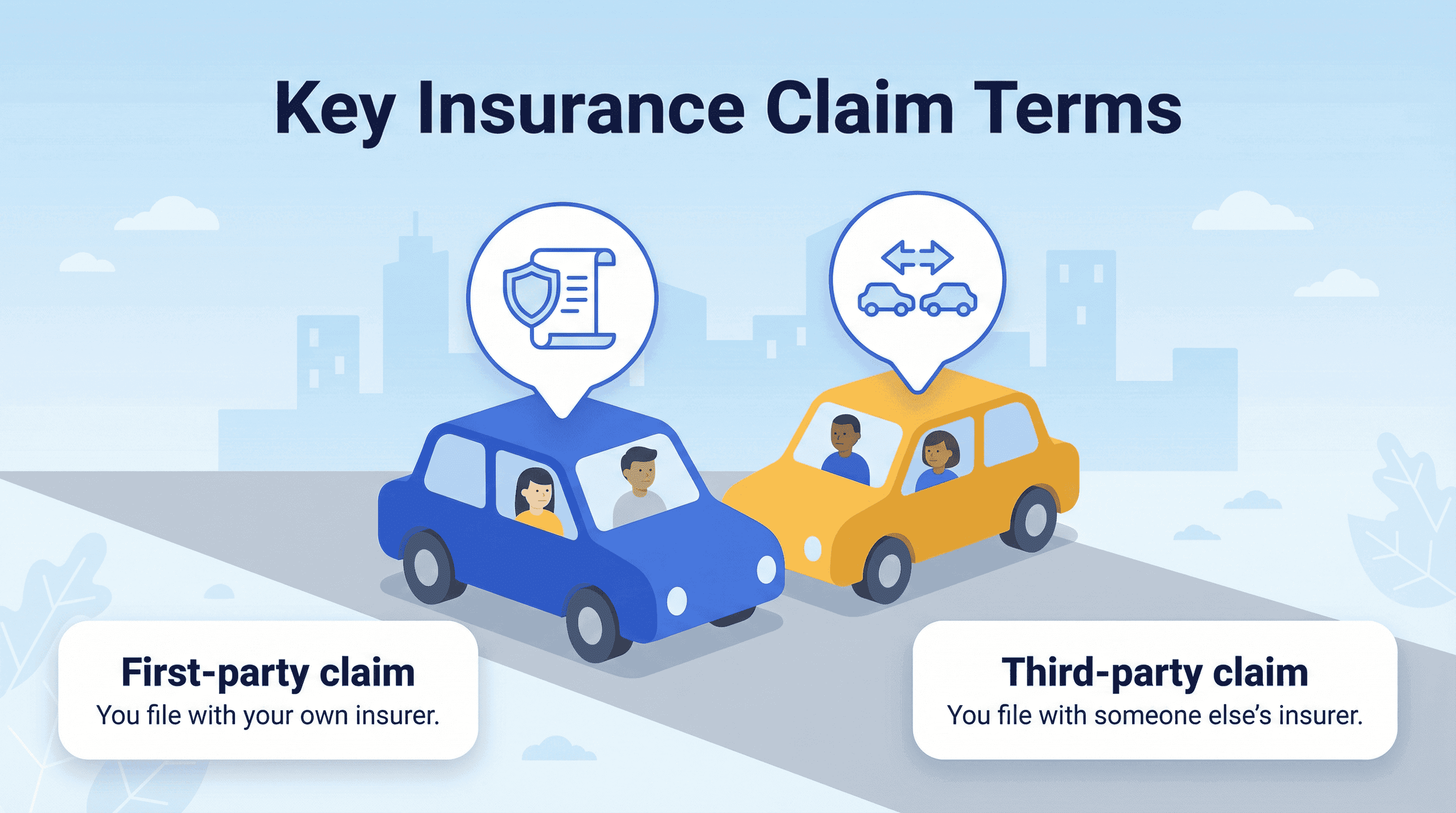
- Insurance Claim: This is a request to your insurance company to pay for damages based on your policy contract. It is a private business transaction.
- Small Claims Court: This is a legal proceeding where one individual sues another for a small sum of money (usually capped between $2,500 and $10,000, depending on the state).
If you hit someone and your insurance company refuses to pay enough to cover their damages, that individual might sue you in small claims court. In this scenario, your insurance policy's "Duty to Defend" clause usually kicks in, meaning the insurance company will provide legal representation or handle the settlement on your behalf, even in a small claims venue.
Step-by-Step Guide: Evaluating Your Damage in 2026
If you experience minor damage, follow this protocol before calling your insurance agent:
- Document the Scene: Take high-resolution photos and videos of the damage. In 2026, many insurers allow you to upload these directly to an AI-driven estimation app.
- Get an Independent Estimate: Visit a reputable local body shop and ask for a "cash price" estimate. Specify that you want to know if there is damage to any sensors or internal brackets.
- Check Your Deductible: Review your policy declarations page to confirm your specific deductible for the type of loss (Collision or Comprehensive).
- Calculate the "True Cost": Use the formula:
(Repair Cost - Deductible) - (Estimated Premium Increase over 3 Years). If the number is negative or very low, do not file. - Check for "Small Claim Forgiveness": Some premium policies in 2026 include a clause where the first claim under a certain threshold (e.g., $1,000) does not trigger a rate increase. Check if your policy has this feature.
Alternatives to Filing an Insurance Claim
If you decide that filing a claim is not financially sound, you have several alternatives:
Manufacturer or Dealership Warranties
Sometimes, what appears to be a "small claim" issue—like a malfunctioning electronic door handle or a cracked interior screen—is actually a mechanical failure covered by your vehicle's warranty rather than your insurance. Always check warranty status first.
Specialized Glass Coverage
Many drivers carry a separate glass endorsement with a $0 deductible. If your small claim is strictly windshield or window damage, check if this endorsement applies. Using glass coverage often has a much smaller impact on your premiums than a standard comprehensive claim.
Cosmetic Repair Networks
Some companies offer "dent and ding" protection plans at the time of vehicle purchase. These are separate from your auto insurance and allow for paintless dent repair (PDR) without impacting your insurance record.
Direct Settlement
If you are at fault in a very minor incident with another party, you can offer to pay for their repairs directly. Caution: If you choose this route, ensure you obtain a signed "Release of Liability" form from the other party to prevent them from coming back later for more money or filing an insurance claim anyway.
FAQs
Will my insurance go up for a small comprehensive claim?
Generally, comprehensive claims (like hail or a cracked windshield) have a negligible impact on premiums compared to collision claims. However, if you file multiple comprehensive claims within a short window, the insurer may view you as living or driving in a high-risk area and adjust your base rates accordingly.
Can I file a claim for a scratch?
Yes, scratches are covered under either collision (if you hit something) or comprehensive (if it was vandalized). However, because professional painting and blending of panels can be expensive, the cost often sits right around the typical $500 or $1,000 deductible, making it a poor candidate for a claim.
What if the repair cost is exactly the same as my deductible?
If the repair is $1,000 and your deductible is $1,000, you should not file a claim. The insurance company will pay nothing ($0), but the incident will still be recorded on your CLUE report as a "zero-dollar claim," which can still affect your risk profile.
Does "Small Accident Forgiveness" apply to all policies?
No. Accident forgiveness is usually an optional "rider" you pay extra for, or a loyalty benefit earned after several years of claims-free driving. You must have this feature active before the accident occurs for it to apply.
Is there a time limit to file a small claim?
Yes, most policies require you to report an incident "promptly" or within a specific timeframe (usually 30 to 90 days). If you wait six months to see if a small scratch starts to rust, the insurer may deny the claim based on a failure to mitigate damages.
Practical Recommendation
Before filing a small claim in 2026, always obtain a professional repair estimate to identify potential ADAS sensor recalibration costs, which are frequently hidden from the naked eye. If the repair cost is less than $500 above your deductible, it is generally more cost-effective to pay out of pocket. This preserves your claims-free discounts and prevents long-term premium surcharges that would likely exceed the value of the insurance payout. If third-party property or another vehicle is involved, however, prioritize filing a claim to protect yourself from future liability and legal action.