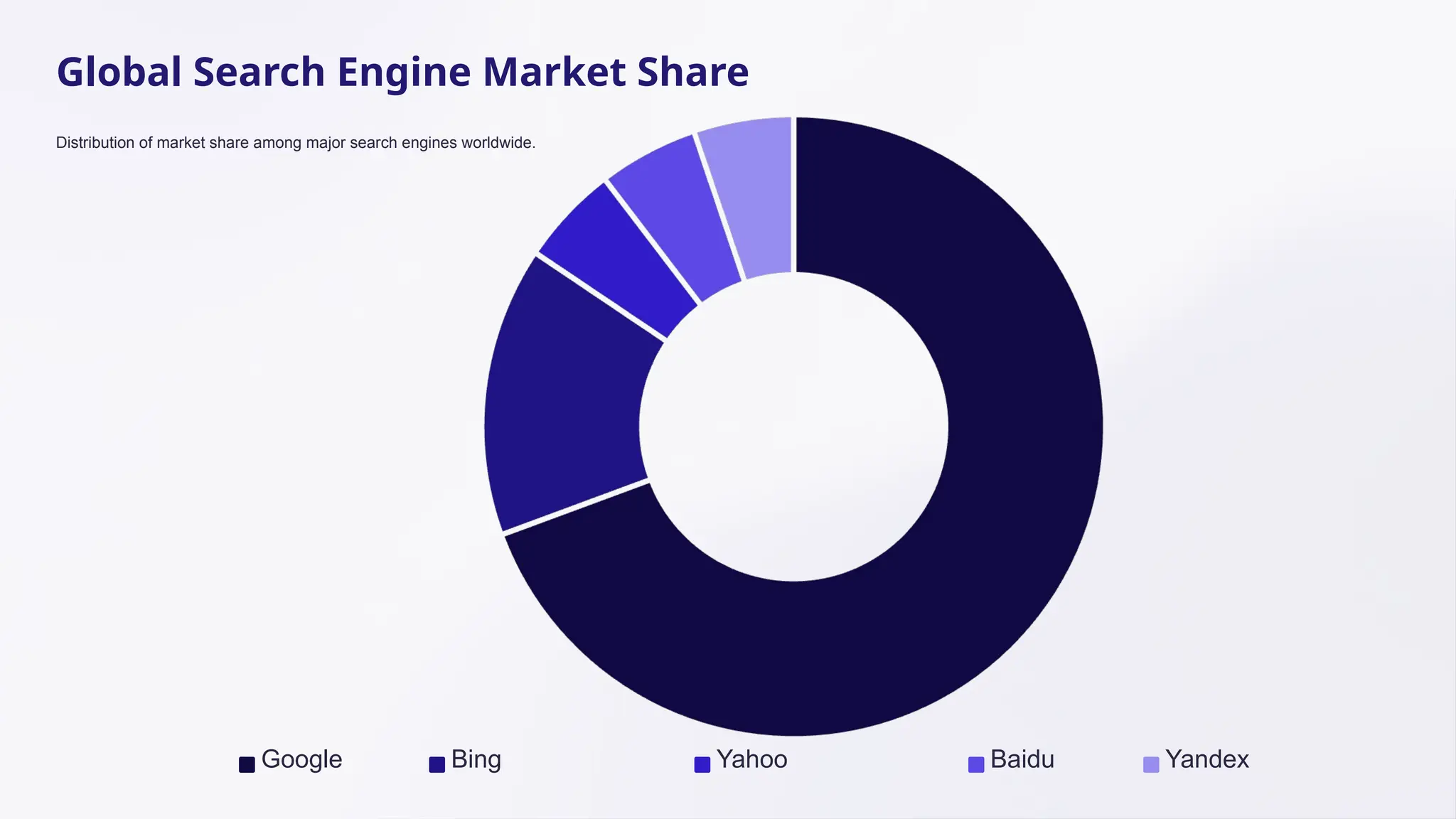
The Asian search engine landscape is a fragmented and highly localized ecosystem where market dominance varies significantly by territory, driven by unique linguistic requirements, regulatory environments, and consumer preferences. Success in this region requires shifting away from a globalized SEO strategy toward platforms like Baidu in China, Naver in South Korea, and Yahoo! Japan, each of which mandates distinct technical, content, and compliance optimizations.
Understanding the Regional Fragmentation
Unlike the global market, which is largely consolidated under the influence of Western search engines, Asia presents a diverse array of dominant players. Digital marketing teams often make the error of applying universal ranking signals to Asian platforms. This approach is frequently ineffective because these engines are engineered to prioritize local ecosystem integration, social media signals from indigenous platforms, and specific linguistic nuances that Western algorithms often fail to index correctly.
The primary divergence in the Asian search engine landscape stems from "Super App" culture. In many Asian markets, search is not just a portal to the web; it is a gateway to e-commerce, banking, food delivery, and social messaging. Consequently, a "search" query often produces results that prioritize internal platform services over external websites. To achieve visibility, a business must decide whether to compete via traditional SEO or by embedding their presence within the walled gardens of these specific search ecosystems.
Dominant Search Engines by Market
The following table summarizes the key players currently dominating the search traffic in the most significant Asian digital markets as of 2026.
| Country | Primary Search Engine | Secondary/Niche Player | Dominant Characteristic |
|---|---|---|---|
| China | Baidu | Sogou / Bing | Strong emphasis on internal ecosystem and ICP licensing. |
| South Korea | Naver | Proprietary "Knowledge View" and local blog integration. | |
| Japan | Yahoo! Japan | Powered by Google’s engine but offers a localized interface. | |
| Vietnam | Coc Coc | Browser-integrated search with strong local language support. | |
| Taiwan | Yahoo! Taiwan | High cross-platform usage; preference for traditional Chinese. |
China: The Baidu Ecosystem
Baidu remains the undisputed leader in China. From a technical SEO perspective, Baidu is famously difficult for foreign domains. It requires a Chinese-hosted server to achieve optimal loading speeds and, more importantly, to facilitate the mandatory ICP (Internet Content Provider) filing. Without an ICP license, a website is often blocked or severely throttled. Baidu places immense value on content freshness and internal "Baijiahao" articles, which are the platform's proprietary content marketing channels.
South Korea: The Naver Advantage
Naver operates on a unique search architecture known as "Universal Search." When a user searches for a product or service, Naver provides a mixed result page that includes "Naver Blog," "Naver Cafe," and "Naver Knowledge iN" (a Q&A platform). Standard websites often rank significantly lower than these internal community-driven pages. For a brand to succeed on Naver, it is not enough to optimize a website; the brand must cultivate a presence within Naver’s specific community forums and maintain active, verified blogs.
Japan: Yahoo! and Google
Japan represents a unique hybrid market. While Yahoo! Japan is the most popular portal, it utilizes Google’s underlying search technology. However, the user interface and the ranking factors differ significantly. Japanese consumers prioritize trust and detailed information. Consequently, SEO strategies for Japan must focus on high-quality, long-form content that emphasizes company history, credibility, and security, often leveraging the Yahoo! ecosystem's specific display advertising formats.
Technical Prerequisites and Localization
Localization in the Asian context extends far beyond mere translation. It requires "transcreation"—a process where marketing messaging is adapted to fit the cultural values, idioms, and aesthetic preferences of the target demographic.
- Server Location and Latency: For search engines like Baidu, server latency is a direct ranking factor. Utilizing a Content Delivery Network (CDN) with nodes inside the target country is not optional; it is a baseline technical requirement.
- Linguistic Precision: Search engines in Asia are highly sensitive to the nuances of local writing systems. In China, this involves the distinction between Simplified and Traditional Chinese. In Japan, the interplay between Hiragana, Katakana, and Kanji requires precise keyword research to ensure that the content matches the specific search intent of the user.
- Regulatory Compliance: Many Asian jurisdictions have strict laws regarding data storage and content censorship. Ensuring that your digital assets comply with local cybersecurity laws (such as China's PIPL) is a prerequisite for maintaining a consistent search presence.
Common Strategic Pitfalls
One of the most frequent mistakes is attempting to "copy-paste" a global SEO strategy. A strategy that relies on backlinks from international news sites or generic social media platforms will often fail to move the needle in South Korea or China.
- Ignoring Mobile-First Design: Most Asian internet users access search engines exclusively through mobile devices. Search engines in this region are designed to accommodate high-density mobile displays, often utilizing "Applet" or "Mini-program" structures. If your mobile site is not optimized for speed and interaction, the search engine will prioritize competitors who have invested in these platform-native formats.
- Neglecting Local Social Signals: In the West, search and social are often viewed as distinct channels. In Asia, they are inextricably linked. Many search results are influenced by the number of shares on WeChat, KakaoTalk, or LINE. Failing to integrate your social media efforts into your SEO roadmap effectively blinds your visibility.
Verification and Troubleshooting
If your website is experiencing a drop in rankings within an Asian search engine, the troubleshooting process should be systematic. Begin by checking the "Search Console" equivalents, such as the Baidu Webmaster Platform or Naver Search Advisor. These tools provide specific diagnostics regarding crawl errors and indexation status.
If your site is not appearing in results at all, investigate the following:
- Robots.txt and Crawling: Verify that your site is not accidentally disallowing bots from the specific region.
- CDN Blocks: Ensure that your CDN provider is not blocking IP ranges from the target country.
- Blacklist Status: In some markets, websites that have hosted unauthorized or restricted content may be blacklisted by regional ISPs, effectively removing them from search results regardless of SEO effort.
FAQs: Navigating the Landscape
Do I need a local domain (e.g., .cn, .kr) to rank in Asian search engines? While not always strictly required, using a local country-code Top-Level Domain (ccTLD) is highly recommended. It signals local relevance to the search engine and is often a prerequisite for obtaining local business certifications, which in turn improve trust signals and ranking performance.
Is Google still relevant in Asia? Yes, Google is the dominant search engine in many parts of Asia, including Southeast Asia and India. However, it is not a "one-size-fits-all" solution for the entire continent. You must analyze the specific market share of the country you are targeting rather than assuming Google's global dominance holds true everywhere.
How does "Super App" culture affect traditional SEO? It shifts the focus from "getting a user to my website" to "getting a user to engage with my branded content within the engine's ecosystem." SEO success in Asia often looks like high-ranking appearances of your brand’s social accounts, marketplace storefronts, and internal blog entries rather than just your standalone website.
Should I use machine translation for localized SEO? Machine translation is generally insufficient for high-level SEO. Asian languages are highly context-dependent. Using standard machine translation often leads to unnatural phrasing that search engines may penalize for low quality, and more importantly, it fails to capture the long-tail keywords that actual humans use to perform searches.
Next Steps for Digital Expansion
To succeed in the Asian search engine landscape, begin by auditing your current traffic sources to determine which Asian markets are already showing interest in your offerings. Once identified, prioritize the primary engine for that market—Baidu for China, Naver for South Korea, or Yahoo! for Japan.
Invest in a local audit of your technical infrastructure. Ensure that your hosting is optimized for the region and that your content is professionally transcreated. Finally, shift your KPIs from vanity metrics to platform-specific engagement metrics, such as "Internal Platform Follows" or "Local Forum Mentions," as these are the true indicators of search visibility in these specialized digital ecosystems.