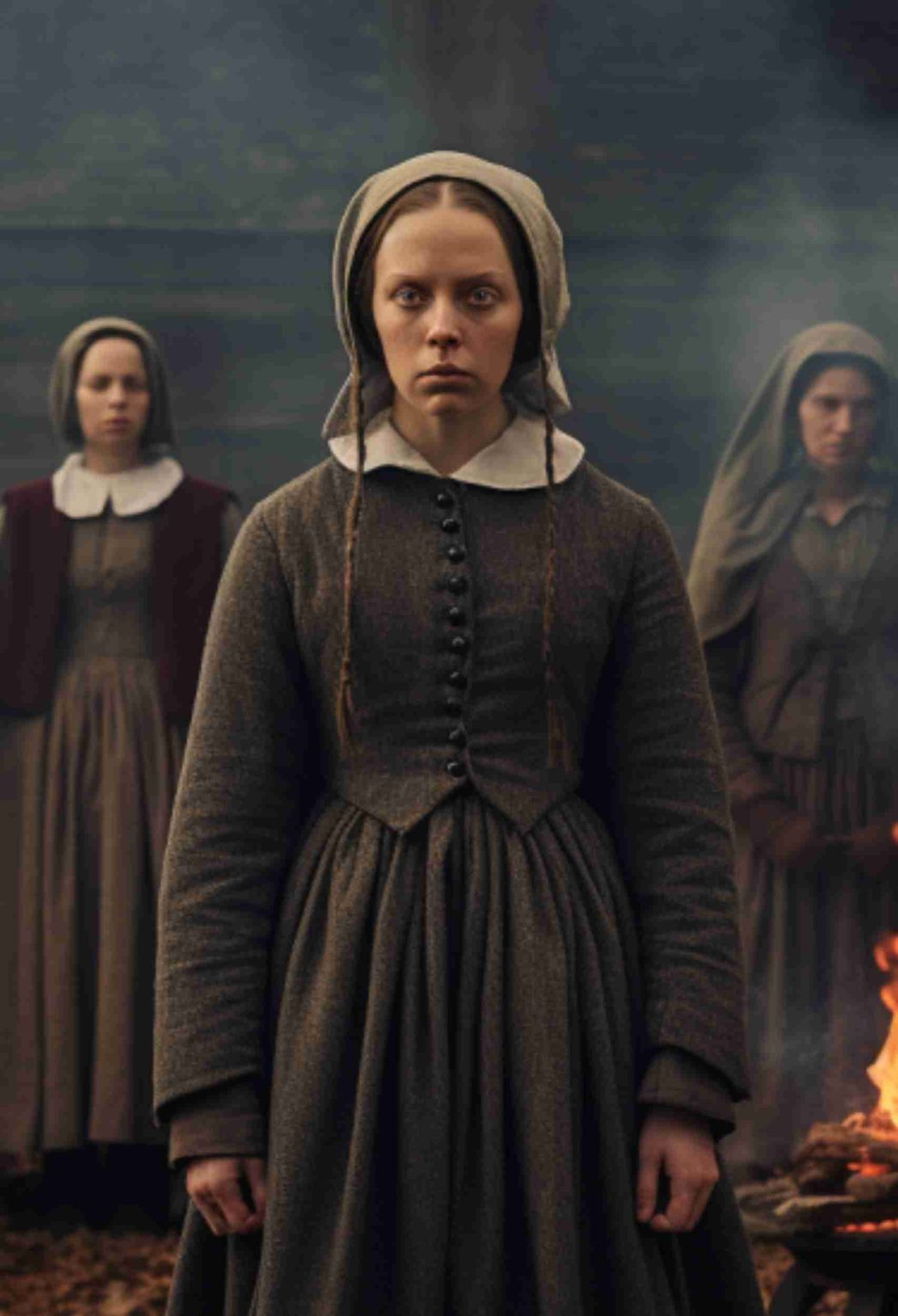
The study of witches and their environmental legacy explores the intersection of historical folklore, traditional botanical knowledge, and the shifting ecological relationship between human societies and the natural world. By analyzing early modern records and contemporary ethnobotanical research, readers can distinguish between mythological archetypes and the grounded, often clandestine, stewardship of medicinal landscapes that characterized these historical figures.
The Historical Intersection of Folklore and Ecology
To understand the environmental legacy associated with witches, one must first disentangle the historical figure from the literary archetype. In the European context, particularly during the Early Modern period (roughly 1450–1750), the "witch" was frequently a scapegoat for societal anxieties, yet they were also the primary custodians of indigenous botanical knowledge.
These individuals often operated as community healers or "cunning folk" who maintained an intimate knowledge of local flora. Their environmental legacy is not found in grand, systemic policy but in the granular, localized management of plant biodiversity. Because their practices relied heavily on the seasonal gathering of herbs, fungi, and roots—such as belladonna, mandrake, or foxglove—they served as a link between wild ecosystems and domestic medical necessity. This legacy is essentially one of radical ecological literacy, where the survival of the community was directly tethered to the health of the surrounding meadows and forests.
Botanical Knowledge as Environmental Stewardship
The primary contribution of these figures to the environmental landscape was the transmission of complex ecological data. Long before formal botany was established as an academic discipline, community healers identified specific soil types, moisture requirements, and micro-climates that favored the growth of potent medicinal plants.
This practice functioned as a form of non-industrial land management. By harvesting selectively and rotating gathering sites, these practitioners exerted a subtle but measurable influence on local plant populations. This stewardship was inherently sustainable; to over-harvest a resource was to ensure the collapse of their primary toolkit. Consequently, the environmental legacy of the "wise woman" or village healer is one of conservation through utility. They functioned as informal botanical censors, documenting which species thrived in specific conditions and which were endangered by encroaching deforestation or agricultural intensification.
The Impact of Anti-Witchcraft Statutes on Landscapes
The environmental legacy of the witchcraft trials is also defined by the negative space left behind by the suppression of these practices. When authorities targeted those with deep knowledge of the land, they effectively severed the transmission of essential ecological expertise.
As the trials proceeded, the oral traditions regarding the medicinal uses of local plants were pushed into the periphery or actively suppressed. This led to a decoupling of the rural population from their ecosystems. Where once a healer might have acted as an intermediary between the community and the forest, the loss of these figures meant that traditional ecological knowledge was replaced by centralized, often imported, pharmacological practices. From a modern ecological perspective, this represents a significant loss of "biocultural diversity." The legacy of the persecution is thus the forced transition from localized, plant-based stewardship to an extractive model of landscape utilization.
Comparative Analysis: Traditional Healers vs. Modern Conservation
When examining the environmental influence of historical healers, it is useful to compare their methodologies with modern ecological concepts. While the terminology has changed, the underlying principles of localized resource management remain relevant.
| Aspect | Historical Traditional Healer | Modern Conservationist |
|---|---|---|
| Knowledge Base | Oral, lineage-based, intuitive | Empirical, data-driven, peer-reviewed |
| Resource Scope | Hyper-local, specific patches | Ecosystem-wide, regional, global |
| Primary Goal | Direct medicinal/community use | Biodiversity preservation |
| Land Interaction | Selective gathering, minimal disturbance | Managed corridors, habitat restoration |
| Documentation | None (clandestine, cultural) | Extensive (databases, GIS mapping) |
This table highlights that while their goals differed, both groups share a fundamental reliance on observing ecological indicators. The traditional practitioner focused on the "health" of an organism as a proxy for medicinal efficacy, while the modern conservationist views that same organism as a bio-indicator for environmental stability.
The Role of Gender in Ecological History
The environmental legacy of witches is inseparable from the gender dynamics of the era. Historical accounts from the 16th and 17th centuries reveal that the association between women and the natural world was viewed by contemporary institutions as a threat to established, masculine-coded power structures.
By pathologizing women who worked closely with the landscape, social and religious leaders exerted control over the natural resources those women managed. This ideological framing enabled the consolidation of land ownership and the marginalization of traditional, often communally managed, natural spaces. The environmental legacy here is one of displacement. The systematic attempt to distance women from the land served the economic interests of the time by facilitating the transition toward private property enclosures, which fundamentally altered the ecological integrity of the commons.
Reclaiming the Legacy: Ethnobotany and Modern Research
In 2026, the academic field of ethnobotany has begun to re-evaluate the historical role of witches through a lens of environmental history. By searching for these narratives in archival records, researchers are now mapping the areas where medicinal plants were historically gathered.
This research is not merely historical; it has practical implications for biodiversity. By identifying the plant species that were central to the lives of early modern healers, botanists can gain insights into the historical distribution of flora that has since been lost to industrial agriculture. The "legacy" is thus a treasure map of historical biodiversity. Restoring access to these plants and the stories associated with them helps modern communities reconnect with the local landscape, fostering a more robust, sustainable relationship with the environment.
Frequently Asked Questions
1. Did "witches" actually have a significant impact on their local environments? The impact was primarily at a local, community-based scale. By practicing selective harvesting and maintaining deep knowledge of plant life cycles, they served as stewards of specific ecosystems. Their influence was significant for the biodiversity of local medicinal flora, even if it did not alter regional climate or topography.
2. How did the witchcraft trials influence modern ecological practices? The trials effectively criminalized the primary holders of traditional botanical knowledge. This resulted in a permanent loss of oral ecological data and accelerated the transition toward industrial, top-down land management, which often favored monoculture over the diverse, patch-based systems favored by healers.
3. Are there surviving records of these environmental practices? While few direct records exist, we can glean much from legal transcripts of the trials. Prosecutors often documented the specific plants, locations, and seasonal habits of the accused, providing inadvertent evidence of their ecological activities and the importance of those plants to their community.
4. Why is this topic considered relevant to current environmental studies? It is relevant because of the focus on "biocultural diversity." Understanding how human communities historically managed landscapes for sustainable, small-scale medicinal use provides a model for modern restorative agriculture and the preservation of heirloom plant varieties.
Next Steps for Further Research
Readers interested in the intersection of history and ecology should begin by consulting the digital archives of the Records of Early English Drama (REED) or regional ethnobotanical studies focusing on the 16th-century European landscape. To bridge the gap between historical narrative and environmental science, examine the work of environmental historians who specialize in the "Great Divergence" of the Enlightenment, where traditional, intimate human-nature relationships were superseded by empirical, extractive science. By focusing on primary court transcripts and local herbals from that period, one can begin to reconstruct the specific environmental footprint of those marginalized figures.