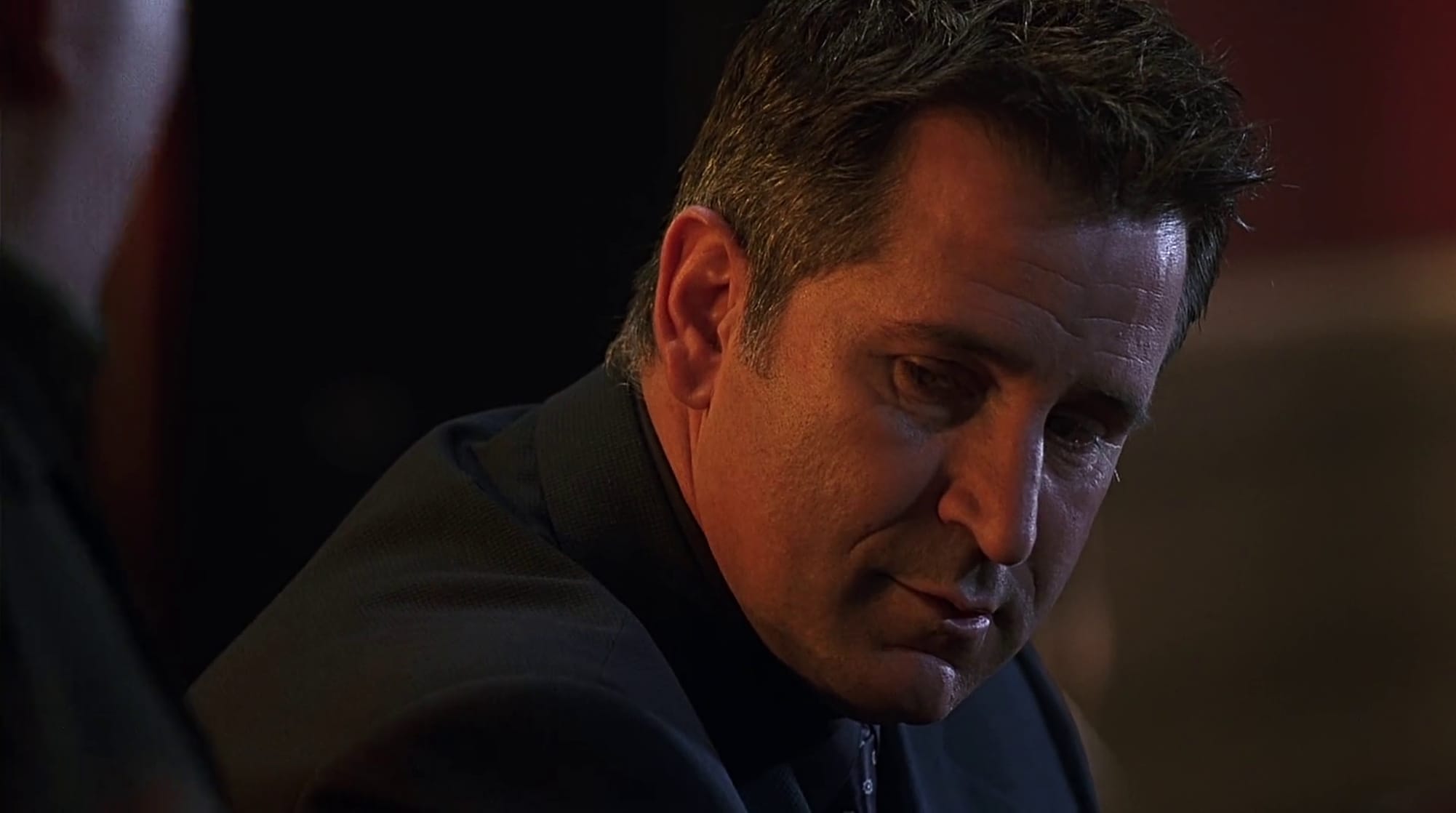
In the 1990s, Anthony LaPaglia emerged as one of Hollywood’s most versatile character actors, transitioning from stage success to iconic roles in films like Empire Records and The Client. His ability to navigate between indie dramas, mainstream comedies, and gritty procedurals established him as a bridge between Australian grit and American cinematic naturalism.
The Rise of a Trans-Pacific Talent: Contextualizing the 1990s
While many audiences today in 2026 recognize Anthony LaPaglia for his long-running television success, the 1990s represented a transformative period where he mastered the art of the American character actor. Born in Adelaide, Australia, LaPaglia moved to the United States in the 1980s, but it was the subsequent decade that saw him fully integrate into the fabric of New York and Hollywood storytelling.
LaPaglia’s impact during this era was largely defined by his uncanny ability to portray specific regional American archetypes—most notably the Italian-American urbanite—with such precision that many audiences were unaware of his Australian origins. This mastery of dialect and physicality allowed him to bypass the "outsider" pigeonholing that often limited foreign actors during that period. By the mid-90s, he had become a go-to performer for directors seeking a blend of blue-collar vulnerability and intimidating intensity.
Breaking the "Mobster" Mold: Early 90s Versatility
At the start of the decade, LaPaglia faced the risk of being typecast in organized crime roles due to his look and mastery of the New York accent. However, his 1990s filmography demonstrates a conscious effort to subvert these expectations by adding layers of pathos and comedic timing to roles that could have been one-dimensional.
Betsy's Wedding and 29th Street
In Betsy's Wedding (1990), directed by Alan Alda, LaPaglia played Stevie Dee, a young man with mob connections who was nonetheless charming and endearingly awkward. This role served as a crucial proof of concept: LaPaglia could play the "tough guy" with a heart, a theme he would revisit throughout the decade.
He followed this with 29th Street (1991), a film that remains a cult favorite for its portrayal of Italian-American family dynamics in Queens. Playing Frank Pesce Jr., LaPaglia showcased a leading-man charisma that balanced the film's frantic energy. These early roles were significant because they grounded his career in "everyman" relatability rather than the high-concept artifice often found in early 90s blockbusters.
The Antagonist Turn: The Client
One of his most visible roles of the decade came in 1994 with the adaptation of John Grisham’s The Client. As Barry "The Blade" Muldano, LaPaglia inhabited a truly menacing presence. His performance was characterized by a simmering, unpredictable violence that stood in stark contrast to the more heroic roles he was beginning to inhabit elsewhere. This range—the ability to be both the lovable neighbor and the terrifying hitman—made him an invaluable asset to casting directors.
The Indie Icon: Empire Records and Trees Lounge
If there is one film that solidified Anthony LaPaglia’s status as a 90s cultural fixture, it is the 1995 cult classic Empire Records. While the film was not a massive box-office hit upon release, its subsequent life on home video and cable television turned it into a generational touchstone.
The Role of Joe Reaves
As Joe Reaves, the manager of an independent record store, LaPaglia provided the emotional anchor for a cast of rebellious teenagers. His performance is a masterclass in the "cool boss" archetype—protective, exasperated, yet deeply committed to the misfits under his wing. In the context of 1995, Joe Reaves represented the Gen X struggle against corporate takeover, and LaPaglia’s weary but defiant portrayal resonated deeply with the youth culture of the time.
Collaboration with Steve Buscemi
In 1996, LaPaglia appeared in Trees Lounge, the directorial debut of Steve Buscemi. This film is essential for understanding his impact on the independent film scene. In the 90s, "indie" cinema was defined by a specific kind of raw, character-driven storytelling, and LaPaglia’s ability to blend into ensemble casts while providing a distinct, grounded energy helped these films achieve a sense of lived-in reality.
The Pivot to Television: Murder One
The mid-to-late 90s saw a significant shift in how television was produced and perceived, and Anthony LaPaglia was at the forefront of this evolution. When Daniel Benzali departed the legal drama Murder One after its first season, the show underwent a creative "reboot" for its second season (1996–1997), bringing in LaPaglia as Jimmy Wyler.
While the show did not survive beyond that second season, LaPaglia’s performance was highly regarded. He brought a more kinetic, empathetic energy to the courtroom than his predecessor. This move was a precursor to the "Prestige TV" era; it showed that a respected film and stage actor could lead a complex, serialized drama. His work on Murder One effectively laid the groundwork for his eventual Emmy-winning turn on Frasier and his iconic role in Without a Trace in the early 2000s.
Impact on the Stage: A View from the Bridge
To discuss LaPaglia’s impact in the 90s without mentioning his stage work would be an oversight. In 1997, he starred in the Broadway revival of Arthur Miller's A View from the Bridge. Playing Eddie Carbone, a tormented longshoreman in 1950s Brooklyn, LaPaglia delivered what many critics consider the definitive performance of his career.
His portrayal earned him the Tony Award for Best Actor in a Play in 1998. This achievement was significant for several reasons:
- Validation of Technical Skill: It proved that his mastery of the Brooklyn accent and working-class persona was not just a cinematic trick but a deeply researched theatrical craft.
- Cultural Bridge: It cemented his status as an "adopted New Yorker." The New York theater community fully embraced him, a rare feat for an international actor playing such a quintessentially American role.
- Artistic Maturity: The intensity required for the role of Eddie Carbone signaled a shift in LaPaglia’s career toward more psychologically complex and tragic characters as the decade closed.
Significant Works of Anthony LaPaglia (1990–1999)
The following table highlights the diversity of LaPaglia’s output during his most formative decade.
| Year | Title | Role | Category | Impact/Significance |
|---|---|---|---|---|
| 1990 | Betsy's Wedding | Stevie Dee | Film | Established his comedic/mobster "lovable rogue" persona. |
| 1991 | 29th Street | Frank Pesce Jr. | Film | Demonstrated leading-man potential in a character-driven drama. |
| 1993 | So I Married an Axe Murderer | Tony Giardino | Film | Showcased comedic chemistry alongside Mike Myers. |
| 1994 | The Client | Barry 'The Blade' Muldano | Film | Proven ability to play a high-stakes, menacing antagonist. |
| 1995 | Empire Records | Joe Reaves | Film | Became a generational icon for Gen X indie culture. |
| 1996 | Trees Lounge | Rob | Film | Solidified his standing in the New York independent film scene. |
| 1996 | Murder One | Jimmy Wyler | TV | Marked his transition into leading man status for prestige TV. |
| 1997 | A View from the Bridge | Eddie Carbone | Stage | Won the Tony Award, confirming his elite status as a dramatic actor. |
| 1999 | Summer of Sam | Detective Lou Petrocelli | Film | Collaborative work with Spike Lee; returned to gritty NY roots. |
| 1999 | Sweet and Lowdown | Al Torrio | Film | Worked with Woody Allen, further diversifying his director portfolio. |
The "Aussie Invasion" Precursor
In the context of film history, LaPaglia’s 90s career served as a precursor to the massive "Australian Invasion" of the 2000s and 2010s. Before Hugh Jackman, Heath Ledger, or Naomi Watts became household names by playing Americans, LaPaglia was the blueprint. He didn't just "play" American; he became part of the American acting infrastructure.
His impact was subtle but profound: he lowered the barrier for international actors to be cast in roles that required deep regional specificity. By the time he appeared in Spike Lee’s Summer of Sam (1999), he was so deeply associated with the New York cinematic landscape that his Australian heritage was almost a footnote to his professional identity.
Legacy of the 1990s Career
By 1999, LaPaglia had achieved a rare "triple threat" status: he was a respected film actor, a Broadway Tony winner, and a proven television lead. This versatility is what allowed him to remain relevant well into the 21st century. The 90s were the decade where he did the "heavy lifting" of his career—building a filmography that refused to be categorized.
His impact is seen in the way character actors today approach their careers. He showed that one could be a "working actor" while still achieving the highest levels of critical acclaim. He didn't chase stardom through blockbusters; he chased it through the complexity of the characters he inhabited, whether they were record store managers, hitmen, or grieving lawyers.
Frequently Asked Questions
Did Anthony LaPaglia use his real accent in 90s films?
In the vast majority of his 90s work, LaPaglia used various American accents, primarily New York and New Jersey dialects. He was so proficient that many fans were surprised to hear his natural Australian accent in interviews. He rarely played Australian characters during this decade, as he was focused on establishing himself within the American industry.
What is considered Anthony LaPaglia’s "breakout" role?
While he had worked in the 80s, his role as Stevie Dee in Betsy's Wedding (1990) is widely considered his mainstream breakout. It put him on the map for both critics and casting directors, leading directly to his prolific output throughout the rest of the decade.
Is Anthony LaPaglia actually Italian?
Anthony LaPaglia is of Italian and Dutch heritage. His father was born in Italy and immigrated to Australia. This background gave him an authentic understanding of the Italian-American experience, which he translated into many of his most famous 1990s roles with great nuance and respect.
How did his 90s stage work affect his film career?
His stage work, specifically the 1997 revival of A View from the Bridge, elevated his status from a reliable character actor to a heavyweight dramatic force. Winning the Tony Award gave him the industry "clout" to be more selective with his roles, eventually leading to his success in television procedurals where high-level dramatic acting was required.
Was Anthony LaPaglia in any major comedies in the 90s?
Yes, he had a significant comedic turn in So I Married an Axe Murderer (1993), playing Tony Giardino, a police officer who desperately wants his life to be like a gritty 70s cop show. This role is often cited as a fan favorite for its self-aware humor and contrast to his more serious roles.
Practical Recommendation for Viewers
To truly understand Anthony LaPaglia’s impact and range in the 1990s, a "essential viewing" marathon should include 29th Street for his leading-man charm, Empire Records for his cultural resonance, and The Client for his dramatic intensity. If possible, seek out archival footage or reviews of his performance in A View from the Bridge to see the technical peak of his 90s craftsmanship. Watching these works in sequence reveals an actor who was not merely appearing in films, but actively shaping the "character actor" archetype for a new generation of cinema.