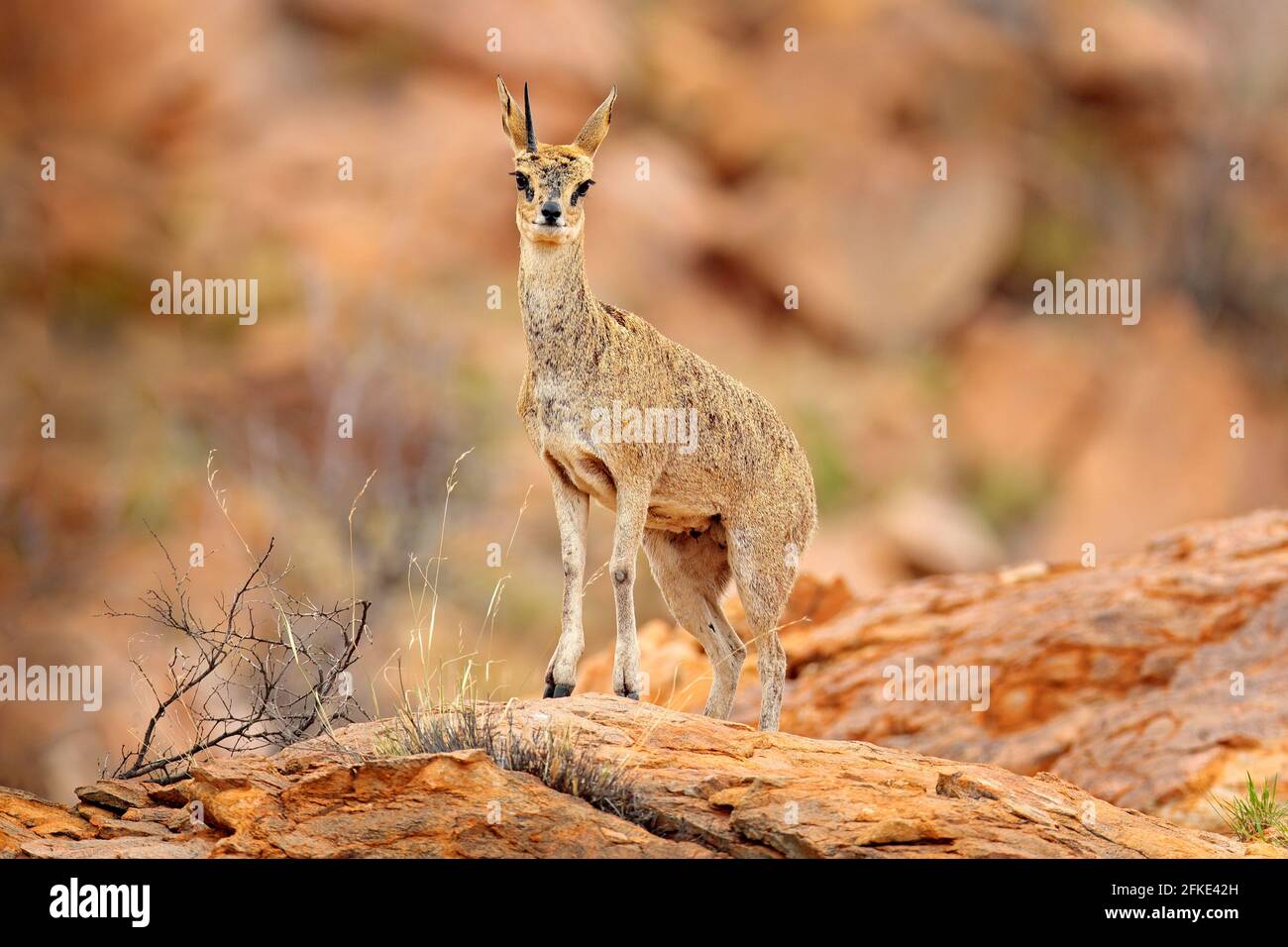
Antelopes thrive in diverse habitats, ranging from the arid sub-Saharan savannas and semi-deserts to high-altitude grasslands and lush wetlands. Their ability to flourish depends primarily on access to specific vegetation types for foraging, proximity to reliable water sources, and the presence of open terrain that facilitates their specialized escape strategies against predators.
The Evolutionary Adaptation to Open Spaces
The defining characteristic of an antelope’s preferred habitat is visibility. Whether in the vast, rolling plains of the Serengeti or the scrublands of the Kalahari, antelopes are cursorial mammals—meaning they are physically adapted for running. Their habitat must provide the long, uninterrupted sightlines necessary for detecting predators such as lions, cheetahs, and hyenas from a distance.
In these environments, vegetation density is a critical filter. Species such as the Springbok (Antidorcas marsupialis) gravitate toward low-lying shrubbery and grasses that do not obstruct their view. If the vegetation grows too dense, it limits their primary survival mechanism: the ability to burst into high-speed flight. Consequently, you will rarely find plains-dwelling antelope in heavily forested zones, as the physical obstruction of trees and thick underbrush would hinder their mobility and predator detection.
Vegetation and Dietary Requirements
Antelopes are categorized by their dietary niches: grazers, browsers, and mixed feeders. Where they thrive is dictated by the availability of their specific food sources within their ecosystem.
- Grazers (e.g., Wildebeest, Hartebeest): These species require expansive tracts of grassland. They rely on high-protein, short grasses, often following seasonal rains that trigger fresh growth. Their habitat must support "pulse-reserve" cycles, where rapid plant growth follows rainfall, providing the nutritional density required for their large body sizes.
- Browsers (e.g., Steenbok, Dik-dik): These animals thrive in habitats with a mix of woody shrubs, succulent leaves, and fallen fruits. Unlike grazers, they are not dependent on vast grassy plains and can prosper in scrubby, dense thickets where they can selectively pick high-energy leaves.
- Mixed Feeders (e.g., Impala, Gazelle): These are the most adaptable, thriving in savanna-woodland mosaics. Their habitat must offer a transition zone—the "ecotone"—where grass meets shrubland. This allows them to switch between grazing and browsing depending on seasonal availability, giving them a survival advantage during periods of drought.
The Role of Water Access
Water is the most significant limiting factor in an antelope’s geographic range. While some species, such as the Oryx, have evolved physiological adaptations to survive for long periods without standing water by obtaining moisture from tubers, roots, and desert succulents, the vast majority of antelope species are water-dependent.
A "thriving" habitat for most antelopes is defined by a seasonal proximity to water holes or river corridors. During the dry season, many antelope populations undergo massive migrations, moving from dried-out interior plains toward permanent water sources like the Okavango Delta or major river basins. The quality of a habitat is often measured by the distance between grazing grounds and water; if the distance becomes too great, the metabolic cost of travel outweighs the nutritional gain of the foraging, forcing the population to relocate or face local decline.
Soil Composition and Mineral Licks
Beyond grass and water, the mineral profile of the soil in a specific location often dictates where antelope populations reach high densities. Natural mineral licks—areas where the soil is rich in essential nutrients like sodium, calcium, and phosphorus—are major hubs of activity.
Antelopes that inhabit areas with poor soil quality will frequently travel to specific "hotspots" to supplement their diet. These licks are not merely optional; they are critical for gestation, antler/horn growth, and bone density. In savanna ecosystems, biologists observe that antelopes often concentrate their grazing habits around areas where termite mounds have altered the soil composition, as these areas produce more nutrient-dense, palatable vegetation compared to the surrounding landscape.
Comparative Analysis of Antelope Habitat Requirements
| Habitat Feature | Savanna/Grassland Species | Scrubland/Desert Species | Wetland/Floodplain Species |
|---|---|---|---|
| Primary Vegetation | Short, perennial grasses | Woody shrubs, succulents | Tall reeds, aquatic grasses |
| Water Dependency | High (daily intake) | Low (metabolic water use) | Very High (permanent) |
| Predator Avoidance | Speed and open vision | Camouflage and stealth | Immersion and speed |
| Mobility Needs | Large, open migratory range | Small, localized home ranges | Seasonal flood adaptation |
Environmental Challenges to Stability
Even in ideal habitats, antelopes face significant threats from environmental fragmentation. As human development expands, the corridors that connect feeding grounds to water sources are frequently blocked by fences, roads, or agricultural expansion.
Antelopes are highly sensitive to "habitat patchiness." If a habitat becomes too fragmented, the species cannot utilize its seasonal migration strategy. For example, the migration of blue wildebeest (Connochaetes taurinus) requires thousands of square kilometers of connected landscape. If these paths are obstructed, the population may lose access to the specific nutritional windows they need for calving, leading to a precipitous decline in birth rates and overall group health.
Furthermore, competition with domestic livestock in grazing areas can degrade the habitat. Overgrazing by cattle removes the specific grass heights that smaller, more selective gazelles require, effectively pushing them out of their own ecological niche. Managing the intersection between wildlife and agricultural land is thus the most pressing conservation task for ensuring these animals continue to thrive.
Frequently Asked Questions
Do all antelopes need to drink water every day? No. While many species are water-dependent, several desert-adapted species, such as the Addax and the Gemsbok (Oryx), can thrive in arid environments with very little standing water. They obtain the majority of their hydration from the plants they eat, specifically moisture-rich roots, bulbs, and melons found in desert biomes.
How does fire affect antelope habitats? Fire is a crucial natural disturbance in many savanna habitats. It prevents the encroachment of woody plants into open grasslands, maintaining the ecosystem in a state that favors grazers. Periodic, low-intensity burns encourage the growth of young, highly nutritious grass shoots, which are significantly easier for antelope to digest than the mature, fibrous grass that grows in the absence of fire.
Why do some antelopes prefer mountain slopes? Mountain-dwelling antelopes, such as the Klipspringer or the Mountain Reedbuck, occupy a specific niche that offers high-ground security. The rugged, rocky terrain serves as a defensive barrier against larger predators that are not as agile on steep, uneven slopes. Their "habitat" is defined more by verticality and rocky cover than by the flat, grassy plains favored by plains-dwelling species.
Can antelopes adapt to changing climates in their current habitat? Only to a degree. Antelopes have evolved specific survival strategies for their environments, but their range of adaptation is limited by their physiological constraints. If the climate shifts toward prolonged, multi-year droughts or significantly higher temperatures, the vegetation cycles they rely on may vanish. Because they are often tied to specific migratory routes, they cannot always simply "move" to a new environment if their existing one degrades.
What is the "edge effect" in antelope habitat? The edge effect refers to the transition zone between two different types of habitats, such as where a forest meets a grassland. These edges are often the most productive areas for "mixed feeder" antelopes, as they provide both the concealment of the forest and the abundant food sources of the open grassland. Maintaining these transitional zones is vital for supporting diverse antelope populations.
Expert Guidance for Understanding Habitat Health
If you are assessing the suitability of a region for sustaining antelope populations, look for "indicator species." The presence of specific high-energy grasses and the absence of overgrazing by domestic livestock are the primary indicators of a healthy environment. A thriving habitat is not static; it is a dynamic, shifting mosaic that changes with the seasons.
To support the conservation of these environments, prioritize the protection of migratory corridors. Land management strategies that emphasize the removal of restrictive fencing and the preservation of riparian buffers around water sources will have the greatest impact on maintaining viable habitats. When observing antelopes in the wild, distance is key; their comfort in a habitat is directly related to their ability to perceive a threat before it reaches them. If you are encroaching on their visual field, you are essentially reducing the quality of their habitat in that moment.