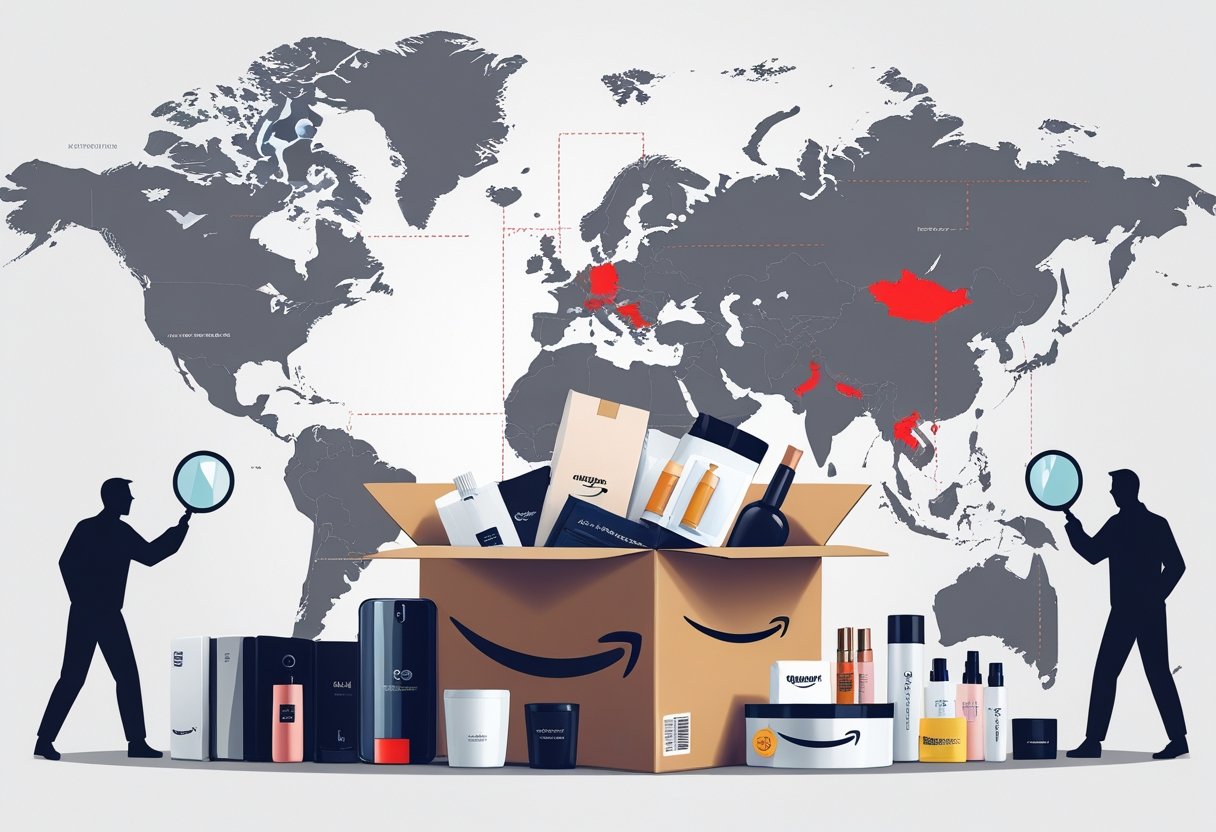
Amazon struggles with counterfeit items primarily because its massive third-party marketplace allows millions of independent sellers to list products with minimal initial vetting. While Amazon invests billions in AI and brand protection programs, the sheer volume of global inventory and the legal protections afforded to online platforms make total elimination of fakes virtually impossible in 2026.
Despite the sophisticated technological barriers implemented over the last decade, the presence of counterfeit goods remains one of the most significant challenges for the world’s largest e-commerce platform. For consumers, the frustration stems from receiving a sub-par or dangerous product. For brands, it is an existential threat to their reputation and revenue. To understand why this problem persists, one must look past the surface-level interface of the website and examine the structural, legal, and logistical realities of global e-commerce.
The Shift from Retailer to Marketplace
The foundational reason counterfeit items appear on Amazon is the company’s transition from a direct retailer to a service-based marketplace. In the early days, Amazon functioned primarily as a "1P" (First-Party) retailer, meaning they bought products from manufacturers and sold them directly to consumers. In this model, the supply chain is tightly controlled.
Today, however, more than 60% of the physical goods sold on Amazon come from third-party (3P) sellers. This marketplace model is what allowed Amazon to scale into the "everything store," but it also opened the gates to bad actors.
The Low Barrier to Entry
Becoming a seller on Amazon is intentionally streamlined. While Amazon has increased its verification requirements as of 2026—including video interviews and stricter document verification—determined counterfeiters use sophisticated methods to bypass these hurdles. They often use stolen identities, "aged" accounts bought on the black market, or shell companies to establish a presence. Because the platform prioritizes a vast selection and competitive pricing, the system is designed for speed, which counterfeiters exploit to list items before human moderators or automated algorithms can flag them.
Global Supply Chain Complexity
Many counterfeit items originate from manufacturing hubs where the same factories producing legitimate goods may run "ghost shifts" at night to produce unauthorized versions using inferior materials. These items are then funneled through a labyrinth of international distributors, making it nearly impossible for Amazon’s automated systems to verify the entire chain of custody for every single SKU (Stock Keeping Unit) listed on the site.
The Logistics Loophole: Commingled Inventory and FBA
One of the most technical reasons a consumer might receive a fake item—even when buying from a reputable-looking seller—is a practice known as commingled inventory. This occurs within the Fulfillment by Amazon (FBA) ecosystem.
How Commingling Works
When a seller uses FBA, they send their products to Amazon’s warehouses. By default, Amazon often uses "stickerless, commingled inventory." This means that if three different sellers are all selling the same popular headphones, Amazon does not necessarily keep Seller A’s inventory separate from Seller B’s. Instead, they treat all units of that specific UPC (Universal Product Code) as identical and store them in the same bin.
When a customer places an order from Seller A, Amazon simply grabs the unit closest to the customer's delivery address. If Seller C sent a batch of counterfeits into the commingled pool, a customer who thought they were buying from the "legitimate" Seller A might end up receiving Seller C's fake product. While Amazon has introduced more "seller-specific" labeling requirements (the X00 label) to combat this, many legacy listings and high-volume categories still suffer from this inventory mixing.
The Legal Shield: Section 230 and Liability
A significant reason counterfeit listings persist is the legal protection Amazon has historically enjoyed. In the United States, Section 230 of the Communications Decency Act has traditionally protected online platforms from being held liable for the content (including product listings) posted by third parties.
The "Marketplace" Defense
For years, Amazon successfully argued in court that it was merely a "service provider" connecting buyers and sellers, not the actual "seller" of the goods. This distinction meant that if a counterfeit battery exploded and caused a fire, the legal liability rested with the third-party seller (who was often unreachable in another country), rather than Amazon.
As of 2026, this legal landscape is shifting. Several high-profile court cases and new consumer protection regulations have begun to chip away at this immunity, holding platforms to a "strict liability" standard in certain jurisdictions. However, until a universal legal precedent is established that holds platforms fully responsible for the authenticity of every 3P item, the financial incentive for Amazon to manually vet every single listing remains low compared to the cost of human oversight.
The "Whack-a-Mole" Dynamic of Enforcement
Amazon utilizes a combination of machine learning and human investigators to purge millions of suspect accounts annually. However, the enforcement process is often described as a game of "whack-a-mole."
- Automated Account Creation: Counterfeit syndicates use bots to create thousands of seller profiles simultaneously. When Amazon shuts down one, ten more are already in the "warming" phase.
- Review Hijacking: Bad actors often take over "dead" listings that have thousands of five-star reviews (e.g., an old listing for a discontinued charging cable) and change the images and text to sell a completely different, counterfeit item. The high review score tricks both consumers and Amazon's ranking algorithms.
- Adversarial AI: As Amazon improves its image recognition AI to spot fake logos, counterfeiters use "adversarial" techniques—such as slightly distorting the logo in the listing photo or using "blur" effects—that are invisible to the human eye but confuse the AI's detection capabilities.
Amazon’s Brand Protection Programs (2026 Status)
To protect its reputation, Amazon has developed several programs. While helpful, they are not a silver bullet because they often require the brand owner to do the heavy lifting.
| Program Name | Primary Function | Limitations |
|---|---|---|
| Brand Registry | Gives brands control over their product pages and access to reporting tools. | Requires a registered trademark; does not prevent new fakes from appearing. |
| Project Zero | Allows brands to instantly delete counterfeit listings without waiting for Amazon's approval. | Available only to brands with high accuracy in reporting; requires constant monitoring. |
| Transparency | A serialization service where brands apply unique 2D codes to every unit manufactured. | Increases manufacturing costs for the brand; only works if Amazon scans them at the warehouse. |
| Counterfeit Crimes Unit (CCU) | A global team that works with law enforcement to prosecute counterfeiters. | Focuses on large-scale syndicates rather than individual small-time bad actors. |
Why AI Cannot Solve the Problem Entirely
Many users wonder why, in 2026, artificial intelligence hasn't eliminated this issue. The reality is that AI is only as good as the data it receives. Counterfeiters are increasingly sophisticated, often producing packaging that is 99% identical to the original.
Furthermore, "gray market" goods complicate the AI's task. A gray market item is a legitimate product sold outside of authorized distribution channels (e.g., a camera intended for sale in Japan being sold in the US). These items aren't "fake," but they may lack warranties. Distinguishing between a high-quality counterfeit, a gray market item, and a legitimate authorized sale is a nuanced task that often requires physical inspection, which is impossible for an algorithm scanning a digital listing.
How to Verify Products and Avoid Fakes
While Amazon works to clean the marketplace, the burden of verification often falls on the shopper. By following specific technical indicators, you can significantly reduce your risk of purchasing a counterfeit.
Check the "Sold By" and "Ships From" Data
On every product page, look at the buy box.
- Sold by Amazon / Ships from Amazon: Generally the safest option, as these are 1P goods.
- Sold by [Brand Name] / Ships from Amazon: Also very safe, as the brand is managing its own inventory.
- Sold by [Unknown Seller] / Ships from [Unknown Seller]: The highest risk. These items bypass Amazon’s warehouse checks entirely and are shipped directly from the seller to you.
Analyze the Review Patterns
Don't just look at the star rating. Look for "Review Merging." If you are looking at a pair of high-end sneakers but the reviews from two years ago discuss a "great kitchen spatula," the listing has been hijacked. Also, prioritize reviews with "Verified Purchase" badges, though be aware that some sophisticated "brushing" schemes can fake these as well.
Use External Verification Tools
In 2026, several browser extensions and third-party sites can analyze Amazon listings for "review integrity." These tools use linguistic analysis to determine if reviews are generated by bots or paid services, which is a leading indicator that the product itself might be a counterfeit.
Recommendations for Safe Shopping
To navigate the Amazon marketplace safely in 2026, adopt a "verification-first" mindset. For mission-critical items—such as safety equipment, high-end electronics, or skincare—prioritize buying directly from the brand's official store on Amazon or from "Ships from/Sold by Amazon" listings.
If you receive an item that feels "off," do not hesitate to report it. Amazon's A-to-z Guarantee generally protects consumers, but reporting the counterfeit is essential for triggering the automated systems that take down bad sellers. Detailed reports including photos of the packaging and the UPC/Serial Number are the most effective way to help Amazon’s Counterfeit Crimes Unit build a case against serial offenders.
Frequently Asked Questions
Does Amazon get in trouble for selling fakes? While historically protected by Section 230, Amazon is increasingly facing legal pressure. In recent years, some jurisdictions have begun holding the platform liable for "strict product liability" if a counterfeit item sold on their site causes physical harm, leading to more aggressive internal policing.
Can I get a refund if I buy a counterfeit item? Yes. Amazon’s A-to-z Guarantee covers items that are "materially different" from the listing, which includes counterfeits. You should report the item specifically as a "counterfeit" or "fake" rather than just "defective" to ensure the seller is flagged.
Why doesn't Amazon just ban all third-party sellers? The third-party marketplace is the engine of Amazon’s profitability. It provides the massive variety and price competition that keeps customers coming back. Removing 3P sellers would turn Amazon into a standard department store with a much smaller selection and higher prices.
Are certain categories more prone to counterfeits? Yes. High-margin, high-demand items like sneakers, luxury cosmetics, Apple accessories, and popular toys (like LEGO) are the primary targets for counterfeiters. Essential items like power tool batteries and charging cables are also high-risk due to the lower level of visual scrutiny they receive from buyers.