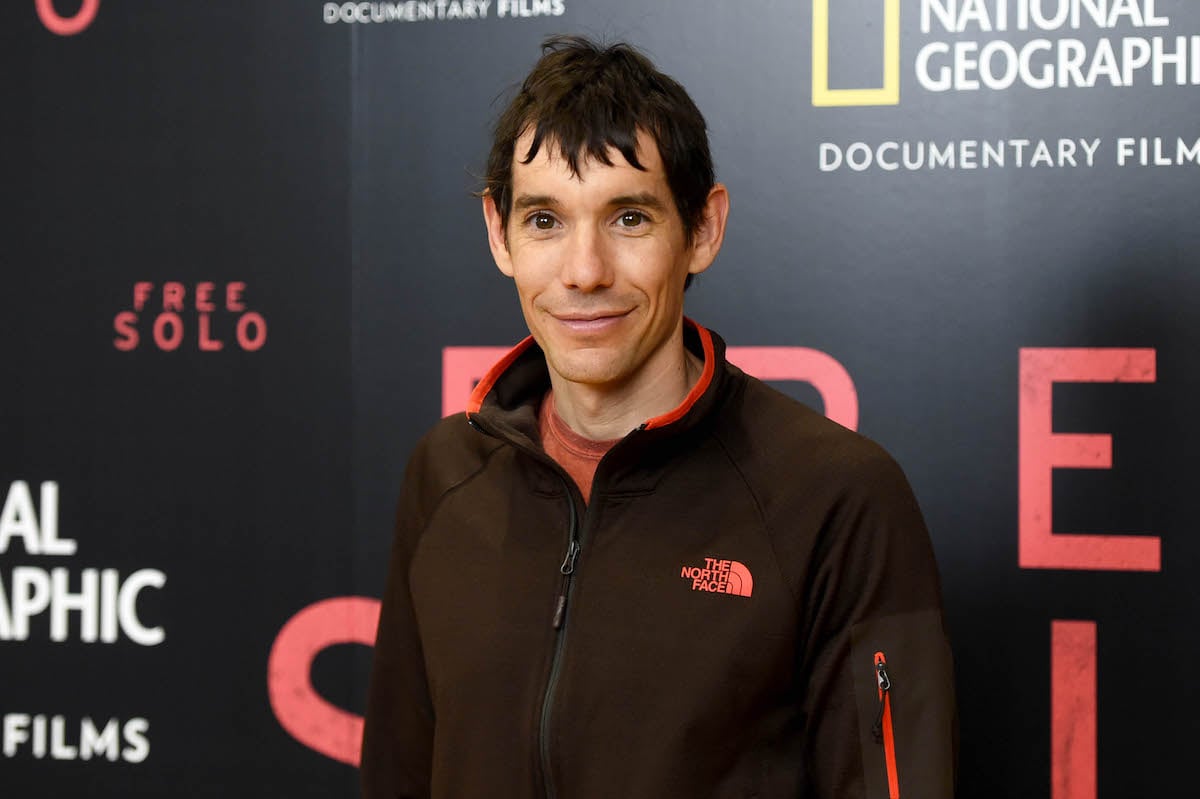
Alex Honnold’s "condition" is not a medical pathology but a unique neurological profile characterized by a non-reactive amygdala—the brain's primary fear center. Scientific fMRI scans revealed that Honnold requires significantly higher levels of stimulus to trigger a fear response compared to the average person, a result of both innate biology and decades of rigorous desensitization.
The Mystery of the "No-Fear" Brain
To the average observer, Alex Honnold’s 2017 free solo ascent of El Capitan—a 3,000-foot granite wall climbed without ropes—appears to be a manifestation of total fearlessness. For years, the climbing community and the general public wondered if Honnold possessed a different psychological makeup or if he was simply better at "managing" a normal human response.
In 2016, neuroscientists sought to answer this question. The result was a fascinating look into a brain that functions at the extreme edge of human capability. While many referred to this as a "condition," it is more accurately described as a specific neurological adaptation. By examining the structure and function of Honnold’s brain, researchers provided a window into how the human mind processes risk, threat, and performance under pressure.
As of 2026, the study of Honnold’s brain remains a cornerstone in sports psychology and neuroscience, used to explain how elite performers can decouple the physical sensation of danger from the emotional experience of panic.
The Amygdala: Understanding the Brain's Alarm System
To understand Alex Honnold’s neurological profile, one must first understand the amygdala. This almond-shaped cluster of nuclei located deep within the brain's temporal lobe is the primary component of the limbic system. Its fundamental role is to scan the environment for threats and initiate the "fight-or-flight" response.
How the Amygdala Functions in a Standard Brain
When a typical person stands on the edge of a cliff, the visual cortex sends signals to the amygdala. The amygdala instantly interprets this as a life-threatening stimulus and triggers the hypothalamus. This results in a cascade of physiological changes:
- Adrenaline Release: Heart rate increases, and breathing quickens.
- Cortisol Spike: The body prepares for high-intensity physical action.
- Cognitive Narrowing: The brain focuses entirely on the threat, often at the expense of fine motor skills or complex reasoning.
In a "standard" brain, this response is involuntary and extremely difficult to suppress. It is an evolutionary survival mechanism designed to keep humans away from dangerous heights and predators.
The Findings of the 2016 fMRI Study
Under the direction of neuroscientist Dr. Jane Joseph at the Medical University of South Carolina, Alex Honnold underwent a series of functional Magnetic Resonance Imaging (fMRI) scans. During these scans, he was shown a series of high-arousal images—gruesome accidents, charred remains, and mountain peaks—designed to trigger the amygdala.
The results were startling. While the control subject (another experienced climber of a similar age) showed significant activation in the amygdala, Honnold’s amygdala remained completely silent. Even when presented with images that typically evoke a visceral "jump" response, his brain's alarm system did not fire. This lack of activation is what many people refer to when discussing "Alex Honnold's condition."
Nature vs. Nurture: Was He Born This Way?
One of the most debated aspects of Honnold’s neurology is whether his non-reactive amygdala is an innate genetic trait or the result of years of "training" his brain. The answer is likely a sophisticated combination of both.
The Role of Habituation and Desensitization
Honnold has spent over two decades climbing. During that time, he has logged thousands of hours in high-stakes environments. In neurology, this is known as habituation. When the brain is repeatedly exposed to a stimulus that it initially perceives as a threat, but no negative outcome occurs, the neural pathways begin to re-evaluate the threat level.
For Honnold, a thousand-foot drop is no longer a "novel" or "threatening" stimulus; it is a workplace environment. Through thousands of repetitions, he has effectively "desensitized" his amygdala. This process is similar to exposure therapy used to treat phobias, but taken to an extreme degree.
Potential Genetic Predispositions
While desensitization explains a great deal, researchers also look at the Big Five personality traits, specifically "Neuroticism" and "Sensation Seeking." Honnold scores exceptionally low on neuroticism (emotional instability) and very high on sensation seeking.
There is evidence to suggest that some individuals are born with a higher "arousal threshold." These people require more intense stimulation to feel the same level of excitement or "reward" that a normal person feels from much milder activities. If Honnold was born with a naturally high threshold, it would explain why he was drawn to solo climbing in the first place—the activity provided the neurological "spark" that his brain required to feel engaged.
Cognitive Control and the Prefrontal Cortex
The lack of amygdala activation is only half of the story. The other half lies in the prefrontal cortex (PFC)—the part of the brain responsible for logic, planning, and executive function.
In the fMRI studies, researchers noticed that Honnold’s PFC is exceptionally active and highly integrated with his sensory processing. Even if his amygdala were to send a faint signal of fear, his prefrontal cortex is likely strong enough to override it immediately. This is the neurological equivalent of a "top-down" control system.
Instead of being governed by emotion (bottom-up), Honnold is governed by data (top-down). He does not feel "fear"; he perceives "risk." He then manages that risk through meticulous planning and technical execution. For Honnold, "danger" is a calculated variable, not an emotional state.
Comparative Brain Responses: Honnold vs. The Average Person
The following table outlines the primary differences discovered during the neurological and psychological assessment of Alex Honnold compared to a standard adult brain.
| Feature | Average Person | Alex Honnold |
|---|---|---|
| Amygdala Activation | High response to threatening imagery. | Near-zero response to threatening imagery. |
| Threat Processing | Emotional (Fear-based "bottom-up"). | Analytical (Risk-based "top-down"). |
| Arousal Threshold | Low; easily stimulated by novel danger. | Extremely high; requires intense stimuli. |
| Prefrontal Regulation | Easily overwhelmed by limbic signals. | Dominant; suppresses emotional interference. |
| Sensation Seeking | Moderate to Low. | Extremely High (Top 1% of population). |
| Habituation Speed | Standard; requires time to adjust. | Accelerated; highly efficient desensitization. |
The Preparation Factor: Mental Mapping
It is a mistake to assume that Honnold relies solely on his "condition" to survive. His neurological profile is supported by a rigorous, almost obsessive preparation process. This process further reinforces his brain’s ability to remain calm.
- Meticulous Journaling: Honnold maintains detailed logs of every climb. By writing down every handhold and movement, he moves the information from short-term "working" memory into long-term procedural memory.
- Visualization: Before a free solo, Honnold spends months visualizing every possible scenario, including what he would do if a hold broke or if he encountered an unexpected obstacle (like a bird or a wet patch of rock). This visualization "pre-programs" the brain's response, leaving no room for panic to enter the void of the unknown.
- Physical Mastery: By the time Honnold solos a route like El Capitan's Freerider, he has climbed it dozens of times with ropes. He has ensured that the physical movements are as natural as walking. When a movement is automated, it requires less cognitive "bandwidth," allowing the brain to remain in a state of flow.
Is This "Condition" Replicable?
The question often arises: Can a normal person train their brain to be like Alex Honnold’s? While most people will never achieve his level of amygdala suppression, the principles of his "condition" are applicable to high-pressure performance in any field.
The concept of Neuroplasticity—the brain's ability to reorganize itself by forming new neural connections—suggests that we can all dampen our fear responses through graduated exposure and cognitive reframing. By identifying a fear, breaking it into manageable segments, and repeatedly exposing ourselves to those segments without a negative outcome, we "rewire" the amygdala to be less reactive.
However, Honnold’s specific combination of an naturally high arousal threshold and a lifetime of extreme desensitization makes his neurological profile a rare outlier in human biology.
Frequently Asked Questions
Does Alex Honnold feel fear at all?
Honnold has stated in various interviews and the 2018 documentary Free Solo that he does feel fear, but his threshold is much higher than others. He describes it more as a "heightened sense of awareness" or "clarity" rather than the paralyzing panic most people associate with fear. His "condition" allows him to experience the warning signs of danger without the emotional "noise" that interferes with performance.
Is Alex Honnold's lack of fear a symptom of a disorder?
No, it is not considered a disorder. While conditions like Urbach-Wiethe disease can cause the amygdala to calcify and disappear (resulting in a total lack of fear), Honnold’s amygdala is physically intact. His lack of activation is a functional difference, likely a result of his specific personality type and years of extreme environmental conditioning.
What happens to his heart rate during a climb?
During his famous solo of El Capitan, Honnold’s heart rate remained remarkably steady and relatively low for the level of physical exertion involved. This indicates that his sympathetic nervous system (the system responsible for the "fight or flight" response) was not in a state of alarm. His body remained in a state of "rest and digest" or "calm focus" even in life-threatening positions.
Can anyone have their brain scanned to check their amygdala?
Yes, fMRI technology is widely available in medical and research settings. However, "testing" your amygdala is not a standard medical procedure. Most studies involving amygdala activation are part of neurological research or psychological studies regarding anxiety, PTSD, or high-performance athletics.
How has Alex Honnold’s brain changed since the 2016 study?
While there have been no publicly released follow-up fMRI studies as of 2026, the principles of neuroplasticity suggest that as Honnold has aged and perhaps shifted his focus away from high-stakes free soloing, his amygdala response could theoretically become more "normal." However, once such deep neural pathways are established through decades of habituation, they often remain a permanent part of an individual’s neurological architecture.
Summary of Recommendations
If you are looking to apply the lessons from Alex Honnold’s neurological profile to your own life or career, consider the following steps:
- Graduated Exposure: Do not avoid the things that scare you; instead, expose yourself to them in small, controlled increments. This "trains" the amygdala that the stimulus is not a threat.
- Focus on Process, Not Outcome: Shift your mental energy from the "What if I fail?" (amygdala-driven) to "What is the next step?" (prefrontal cortex-driven).
- Build a "Memory Palace" of Competence: Like Honnold’s climbing logs, keep a record of your successes in high-pressure situations. This provides your brain with "data" that you are capable of handling stress, which reduces future anxiety.
- Understand Your Baseline: Recognize that everyone has a different "arousal threshold." Comparing your fear response to others is less productive than understanding your own triggers and working to manage them.
Alex Honnold’s "condition" serves as a powerful reminder of the human brain's adaptability. Whether through genetics, environment, or sheer force of will, the mind can be trained to see "impossible" challenges as merely a series of manageable steps.