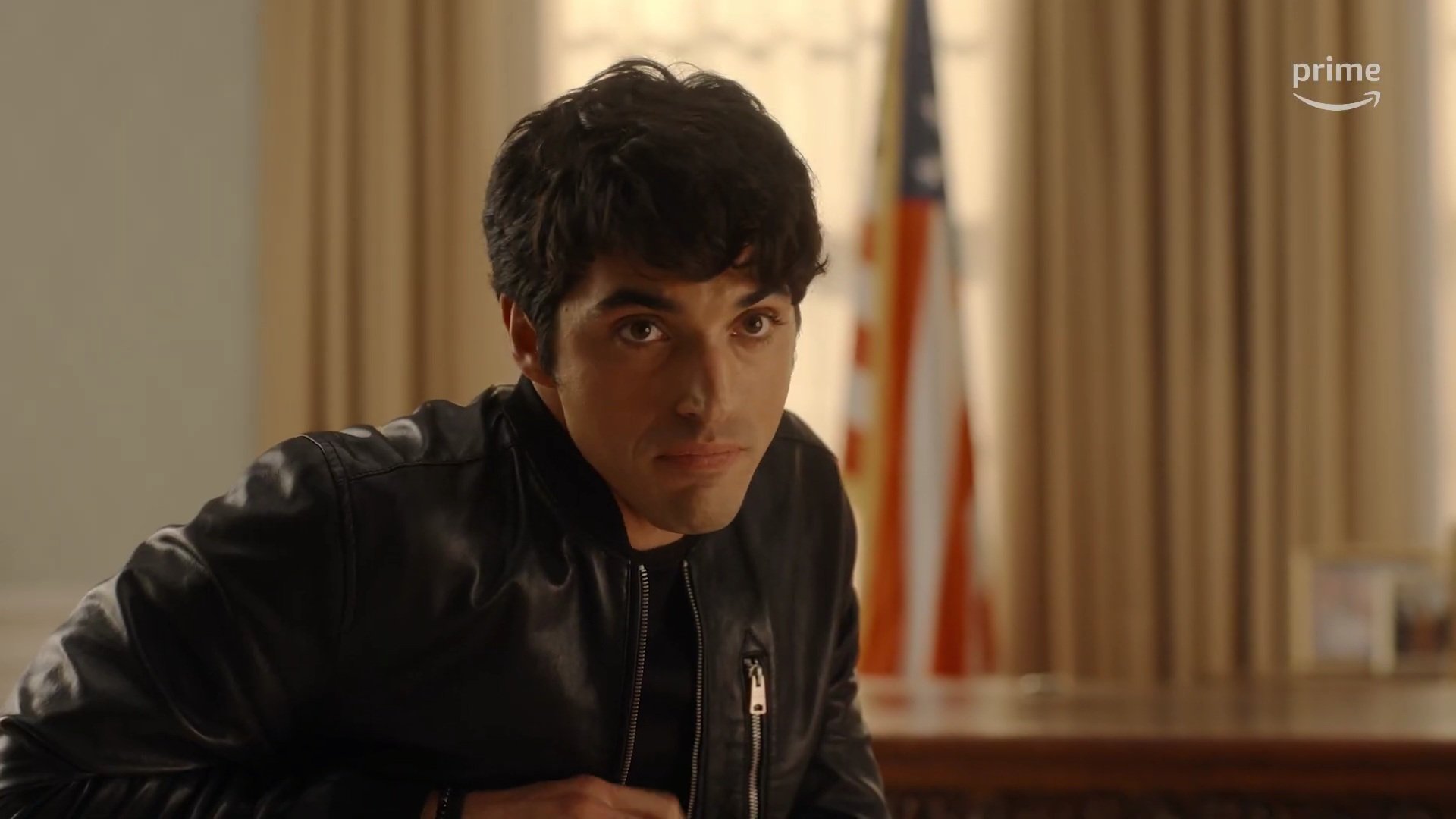
Alex Claremont-Diaz, the charismatic First Son of the United States, is the central figure of the 2023 Amazon MGM Studios film Red, White & Royal Blue, portrayed by Taylor Zakhar Perez. His cinematic journey encompasses a high-stakes international romance with Prince Henry, cultural impact as a bisexual Latino lead, and a highly anticipated sequel currently expanding the franchise in 2026.
The transition of Alex Claremont-Diaz from the pages of Casey McQuiston’s best-selling 2019 novel to the silver screen represented a landmark moment for queer cinema and romantic comedies. As the son of the first female President of the United States, Alex’s character serves as a bridge between political idealism and personal self-discovery. In the film medium, this character underwent specific evolutions to fit the constraints of a two-hour narrative, yet he remained the "FSOTUS" (First Son of the United States) that fans globally had grown to adore.
As of 2026, the legacy of Alex Claremont-Diaz in the movies has extended beyond a single successful release. The character has become a blueprint for modern romantic leads—complex, ethnically diverse, and unapologetically ambitious. Understanding his cinematic presence requires looking at the casting choices, the narrative deviations from the source material, and the production milestones that have kept the franchise thriving into the mid-2020s.
The Cinematic Evolution of Alex Claremont-Diaz
The jump from literature to film is rarely a direct translation, and for a character as beloved as Alex Claremont-Diaz, the pressure on the production team was immense. Director Matthew López, who co-wrote the screenplay with Ted Malawer, had to condense a 400-page novel into a coherent film while maintaining Alex’s frantic, brilliant, and often impulsive energy.
From Page to Screen: Capturing the "First Son" Energy
In the novel, Alex is described as a high-achieving, somewhat "extra" individual who is constantly calculating his political future. He is a person who builds "spreadsheets for his feelings," a trait that is difficult to visualize without heavy exposition. The movie solves this by emphasizing his physical presence and his kinetic interactions with his environment.
The film version of Alex retains his fierce loyalty to his mother’s administration and his deep pride in his Mexican-American heritage. However, the cinematic Alex is slightly more streamlined. For instance, the character of June Claremont-Diaz—Alex’s sister in the book—was removed for the movie adaptation. This decision placed a greater burden on the character of Alex to carry the emotional weight of the family dynamic alone, effectively merging aspects of June’s supportive nature into Alex’s own narrative arc.
Taylor Zakhar Perez: Casting and Performance Analysis
The casting of Taylor Zakhar Perez was a turning point for the production. Known previously for The Kissing Booth sequels, Perez brought a specific blend of athletic charisma and vulnerability that matched the "Alex" archetype.
To prepare for the role, Perez had to balance the character’s dual identity: the polished public figure who serves as a political asset to President Ellen Claremont (played by Uma Thurman) and the private, uncertain young man falling for a British prince. Critics often point to Perez’s ability to handle the rapid-fire dialogue—much of it adapted directly from McQuiston’s prose—as the reason the character felt authentic to the source material despite the plot changes. His chemistry with Nicholas Galitzine (Prince Henry) became the film’s cornerstone, driving the massive streaming numbers that justified the franchise's continuation.
Red, White & Royal Blue (2023): A Deep Dive into the First Film
Released on August 11, 2023, the first movie established the visual and emotional vocabulary of Alex Claremont-Diaz’s world. The film prioritizes the "enemies-to-lovers" trope, starting with the infamous "Cakegate" incident at a royal wedding and evolving into a clandestine long-distance relationship.
Key Character Arcs and Plot Divergences
The cinematic Alex Claremont-Diaz faces a different set of obstacles than his literary counterpart. In the movie, the discovery of his sexuality is framed less as a slow-burn realization and more as a sudden, undeniable collision with his feelings for Henry.
- The Political Stakes: The film heightens the tension surrounding the Texas primary. Alex’s role as a campaigner is centralized, making his personal scandal with Prince Henry a more direct threat to his mother’s reelection than it appeared in certain sections of the book.
- The Secret Correspondence: A major challenge was depicting the emails and texts between Alex and Henry. The movie uses a creative visual technique where the characters appear to be in the same room while reciting their messages, allowing the audience to see Alex’s emotional evolution in real-time.
- The Coming Out Scene: One of the most discussed scenes involves Alex coming out to his mother. The movie’s version, featuring Uma Thurman’s President Claremont offering a "mother-to-son" talk with a PowerPoint-style pragmatic edge, became an instant fan favorite for its blend of humor and heart.
The Chemistry that Defined a Genre
The success of Alex Claremont-Diaz as a movie character rests almost entirely on the believable friction between him and Prince Henry. The "opposites attract" dynamic—Alex as the loud, brash American and Henry as the reserved, traditionalist Brit—is exaggerated in the film to create immediate visual and tonal contrast. This chemistry was not just a result of the acting but also of the intimacy coordination and the direction of Matthew López, who focused on the physical language of the characters as much as their dialogue.
The Success and Cultural Significance of the Movie Adaptation
When Red, White & Royal Blue premiered, it quickly became the #1 movie globally on Prime Video. This success was a significant data point for studios, proving that R-rated queer romantic comedies had a massive, underserved audience.
Alex Claremont-Diaz represents a rare intersection in mainstream film: a Latino lead in a high-budget romance where his heritage is integral but not a "problem" to be solved. The movie highlights his culture through his relationship with his father, Senator Oscar Diaz, and the inclusion of Spanish dialogue, which grounds the character in a specific, lived-in reality. This portrayal has been cited by organizations like GLAAD as a positive step forward for intersectional representation in the rom-com genre.
| Feature | Book Alex Claremont-Diaz | Movie Alex Claremont-Diaz |
|---|---|---|
| Siblings | Sister (June) | None (Only child in film) |
| Age | Early 20s (University student) | Mid-20s (Law student/Political aide) |
| Primary Conflict | Reelection & Self-Discovery | Reelection & International Diplomacy |
| Heritage | Mexican-American (Texas roots) | Mexican-American (Texas roots) |
| Key Relationship | Prince Henry (Secretive/Gradual) | Prince Henry (Intense/Fast-paced) |
The 2026 Landscape: Red, White & Royal Blue 2 and Beyond
Following the massive success of the original film, Amazon MGM Studios officially greenlit a sequel. In 2026, the discussion around Alex Claremont-Diaz has shifted from "Will he be portrayed accurately?" to "Where does his story go after the happy ending?"
Sequel Development and Plot Expectations
The sequel, which was confirmed to have Matthew López and Casey McQuiston returning to craft the story, explores the "life after" for Alex. While the first movie ended with Alex and Henry visiting Alex’s childhood home in Texas after the election victory, the sequel focuses on the complexities of maintaining a public, high-profile international relationship.
In the 2026 cinematic context, Alex is no longer just the First Son; he is a public figure in his own right, navigating law school and his burgeoning political career while his partner remains a member of the British Royal Family. The sequel aims to address the logistical and emotional hurdles of two men from vastly different worlds trying to build a shared life under the microscope of global media.
Production Timeline and Casting Continuity
Both Taylor Zakhar Perez and Nicholas Galitzine signed on to reprise their roles, a move that was essential for the franchise’s viability. Production for the sequel took place through 2025, with a focus on expanding the locations from Washington D.C. and London to other international settings. The 2026 release cycle has seen a massive marketing push, emphasizing that the characters have matured since their 2023 debut.
Technical Aspects of the Character's Presentation
The way Alex is filmed contributes significantly to his "First Son" persona. The cinematography uses warm, vibrant tones for Alex’s scenes in the U.S., particularly in Texas, to contrast with the cooler, more sterile blues and greys of the UK royal settings.
- Costume Design: Alex’s wardrobe in the movies is a calculated mix of "young professional" and "casual rebel." He is often seen in slim-fit suits that signify his status, but with loosened ties or unbuttoned collars that suggest his desire to break free from the constraints of the presidency.
- Visual Motifs: The use of the "Star Spangled Banner" and the American flag in Alex’s proximity serves as a constant reminder of the weight he carries. In the movie, his transition from being a symbol of the country to being his own man is mirrored in his changing attire and hair styling as the film progresses.
FAQs about Alex Claremont-Diaz in the Movies
Is the movie Alex Claremont-Diaz different from the book version?
Yes, several changes were made for the movie. The most significant is the removal of his sister, June, which makes Alex an only child in the film. Additionally, the movie ages him up slightly to be a law student, and some of the political subplots are condensed to keep the focus on the romance with Prince Henry.
Who plays Alex Claremont-Diaz in the film?
Alex Claremont-Diaz is played by Taylor Zakhar Perez. He received critical acclaim for his portrayal, particularly for his chemistry with co-star Nicholas Galitzine.
Will there be a second movie featuring Alex Claremont-Diaz?
Yes. Amazon MGM Studios officially announced a sequel in May 2024. As of 2026, the sequel has been a major focus of the franchise, continuing the story of Alex and Henry's relationship following the events of the first film and the presidential election.
Why is the movie version of Alex's story R-rated?
The film received an R-rating primarily for its "language and some sexual content." The production team and director Matthew López chose to keep the mature themes and intimacy of the book intact to provide an authentic representation of the characters' relationship.
Does the movie address Alex’s Mexican-American heritage?
Absolutely. The movie highlights Alex's heritage through his relationship with his father, his use of Spanish, and the political importance of his family's roots in Texas. This remains a core part of his identity in the cinematic adaptation.
Summary of the Character’s Cinematic Impact
Alex Claremont-Diaz has transitioned from a literary icon to a cinematic staple. His presence in the movies has helped redefine what a modern romantic lead looks like, emphasizing that identity, politics, and romance are deeply intertwined. For fans looking to engage with the character in 2026, the best course of action is to:
- Watch the 2023 Original: Familiarize yourself with the foundation of the character and the "Cakegate" incident on Prime Video.
- Compare with the Source Material: Read Casey McQuiston’s novel to understand the internal monologue that informs Taylor Zakhar Perez's performance.
- Follow Official Updates: Keep an eye on Amazon MGM Studios’ press releases for the latest information regarding sequel screenings, behind-the-scenes content, and franchise expansions.
The journey of Alex Claremont-Diaz in the movies is a testament to the power of representative storytelling, proving that audiences are eager for diverse, joyful, and complex queer narratives on the largest possible stage.