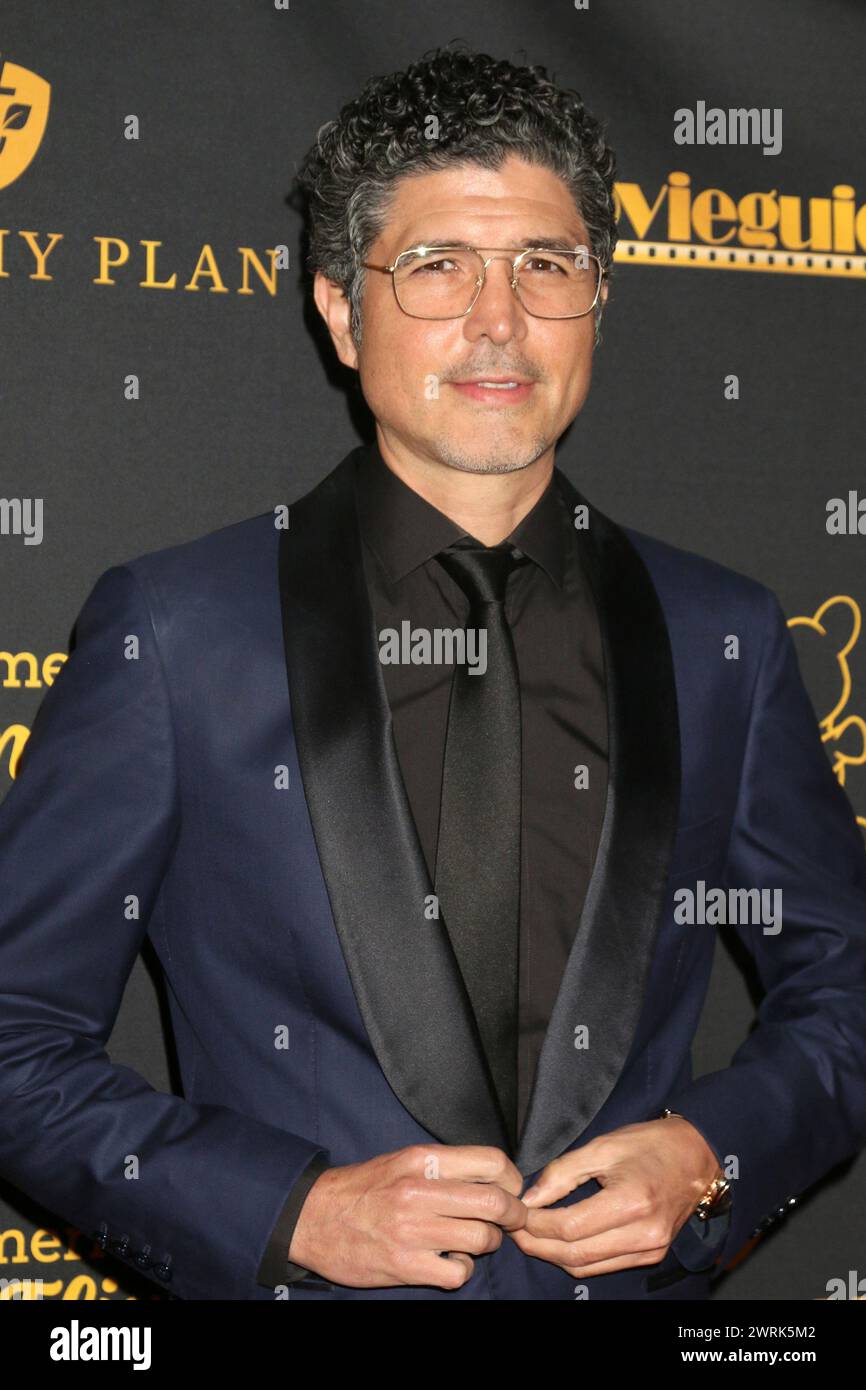
Alejandro Gómez Monteverde is a celebrated Mexican filmmaker recognized for directing and co-writing high-impact independent films including the Toronto International Film Festival winner Bella, the historical drama Little Boy, and the global box office sensation Sound of Freedom. His career is defined by a consistent focus on themes of faith, family, human dignity, and social justice, often utilizing innovative distribution models to reach vast audiences.
Early Life and the Foundations of a Cinematic Vision
Born in Tampico, Tamaulipas, Mexico, in 1977, Alejandro Gómez Monteverde’s journey into the world of cinema was characterized by a transition from his native Mexico to the United States to pursue his education. He attended the University of Texas at Austin, where he studied film. This period was instrumental in shaping his technical skills and his narrative voice. Austin's vibrant independent film scene provided a backdrop for Monteverde to experiment with storytelling that diverged from mainstream Hollywood tropes.
His early work was marked by a desire to tell stories that were "ennobling to the human spirit." This philosophy became the cornerstone of his career. Unlike many directors who seek to enter the industry through high-concept action or genre films, Monteverde focused on the intimacy of human relationships and the moral complexities of the modern world. This focus eventually led to the formation of Metanoia Films, a production company he co-founded with Eduardo Verástegui and Leo Severino, aimed at creating content that inspires and moves audiences toward positive social reflection.
The Breakthrough Success of Bella (2006)
The definitive turning point in Monteverde’s career occurred in 2006 with the release of Bella. This low-budget independent film, which Monteverde directed and co-wrote, serves as a masterclass in how a poignant narrative can transcend limited resources. Starring Eduardo Verástegui and Tammy Blanchard, the film tells the story of a soccer star whose career ends in tragedy and a waitress struggling with an unplanned pregnancy.
The TIFF People’s Choice Award
In a stunning upset, Bella won the prestigious People’s Choice Award at the 2006 Toronto International Film Festival (TIFF). This award is historically a strong predictor of critical and commercial success, with previous winners including Slumdog Millionaire and The King’s Speech. The victory catapulted Monteverde into the international spotlight, proving that his "soulful" approach to filmmaking had significant market appeal.
Narrative Themes and Artistic Style
In Bella, Monteverde established his signature style: a preference for warm, naturalistic lighting, an emphasis on non-linear storytelling to reveal character depth, and a focus on redemption. The film was praised not only for its pro-life undertones but for its authentic portrayal of Latino culture in New York City, avoiding the common stereotypes often found in mid-2000s cinema. The success of Bella established Monteverde as a director who could marry personal conviction with broad cinematic appeal.
The Challenges of the Second Feature: Little Boy (2015)
The trajectory of an independent filmmaker is rarely a straight line. Following the success of Bella, it took nearly a decade for Monteverde to release his next major project, Little Boy. Released in 2015, this film represented a significant step up in terms of production value, scale, and visual ambition.
Set in a small American town during World War II, Little Boy follows a young child with developmental challenges who is determined to bring his father home from the war through the power of faith and "moving mountains." The film featured an ensemble cast including Emily Watson, Tom Wilkinson, and Kevin James.
Production and Visual Craft
While Little Boy received mixed reviews from critics—some of whom found its sentimentality overwhelming—it was lauded for its stunning cinematography and production design. Monteverde demonstrated a sophisticated ability to recreate a stylized, nostalgic 1940s America. The film's lighting and color palette were meticulously crafted to evoke a fable-like atmosphere, reinforcing the story's perspective through the eyes of a child.
Independent Distribution Hurdles
Little Boy also highlighted the difficulties of independent distribution for mid-budget dramas. Despite its high production quality, the film struggled to find the same level of mainstream cultural penetration as Bella. However, it solidified Monteverde's reputation as a director capable of managing complex period pieces and sensitive performances from child actors.
The Sound of Freedom (2023): A Cultural Milestone
The most significant chapter in the Alejandro Gómez Monteverde career overview began with the release of Sound of Freedom in July 2023. While the film became a massive commercial hit, its path to the screen was fraught with industry obstacles that eventually led to a revolution in how independent films are marketed.
The Seven-Year Journey to Release
Monteverde finished production on Sound of Freedom in 2018. The film, which stars Jim Caviezel as Tim Ballard (a former government agent who embarks on a mission to rescue children from sex trafficking in Colombia), was initially caught in the middle of corporate acquisitions. After the 21st Century Fox merger with Disney, the project sat on a shelf for years. Monteverde and his producers eventually regained the rights, leading to a partnership with Angel Studios.
Distribution Innovation and Box Office Impact
In 2023, the film was released using a "Pay It Forward" model, where viewers could buy tickets for others who might not be able to afford them. This grassroots movement propelled the film to earn over $250 million at the global box office against a modest production budget of approximately $14.5 million.
From a directorial standpoint, Sound of Freedom showcased Monteverde’s ability to handle high-stakes tension and international thriller elements without losing the emotional core of the story. The film was noted for its restraint; despite the harrowing subject matter of child trafficking, Monteverde made the deliberate choice to keep the most graphic elements off-screen, focusing instead on the psychological toll on the rescuers and the humanity of the victims.
Religious and Social Epics: Cabrini (2024)
Following the massive success of Sound of Freedom, Monteverde released Cabrini in March 2024. This film marked a return to his roots in historical drama but on a much grander, more operatic scale. Cabrini depicts the life of Francesca Cabrini, an Italian immigrant who arrived in New York in 1889 and fought against the male-dominated social and ecclesiastical structures to build an empire of hope for the poor.
Technical Mastery and Critical Reception
Cabrini is often cited by critics as Monteverde’s most technically accomplished work. The film features lush, chiaroscuro lighting and expansive set pieces that recreate the grit and grandeur of late 19th-century New York. The film received high praise for its "feminist" undertones—focusing on Cabrini’s administrative genius and indomitable will—rather than purely on her religious status.
Directorial Evolution
In Cabrini, Monteverde’s evolution as a director is evident. He moved away from the more intimate, handheld feel of Bella toward a formal, more "European" cinematic style. The pacing is deliberate, and the visual language is designed to emphasize the scale of the institutional resistance Cabrini faced.
Summary of Major Filmography
The following table outlines the key projects that define Alejandro Gómez Monteverde’s career and their impact on the industry.
| Film Title | Year | Primary Role | Key Achievement / Impact |
|---|---|---|---|
| Bella | 2006 | Director, Writer, Producer | Won the TIFF People's Choice Award; established the Metanoia Films brand. |
| Little Boy | 2015 | Director, Writer | Demonstrated mastery of period-piece production and child-actor direction. |
| Sound of Freedom | 2023 | Director, Writer | Became one of the most successful independent films of all time; revolutionized distribution. |
| Cabrini | 2024 | Director, Writer | Received high critical acclaim for cinematography and its portrayal of historical female leadership. |
Artistic Style and Filmmaking Philosophy
To understand Monteverde's career is to understand a specific philosophy of filmmaking. He often refers to his work as "cinematic healing." His films are characterized by several recurring elements:
- The Moral Dilemma: His protagonists are often faced with impossible choices where the "right" path requires immense personal sacrifice.
- Visual Symbolism: Monteverde uses recurring visual motifs—such as light breaking through shadows or vast, daunting landscapes—to represent internal spiritual struggles.
- Collaboration: He maintains a tight-knit circle of collaborators, most notably Eduardo Verástegui, who has appeared in or produced several of his films. This "troupe" approach allows for a consistent tonal quality across his filmography.
- Social Advocacy: Beyond entertainment, his films are designed to prompt action. Whether it is raising awareness for adoption (Bella) or fighting human trafficking (Sound of Freedom), the "mission" of the film is inseparable from the art.
The Industry Legacy and Future Outlook (2026)
As of 2026, Alejandro Gómez Monteverde stands as a pillar of a new era of independent cinema. He has successfully bridged the gap between niche faith-based audiences and the general moviegoing public. His career demonstrates that there is a massive, often underserved market for stories that prioritize moral clarity and emotional resonance over cynical post-modernism.
His legacy is also tied to the disruption of the traditional Hollywood studio system. By proving that films rejected by major studios can find a global audience through innovative crowdfunding and digital word-of-mouth, Monteverde has cleared a path for other independent directors to maintain their creative integrity while achieving commercial viability.
Frequently Asked Questions
What was Alejandro Gómez Monteverde's first movie?
His feature film debut was Bella (2006). Before this, he worked on several short films and commercials while developing his craft in Texas. Bella was notable for being produced on a shoestring budget and winning the top prize at the Toronto International Film Festival, an unprecedented feat for a first-time director in that category.
Why did Sound of Freedom take so long to be released?
The film was completed in 2018 under the Fox International banner. When Disney acquired 21st Century Fox, the film's distribution was delayed as it did not fit the studio's immediate release slate. It took years of negotiation for the filmmakers to buy back the rights and partner with Angel Studios for its eventual 2023 release.
Where did Alejandro Gómez Monteverde study film?
He studied at the University of Texas at Austin. His time in Austin was crucial, as the city is known for its independent film culture and was the launching pad for many influential directors. He has often credited his education for giving him the technical foundation to execute his visual style.
Is Alejandro Gómez Monteverde involved in all his film's scripts?
Yes, Monteverde is a "writer-director" who typically co-writes his screenplays. He has frequently collaborated with writers like Rod Barr and Leo Severino. This involvement in the writing process ensures that the thematic "soul" of the project remains consistent from the initial concept to the final edit.
What are the main themes in Monteverde's work?
Recurring themes include the sanctity of life, the power of faith, the importance of family, and the resilience of the human spirit in the face of institutional or social oppression. He focuses on characters who are often overlooked by society but possess extraordinary moral courage.
Practical Recommendations for Aspiring Independent Filmmakers
For those looking to follow in the footsteps of the Alejandro Gómez Monteverde career model, several key lessons can be drawn:
- Focus on Story Over Scale: Monteverde's early success with Bella proved that a powerful, human-centric story can outweigh a small budget. Prioritize character development and emotional stakes.
- Identify Your Audience: One of Monteverde's strengths is knowing exactly who his audience is and how to speak to them. Independent filmmakers should identify specific communities or interest groups that will champion their work.
- Persistence in Distribution: The journey of Sound of Freedom teaches that a finished film is not the end of the road. Finding the right distribution partner—even if it means waiting years—is essential for a film to reach its intended impact.
- Master the Visual Language: Even in his smaller films, Monteverde’s work looks "expensive." Investing time in cinematography and lighting can help an independent film stand out in a crowded digital marketplace.