Alan Menken is a legendary American composer and pianist whose work redefined the modern film musical, particularly through his transformative scores for Walt Disney Animation Studios. As of 2026, Menken remains one of the most decorated individuals in entertainment history, holding the prestigious EGOT status—having won Emmy, Grammy, Oscar, and Tony Awards—for his indelible contributions to cinema and theater.
The Genesis of a Musical Revolution: The Ashman-Menken Partnership
To understand the impact of Alan Menken, one must look back at the late 1980s, a period when the traditional film musical was considered a dying art form. Menken, alongside his frequent collaborator, lyricist Howard Ashman, brought the sensibilities of Off-Broadway theater to the silver screen. Their partnership began with the cult classic Little Shop of Horrors, but it was their recruitment by Disney that altered the course of animation history.
Menken’s approach was revolutionary because he did not merely provide background music; he utilized the "book musical" structure, where songs serve as vital plot engines and character development tools. Before Menken, many animated films used songs as interludes. Under his guidance, the "I Want" song—a theatrical trope where the protagonist expresses their deepest desires early in the first act—became a staple of the Disney formula, beginning with "Part of Your World" in The Little Mermaid (1989).
From Off-Broadway to the Magic Kingdom
The transition from the gritty, satirical world of Little Shop of Horrors to the fairy-tale landscapes of Disney required a versatile musical palette. Menken demonstrated an uncanny ability to synthesize disparate genres. In The Little Mermaid, he blended Broadway showtunes with Calypso and Reggae influences, specifically through the character of Sebastian the crab. This genre-bending approach made the music feel both timeless and contemporary, a hallmark of his style that persists in his work evaluated as of 2026.
The Disney Renaissance: A Decade of Mastery
The period between 1989 and 1999, often referred to as the Disney Renaissance, was largely defined by Menken’s melodic genius. During this era, he produced a string of scores that earned him eight Academy Awards. His work during this time wasn't just commercially successful; it was technically sophisticated, utilizing leitmotifs and complex orchestral arrangements that rivaled classical compositions.
Beauty and the Beast (1991)
Often cited as Menken’s magnum opus, Beauty and the Beast showcased his ability to handle grand, operatic themes alongside playful character pieces. The title track, a tender ballad, demonstrated his restraint, while "Be Our Guest" was a maximalist tribute to French cabaret and Busby Berkeley-style spectacles. The score was the first animated film to be nominated for the Academy Award for Best Picture, a testament to the emotional weight Menken's music provided.
Aladdin (1992)
Following the tragic passing of Howard Ashman during the production of Aladdin, Menken collaborated with Tim Rice to complete the score. Here, Menken pivoted toward Middle Eastern-inspired scales mixed with 1940s jazz and "hot" swing, particularly for the Genie’s sequences. "A Whole New World" became a global phenomenon, proving that Menken could write pop-chart-topping hits that still functioned perfectly within a narrative framework.
Pocahontas (1995) and The Hunchback of Notre Dame (1996)
In the mid-90s, Menken’s work took a more symphonic and mature turn. Pocahontas introduced more folk and naturalistic textures, while The Hunchback of Notre Dame remains perhaps his most ambitious work. For Hunchback, Menken incorporated liturgical chants, massive choral arrangements, and dark, gothic themes that pushed the boundaries of what was expected from a "family" film score. The track "Hellfire" is frequently analyzed by musicologists for its complex emotional layering and use of the Dies Irae motif.
Technical Depth: The "Menken Sound" Explained
What exactly constitutes the "Menken Sound"? It is a blend of traditional orchestral scoring and a deep understanding of the "Great American Songbook." Menken often employs specific musical devices to create his "timeless" feel:
- Thematic Recurrence (Leitmotifs): Menken assigns specific melodic phrases to characters or concepts. In Tangled (2010), the "healing incantation" theme reappears in various guises throughout the score, reinforcing the magical connection between Rapunzel and the sun.
- Rhythmic Versatility: He is a master of rhythm, moving seamlessly from the 6/8 lilt of a French waltz to the 4/4 drive of a gospel anthem (Hercules, 1997).
- Vocal Ranges and Characterization: Menken writes specifically for the "acting singer." His melodies are designed to highlight the emotional cracks in a voice, allowing performers to act through the notes rather than just hitting them.
- Modulation for Emotional Height: He frequently uses key changes (modulations) during the final chorus of his ballads to simulate an emotional "lift," a technique that has become a standard in power ballads.
Beyond Animation: Live Action and the Broadway Stage
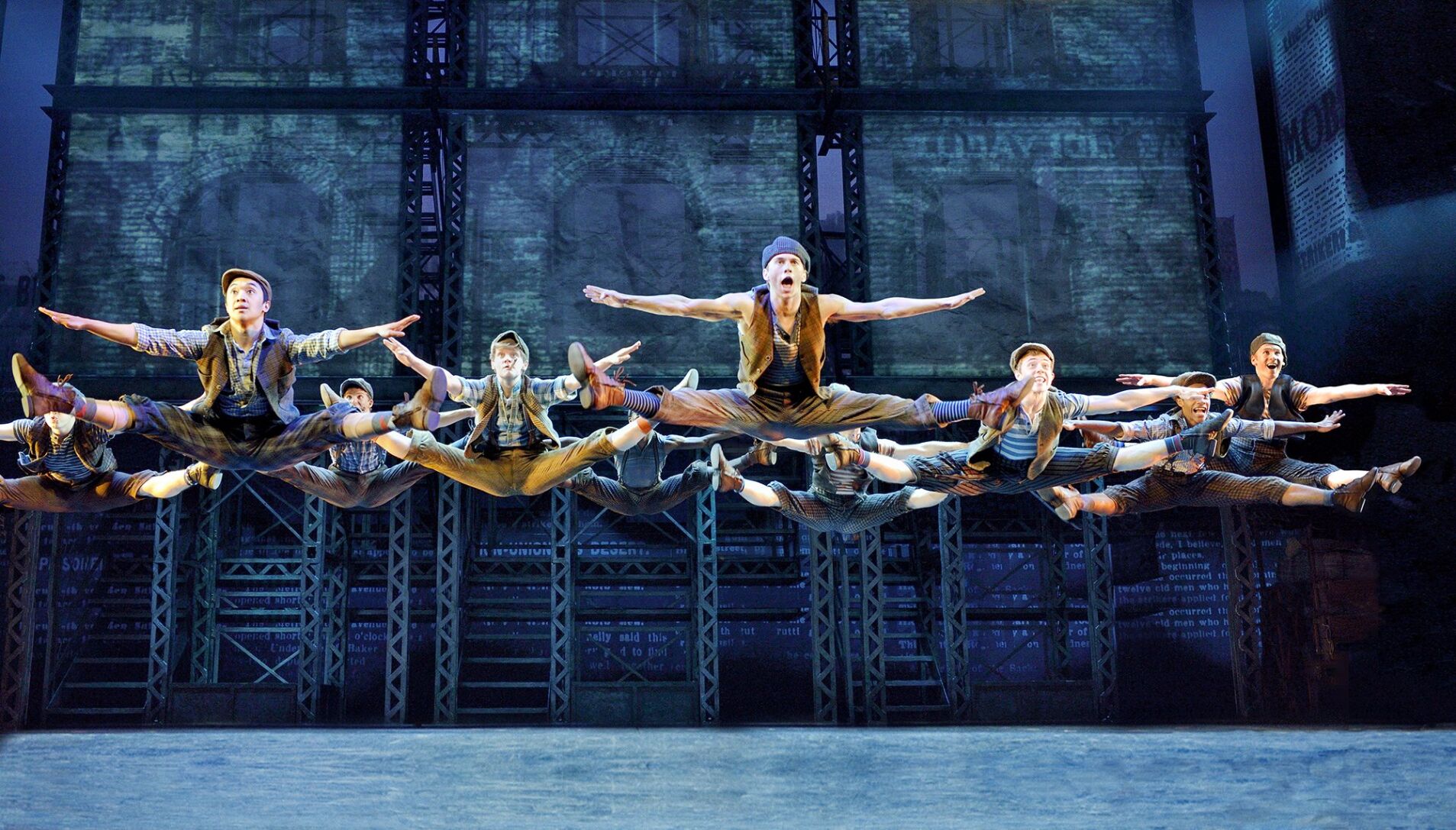
Alan Menken’s influence extends far beyond hand-drawn animation. He has successfully transitioned his film scores to the Broadway stage, often expanding them with new material. His stage adaptation of Newsies (originally a 1992 live-action film) won him a Tony Award in 2012, proving that his music had a life independent of the screen.
In the 2010s and early 2020s, Menken was instrumental in the wave of Disney live-action remakes. For films like Beauty and the Beast (2017), Aladdin (2019), and The Little Mermaid (2023), he revisited his classic scores, updating the orchestrations and writing new songs with lyricists like Lin-Manuel Miranda. These updates allowed him to address modern sensibilities while preserving the core melodies that audiences have loved for decades.
Key Works and Awards Table
The following table highlights the most significant milestones in Alan Menken's career, reflecting his dominance in the industry through 2026.
| Project Title | Year | Primary Lyricist | Key Awards Received | Iconic Song |
|---|---|---|---|---|
| Little Shop of Horrors | 1982 | Howard Ashman | Drama Desk Award | "Suddenly, Seymour" |
| The Little Mermaid | 1989 | Howard Ashman | 2 Academy Awards | "Under the Sea" |
| Beauty and the Beast | 1991 | Howard Ashman | 2 Academy Awards | "Beauty and the Beast" |
| Aladdin | 1992 | Ashman / Tim Rice | 2 Academy Awards | "A Whole New World" |
| Pocahontas | 1995 | Stephen Schwartz | 2 Academy Awards | "Colors of the Wind" |
| Hercules | 1997 | David Zippel | Oscar Nomination | "Go the Distance" |
| Enchanted | 2007 | Stephen Schwartz | 3 Oscar Nominations | "That's How You Know" |
| Tangled | 2010 | Glenn Slater | Grammy Award | "I See the Light" |
| Newsies (Broadway) | 2012 | Jack Feldman | Tony Award | "Santa Fe" |
| The Little Mermaid (Live Action) | 2023 | Lin-Manuel Miranda | Grammy Nomination | "Wild Uncharted Waters" |
The Legacy of a Living Legend in 2026
As we look at the landscape of film music in 2026, Menken’s fingerprints are everywhere. He paved the way for the next generation of composers, such as Lin-Manuel Miranda and the duo Pasek & Paul, who have cited Menken as a primary influence in their pursuit of narrative-driven songwriting.
Menken's ability to remain relevant for over 40 years stems from his refusal to be pigeonholed into a single style. Whether he is writing a 1960s-inspired girl group number for Little Shop of Horrors or a sweeping, Alan Silvestri-esque orchestral climax for Enchanted, his work is characterized by a high degree of "earworm" potential—melodies that are easy to remember but difficult to construct.
Common Mistakes in Evaluating Menken's Work
When discussing Menken, fans and critics sometimes overlook the collaborative nature of his work. While Menken provides the melody and the harmonic structure, the lyrics of Ashman, Rice, and Schwartz are what provide the "theatrical" bite. A common mistake is attributing the success of the Disney Renaissance solely to the animation, when in reality, the films were essentially built around Menken's musical demos. He was often the first person hired on these projects, and the storyboards were frequently drawn to match his rhythms.
Frequently Asked Questions
What is Alan Menken's "EGOT" status?
Alan Menken achieved EGOT status in 2020. This means he has won at least one Emmy, Grammy, Oscar, and Tony Award. He secured his Emmy for the song "Waiting in the Wings" from Tangled: The Series, his Oscars for various Disney films (8 in total), his Grammys for his film scores and songs (11 in total), and his Tony for the score of the Broadway musical Newsies.
How many Academy Awards has Alan Menken won?
As of 2026, Alan Menken has won eight Academy Awards. This is the highest number of Oscars won by any living individual in the music categories. His wins are split between Best Original Score and Best Original Song for the films The Little Mermaid, Beauty and the Beast, Aladdin, and Pocahontas.
Did Alan Menken write the music for The Lion King?
No. A frequent point of confusion is attributing all 90s Disney music to Menken. The music for The Lion King was composed by Elton John (songs) and Hans Zimmer (score). Menken’s primary Disney contributions during that era were The Little Mermaid, Beauty and the Beast, Aladdin, Pocahontas, The Hunchback of Notre Dame, and Hercules.
Who were Alan Menken’s most frequent collaborators?
His most legendary partnership was with Howard Ashman, who served as his lyricist and creative mentor until Ashman’s death in 1991. Following Ashman, Menken worked extensively with Stephen Schwartz (Pocahontas, The Hunchback of Notre Dame, Enchanted), Tim Rice (Aladdin, Beauty and the Beast stage version), Glenn Slater (Tangled, The Little Mermaid stage version), and David Zippel (Hercules).
What makes his film scores "timeless"?
Menken's scores are considered timeless because they are rooted in classical music theory and traditional musical theater structures, which do not go out of style as quickly as pop-oriented scores. By using a full orchestra and focusing on strong, singable melodies, his music transcends the specific era in which it was recorded.
Practical Recommendation for Enthusiasts
For those looking to truly appreciate the technical depth of Alan Menken's work, the best starting point is not the films themselves, but the Original Broadway Cast Recordings of his shows. While the film versions are iconic, the Broadway adaptations—specifically The Hunchback of Notre Dame and Newsies—allow the scores to breathe, featuring expanded orchestrations and additional songs that showcase his ability to sustain a musical narrative over two hours.
In 2026, many of these scores are available in "Legacy Collections" or high-resolution audio formats, which highlight the intricate counterpoint and choral layering that can sometimes be lost in standard film mixes. Studying the demo versions of his songs, where Menken often sings and plays the piano himself, provides a rare glimpse into the raw melodic construction that has defined modern cinema.