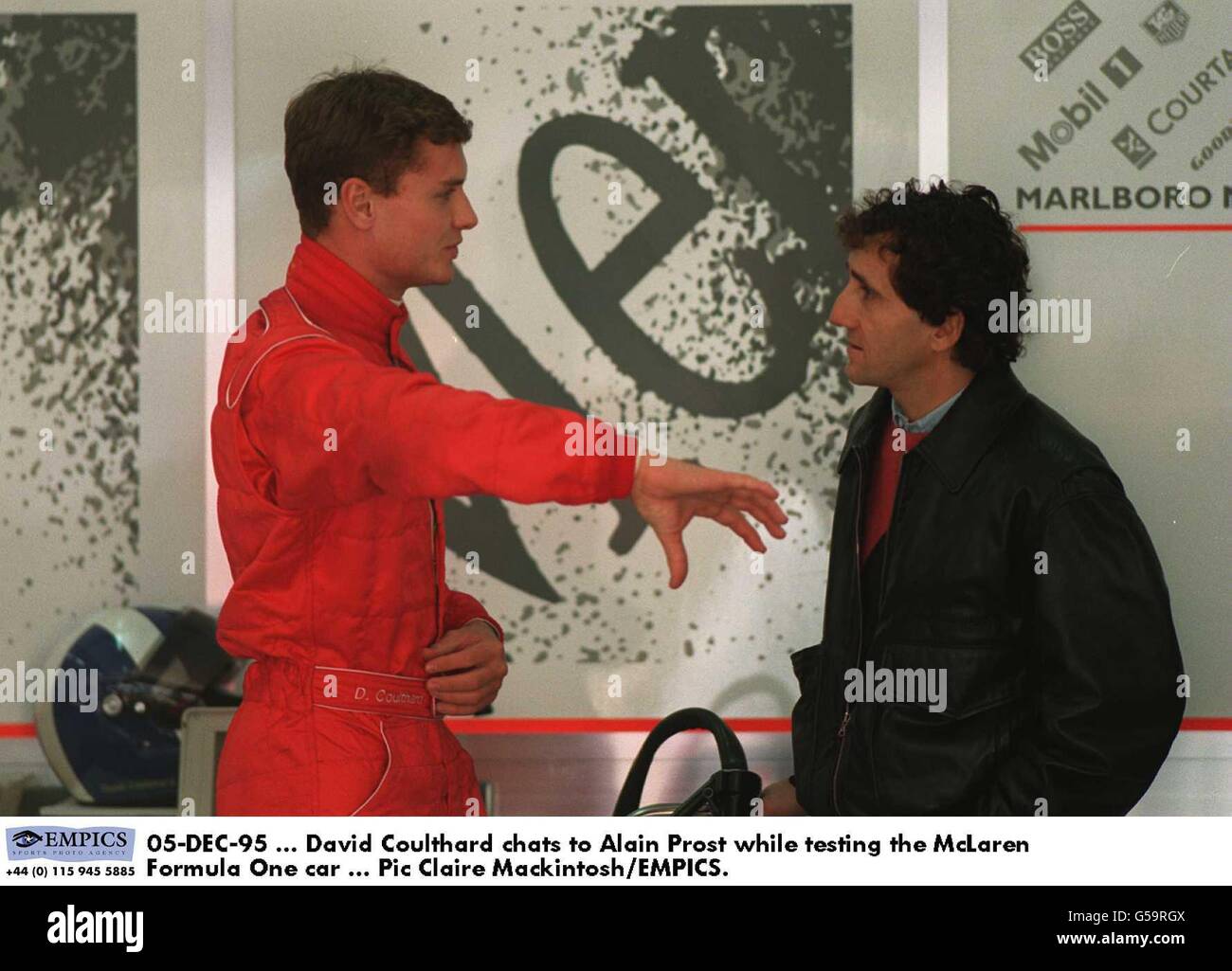
Alain Prost was born on February 24, 1955, in Lorette, France. As of 2026, the legendary four-time Formula 1 World Champion is 71 years old. Despite his transition away from the cockpit decades ago, Prost remains a definitive figure in motorsport, balancing his time between advisory roles and personal fitness.
The Early Years: From Lorette to the Global Stage
Alain Marie Pascal Prost’s journey began in the town of Lorette, near Saint-Chamond. Growing up in a family of modest means, his entry into the world of racing was not immediate. Unlike many modern drivers who start karting at the age of four or five, Prost discovered his passion for speed during a family vacation at the age of 14. This relatively late start did not hinder him; instead, it seemed to fuel a disciplined approach to the sport that would eventually define his career.
By the time Prost reached his late teens, he had already displayed the analytical mind that would later earn him the nickname "The Professor." He won several karting championships in France before moving into single-seater racing. His ascent through the ranks of Formula Renault and Formula Three was meteoric. By the time he debuted in Formula 1 in 1980 with McLaren at the age of 25, he was already being hailed as a future champion. This foundational period is crucial to understanding how he maintained such a high level of performance into his late 30s—a rarity in an era where physical and mechanical reliability were significantly lower than they are today.
A Career Defined by Longevity and Precision
Alain Prost’s professional career spanned from 1980 to 1993, a 13-year period that witnessed some of the most dramatic changes in automotive technology. When analyzing Alain Prost’s age in the context of his career, it is remarkable to note that he secured his final World Championship in 1993 at the age of 38. This achievement made him one of the oldest champions in the modern era of the sport.
The McLaren Dominance
The mid-1980s saw Prost at the peak of his powers. Joining McLaren in 1984, he partnered with Niki Lauda. This partnership was instrumental in shaping Prost's tactical approach. While Prost was often faster, Lauda’s veteran experience taught him that winning a championship was not just about winning every race, but about finishing consistently and maximizing points. In 1985, at age 30, Prost won his first title, followed by a second in 1986. These years cemented his status as a master of race craft.
The Rivalry with Ayrton Senna
No discussion of Prost's career or life is complete without acknowledging his rivalry with Ayrton Senna. This period, roughly between 1988 and 1993, saw two of the greatest drivers in history push each other to the absolute limit. As Prost aged into his mid-30s, he had to rely more on his "Professor" persona—using his intellect and setup skills—to combat the raw, aggressive speed of the younger Senna. This rivalry was more than just a battle for points; it was a clash of philosophies that defined Formula 1 for a generation.
The Williams Swan Song
After a tumultuous stint at Ferrari and a sabbatical year in 1992, Prost returned to the grid with Williams-Renault in 1993. At 38, many critics wondered if he still possessed the reactions necessary to compete. Prost answered by securing seven wins and his fourth world title. His decision to retire at the end of that season, while still at the top of his game, allowed him to preserve his legacy and transition into the next phase of his life with his health and reputation intact.
Key Career Milestones and Age Statistics
The following table highlights the progression of Alain Prost’s career, illustrating his achievements relative to his age at the time of each milestone.
| Year | Milestone / Achievement | Team | Age |
|---|---|---|---|
| 1955 | Born on February 24 | N/A | 0 |
| 1980 | Formula 1 Debut (Argentina GP) | McLaren | 25 |
| 1981 | First Grand Prix Victory (France) | Renault | 26 |
| 1985 | First World Championship | McLaren | 30 |
| 1986 | Second World Championship | McLaren | 31 |
| 1989 | Third World Championship | McLaren | 34 |
| 1993 | Fourth World Championship & Retirement | Williams | 38 |
| 1997 | Launched Prost Grand Prix | Owner | 42 |
| 2017 | Strategic Advisor Role | Renault/Alpine | 62 |
| 2026 | Current Status | Retired/Consultant | 71 |
Life After the Cockpit: The Transition to Management
When Prost retired from driving in 1993, he did not walk away from the paddock. His post-driving career has been as active as his racing days. In 1997, at the age of 42, he fulfilled a lifelong ambition by acquiring the Ligier team and rebranding it as Prost Grand Prix. Although the venture faced significant financial and technical hurdles, eventually folding in 2002, it demonstrated Prost’s willingness to take risks and his desire to contribute to French motorsport.
In the years following the closure of his team, Prost remained a sought-after consultant. His deep understanding of technical regulations and driver psychology made him an invaluable asset. He spent years as a brand ambassador and special advisor for the Renault Group, and later for the Alpine F1 Team. Even as he entered his late 60s, Prost's insights were considered cutting-edge, proving that age had not diminished his analytical sharpness.
Physical Health and Fitness at 71
One of the most impressive aspects of Alain Prost’s life in 2026 is his physical condition. Unlike some of his contemporaries who struggled with the physical toll of racing, Prost has maintained a rigorous fitness regimen. He is an avid cyclist, frequently participating in "L’Étape du Tour"—a public event that allows amateur cyclists to race on the same roads used by the Tour de France.
His commitment to cycling is not merely a hobby; it is a continuation of the discipline he applied to racing. Prost has often stated that the cardiovascular benefits and the mental clarity gained from long-distance cycling have been vital to his longevity. At 71, he remains a vocal advocate for heart health and active lifestyles for retirees, often appearing at charity events to promote wellness.
The Professor’s Legacy in Modern Racing
In 2026, the influence of Alain Prost can be seen in the driving styles of the new generation. Modern Formula 1, with its heavy emphasis on tire management, energy recovery systems, and fuel saving, is a discipline perfectly suited to the "Prostian" method. Drivers like Max Verstappen and Lewis Hamilton have often been compared to Prost for their ability to win races at the slowest possible speed—minimizing risk while maximizing efficiency.
Prost’s legacy is also preserved through his family. His son, Nicolas Prost, followed in his footsteps, racing in Formula E and endurance racing. This multi-generational connection to the sport has kept the Prost name relevant even as Alain himself takes a step back from the daily grind of the F1 circus.
Frequently Asked Questions
How many World Championships did Alain Prost win?
Alain Prost won four Formula 1 World Championships. His titles came in 1985, 1986, and 1989 with McLaren, and his final title in 1993 with Williams. He is one of only five drivers in history to win four or more titles, joining the ranks of Juan Manuel Fangio, Michael Schumacher, Sebastian Vettel, and Lewis Hamilton.
Why was Alain Prost called "The Professor"?
Prost earned the nickname "The Professor" (Le Professeur) because of his intellectual and calculated approach to racing. He prioritized car setup, fuel efficiency, and tire wear over raw aggression. He often aimed to drive just fast enough to win, believing that taking unnecessary risks was a sign of a poor driver. This strategy allowed him to avoid many of the accidents and mechanical failures that plagued his rivals.
What is Alain Prost doing in 2026?
In 2026, Alain Prost serves as a senior elder statesman for the motorsport community. While he has moved away from full-time executive roles at Alpine, he remains a consultant and a prominent figure at historic racing events. He spends much of his time in France and Switzerland, focusing on his health, cycling, and occasional media appearances providing expert commentary on the technical aspects of the sport.
How did Alain Prost’s rivalry with Ayrton Senna end?
The rivalry, which was often bitter and personal, ended with a reconciliation shortly before Senna’s tragic death in 1994. After Prost retired in 1993, the tension began to thaw. In Senna’s final race weekend at Imola, he famously sent a radio message to Prost, who was in the commentary box, saying, "A special hello to my dear friend Alain. We all miss you, Alain." Prost was a pallbearer at Senna’s funeral and has spent decades honoring Senna’s memory through the Senna Foundation.
Was Alain Prost ever a team owner?
Yes, Prost owned and operated Prost Grand Prix from 1997 to 2001. The team was born out of his purchase of the Ligier team. While the team showed early promise, achieving several podium finishes, it eventually suffered from a lack of major sponsorship and engine reliability issues, leading to its liquidation in early 2002.
Moving Forward: Appreciating a Legend
Understanding Alain Prost’s age and current status offers more than just a biological fact; it provides a window into a life lived with extraordinary discipline. For fans and researchers, the best way to appreciate Prost’s contribution is to study his race craft. Watching archives of the 1986 Australian Grand Prix or the 1990 Mexican Grand Prix reveals a driver who was always three steps ahead of the field.
As he navigates his eighth decade, Alain Prost remains a blueprint for how professional athletes can transition from high-stakes competition to a fulfilling, healthy, and influential post-career life. Whether through his occasional appearances on the FIA Official Site or his presence at the Monaco Grand Prix, "The Professor" continues to teach us about the value of intelligence over impulse.