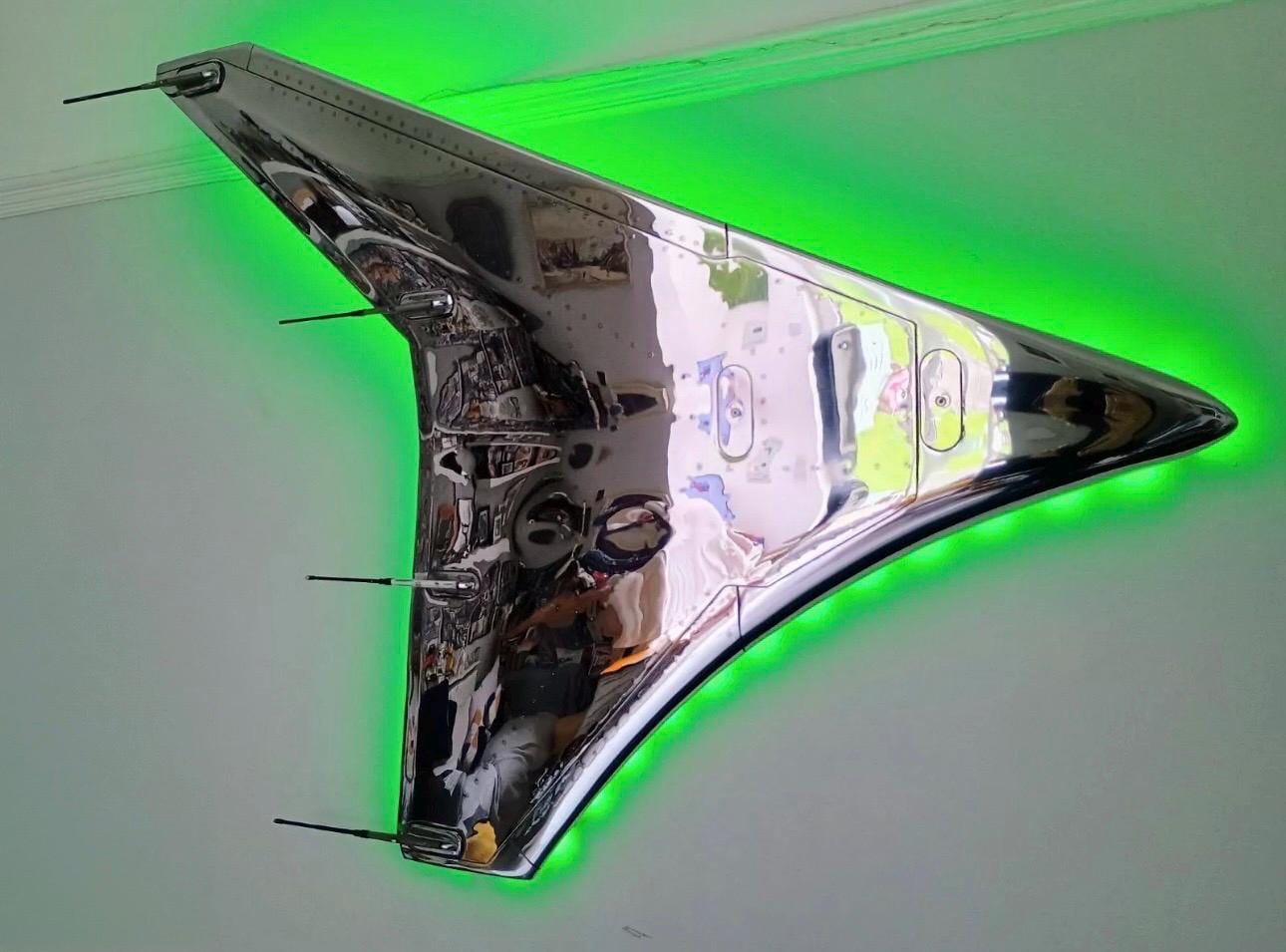
Airbus Sharklets are 2.4-meter-tall wingtip extensions designed specifically for the A320 aircraft family to significantly reduce induced drag. By mitigating wingtip vortices, these composite devices improve fuel efficiency by up to 4%, lower annual CO2 emissions by approximately 900 tonnes per aircraft, and enhance payload-range capabilities for global airlines.
The Aerodynamics of Induced Drag and Wingtip Vortices
To understand why Sharklets represent a revolution in narrow-body efficiency, one must first understand the physics of the wingtip. An aircraft generates lift through a pressure differential: high pressure on the bottom of the wing and low pressure on the top. At the wingtip, this high-pressure air naturally attempts to escape to the low-pressure area, creating a circular, spinning tunnel of air known as a wingtip vortex.
These vortices are more than just turbulent air; they are a primary source of induced drag. This drag acts as an invisible parachute, pulling back on the aircraft and forcing the engines to work harder—and burn more fuel—to maintain cruise speed. In the early decades of jet travel, this was considered an unavoidable tax on flight. However, as fuel costs and environmental regulations tightened, the quest to "tame" the wingtip became a priority for aerospace engineers.
The Sharklet works by acting as a physical barrier and an aerodynamic diffuser. By curving the wingtip upward, the device transitions the pressure gradient more smoothly and moves the vortex further away from the main wing surface. This effectively increases the "aspect ratio" of the wing without physically increasing the wingspan to a degree that would prevent the aircraft from fitting into standard airport gates. By 2026, the refinement of these devices has made them the gold standard for aerodynamic optimization in the narrow-body segment.
The Evolution from Wingtip Fences to Sharklets
Before the Sharklet became the signature silhouette of the Airbus A320 series, the manufacturer utilized "wingtip fences." These were smaller, arrow-shaped devices that extended both above and below the wingtip. While innovative for their time, wingtip fences provided only a modest reduction in drag—roughly 1% to 1.5%.
The development of the Sharklet, which began in earnest in the late 2000s and saw its first flight test in 2011, moved toward a "blended" design. Unlike the sharp angles of the older fences, Sharklets feature a smooth, sweeping transition from the wing. This minimizes "interference drag," which occurs where two surfaces meet at an angle.
The A320neo Integration
While Sharklets were originally offered as a retrofit for the A320ceo (Current Engine Option) and an option for new-build "ceo" aircraft, they are a fundamental, non-optional component of the A320neo (New Engine Option). In the "neo" family, the wings are structurally optimized from the factory to handle the different aerodynamic loads produced by the Sharklets, allowing for even greater weight-to-performance ratios.
Quantifiable Benefits: Fuel, Range, and Environment
The impact of Sharklets on an airline's bottom line and environmental footprint is measurable and significant. For a medium-haul flight, the 4% fuel saving might seem incremental, but when multiplied across a fleet of 100 aircraft flying 3,000 hours a year each, the numbers become staggering.
Fuel Burn and Emissions
A single A320 equipped with Sharklets reduces its CO2 emissions by about 900 tonnes per year. This is roughly equivalent to the CO2 absorbed by 40,000 trees. As of 2026, with global carbon offset programs and tightening emissions trading schemes like the EU ETS, these savings represent a direct reduction in operating taxes and carbon credit requirements for carriers.
Payload and Range Flexibility
Efficiency isn't just about saving fuel; it’s about what the aircraft can do. Sharklets provide two primary operational advantages:
- Extended Range: An A320 with Sharklets can fly approximately 100 nautical miles (185 km) further than a non-equipped counterpart with the same fuel load.
- Increased Payload: Alternatively, the aircraft can carry an additional 450 kilograms of payload (roughly five extra passengers and their luggage) over the same distance.
This flexibility allows airlines to open "thin" long-haul routes that were previously unreachable for narrow-body jets, or to operate more reliably out of "hot and high" airports where thin air makes lift more difficult to generate.
Structural Engineering and Retrofit Requirements
Installing a 2.4-meter-tall device that catches the wind is not as simple as bolting it onto the end of the wing. The Sharklet exerts significant upward and outward leverage (torque) on the wing structure.
The Wing-Box Reinforcement
For aircraft not originally built for Sharklets, a "retrofit" requires substantial structural strengthening. The outer wing skins must be thickened, and the "wing box"—the central structural component where the wings attach to the fuselage—often requires reinforcement to handle the increased bending moments.
Airbus developed specific retrofit kits for the A319, A320, and A321. These kits utilize lightweight Carbon Fiber Reinforced Plastic (CFRP) for the Sharklets themselves, ensuring that the weight added by the device is offset by the aerodynamic gains. The weight of a pair of Sharklets and the necessary structural reinforcement is approximately 200kg to 250kg, but the "aerodynamic weight" reduction (the efficiency gain) far exceeds this physical mass.
Comparative Performance Table
The following table compares the performance metrics of the A320 family across different wingtip configurations.
| Metric | A320ceo (Wingtip Fence) | A320ceo (Sharklets) | A320neo (Standard Sharklets) |
|---|---|---|---|
| Average Fuel Saving | Baseline | 3% - 4% | 15% - 20% (Combined with Engines) |
| Annual CO2 Reduction | Baseline | ~900 Tonnes | ~5,000+ Tonnes |
| Range Increase | Baseline | +100 nm | +500 nm |
| Take-off Performance | Standard | Improved (Higher Lift) | Optimized |
| Primary Material | Aluminum/Composite | Composite (CFRP) | Advanced Composites |
Note: Data reflects average operational conditions as of 2026. "Neo" savings are a result of both Sharklets and advanced GTF/LEAP engine technology.
Economic Impact for the Global Aviation Industry
In the current 2026 economic landscape, the Return on Investment (ROI) for Sharklet technology has accelerated. With the volatility of jet fuel prices and the introduction of stricter "Green Sky" mandates, the payback period for a Sharklet retrofit is now typically under three years for high-utilization aircraft.
Beyond fuel, Sharklets enhance the residual value of the aircraft. In the secondary market, an A320ceo with Sharklets is significantly more desirable to lease than a "non-Sharklet" aircraft. Lessors view the technology as a hedge against future fuel price spikes and a necessary feature for compliance with international environmental standards set by the International Civil Aviation Organization (ICAO).
Furthermore, the improved climb performance provided by Sharklets allows aircraft to reach their optimal cruising altitude faster. Since engines burn more fuel at lower, denser altitudes, reaching the "thin air" of 35,000 feet more quickly provides an additional layer of indirect fuel savings.
Maintenance and Operational Considerations
While Sharklets offer immense benefits, they do introduce new variables for maintenance crews. Being at the furthest extremity of the aircraft, wingtips are susceptible to "ground rash"—accidental contact with hangar walls, catering trucks, or other ground support equipment.
- Inspection Intervals: Composite materials require specialized non-destructive testing (NDT) to check for delamination or internal cracking after a lightning strike or ground impact.
- Repair Protocols: Unlike aluminum wingtips that can often be patched, composite Sharklets often require modular replacement if the structural integrity of the CFRP is compromised.
- Airport Compatibility: Because Sharklets increase the wingspan slightly compared to the original wingtip fences, airlines must ensure that their specific gate assignments and taxiway clearances remain compliant with "Code C" airport regulations.
Future Outlook: Beyond the Sharklet in 2026
As we look at the state of aviation in 2026, the Sharklet is no longer the end of the road for efficiency; it is the foundation. Airbus is currently testing "active" wingtips and AlbatrossOne technology—wings that can flap or hinge to alleviate gust loads. These future systems build on the aerodynamic principles proven by the Sharklet, aiming to reduce drag by another 5% to 10% through biomimicry.
Additionally, the integration of 3D-printed components within the Sharklet structure is reducing the weight of the devices even further. By using additive manufacturing, engineers can create internal "lattice" structures that provide maximum strength with minimum mass, further tipping the scales in favor of aerodynamic efficiency.
Frequently Asked Questions
Can Sharklets be installed on any Airbus aircraft?
Sharklets were specifically designed for the A320 family (A318, A319, A320, and A321). While the A330 and A350 have their own advanced wingtip designs (often referred to as "winged" or "curved" tips), the term "Sharklet" is trademarked and specific to the narrow-body fleet. Not all older A320s are eligible for retrofitting; it depends on the structural "build standard" of the wing.
How much does it cost to retrofit an aircraft with Sharklets?
While prices vary based on fleet size and contract terms, a Sharklet retrofit typically costs between $1 million and $1.5 million per aircraft. This includes the hardware, the structural reinforcement kits, and the labor required for installation, which usually takes about two weeks during a heavy maintenance check.
Why are they called "Sharklets"?
The name is a marketing term coined by Airbus, reflecting the device's resemblance to a shark's dorsal fin. It distinguishes the Airbus product from Boeing’s "Winglets." While they serve the same aerodynamic purpose, the design philosophies and shapes differ significantly.
Do Sharklets help during takeoff and landing?
Yes. By increasing lift and reducing drag, Sharklets allow for a lower take-off speed and a steeper climb gradient. This is particularly useful at noise-sensitive airports or those with short runways. During landing, they can slightly improve the aircraft's stability in crosswinds, though their primary benefit remains in the climb and cruise phases.
Are Sharklets made of metal?
Most modern Sharklets are made from Carbon Fiber Reinforced Plastic (CFRP). This composite material is chosen for its high strength-to-weight ratio and its ability to be molded into the complex, aerodynamically optimized "blended" curves that would be difficult to achieve with traditional aluminum.
Practical Recommendation for Operators and Enthusiasts
For airline fleet managers in 2026, the decision to maintain or retrofit Sharklet-equipped aircraft is no longer optional for competitive operations. The 4% fuel saving is the baseline requirement for maintaining profitability in a high-cost fuel environment. For aviation students and enthusiasts, studying the Sharklet provides a masterclass in how small changes to a massive structure can yield outsized environmental and economic results.
If you are tracking flights or spotting at an airport, look for the tall, graceful curve at the end of the wing; that device is doing the heavy lifting of modern aviation’s sustainability efforts. For those interested in the deep technical specifications of wing modifications, consulting the European Union Aviation Safety Agency (EASA) Type Certificate Data Sheets (TCDS) provides the most granular look at weight and balance changes associated with these devices.