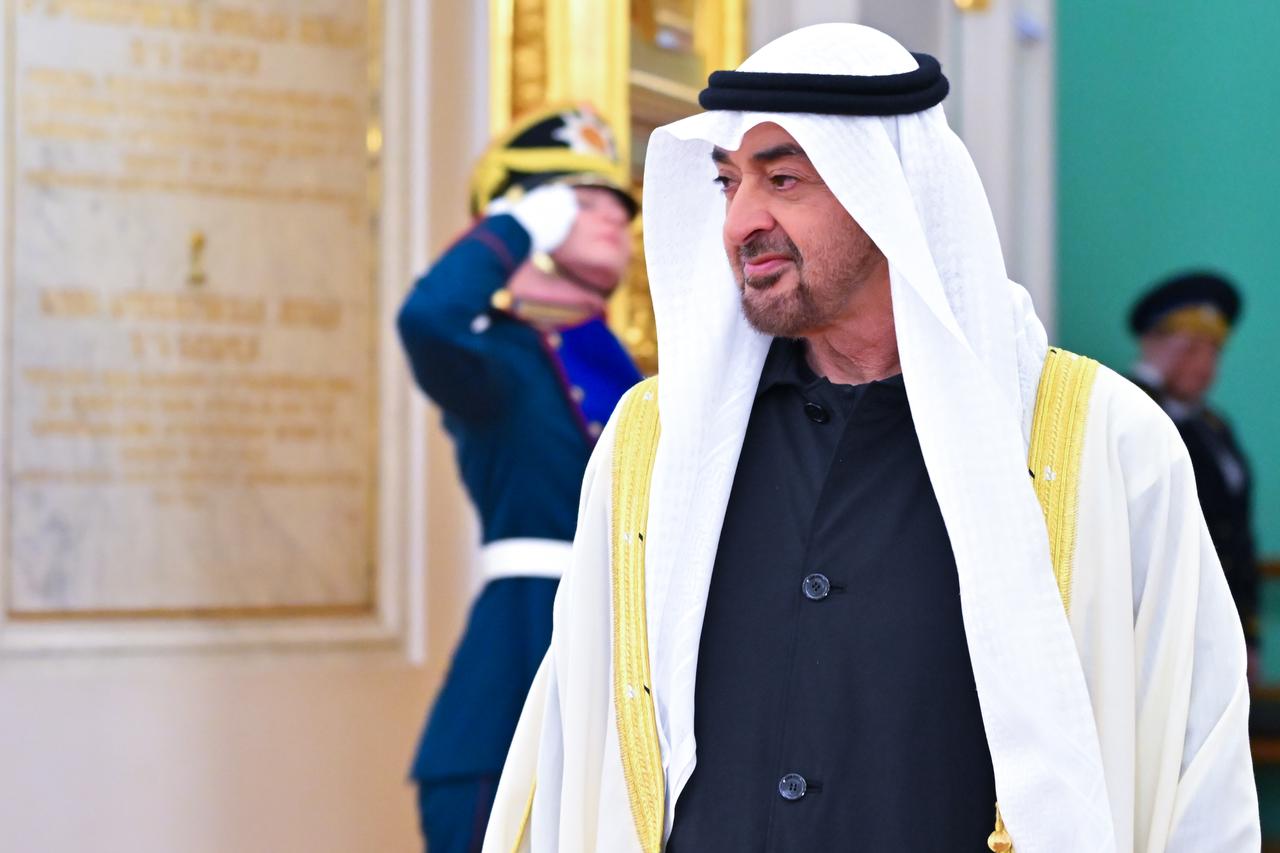
The influence of the late Sheikh Ahmed bin Zayed Al Nahyan remains a cornerstone of the modern Abu Dhabi financial landscape. As the former Managing Director of the Abu Dhabi Investment Authority (ADIA), he oversaw a period of significant maturation for one of the world's largest sovereign wealth funds. His leadership during the early 21st century established rigorous governance standards, professionalized investment strategies, and solidified the UAE’s position as a sophisticated participant in international capital markets.
The Evolution of the Abu Dhabi Investment Authority
To understand the role of Sheikh Ahmed bin Zayed Al Nahyan in global finance, one must first recognize the evolution of ADIA. Established in 1976, ADIA was created to manage the financial surpluses of the Emirate of Abu Dhabi. Under the stewardship of Sheikh Ahmed, who served as Managing Director from 1997 until his passing in 2010, the institution transitioned from a primarily reserves-based entity into a highly diversified, global investment powerhouse.
During his tenure, Sheikh Ahmed focused on balancing the need for long-term capital preservation with the pursuit of competitive, risk-adjusted returns. He was instrumental in shifting the organization’s operational culture, moving away from purely passive management toward a more active, research-driven approach. This involved the integration of rigorous risk management protocols and the diversification of asset classes, including a stronger push into global equities, real estate, and private equity markets.
Professionalization and Institutional Growth
The transformation of ADIA under Sheikh Ahmed was defined by several key strategic shifts that remain relevant in 2026:
- Investment Internalization: While ADIA has always utilized external managers, Sheikh Ahmed oversaw an expansion in internal capabilities. By building a robust in-house team of analysts and portfolio managers, he ensured that the authority could better monitor its own risk exposure and maintain a deeper understanding of market trends.
- Geographic Diversification: Moving beyond traditional markets, he encouraged the exploration of emerging economies and diverse sectors, acknowledging that global finance was becoming increasingly interconnected.
- Transparency and Governance: Though sovereign wealth funds are traditionally opaque, Sheikh Ahmed began the process of aligning ADIA with international best practices. This involved enhancing reporting structures and adhering to the Santiago Principles, which govern the transparency and conduct of sovereign wealth funds globally.
Impact on Global Capital Markets
Sheikh Ahmed bin Zayed Al Nahyan did not merely act as a custodian of wealth; he was a significant participant in the machinery of international finance. Throughout the late 1990s and 2000s, ADIA became a major shareholder in several global blue-chip institutions and infrastructure projects.
One of the most notable interventions occurred during the 2008 global financial crisis. In November 2007, ADIA made a landmark $7.5 billion investment in Citigroup. This move was viewed as a strategic vote of confidence in the stability of the global financial system during a period of extreme volatility. For observers of global finance, this action highlighted the role of sovereign wealth funds as "stabilizers of last resort"—entities with the long-term horizons necessary to provide liquidity when private market participants are retreating.
Strategic Investment Pillars
The following table summarizes the primary areas of focus that defined the investment strategy under his leadership, many of which continue to serve as the structural backbone for the institution today:
| Asset Class | Strategy Focus | Objective |
|---|---|---|
| Global Equities | Index-tracking and active management | Broad market exposure and alpha generation |
| Fixed Income | Sovereign and corporate debt | Risk mitigation and steady income streams |
| Infrastructure | Long-term physical assets | Inflation-hedged returns and economic development |
| Real Estate | International commercial/residential | Diversification and stable capital appreciation |
| Private Equity | Direct and co-investment | Higher risk-adjusted returns through long-term holding |
Stewardship and Philosophy
Sheikh Ahmed’s philosophy was rooted in the concept of "prudent stewardship." He frequently emphasized that the capital managed by ADIA belonged to future generations of citizens in Abu Dhabi. This created an investment environment that favored long-term sustainability over short-term market fluctuations.
His approach to risk was characterized by caution, yet he was not afraid of innovation. By fostering a culture where institutional learning was prioritized, he ensured that ADIA did not fall into the trap of short-termism that afflicted many Western institutional investors during the mid-2000s. He believed in learning from market cycles, emphasizing that periods of economic downturns were as much about asset accumulation as they were about capital preservation.
Navigating the 2008 Financial Crisis
The 2008 financial crisis tested the resilience of all major financial institutions. Under Sheikh Ahmed, ADIA maintained a disciplined adherence to its long-term asset allocation targets. While the global value of many portfolios plummeted, ADIA’s institutional strength allowed it to remain a buyer in a market where sellers were desperate. This period served as a case study for the value of sovereign wealth funds with long investment horizons, effectively demonstrating that the "patient capital" model could survive severe liquidity crunches.
Modern Implications for Global Finance
In 2026, the strategies implemented during Sheikh Ahmed’s tenure are recognized as standard operating procedures for major sovereign funds. The legacy of his leadership is evident in how Abu Dhabi approaches global partnerships. The integration of environmental, social, and governance (ESG) factors—now a requirement for modern institutional investors—draws heavily from the early emphasis he placed on reputation management and long-term socioeconomic stability.
Furthermore, his insistence on internal expertise has paved the way for current leadership at ADIA to pivot toward technology-driven investment strategies, including AI-driven trading and big-data analytics. The foundation he built allowed for a seamless transition into these complex modern methodologies without sacrificing the conservative risk profile required of a state-owned investment vehicle.
Frequently Asked Questions
What was Sheikh Ahmed bin Zayed Al Nahyan’s primary role in finance? He served as the Managing Director of the Abu Dhabi Investment Authority (ADIA) from 1997 to 2010. In this capacity, he managed one of the world's largest pools of capital, professionalizing the organization and integrating it into global financial markets.
How did he influence the investment strategy of ADIA? He moved the institution from a passive reserve management style to an active, diversified investment approach. He prioritized long-term capital preservation, institutional transparency, and the building of significant in-house analytical capabilities.
Why was the 2007 Citigroup investment significant? The $7.5 billion investment in Citigroup by ADIA, under his guidance, was a critical moment that provided much-needed liquidity to the global financial system during the onset of the 2008 financial crisis, demonstrating the vital role of sovereign wealth funds in global stability.
What is the "Santiago Principle" and why does it matter here? The Santiago Principles are a set of 24 guidelines for sovereign wealth funds regarding governance, transparency, and accountability. Sheikh Ahmed was a proponent of these principles, helping to align ADIA’s operations with global expectations for institutional behavior.
How is his legacy felt in the current financial environment of 2026? His legacy persists through the robust governance frameworks and the long-term investment horizon that continue to guide ADIA. His focus on institutional maturity allows the fund to remain competitive and resilient in the face of modern market volatility and technological disruption.
Recommendation for Further Exploration
To truly understand the trajectory of institutional investing in the Middle East, one should examine the annual reports of the Abu Dhabi Investment Authority from the early 2000s through the present day. These documents illustrate the continuity between the foundational years of Sheikh Ahmed’s leadership and the contemporary strategic vision of the organization. For researchers and financial professionals, tracking the transition from basic equity holdings to today's complex portfolio of private equity and infrastructure is essential for understanding how state-backed capital has come to shape the modern global financial architecture.