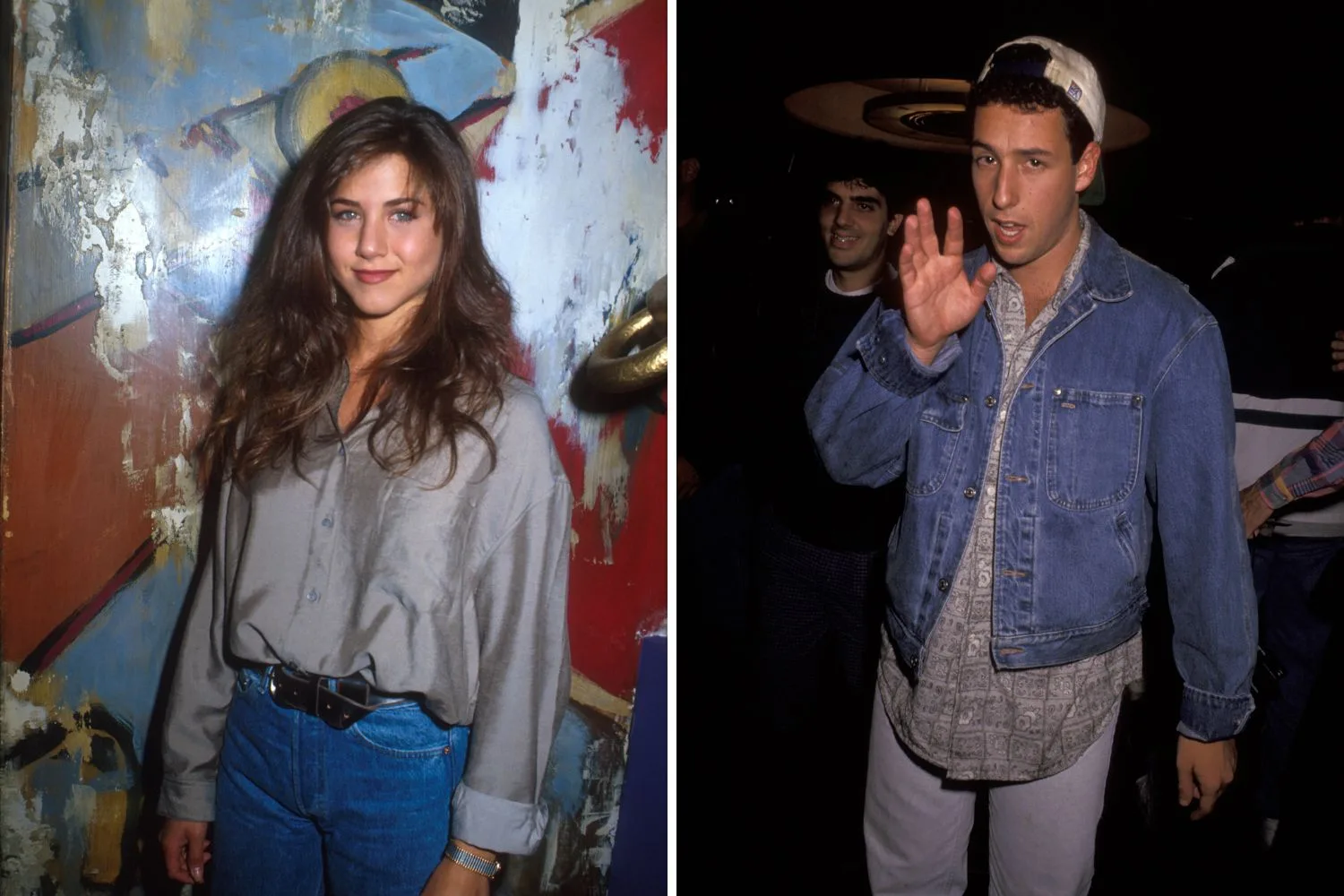
Adam Sandler’s early romantic life, leading up to his long-standing marriage to Jackie Titone, represents a relatively private era of the actor’s personal history that coincided with his meteoric rise from Saturday Night Live cast member to Hollywood comedy icon. While Sandler is widely recognized today for his enduring partnership and family-oriented public persona, his trajectory during the 1990s and early 2000s reflects the transition from a rising comedic star to a major industry force.
The Context of Early Fame and Relationships
In the early 1990s, Adam Sandler was a young comedian finding his voice on Saturday Night Live. His romantic timeline during this period was characterized by a distinct separation between his professional work—which often leaned into themes of angst, heartbreak, and eccentric dating dynamics—and his private life. Unlike many of his contemporaries who courted intense media speculation, Sandler maintained a low profile regarding his off-screen relationships, focusing his public energy on building a distinct brand of musical comedy and character work.
The mid-1990s served as a transformative phase for Sandler. Following his departure from Saturday Night Live in 1995, he moved decisively into feature film territory with Billy Madison and Happy Gilmore. This era was pivotal not only for his career but also for the stabilization of his personal life. While he was linked to various figures within the entertainment industry in tabloid reports of the era, the primary narrative of his early romantic life centers on his eventual meeting with his wife, Jacqueline "Jackie" Titone, which served as the cornerstone for his long-term domestic life.
The Meeting of Adam Sandler and Jackie Titone
The most significant juncture in Adam Sandler’s romantic timeline occurred in 1999 on the set of the film Big Daddy. Jackie Titone, an actress and model, was cast in the role of the waitress in the sports bar scene. At the time, Sandler was firmly established as a bankable comedic star, and their professional encounter quickly evolved into a personal connection.
This period is essential to understanding Sandler’s transition into a more settled chapter of his life. Titone’s introduction into his world coincided with the formation of his production company, Happy Madison Productions. Over the subsequent years, Titone became a consistent presence in his creative projects, marking a shift in how Sandler balanced his professional relationships with his romantic ones. Their courtship lasted several years before they formalized their commitment to one another.
Significant Milestones in the Early Partnership
The timeline of their relationship from 1999 to their eventual marriage in 2003 serves as a template for stability in an industry often defined by fleeting unions. The progression follows a logical sequence of professional collaboration, public introduction, and private commitment:
- 1999: The Professional Encounter: Adam Sandler and Jackie Titone meet on the set of Big Daddy. This marks the beginning of their professional and personal association.
- 2000: Increasing Public Appearances: As their relationship deepened, Titone began appearing alongside Sandler at industry events and red carpets, signaling the official nature of their partnership to the public.
- 2002: Formal Engagement: The couple opted for a private engagement, largely remaining out of the intense tabloid cycle that followed other major stars of the early 2000s.
- 2003: Marriage: Adam Sandler and Jackie Titone were married in a traditional Jewish ceremony in Malibu, California. This milestone cemented their roles as a power couple within the comedy production sphere.
The Role of Collaboration in Early Bonding
A defining feature of Sandler’s early romantic timeline is the integration of his partner into his creative output. Unlike many actors who compartmentalize their work from their private lives, Sandler fostered a collaborative environment. Jackie Titone’s appearances in films like Little Nicky, 50 First Dates, and I Now Pronounce You Chuck & Larry—all stemming from the period following their initial meeting—highlight a partnership that thrived on shared professional goals.
This collaborative approach was not merely incidental; it became a hallmark of the "Happy Madison" brand. By incorporating family and partners into his films, Sandler created a distinct working environment that prioritized long-term loyalty and internal support structures. For the audience and the industry at large, this contributed to a public perception of Sandler as a stable, reliable figure within a volatile business.
Comparison of Early Career Dynamics
To understand the nature of Sandler’s romantic history, it is helpful to contrast his trajectory with the typical patterns of Hollywood celebrities in the late 1990s.
| Feature | Adam Sandler's Approach | Typical Industry Pattern (1990s) |
|---|---|---|
| Media Engagement | High privacy, minimal tabloid focus | High exposure, frequent public breakups |
| Relationship Scope | Long-term partnership/marriage | Short-term dating cycles |
| Professional Integration | Direct collaboration with spouse | Strict separation of work and life |
| Public Image | Consistent, family-oriented | Variable, often controversial |
As shown in the table above, Sandler’s choice to integrate his partner into his professional life provided a layer of stability that helped him avoid the pitfalls of the celebrity gossip cycle. This strategic choice allowed him to focus on the evolution of his production company rather than managing the fallout of high-profile romantic disputes.
Addressing Common Questions
To provide further clarity on this timeline, it is helpful to address common inquiries regarding his early life and transition into marriage.
Did Adam Sandler have prominent relationships before Jackie Titone? While various tabloid rumors existed during the 1990s, Sandler effectively maintained a high degree of privacy. There are no widely documented, confirmed public relationships that defined his early career trajectory before his union with Titone.
How did the filming of "Big Daddy" influence his personal life? The filming of Big Daddy is considered the catalyst for his current domestic life. It served as the environment where he met his wife, and the subsequent success of the film provided the financial and professional foundation for the next stage of his career at Happy Madison.
Was the conversion to Judaism a factor in their marriage? Yes, Jackie Titone converted to Judaism before their 2003 wedding. This alignment of faith was a significant step in their commitment and is frequently cited as a reflection of the shared values the couple maintains in their home life.
How did his early romantic stability affect his career choices? The stability provided by his marriage allowed Sandler to transition from the aggressive, often nihilistic characters of his early SNL days toward the more sentimental and family-centric roles he became known for in the late 2000s and beyond.
Factors Contributing to Long-term Success
The longevity of the union starting from his early career days is often attributed to the couple’s shared values and their ability to work together without personal friction. By building a production company that emphasized a close-knit group of friends and family, Sandler created an ecosystem where his professional success was intrinsically linked to the health of his personal life.
This environment ensured that the pressures of Hollywood—specifically the intense travel, long production schedules, and the demand for constant public presence—were mitigated by the fact that the couple was often in the same professional space. The transition from his early, high-energy comedic years to his later, more introspective roles in films like Punch-Drunk Love and Uncut Gems suggests a maturity that was anchored by the stability formed in the years following his 1999 meeting with Titone.
Final Considerations
The timeline of Adam Sandler’s early romantic life is characterized by a deliberate movement toward stability. By prioritizing a partnership that balanced professional collaboration with personal growth, Sandler avoided the instability that often characterizes the trajectories of young, high-profile comedians. His life today is a direct extension of the decisions made between 1999 and 2003, reflecting a legacy built as much on his personal foundation as on his professional contributions to cinema.
For those analyzing the trajectory of major Hollywood figures, Sandler’s experience offers a case study in how maintaining privacy and fostering a supportive professional environment can act as a catalyst for a long and productive career. The key takeaway for followers of his history is that his success was not achieved despite his relationships, but rather through the consistency and reliability that his marriage provided from his earliest days of stardom.