Florida auto insurance claims are frequently denied due to material misrepresentation on policy applications, violations of the 14-day medical treatment rule for PIP, or the presence of excluded drivers. Insurers also cite "failure to cooperate" with investigations, commercial use exclusions for delivery drivers, policy lapses for non-payment, and intentional acts as grounds for denying coverage.
Understanding the complexities of Florida’s insurance landscape requires a deep dive into both the contractual language of policies and the evolving statutory framework. As of 2026, the Florida insurance market continues to feel the ripple effects of major legislative reforms from previous years, making it more critical than ever for policyholders to understand why their claims might be rejected. Florida remains a "no-fault" state, but the nuances of Personal Injury Protection (PIP) and the specific duties of the insured create numerous pitfalls.
Below are the seven most common reasons for auto insurance coverage denials in Florida, analyzed through the lens of current state statutes and industry standards.
1. Material Misrepresentation on the Application
Material misrepresentation is perhaps the most potent tool an insurer has for denying a claim and, in many cases, voiding the policy entirely (a process known as rescission). Under Florida Statute 627.409, an insurer can deny a claim if the applicant provided false information that was "material" to the risk the insurer assumed.
What Constitutes Materiality?
Information is considered material if the insurer, had it known the truth, would not have issued the policy at the same premium rate or at all. In Florida, common examples include:
- Garaging Address: Reporting that a vehicle is kept in a rural area with lower crime rates when it is actually parked in a high-density urban center like Miami or Tampa.
- Undisclosed Drivers: Failing to list a licensed teenager or a roommate who regularly uses the vehicle.
- Vehicle Usage: Stating a car is for personal use when it is actually used for business or long-distance commuting.
Even "innocent" mistakes can lead to a denial. Florida courts have historically held that the insurer does not necessarily need to prove the applicant intended to defraud; they only need to prove that the information was incorrect and material to the risk.
2. Failure to Seek Treatment Within the 14-Day PIP Window
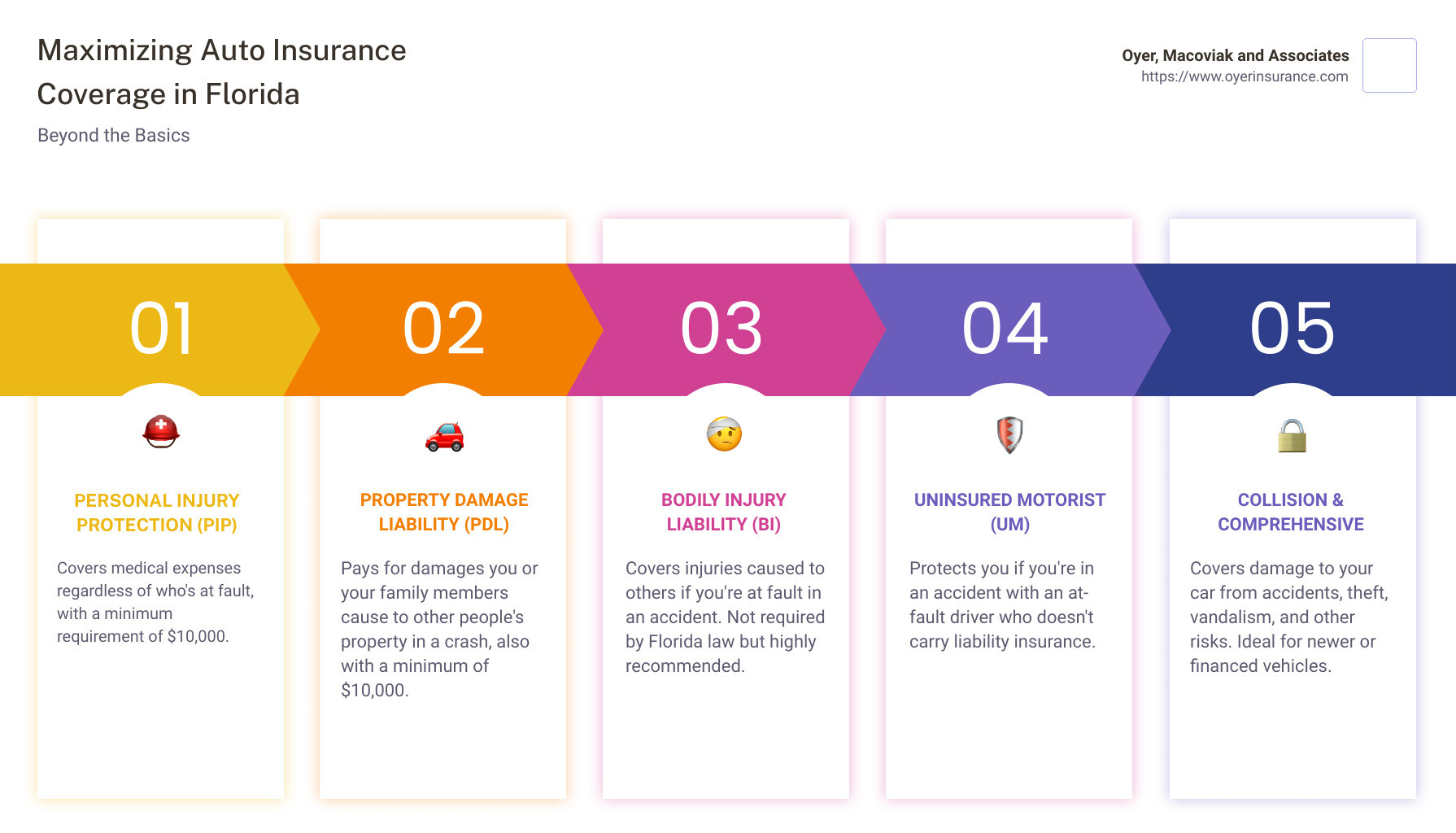
Florida’s Personal Injury Protection (PIP) system is designed to provide up to $10,000 in medical and disability benefits regardless of fault. However, these benefits are strictly conditioned on the "14-day rule" established under Florida Statute 627.736.
The Strict Deadline
If an insured person fails to seek initial medical treatment within 14 days after a motor vehicle accident, the insurer is legally permitted to deny the PIP claim in its entirety. This treatment must be provided by a qualified professional, such as a medical doctor (MD), osteopathic physician (DO), chiropractor (DC), or at a hospital facility.
The "Emergency Medical Condition" (EMC) Threshold
Even if the 14-day deadline is met, a claim can be partially denied regarding the benefit amount. By default, Florida PIP only provides $2,500 in benefits unless a qualified medical provider determines that the claimant suffered an Emergency Medical Condition (EMC). If an insurer’s peer review or medical exam determines no EMC exists, they will deny any payment above the $2,500 cap, even if total medical bills exceed $10,000.
3. Excluded Drivers and Household Resident Issues
Florida policies often contain "Named Driver Exclusions." If an individual specifically listed as excluded on the policy is driving the vehicle at the time of the accident, the insurer will deny all coverage, including liability and collision.
The Unlisted Resident Trap
A more complex denial occurs when a household resident—who was not explicitly excluded but also not listed as a driver—is involved in a crash. Many Florida insurance contracts require the policyholder to disclose all residents of the household who are of driving age. If a resident who has regular access to the vehicle is not disclosed, the insurer may argue that the risk was not properly disclosed, leading to a denial based on a breach of policy conditions.
Permissive Use vs. Resident Use
While "permissive use" generally covers a friend or relative who occasionally borrows your car, Florida insurers scrutinize this closely. If the "friend" is found to be living with you, the permissive use defense often fails, and the claim is denied because that resident should have been rated on the policy.
4. Commercial or "Business Use" Exclusions
The rise of the gig economy has made this one of the most common reasons for denials in 2026. Standard personal auto insurance policies in Florida explicitly exclude coverage for vehicles used for "livery" or carrying persons or property for a fee.
Delivery and Ride-Sharing
If you are involved in an accident while delivering food (e.g., UberEats, DoorDash) or driving for a ride-share service (e.g., Uber, Lyft), your personal insurer will almost certainly deny the claim if you do not have a specific commercial endorsement.
Insurers often investigate this by:
- Checking the driver’s phone for active apps at the time of the crash.
- Interviewing witnesses or the other driver about whether delivery bags were present.
- Reviewing police reports that mention the driver was "on the clock."
Even if the app was off but the driver was "logged in" and waiting for a request, a personal policy may still deny coverage, creating a "coverage gap" between the personal policy and the ride-share company’s contingent liability policy.
5. Failure to Cooperate with the Investigation
Every Florida auto insurance policy includes a "Duty to Cooperate" clause. This requires the insured to assist the company in its investigation of the claim. Failure to fulfill this duty provides the insurer with a legal basis to deny the claim and potentially withdraw their defense in a liability lawsuit.
Examination Under Oath (EUO)
Insurers may request an Examination Under Oath, which is a formal proceeding where the insured answers questions from the insurance company's attorney while under oath and in the presence of a court reporter. If a policyholder refuses to attend an EUO or refuses to provide requested documents (such as cell phone records or tax returns during a fraud investigation), the claim will be denied for "failure to cooperate."
Compulsory Medical Exams (CME)
For PIP and Uninsured Motorist (UM) claims, the insurer has the right to request a Compulsory Medical Exam (also called an Independent Medical Exam or IME). If the insured fails to show up for these appointments, the insurer can terminate benefits immediately. Florida courts generally side with insurers on this issue, provided the request for the exam was "reasonable."
6. Lapsed Coverage and Non-Payment
While it seems straightforward, denials due to policy lapses are frequent. Florida law requires insurers to provide specific notice periods before canceling a policy for non-payment.
The 10-Day Notice Requirement
Under Florida law, an insurer must provide at least 10 days' notice before canceling a policy for non-payment of premium. If an accident occurs at 12:01 AM the day after the cancellation date, there is no coverage.
The "Renewal" Denial
Confusion often arises during policy renewals. If a policyholder fails to pay the renewal premium by the expiration date of the previous term, the policy simply expires. There is no "grace period" required by Florida law for renewals, unlike the notice required for mid-term cancellations. If the insured sends a payment after an accident occurs, the insurer can "reactivate" the policy but will exclude coverage for any losses that occurred during the lapse period.
7. Intentional Acts and Criminal Activity
Insurance is designed to cover "accidents"—unforeseen and unintended events. If an insurer determines that the damage was caused intentionally by the insured, they will deny the claim based on the "Intentional Acts" exclusion.
Examples of Deniable Conduct
- Staged Accidents: Florida has long been a hotspot for insurance fraud involving staged collisions. If the Special Investigative Unit (SIU) finds evidence that the crash was planned, the claim is denied and referred for criminal prosecution.
- Racing: Most Florida policies exclude damage occurring during "organized racing" or "speed contests," whether on a track or a public street.
- Criminal Acts: While a simple traffic ticket won't void your coverage, using a vehicle to flee from law enforcement or to commit a felony can trigger exclusions related to criminal activity.
Summary of Denial Reasons and Legal Context
| Denial Reason | Primary Florida Statute/Rule | Common Insurer Action | Potential Resolution |
|---|---|---|---|
| Material Misrepresentation | Fla. Stat. § 627.409 | Policy Rescission | Prove inaccuracy was not material |
| 14-Day PIP Rule | Fla. Stat. § 627.736 | Total PIP Denial | Proof of immediate medical care |
| Excluded Driver | Contract Law / Named Exclusion | Total Denial of Coverage | Prove driver was not the excluded person |
| Commercial Use | Livery Exclusion Clause | Denial of Physical Damage/Liability | Purchase Gig-Economy Endorsements |
| Failure to Cooperate | Duty to Cooperate Clause | Denial / Loss of Defense | Comply with EUO/Document requests |
| Policy Lapse | Notice Requirements | Denial of all claims post-lapse | Verify notice was sent correctly |
| Intentional Acts | Public Policy / Fraud Statutes | Denial / Criminal Referral | Prove the act was accidental |
How to Challenge an Insurance Denial in Florida
If your claim is denied, the insurer is required to provide a written explanation citing the specific policy language or state statute they are relying upon. In Florida, the 2023 legislative changes (specifically HB 837) have modified the landscape for "bad faith" claims and attorney fees, but policyholders still have several avenues for recourse.
1. Request a Internal Appeal
Most insurers have a secondary review process. You can submit additional evidence—such as missing medical records, proof of residency, or corrected application data—to ask them to reconsider.
2. File a Consumer Complaint
The Florida Department of Financial Services (DFS) oversees the Division of Consumer Services. Filing a complaint can trigger a regulatory review of the insurer's decision-making process to ensure they are following Florida Administrative Codes.
3. Civil Remedy Notice (CRN)
If the insurer is acting in bad faith (e.g., denying a claim they know is valid), you may file a Civil Remedy Notice under Florida Statute 624.155. This gives the insurer 60 days to "cure" the violation before you can proceed with a bad faith lawsuit.
4. Litigation
If the dispute involves the interpretation of policy language, a breach of contract lawsuit may be necessary. In Florida, the burden of proof for exclusions typically rests with the insurer; they must prove that the exclusion applies to your specific situation.
Frequently Asked Questions
Can my insurer deny my claim if I wasn't at fault?
Yes. In Florida, your own PIP coverage pays for your medical bills regardless of fault. If you violate the 14-day rule or the "failure to cooperate" clause, your own insurer can deny your PIP claim even if someone else hit you. Additionally, if you are seeking Uninsured Motorist (UM) benefits from your own provider, they can deny that claim based on policy exclusions or misrepresentations.
Does Florida have a grace period for auto insurance payments?
Technically, no. While some states mandate a grace period, Florida law focuses on the notice requirement. An insurer must send you a 10-day notice of cancellation for non-payment. If you pay within those 10 days, the policy remains in force. If you don't, the policy cancels on the date specified in the notice.
What happens if I didn't know about the 14-day PIP rule?
Unfortunately, "lack of knowledge" is not a legal defense in Florida. The 14-day rule is a statutory requirement, and Florida courts have consistently upheld denials for patients who sought care on the 15th day or later, regardless of the severity of their injuries or their awareness of the law.
Can a claim be denied if the police report says I was not at fault?
Yes. An insurance company’s internal investigation is independent of a police report. Police reports are generally considered "hearsay" in Florida civil courts and are often inadmissible. If the insurer's investigators find evidence of a policy violation (like an undisclosed driver), they can deny the claim regardless of what the responding officer wrote.
If my insurer denies my claim, will they still defend me in a lawsuit?
Not necessarily. If the denial is based on a "coverage defense" (like an excluded driver or material misrepresentation), the insurer may issue a "Reservation of Rights" letter or file a Declaratory Judgment action to ask a court to confirm they have no duty to defend or indemnify you.
Recommendation for Florida Drivers
To minimize the risk of a coverage denial, Florida drivers should perform a "policy audit" annually. Ensure all household residents over the age of 15 are disclosed to the insurer, even if they have their own insurance. If you perform any delivery work, verify that your policy includes a "Business Use" or "Transportation Network Company" (TNC) endorsement. Finally, in the event of any accident—no matter how minor—seek a medical evaluation within 72 hours to ensure compliance with the PIP statute and to document any potential Emergency Medical Conditions.