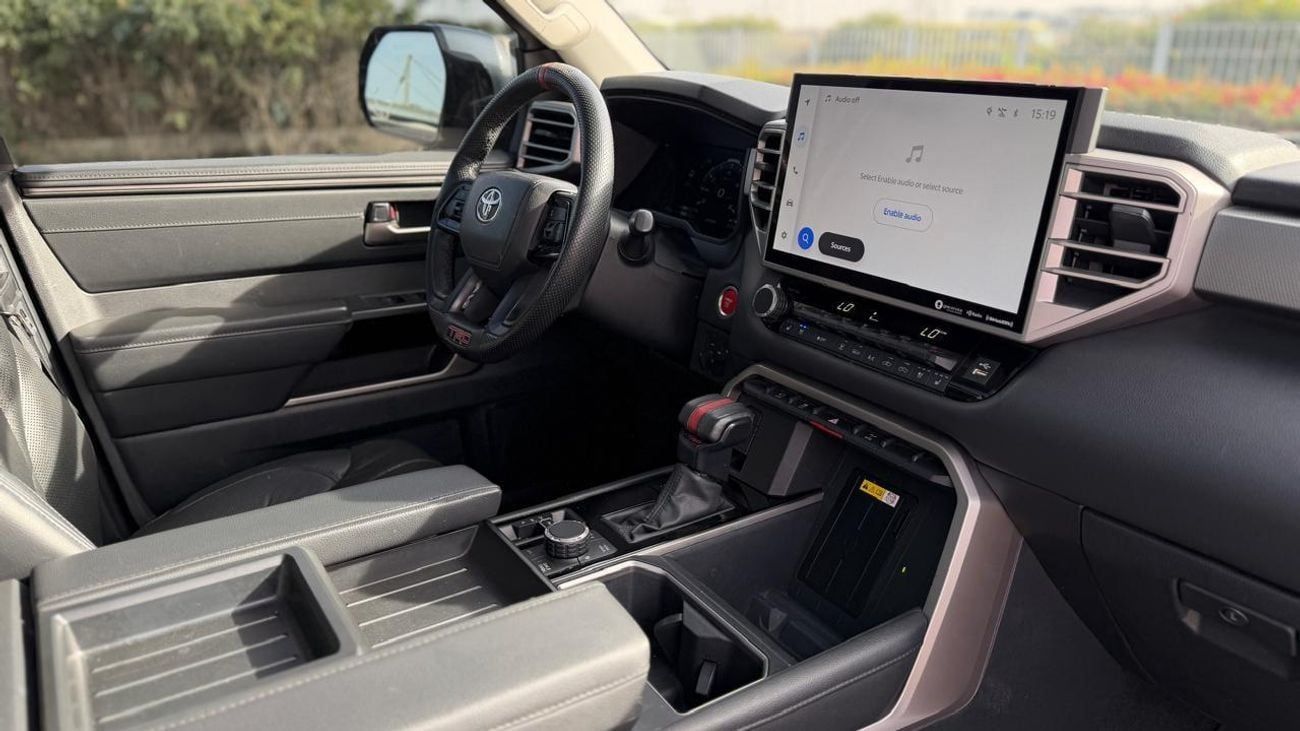
The 2024 Toyota Tundra interior balances rugged, truck-oriented utility with modern automotive technology, featuring a bold dashboard architecture, spacious crew cab dimensions, and up to a 14-inch touchscreen multimedia interface depending on the trim level.
Evaluating a modern full-size pickup truck requires looking past exterior styling and towing specifications to examine where drivers and passengers spend their time. The interior of a contemporary half-ton truck serves as a mobile office, a family transporter, and a command center for towing and off-road excursions. When Toyota redesigned the Tundra for the modern generation, shifting away from the aging architecture of its predecessor, the cabin underwent a radical transformation. This 7-point interior review of the 2024 Toyota Tundra breaks down the cabin across key operational and ergonomic criteria, examining how well it serves daily drivers, contractors, and outdoor enthusiasts alike.
1. Dashboard Architecture and Ergonomics
The layout of the 2024 Toyota Tundra dashboard marks a sharp departure from past generations, trading soft curves for aggressive, horizontal lines and architectural chunkiness. Toyota designed the cockpit to feel purposeful, incorporating chunky physical controls that are easy to operate while wearing work gloves.
The center console and dash feature tactile toggle switches for climate control, drive modes, and towing features. These mechanical buttons are flanked by rubberized dials that offer satisfying resistance and feedback. This mix of digital integration and analog tactility addresses a common complaint among truck owners who dislike burying basic climate functions deep inside touchscreen menus. The steering wheel is wrapped in high-grade materials on upper trims, featuring logical steering-wheel controls for adaptive cruise control, lane-keeping assistance, and audio management.
However, the sheer bulk of the dashboard can feel imposing in lower trims, where darker, hard plastic surfaces dominate. While upper trims like the Limited, Platinum, and 1794 Edition introduce soft-touch synthetic or semi-aniline leather surfaces, base models rely heavily on textured plastics that prioritize chemical durability and scratch resistance over luxurious tactile appeal.
2. Infotainment and Connectivity Technology
Technology integration is one of the most significant upgrades in the modern Tundra generation. At the center of the dash sits either an 8-inch multimedia touchscreen on base trims or a massive 14-inch high-definition touchscreen on Limited grades and above.
Powered by Toyota’s modern Audio Multimedia interface, the system supports wireless Apple CarPlay and Android Auto connectivity, cloud-based navigation, and an intelligent voice assistant that responds to natural language prompts like "Hey Toyota." The processing speed of the 14-inch screen is snappy, with crisp graphics and a split-screen capability that allows drivers to view navigation instructions while maintaining audio controls.
Complementing the central display is a 12.3-inch digital meter cluster available on higher trims. This customizable gauge display presents essential vehicle data, off-road inclinometers, and towing analytics in sharp high-resolution color. USB-A and USB-C ports are scattered generously throughout the front and rear rows, ensuring that multiple devices can remain charged on long highway stretches or remote job sites.
3. Seating Comfort and Cabin Ergonomics
Driver and passenger fatigue on long-haul journeys often stems from poor seating geometry and inadequate lumbar support. The 2024 Toyota Tundra addresses this by offering redesigned seats with improved contouring across all primary trim levels.
Base models feature fabric-trimmed seats with manual adjustments, while mid-tier trims introduce power-adjustable front buckets with heating and ventilation. Premium variants such as the 1794 Edition and Capstone elevate the experience with semi-aniline leather upholstery, 10-way power adjustments, and multi-mode massage functions for the front occupants.
The driving position offers an expansive view over the flat hood line, aided by large side mirrors and a squared-off glasshouse. Rear-seat passengers enjoy exceptional accommodation in the CrewMax configuration, which provides class-competitive legroom that rivals large full-size SUVs. Rear seatbacks feature a comfortable recline angle, reducing the vertical, bolt-upright posture found in some older utility trucks.
4. Materials, Build Quality, and Craftsmanship
Material selection in the 2024 Tundra varies dramatically depending on the chosen trim level, creating a stark contrast between work-truck utilitarianism and luxury cruiser comfort.
| Trim Level | Primary Seating Material | Dashboard & Door Accents | Notable Interior Feature |
|---|---|---|---|
| SR / SR5 | Heavy-duty fabric | Textured hard plastics | Easy-clean vinyl flooring options |
| Limited | SofTex synthetic leather | Soft-touch padded panels | 14-inch touchscreen standard |
| Platinum | Leather-trimmed | Premium wood-grain or metallic trim | Panoramic glass roof |
| 1794 Edition | American walnut wood trim | Rich-brown or black leather | Western heritage design motifs |
| Capstone | Semi-aniline leather | Dark American walnut / acoustic glass | Two-tone white and black theme |
Build quality throughout the cabin is generally solid, with tight panel gaps and sturdy mounting points designed to withstand the violent vibrations and torsional loads of off-road driving. However, some lower-dash plastic trim pieces can exhibit minor flex when pressed firmly, a reminder that the underlying structure is engineered to handle rugged industrial demands rather than strictly delicate luxury refinement.
5. Storage Solutions and Cabin Utility
A full-size truck interior must function as a mobile storage locker, and the Tundra provides numerous clever cubbies, bins, and compartments to manage clutter.
The center console bin is cavernous, deep enough to swallow hanging file folders, a laptop, or multiple large water bottles. The lid of the center console can also be equipped with an available fold-out workspace table on select trims, turning the cabin into a mobile desk. Additional storage is found in the dual-tier glovebox, deep door pockets molded to accept oversized thermoses, and a dedicated smartphone storage tray ahead of the gear shifter that features a wireless charging pad.
In the CrewMax configuration, flipping up the rear bench reveals hidden storage compartments underneath the seat base. These under-seat trays are ideal for stashing recovery gear, tie-down straps, and emergency roadside kits without cluttering the main passenger floor area.
6. Visibility, Glass Area, and Camera Integration
Navigating a massive half-ton pickup truck in tight urban parking structures or crowded job sites requires exceptional situational awareness. The Tundra’s cabin architecture aids forward visibility via low-slung side glass cutouts and narrow A-pillars.
However, the thick C-pillars on the CrewMax model create standard blind spots that rely heavily on electronic intervention. Toyota equips every 2024 Tundra with Blind Spot Monitor and Rear Cross-Traffic Alert. Furthermore, the available Panoramic View Monitor stitches together multiple exterior cameras to provide a 360-degree top-down view of the truck and its surroundings.
For towing enthusiasts, the interior camera display integrates trailer backup guides and a digital rearview mirror option. This digital mirror eliminates blocked rearward views caused by tall cargo in the truck bed or rear passengers.
7. Cabin Noise, Ride Isolation, and Climate Control
Modern truck buyers increasingly demand quiet, serene cabins that isolate occupants from wind, tire, and powertrain roar. The 2024 Tundra utilizes acoustic laminated windshields and front side glass on higher trim levels to suppress high-frequency wind rush at highway speeds.
The ride isolation varies based on the powertrain choice. The standard i-FORCE twin-turbo V6 emits a purposeful growl under heavy acceleration, while the i-FORCE MAX hybrid variant adds an electric motor smoothness that hushes the cabin during low-speed EV-only operation. Climate control performance is robust, featuring dual-zone automatic temperature regulation and dedicated rear-seat climate vents mounted at the back of the center console to ensure even airflow distribution across the massive CrewMax cabin.
Summary of Strengths and Limitations
Evaluating the 2024 Toyota Tundra interior reveals a platform designed to meet modern technological expectations while preserving traditional truck functionality.
- Pros:
- Massive, responsive 14-inch infotainment screen with wireless smartphone projection.
- Generous rear-seat legroom and comfort in the CrewMax configuration.
- Abundant physical switches and tactile controls for climate and drive modes.
- Thoughtful storage solutions, including hidden under-seat compartments.
- Cons:
- Extensive use of hard plastics in base SR and SR5 trims.
- Thick rear C-pillars create visibility blind spots requiring reliance on camera systems.
- Lower dash panels can exhibit minor flex compared to European luxury utility standards.
Frequently Asked Questions
Does the 2024 Toyota Tundra interior feature physical climate controls?
Yes. Unlike many modern vehicles that bury climate functions inside touchscreen menus, the Tundra retains dedicated physical toggle switches and chunky dials for temperature adjustment, fan speed, and seat heating. This design makes it easier to operate climate settings while driving or wearing gloves.
How much rear legroom does the 2024 Toyota Tundra CrewMax offer?
The CrewMax cab configuration provides expansive rear legroom measuring over 41 inches. This generous spacing allows adult passengers to sit comfortably on long road trips without their knees pressing against the front seatbacks, closely matching the passenger comfort of large full-size SUVs.
Is wireless Apple CarPlay and Android Auto standard?
Wireless Apple CarPlay and Android Auto connectivity come standard across all 2024 Toyota Tundra trim levels. Users can pair their smartphones without plugging into a physical USB port, though wired charging options remain available through multiple front-row and rear-row USB ports.
What is the difference between the lower trim interiors and luxury trims like the Capstone?
Base trims like the SR5 utilize durable fabric seating surfaces, textured hard plastics, and an 8-inch screen, prioritizing chemical and physical wear resistance. Luxury trims like the Capstone introduce semi-aniline leather, authentic wood trim, acoustic laminated glass, panoramic glass roofs, and a 12.3-inch digital gauge cluster.
Where is the storage located inside the cabin?
Cabin storage includes a deep center console bin, dual-tier gloveboxes, oversized door map pockets, a front wireless charging tray, and hidden under-seat storage compartments beneath the rear bench seat in CrewMax models for organizing tools and gear.