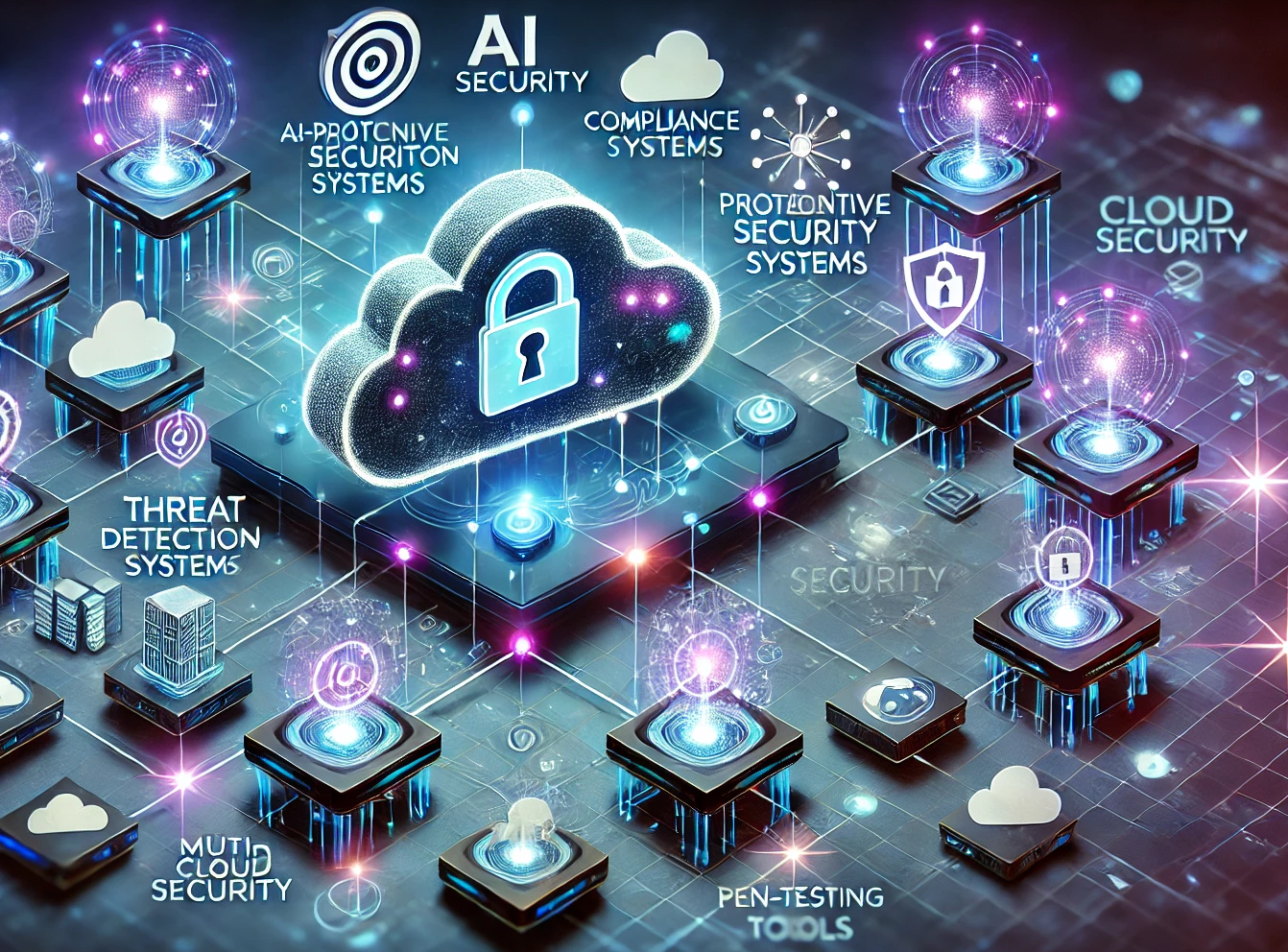
Cloud security is undergoing a fundamental transformation driven by the proliferation of multi-cloud architectures, the mainstream adoption of artificial intelligence, and an escalating threat landscape. Organizations must pivot away from perimeter defenses toward identity-first strategies, automated posture management, and runtime threat detection to secure modern digital infrastructure.
As enterprise migration to the cloud reaches maturity, the security paradigm has shifted dramatically. Traditional tools designed for static, on-premises data centers can no longer keep pace with ephemeral workloads, serverless architectures, and complex software supply chains. Security leaders face the dual challenge of protecting increasingly distributed assets while enabling rapid engineering velocity. Understanding the core evolutionary pressures shaping this domain is essential for maintaining resilience and regulatory compliance.
Below is an examination of the major structural changes redefining how organizations protect their cloud environments, alongside actionable guidance for security architects and engineering leaders.
1. Identity as the New Perimeter
The traditional network perimeter—defined by firewalls and virtual private cloud boundaries—has dissolved. With remote workforces, third-party integrations, and multi-cloud deployments, identity has become the primary control plane for cloud security.
The Evolution of Access Management
Identity and Access Management (IAM) has moved far beyond simple username and password authentication. Organizations now rely on continuous authentication models that evaluate risk signals in real time. These signals include user behavior analytics, device health posture, geographic velocity, and contextual access requests.
Zero Trust Architecture (ZTA) principles dictate that no user or service, whether inside or outside the traditional network edge, is trusted by default. Every access request must be authenticated, authorized, and encrypted before granting least-privilege access.
Challenges in Non-Human Identity Security
While human identity management has matured, non-human identities—such as service accounts, API keys, secrets, and machine-to-machine tokens—represent a massive blind spot. Modern cloud environments often host exponentially more non-human identities than human users.
Securing these assets requires:
- Automated discovery and inventory of all embedded secrets and API tokens.
- Enforced rotation policies that prevent long-lived credentials from lingering in source code repositories or configuration files.
- Fine-grained permission scoping to ensure that a compromised service account can only access explicitly required resources.
2. Artificial Intelligence and Machine Learning in Defense and Offense
Artificial intelligence is no longer an emerging concept; it is embedded deeply into both defensive tooling and adversary toolkits. The asymmetry of cyber warfare means defenders must leverage machine intelligence to process telemetry at a scale that human analysts cannot match.
Automated Threat Detection and Response
Modern cloud security posture management (CSPM) and cloud workload protection platforms (CWPP) utilize machine learning to establish behavioral baselines. By analyzing billions of log events, network flows, and API calls, these systems can flag anomalous activities—such as unexpected data exfiltration or privilege escalation attempts—within seconds of occurrence.
Automated remediation workflows can isolate compromised containers, revoke malicious API tokens, or terminate vulnerable sessions without requiring human intervention. This speed is crucial when dealing with automated, machine-driven attacks that execute in fractions of a second.
The Rise of AI-Driven Attacks
Adversaries are similarly weaponizing artificial intelligence. Automated vulnerability scanners powered by generative models can discover zero-day vulnerabilities in custom applications faster than internal security teams can patch them. Phishing campaigns targeting cloud administrators have also grown more sophisticated, utilizing deepfakes and context-aware social engineering to bypass standard verification checks.
3. Shift-Left Security and Cloud-Native Application Protection Platforms (CNAPP)
Securing cloud workloads after deployment is no longer sufficient. Security must be integrated into the earliest stages of the software development life cycle (SDLC), a philosophy commonly referred to as "shift-left."
Integrating Security into CI/CD Pipelines
Developers are now on the front lines of security. Infrastructure as Code (IaC) templates, such as Terraform or AWS CloudFormation, are scanned for misconfigurations before they ever reach production. By embedding security gates into continuous integration and continuous deployment (CI/CD) pipelines, organizations catch vulnerabilities during the coding phase when remediation costs are lowest.
The Dominance of CNAPP
Point solutions for vulnerability management, container security, and cloud monitoring have given way to consolidated Cloud-Native Application Protection Platforms (CNAPPs). A CNAPP unifies multiple security functions into a single dashboard, providing end-to-end visibility from development time to runtime execution.
| Security Function | Traditional Point Solution | Unified CNAPP Approach |
|---|---|---|
| Code Analysis | Static Application Security Testing (SAST) | Integrated IaC and source code scanning within the pipeline |
| Workload Protection | Host-based agents | Agentless and agent-based runtime threat monitoring for containers and serverless |
| Posture Management | Periodic compliance audits | Continuous configuration monitoring and automated remediation |
| Data Security | Siloed database scanners | Unified discovery and classification of sensitive data across multi-cloud stores |
4. Supply Chain Security and Software Bills of Materials (SBOM)
Modern software is rarely written entirely from scratch. Applications are assembled using open-source libraries, third-party APIs, and pre-packaged container images. This reliance on external components has turned the software supply chain into a prime vector for systemic compromise.
The Imperative of Transparency
To secure the software supply chain, organizations must maintain complete visibility into every component of their applications. This has driven the widespread adoption of the Software Bill of Materials (SBOM). An SBOM acts as a comprehensive ingredient list for software, detailing every library, dependency, and version included in a build.
When a critical vulnerability is discovered in an open-source library like Log4j or a widely used container base image, an SBOM allows security teams to instantly determine whether their applications are affected, eliminating hours of manual triage.
Securing Third-Party Integrations
Organizations are also implementing stringent vendor risk management frameworks. Third-party SaaS providers and cloud-to-cloud integrations often possess broad permissions within corporate environments. Continuous monitoring of these integrations ensures that external partners do not become backdoors for malicious actors.
5. Compliance Automation and Regulatory Realities
Cloud compliance has grown increasingly complex, driven by expanding global data privacy regulations, industry-specific mandates, and stringent reporting requirements. Manual compliance checklists are obsolete in dynamic cloud environments where infrastructure changes by the minute.
Continuous Compliance Monitoring
Rather than treating compliance as an annual audit exercise, organizations have adopted continuous compliance frameworks. Automated tools map cloud configurations directly to regulatory standards such as GDPR, HIPAA, SOC 2, and regional cybersecurity laws. If a misconfiguration introduces a compliance violation—such as an unencrypted S3 bucket or an overly permissive security group—the system flags the deviation immediately and triggers corrective scripts.
Navigating Sovereign Clouds
Data residency laws and geopolitical pressures have accelerated the demand for sovereign cloud solutions. Enterprises operating across multiple jurisdictions must ensure that data remains within specified geographic boundaries and adheres to local encryption and access control laws. Security architects must design data architectures that accommodate regional isolation without fracturing global business operations.
Frequently Asked Questions
What is the single most important cloud security shift?
The shift toward identity-first security and Zero Trust architecture is the most critical change. Because traditional network perimeters no longer exist, verifying every user, device, and non-human identity in real time is the foundation of modern cloud defense.
How do CNAPPs improve operational efficiency?
CNAPPs consolidate multiple security tools—such as CSPM, CWPP, and container security—into a single platform. This reduces "alert fatigue" by correlating disparate security signals into unified risk paths, allowing engineering and security teams to prioritize the most critical vulnerabilities.
What is an SBOM and why is it necessary?
A Software Bill of Materials (SBOM) is a formal record containing the details and supply chain relationships of various components used in building software. It is necessary because it enables organizations to quickly identify and patch vulnerabilities hidden deep within third-party open-source dependencies.
How are non-human identities managed in the cloud?
Non-human identities, such as API keys, service accounts, and machine tokens, are managed through automated discovery, strict least-privilege permission scoping, and automated rotation policies to prevent credential leakage.
How does shift-left security impact development velocity?
Shift-left security integrates security checks into the early coding and CI/CD stages. While it introduces initial guardrails, it ultimately accelerates velocity by catching vulnerabilities early, avoiding costly production outages and emergency patch cycles.
Next Actions for Security Leaders
To operationalize these shifts, organizations should conduct a comprehensive audit of their current cloud security posture. Begin by inventorying all human and non-human identities, transitioning legacy access models toward Zero Trust. Next, evaluate existing point solutions against unified CNAPP offerings to streamline monitoring and reduce alert fatigue. Finally, mandate SBOM generation across all development pipelines to secure the software supply chain before vulnerabilities reach production environments.