Designing a workspace for a 350lb individual requires a fundamental shift from standard ergonomics to high-capacity engineering. By prioritizing structural weight ratings, increased lateral clearance, advanced thermoregulation, and specialized reach-zone customization, you create an inclusive environment that prevents equipment failure and physical strain while maximizing long-term professional productivity and comfort.
Standard office furniture is typically engineered for the "average" user, which usually tops out at a weight capacity of 250 to 275 pounds. For a 350lb man, this industry standard is not just uncomfortable—it is a safety hazard and a barrier to focus. When a workspace is designed through the lens of a larger body, the resulting lessons reveal flaws in "one-size-fits-all" design and offer a roadmap for building a truly resilient office.
Lesson 1: Prioritizing Structural Integrity and Dynamic Load Ratings
The most immediate lesson learned from a heavy-duty workspace is that static weight capacity is not the same as dynamic load resilience. When a 350lb individual sits down, the force exerted on the chair’s gas cylinder and base is significantly higher than 350lbs of static pressure due to the acceleration of the movement.
In 2026, the gold standard for these environments remains the BIFMA X5.11 certification. This is a specific testing standard for large-occupant office chairs, ensuring they are rated for users up to 400lbs or more. A standard chair often fails at the gas lift or the caster housing. For a workspace to remain functional, every component—from the chair’s star base to the desk’s motor—must be vetted for its peak load capacity.
Beyond the chair, the desk itself must be reconsidered. Many modern standing desks use dual-motor systems that struggle with the weight of heavy-duty monitor arms, multiple displays, and the significant pressure a larger user exerts when leaning on the surface. A 350lb man often requires more substantial arm support, leading to higher downward pressure on the desk’s front edge. Engineering the workspace around Heavy-Duty (HD) actuators ensures that the sit-stand transition remains smooth and the motors do not burn out under the uneven distribution of weight.
Lesson 2: The Importance of Lateral Clearance and Spatial Geometry
Standard ergonomics focus heavily on verticality—seat height, monitor height, and keyboard level. However, a workspace for a 350lb man teaches us that lateral clearance (width) is equally critical for sustained focus and physical health.
Most "ergonomic" desks have legs or support frames that are positioned too close together. For a larger user, this creates a "constricted cockpit" feeling where the knees or thighs are constantly at risk of hitting the desk's underside or its structural supports. The design lesson here is to prioritize wide-span frames. A desk frame should allow for at least 30 to 36 inches of clear horizontal space between the legs to accommodate a wider chair and allow for natural leg movement.
This spatial geometry extends to the "turn radius" of the workspace. A 350lb user typically utilizes a chair with a wider base (often 28 to 30 inches in diameter). If the workspace is tucked into a corner or a narrow cubicle, the user becomes "trapped," making it physically taxing to enter or exit the desk area. Designing with an open-concept footprint or utilizing L-shaped desks with recessed corner supports provides the necessary clearance to move without friction.
Lesson 3: Advanced Thermoregulation and Material Science
Adipose tissue acts as an efficient insulator, meaning larger individuals often generate and retain more body heat than their smaller counterparts. A workspace that ignores this biological reality quickly becomes a source of physical distress. The third design lesson focuses on active and passive cooling through material selection.
Standard "executive" leather chairs are a poor choice for this demographic. Leather and high-density closed-cell foam trap heat against the body, leading to discomfort and skin irritation over long sessions. The lesson from a 350lb man’s workspace is the mandatory adoption of high-tensile elastomeric mesh. This material allows for 360-degree airflow, facilitating evaporative cooling.
Furthermore, the desk surface material matters. Cold-touch materials like tempered glass can be jarring, while certain cheap laminates can become "sticky" with minimal perspiration. In 2026, workspace designers are increasingly turning to anti-microbial, matte-finish linoleum or solid wood, which offers a neutral thermal experience and better moisture management. Integrating a dedicated, low-noise "peripheral fan" or a localized air purification system directly into the desk’s cable management port can further enhance the thermal environment without disrupting the overall office acoustics.
Lesson 4: Customizing Reach Zones and Leveraged Support
The biomechanics of a 350lb individual often include a different center of gravity and a different range of motion in the shoulders and torso. Traditional "neutral reach zones"—the area you can touch without leaning—are often smaller or shifted forward for larger users.
The design lesson here is the implementation of deep-surface desks. While a 24-inch deep desk is standard, a 30-inch or 36-inch depth allows a larger user to pull their chair closer to the workspace while still having room for their forearms to rest fully on the surface. This prevents "shoulder shrugging," a common cause of chronic neck pain in larger office workers.
Armrest adjustability also takes on new meaning. For a 350lb man, the armrests must not only move up and down but must have a significant "width adjustment" capability. If the armrests are fixed too narrow, they force the shoulders into internal rotation; if too wide, they offer no support. Workspace design must prioritize 4D armrests that can be moved outward to align with the user's actual skeletal width, providing a stable platform for typing and mousing that reduces the load on the trapezius muscles.
Lesson 5: Dignified Aesthetics and the Psychology of Scale
Perhaps the most overlooked lesson is the psychological impact of furniture that looks "different." For a long time, heavy-duty furniture was designed with a "hospital-grade" or "industrial" aesthetic that lacked the refinement of modern office trends. This can create a sense of "othering" for the user.
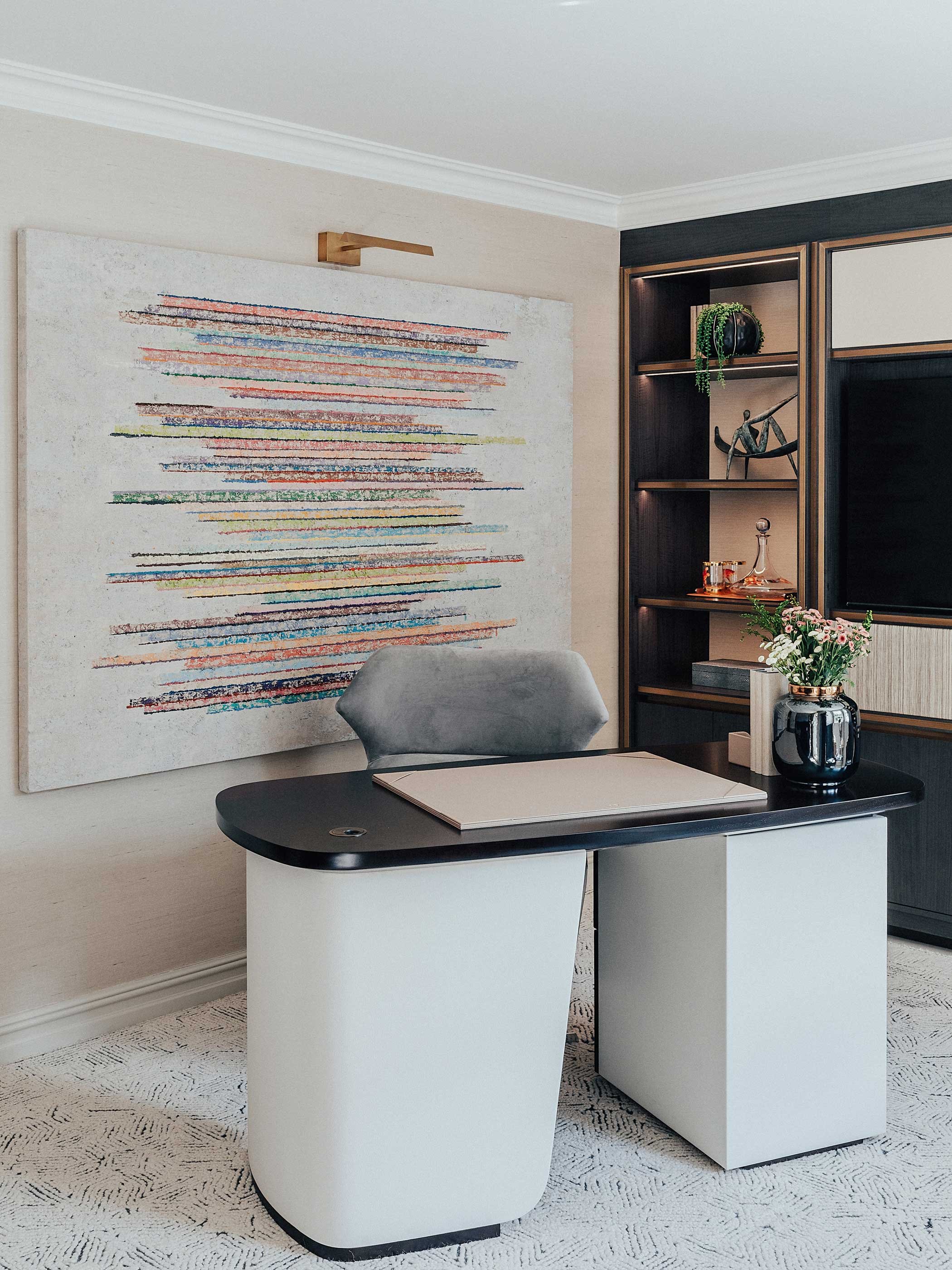
A well-designed workspace for a 350lb man proves that strength does not have to sacrifice style. The lesson is to seek out "overbuilt" furniture that hides its reinforcement. For example, using a solid steel frame powder-coated in a matte finish, or a solid oak desktop that is 1.5 inches thick, provides the necessary 500lb+ weight capacity while maintaining a high-end, professional look.
Designing for scale means selecting monitors and peripherals that don't look "lost" in a larger setup. A single 49-inch ultrawide monitor often serves a 350lb user better than two small monitors, as it aligns better with a wider field of view and reduces the need for frequent, sharp neck rotations. By curating a workspace that feels intentional rather than compensatory, the design fosters a sense of belonging and professional confidence.
Comparative Overview: Standard vs. Heavy-Duty Workspace Design
The following table outlines the technical specifications that differentiate a standard workspace from one optimized for a 350lb individual.
| Feature | Standard Workspace (Typical) | 350lb+ Optimized Workspace | Primary Benefit |
|---|---|---|---|
| Chair Weight Rating | 250 - 275 lbs | 400 - 500 lbs (BIFMA X5.11) | Safety & longevity |
| Seat Width | 18" - 20" | 22" - 26" | Lateral comfort |
| Cylinder Type | Class 3 Gas Lift | Class 4 Heavy-Duty / Reinforced | Prevents "sinking" |
| Desk Leg Span | 24" - 28" clearance | 32" - 40" clearance | Knee & thigh mobility |
| Surface Depth | 24" | 30" - 36" | Forearm support |
| Upholstery | Foam / Faux Leather | High-Tensile Mesh | Thermoregulation |
| Floor Protection | Standard Plastic Mat | High-Load Polycarbonate or Glass | Prevents floor cracking |
Frequently Asked Questions
What is the difference between "Big and Tall" and "Heavy Duty" furniture?
"Big and Tall" is often a marketing term that may prioritize height (longer gas lifts) or width without necessarily increasing the structural load capacity of the internal components. "Heavy Duty" or "High Capacity" furniture specifically refers to items tested under higher stress loads (like the BIFMA X5.11 standard) to ensure they will not suffer catastrophic failure under significant weight. When designing for a 350lb user, always check the specific weight rating rather than relying on the "Big and Tall" label.
Do I need a special floor mat for a 350lb user's chair?
Yes. Standard flexible PVC chair mats often crack or develop deep "ruts" under the concentrated pressure of a 350lb user and a heavy-duty chair (which itself can weigh 60-80lbs). A tempered glass chair mat or a high-load polycarbonate mat is essential. These materials distribute the weight more evenly and provide a much lower rolling resistance, making it significantly easier for the user to move the chair without straining their legs or back.
Are standing desks safe for users over 350lbs?
Standing desks can be safe and highly beneficial, but they must be selected with care. You must verify the lift capacity of the motors. A 350lb user may lean on the desk with significant force (sometimes adding 50-100lbs of pressure), so a desk with a 350lb or 400lb lift capacity is recommended. Look for four-leg standing desk designs rather than the standard two-leg T-frame, as four legs provide much higher lateral stability and prevent "desk wobble" at higher elevations.
How do I measure the correct desk height for a larger body?
Standard ergonomic calculators often fail to account for the thickness of the user's thighs. When seated, there should be at least 2 to 3 inches of clearance between the top of the thighs and the underside of the desk or keyboard tray. For a 350lb man, this often means the desk must be set slightly higher than a standard calculator suggests. Using an adjustable keyboard tray that can tilt and drop below the desk surface can help maintain neutral wrist alignment while allowing the desk itself to remain high enough for leg clearance.
Why does the chair's "tilt tension" matter so much?
For a 350lb user, standard tilt mechanisms often lack the resistance necessary to support the user when they lean back. This results in a "launching" or "falling" sensation. A workspace optimized for this weight requires a chair with a heavy-duty tension spring or a "multilock" tilt limiter. This allows the user to recline safely, redistributing their weight and relieving pressure on the spine without the risk of the chair flipping or the mechanism snapping.
Practical Recommendation: Next Steps for Implementation
If you are redesigning a workspace to accommodate a 350lb user, start with the foundation—the chair and the floor. Replacing a standard chair with a BIFMA X5.11 certified model and adding a glass chair mat provides the most immediate improvement in safety and mobility.
Next, address spatial constraints. If the current desk has a "modesty panel" or a center drawer that restricts vertical legroom, remove it. If the desk legs are too narrow, consider upgrading to a wide-span adjustable frame. Finally, focus on thermal comfort by switching to mesh seating and ensuring there is adequate airflow around the workstation. By following these five lessons, you create a workspace that doesn't just "fit" a larger body but empowers it to perform at its peak.