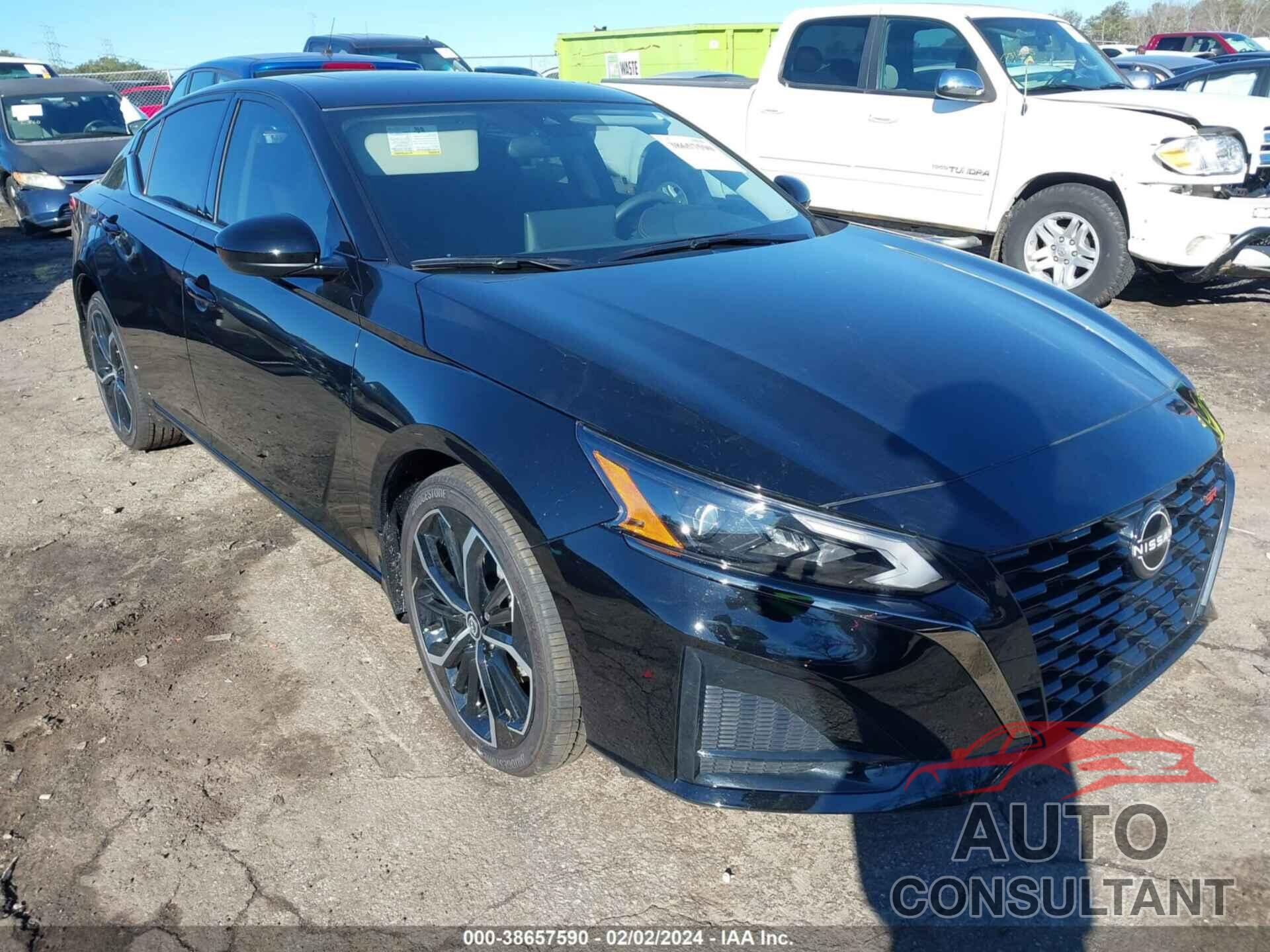
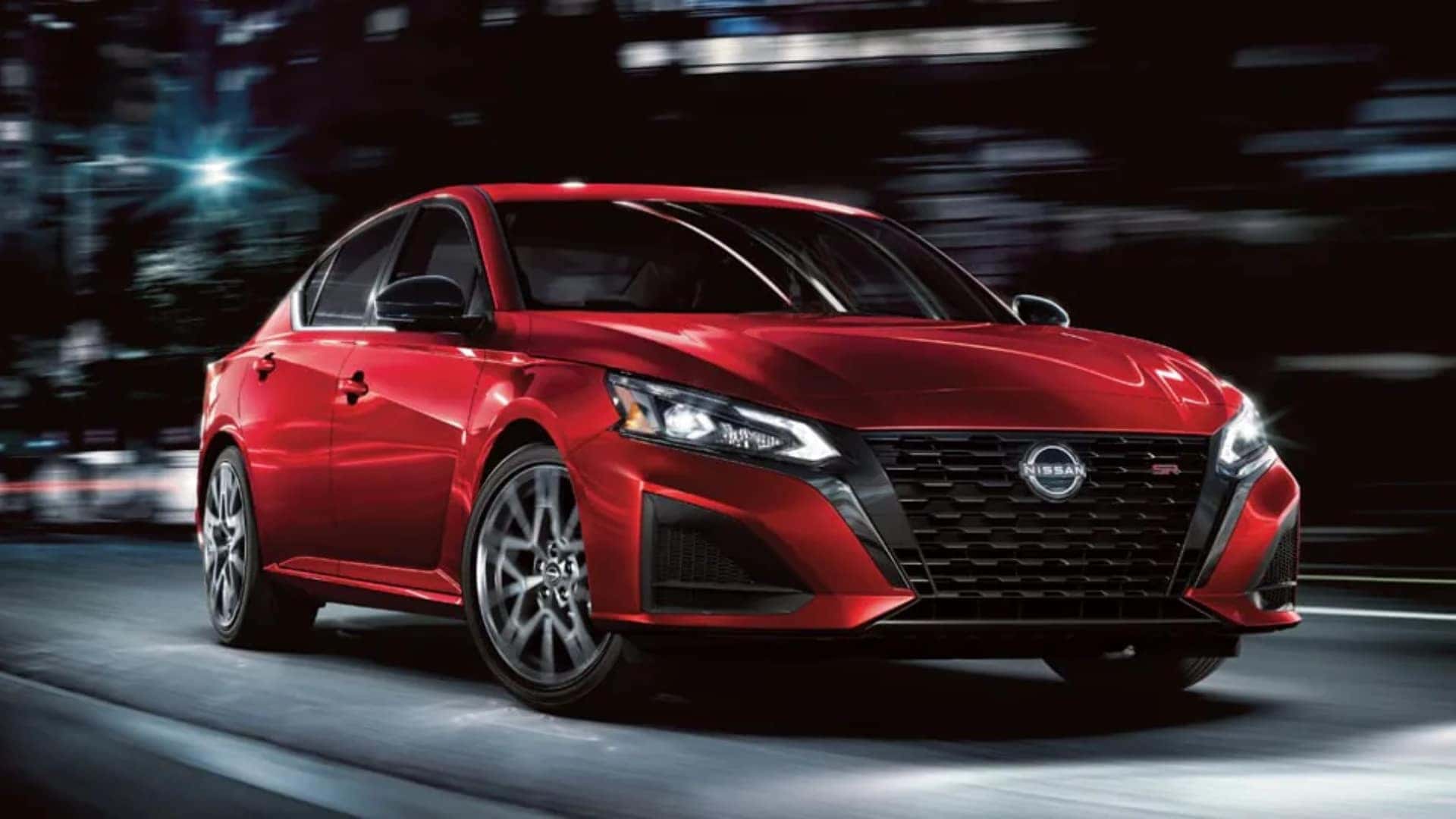
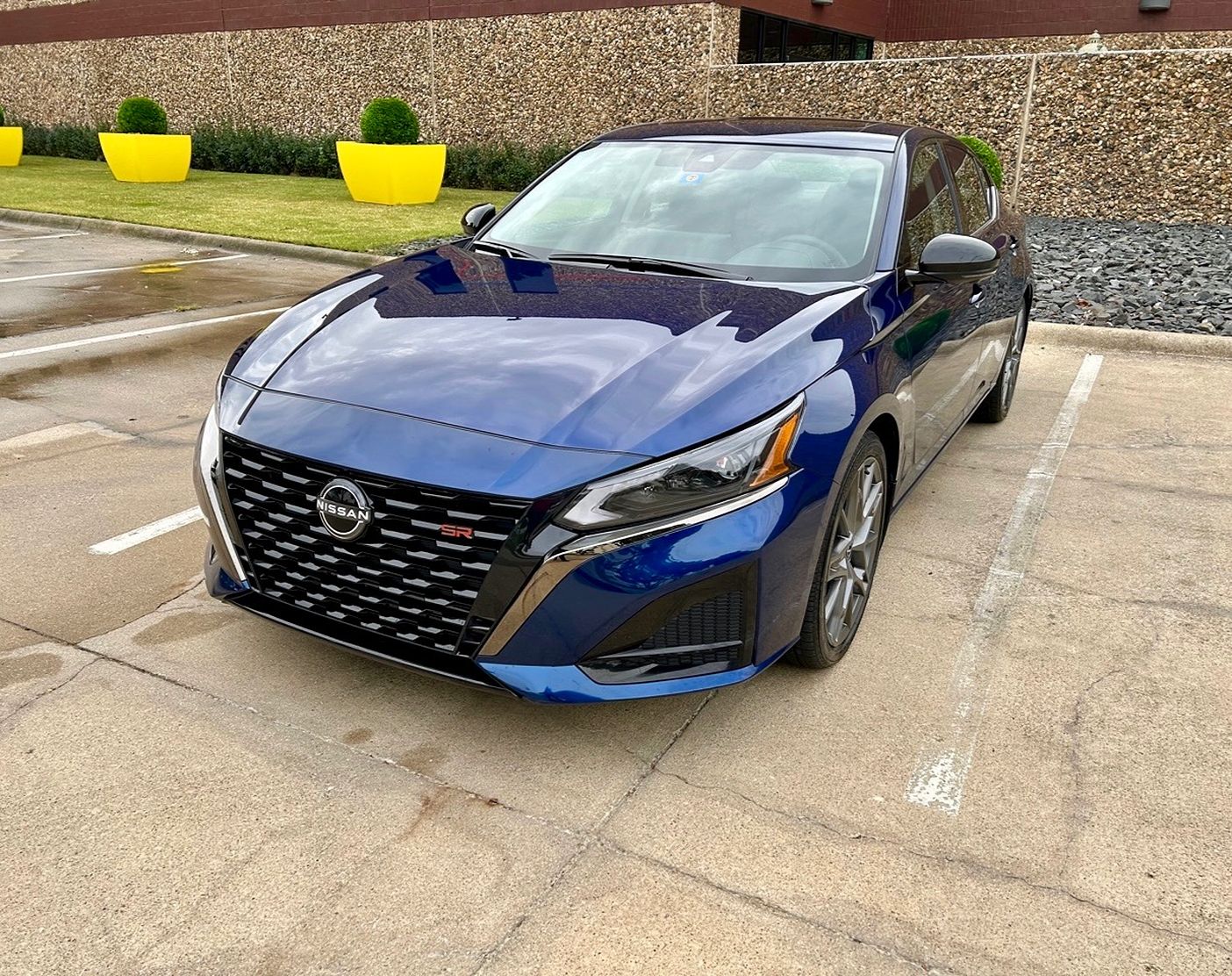
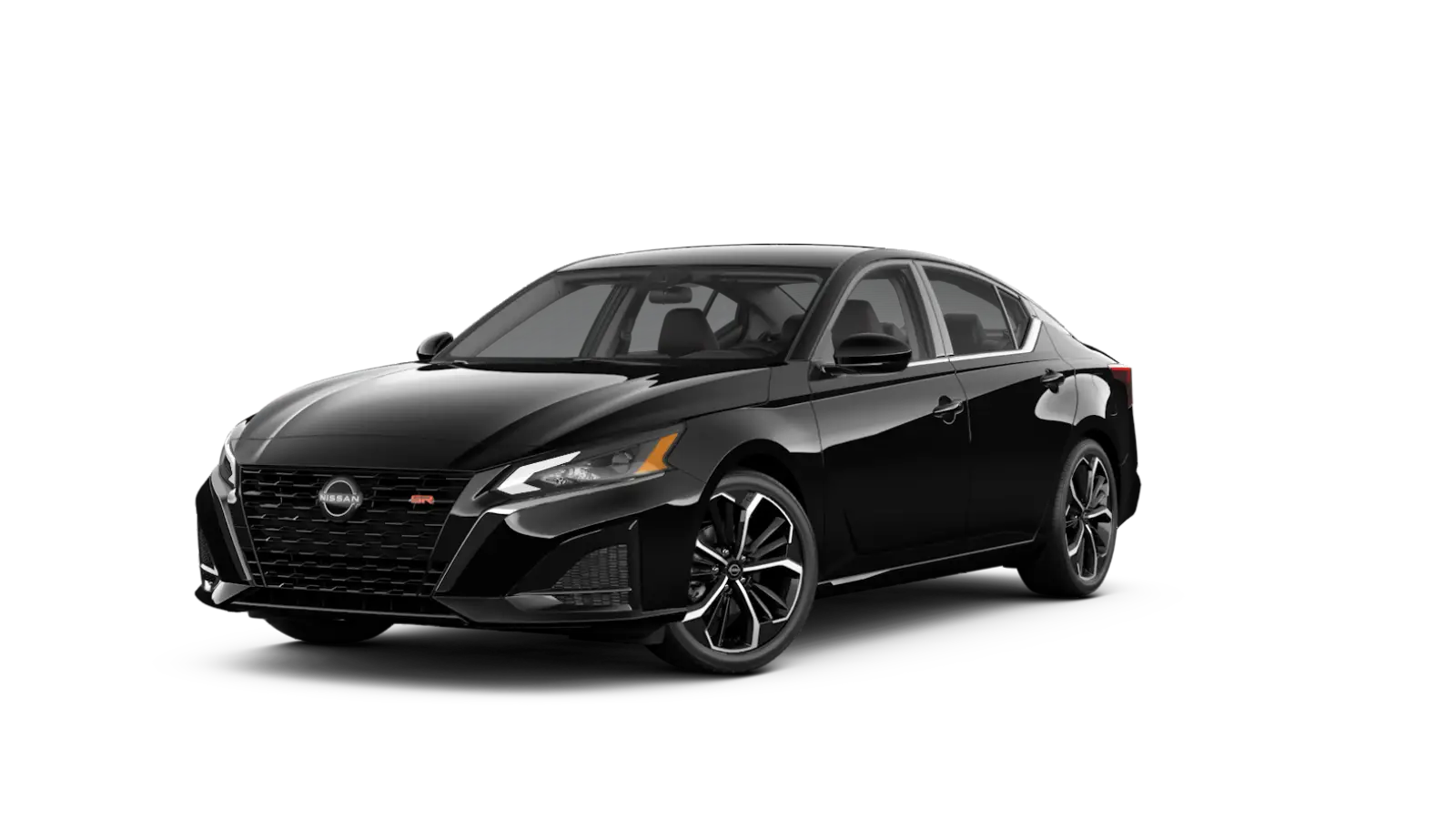
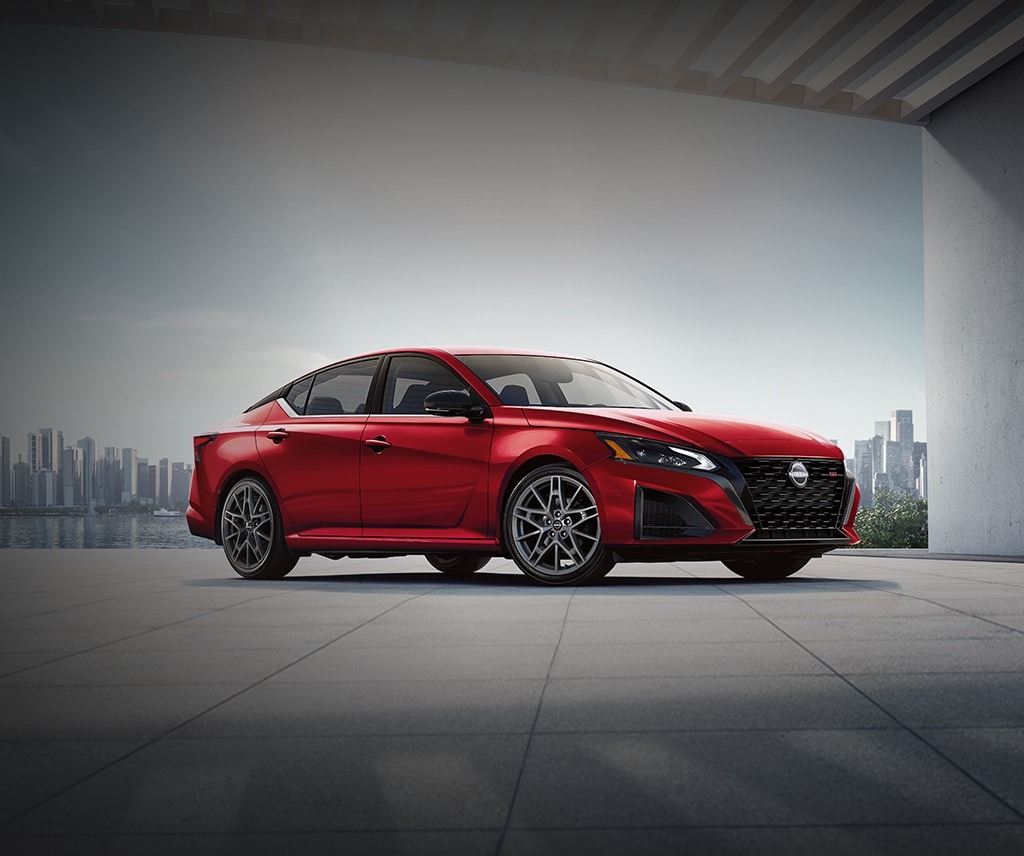
The 2024 Nissan Altima SR VC-Turbo achieves a 0-60 mph acceleration time of 5.9 seconds (with some independent instrumented tests recording times as fast as 5.8 seconds) when powered by premium 93-octane fuel. In contrast, standard 2024 Altima models equipped with the naturally aspirated 2.5-liter four-cylinder engine register a 0-60 mph time between 7.4 and 7.8 seconds.
2024 Nissan Altima Acceleration Breakdown by Trim and Powertrain
When evaluating midsize sedan performance, the 2024 Nissan Altima exhibits a dual personality. Nissan offers two distinct engine configurations across its model lineup: a high-efficiency 2.5-liter naturally aspirated four-cylinder engine and a technologically advanced 2.0-liter Variable Compression Turbocharged (VC-Turbo™) engine.
The sub-6-second sprint—specifically the 5.9-second 0-60 mph performance—is exclusive to the Altima SR VC-Turbo model equipped with Front-Wheel Drive (FWD). The non-turbocharged trims (S, SV, SR 2.5, and SL) prioritize fuel efficiency over acceleration, placing them in the 7.4 to 7.8-second range.
The table below details the performance specifications, engine outputs, drivetrain configurations, and acceleration metrics across the entire 2024 Nissan Altima lineup:
| Trim Level | Engine Powertrain | Horsepower (hp) | Torque (lb-ft) | Drivetrain | 0-60 MPH (Seconds) | 1/4-Mile Performance |
|---|---|---|---|---|---|---|
| SR VC-Turbo | 2.0L Variable Compression Turbo 4-Cyl | 248 @ 5,600 RPM (93 Octane) | 273 @ 4,000 RPM (93 Octane) | FWD | 5.8 – 5.9 s | 14.3 s @ 100 mph |
| SR VC-Turbo | 2.0L Variable Compression Turbo 4-Cyl | 236 @ 5,600 RPM (87 Octane) | 267 @ 4,000 RPM (87 Octane) | FWD | 6.1 – 6.3 s | 14.7 s @ 97 mph |
| S / SV / SL | 2.5L Naturally Aspirated 4-Cyl | 188 @ 6,000 RPM | 180 @ 3,600 RPM | FWD | 7.4 s | 15.8 s @ 90 mph |
| SR 2.5 | 2.5L Naturally Aspirated 4-Cyl | 188 @ 6,000 RPM | 180 @ 3,600 RPM | FWD | 7.4 s | 15.8 s @ 90 mph |
| SV / SL AWD | 2.5L Naturally Aspirated 4-Cyl | 182 @ 6,000 RPM | 178 @ 3,600 RPM | AWD | 7.7 s | 16.0 s @ 88 mph |
| SR 2.5 AWD | 2.5L Naturally Aspirated 4-Cyl | 182 @ 6,000 RPM | 178 @ 3,600 RPM | AWD | 7.6 s | 15.9 s @ 89 mph |
Note: Acceleration figures reflect testing under optimal weather and road conditions using instrumented testing procedures (with 1-foot rollout applied where noted by automotive publications such as Car and Driver).
The Engineering Behind the 5.9-Second Sprint: Nissan’s 2.0L VC-Turbo Engine
To understand how a front-wheel-drive family sedan breaks into the 5-second bracket, one must look at the mechanical innovations inside the 2.0-liter VC-Turbo engine (KR20DDET).
Introduced as a production-first technology by Nissan and Infiniti, the Variable Compression Turbocharged engine changes its physical compression ratio continuously while driving. This dynamic capability bridges the gap between high-output sport performance and frugal daily commuter efficiency.
- Nissan 2.0L VC-Turbo Dynamic Adjustment
- High Load / Hard Acceleration
- 8.1:1 Compression Ratio
- Maximum Boost & Power Output
- Low Load / Highway Cruising
- 14.0:1 Compression Ratio
- Maximum Fuel Efficiency
- High Load / Hard Acceleration
1. Dynamic Compression Ratio Adjustment
Traditional internal combustion engines operate on a fixed compression ratio, forcing engineers to choose between high compression (efficient, but prone to engine knock under boost) or low compression (safer under turbo boost, but sluggish when unboosted).
The VC-Turbo engine solves this using an electric motor connected to a multi-link mechanism:
- 8.1:1 Low Compression Ratio: When the driver presses firmly on the accelerator pedal, the multi-link system shortens the piston stroke within milliseconds. This lower ratio allows the turbocharger to build maximum manifold boost (up to ~14.5 psi) without causing premature detonation (knock). This delivers the full 248 horsepower and 273 lb-ft of torque.
- 14.0:1 High Compression Ratio: During light throttle conditions or constant highway cruising, the system lengthens the piston stroke. This maximizes thermodynamic efficiency, allowing the engine to sip fuel much like a non-turbocharged engine.
2. Dual Fuel Injection Strategy
The 2.0L VC-Turbo engine uses both Direct Injection Gasoline (DIG) and traditional Multi-Point Port Injection (MPI). Under heavy acceleration—such as a 0-60 mph launch—the engine relies heavily on high-pressure direct injection to cool the combustion chamber and maximize power output. Under light load, it switches or blends with port injection to reduce emissions and optimize combustion.
3. Fuel Grade Impact on 0-60 Times
Nissan explicitly notes that peak engine output requires 93-octane premium unleaded fuel.
- With 93 Octane Premium Fuel: The ECU unleashes the engine’s maximum rated output of 248 hp and 273 lb-ft of torque, enabling 0-60 mph acceleration in 5.8 to 5.9 seconds.
- With 87 Octane Regular Fuel: The engine management system retards ignition timing and adjusts boost pressure to prevent knocking. As a result, peak output drops to 236 hp and 267 lb-ft of torque, adding roughly 0.3 to 0.4 seconds to the 0-60 sprint (yielding times around 6.1 to 6.3 seconds).
Real-World Launch Dynamics and the Xtronic Transmission
Achieving a sub-6-second 0-60 time in a front-wheel-drive sedan presents distinct engineering challenges, primarily regarding traction management and transmission tuning.
The Xtronic Continuously Variable Transmission (CVT)
Unlike many performance sedans equipped with dual-clutch or traditional torque-converter automatic transmissions, the 2024 Altima SR VC-Turbo routes its power through Nissan's Xtronic CVT.
While CVTs historically faced criticism for sluggish off-the-line throttle response and engine "droning," Nissan implemented specialized performance mapping for the VC-Turbo model:
- D-Step Logic Control: Under full throttle, the transmission computer simulates discrete gear steps rather than holding a constant high RPM. This provides a more traditional acceleration feel while keeping the engine in its optimal torque band (between 3,600 RPM and 5,200 RPM).
- Paddle Shifters & Manual Mode: The SR trim features steering-wheel-mounted paddle shifters that allow drivers to select eight simulated gear ratios, offering elevated control when driving on winding roads or exiting corners.
Launch Technique and Traction Limits
Because the 248-hp VC-Turbo engine is paired exclusively with Front-Wheel Drive, full-throttle launches require careful traction control intervention:
- Torque Steer Management: Channeling 273 lb-ft of low-end torque to the steering wheels can cause mild torque steer under aggressive launches. Nissan utilizes asymmetric driveshafts and electronic steering vectoring to minimize steering wheel pull.
- Wheel Slip Off the Line: Launching from a standstill on street tires involves managing initial wheelspin. Brake-torqueing (holding the brake while building slight engine load before release) allows the turbocharger to build boost, but excessive launch RPM will overwhelm the front 235/40R19 all-season tires, triggering traction control intervention that slows overall 0-60 performance.
- Optimal Launch Procedure: The fastest 0-60 times are registered by applying a smooth, rapid roll onto the accelerator rather than instantly stomping the pedal from a dead stop, allowing the front tires to hook up before peak boost hits at 4,000 RPM.
Standard 2.5L Engine Performance: 7.4 to 7.8 Seconds
While the VC-Turbo captures headline acceleration numbers, the vast majority of 2024 Nissan Altimas sold feature the standard 2.5-liter naturally aspirated direct-injected 4-cylinder engine (QR25DD).
| Feature | 2.5L NA Engine | 2.0L VC-Turbo Engine |
|---|---|---|
| Peak Horsepower | 188 hp (FWD) / 182 (AWD) | 248 hp (93 Octane) |
| Peak Torque | 180 lb-ft / 178 (AWD) | 273 lb-ft (93 Octane) |
| 0-60 Time | 7.4s (FWD) / 7.7s (AWD) | 5.8s - 5.9s |
| AWD Availability | Optional (SV, SR, SL) | Not Available (FWD) |
| Recommended Fuel | 87 Octane Regular | 93 Octane Premium |
Acceleration and Daily Driveability
The 2.5-liter engine delivers 188 horsepower and 180 lb-ft of torque in FWD models. Off the line, throttle response is prompt, but acceleration tapers off as speed builds.
- 0-60 mph Acceleration: FWD models accomplish the sprint in approximately 7.4 seconds.
- Highway Passing Power: Merging onto highway traffic or completing 50-70 mph passing maneuvers requires patience, as the CVT must adjust ratios to hold the engine near its 6,000 RPM power peak.
Intelligent All-Wheel Drive Performance Penalty
Nissan offers an Intelligent All-Wheel Drive (AWD) system paired exclusively with the 2.5-liter engine.
While AWD provides superior traction in rain and snow by routing up to 50% of engine torque to the rear wheels when front slip is detected, it introduces a performance trade-off:
- Power Output Reduction: AWD models are tuned slightly differently, producing 182 horsepower and 178 lb-ft of torque (a 6 hp and 2 lb-ft drop compared to FWD versions).
- Weight Penalty: The rear differential, driveshaft, and transfer case add approximately 120 to 150 lbs to the vehicle's curb weight.
- 0-60 Acceleration Result: The AWD Altima requires 7.6 to 7.8 seconds to reach 60 mph. While off-the-line launch traction on wet pavement is vastly superior to FWD, the extra weight and mechanical parasitic loss slow acceleration on dry asphalt.
2024 Altima 0-60 Performance vs. Midsize Sedan Rivals
To contextualize the Altima's performance within the midsize family sedan segment, it helps to compare the SR VC-Turbo and 2.5L models against key market competitors.
| Vehicle | 0-60 Acceleration |
|---|---|
| Hyundai Sonata N Line (2.5T) | 5.2s |
| Nissan Altima SR VC-Turbo | 5.9s |
| Honda Accord Hybrid (2.0L) | 6.6s |
| Toyota Camry 2.5L FWD | 7.3s |
| Nissan Altima 2.5L FWD | 7.4s |
| Nissan Altima 2.5L AWD | 7.7s |
Altima SR VC-Turbo vs. Competitors
- Toyota Camry (Previous V6 & Current Hybrid Generations): Older 3.5L V6 Camry models posted 0-60 times of roughly 5.8 seconds, placing them neck-and-neck with the VC-Turbo Altima. Newer hybrid-only trim levels sacrifice raw acceleration for efficiency, reaching 60 mph in roughly 6.8 to 7.1 seconds.
- Honda Accord: The current 11th-generation Accord relies primarily on a 204-hp hybrid powertrain, recording 0-60 times of around 6.6 seconds. The Altima VC-Turbo easily outpaces current standard Accord models in straight-line acceleration.
- Hyundai Sonata N Line / Kia K5 GT: Powered by a 2.5-liter turbocharged engine making 290 hp, the Sonata N Line completes 0-60 mph sprints in 5.2 to 5.4 seconds. These dedicated performance sedans remain faster off the line than the Altima VC-Turbo, largely due to their wet dual-clutch automatic transmissions.
Variables That Influence Real-World 0-60 Times
A published 0-60 time of 5.9 seconds represents optimal testing conditions. Several environmental and physical factors alter real-world acceleration performance in everyday driving:
1. Fuel Grade Selection
As established by Nissan engineering documentation, running the 2.0L VC-Turbo on standard 87-octane fuel causes the engine computer to reduce ignition timing and boost parameters to prevent engine knock. This reduces horsepower from 248 to 236 hp, slowing 0-60 acceleration by 0.3 to 0.4 seconds.
2. Tire Compound and Inflation Pressure
The SR VC-Turbo comes standard with 19-inch aluminum-alloy wheels wrapped in P235/40R19 all-season tires.
- Tire Temperature: Cold tires on cold pavement lack the friction coefficient needed to handle 273 lb-ft of torque, causing traction control intervention.
- Tire Wear: Worn tread reduces moisture displacement and grip, increasing wheelspin during high-rpm launches.
3. Ambient Temperature and Density Altitude
Turbocharged engines perform best in cold, dense air. High ambient temperatures (above 90°F / 32°C) or high elevation (such as driving in Denver at 5,000+ feet above sea level) reduce air density.
- Although the turbocharger helps compensate for altitude compared to naturally aspirated engines, intercooler heat soak in high temperatures degrades intake air cooling, adding several tenths of a second to acceleration runs.
4. Vehicle Payload and Fuel Level
Standard instrumented tests are conducted with a single driver and a minimal fuel load. Adding passengers, heavy cargo, or a full tank of fuel adds weight:
- Every additional 100 pounds of weight slows 0-60 performance by roughly 0.1 seconds. Carried passengers can easily add 0.3 to 0.5 seconds to launch times.
Fuel Economy vs. Performance: The Efficiency Balance
One of the central arguments for choosing the 2.0L VC-Turbo engine over traditional high-displacement engines (like legacy V6 sedans) is fuel economy when cruising.
According to EPA estimates for the 2024 Nissan Altima:
- 2.5L FWD Models: EPA-estimated 27 mpg city / 39 mpg highway / 32 mpg combined.
- 2.5L AWD Models: EPA-estimated 26 mpg city / 36 mpg highway / 30 mpg combined.
- 2.0L VC-Turbo FWD Model: EPA-estimated 25 mpg city / 34 mpg highway / 28 mpg combined.
The VC-Turbo surrenders only 2 to 5 mpg in highway efficiency compared to the base 2.5L engine while shaving nearly two full seconds off the 0-60 mph sprint. However, aggressive acceleration runs that keep the turbo spooled in low-compression mode (8.1:1) will drop real-world city fuel economy significantly.
Frequently Asked Questions
Which 2024 Nissan Altima trim level goes 0 to 60 in 5.9 seconds?
Only the 2024 Nissan Altima SR VC-Turbo achieves a 5.9-second 0-60 mph time. This performance is unique to the 2.0-liter variable compression turbocharged engine configuration, which is front-wheel drive only.
Can you get all-wheel drive (AWD) on the 5.9-second Altima VC-Turbo?
No. Nissan offers Intelligent All-Wheel Drive exclusively on Altima models fitted with the naturally aspirated 2.5-liter engine (SV, SR 2.5, and SL trims). The 2.0L VC-Turbo engine is available strictly with Front-Wheel Drive (FWD).
Does using regular 87-octane gas affect the 0-60 speed of the VC-Turbo?
Yes. Using 87-octane regular fuel lowers the engine's output from 248 horsepower and 273 lb-ft of torque down to 236 horsepower and 267 lb-ft of torque. This fuel change increases the 0-60 mph acceleration time from 5.9 seconds to approximately 6.2 seconds.
Is the 2024 Altima VC-Turbo faster than the 2.5L base model?
Yes, substantially faster. The VC-Turbo reaches 60 mph in 5.8 to 5.9 seconds, whereas the standard 2.5L FWD model takes roughly 7.4 seconds, and the 2.5L AWD model takes between 7.6 and 7.8 seconds.
How does the Altima's CVT transmission handle 0-60 launches?
The SR VC-Turbo utilizes custom Xtronic CVT tuning with "D-Step" simulated gear shifts under wide-open throttle. This feature prevents engine rpm from lingering at a single high pitch, giving the driver progressive acceleration steps while holding the engine within its optimal boost range.
Final Takeaway for Buyers
If straight-line acceleration and effortless highway passing power are high priorities, the 2024 Nissan Altima SR VC-Turbo delivers genuine sport-sedan quickness. Its 5.9-second 0-60 mph performance puts it among the fastest non-luxury front-wheel-drive sedans in its class, offering a noticeable speed upgrade over standard midsize commuter cars.
However, buyers seeking all-weather traction or maximum fuel economy should consider the 2.5L AWD or 2.5L FWD models. While their 7.4 to 7.8-second acceleration is unhurried, they offer available all-wheel drive and up to 39 mpg on the highway at a lower initial purchase price. For maximum acceleration performance out of the VC-Turbo engine, ensure you fill the tank with 93-octane premium fuel.