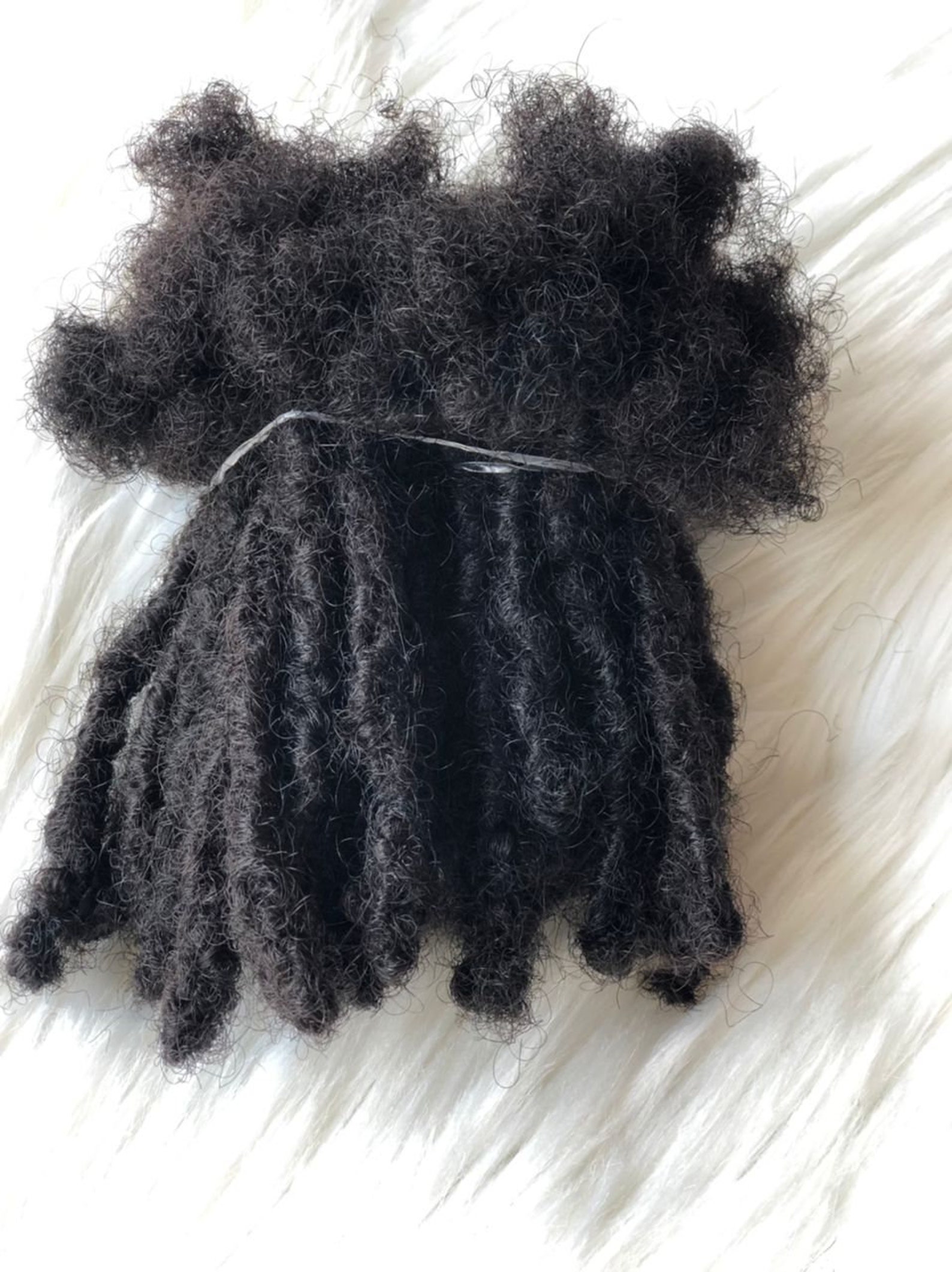
4C hair strands represent the tightest coil pattern in the hair typing system, characterized by a distinct Z-shaped or "zigzag" kink rather than a defined curly loop. These strands are known for high shrinkage, delicate structural integrity, and a significant need for moisture retention due to the difficulty of scalp oils traveling down the tightly coiled fiber.
Understanding 4C hair requires moving beyond surface-level aesthetics and into the biological and structural realities of the hair fiber. While often categorized simply as "coily" or "kinky," 4C hair possesses unique mechanical properties that dictate how it grows, how it absorbs moisture, and how it responds to environmental stressors. As we move through 2026, the focus in the natural hair community has shifted from merely "managing" this texture to optimizing its health through a deep understanding of strand anatomy and porosity.
The Biological Blueprint: Why 4C Hair Strands Are Unique
The physical appearance of 4C hair is determined by the shape of the hair follicle within the scalp. Unlike straight hair, which emerges from a circular follicle, or wavy hair, which comes from an oval one, 4C hair emerges from a flat, elliptical, or ribbon-like follicle. This shape causes the hair to grow at a sharp angle, resulting in the characteristic tight coils and kinks.
The Z-Pattern Geometry
Most people are familiar with the "S" pattern associated with Type 3 or Type 4A hair. However, 4C strands often lack a consistent curl diameter. Instead, the strand changes direction abruptly, creating "points" or "bends" along the fiber. These points are structurally significant because they represent the most vulnerable parts of the hair. At every bend in the "Z," the cuticle layer is slightly lifted or stretched, making it easier for moisture to escape and for mechanical damage (breakage) to occur.
Keratin Distribution and Disulfide Bonds
Inside each 4C strand, the distribution of keratin—the protein that makes up the hair—is asymmetrical. The disulfide bonds, which provide hair with its strength and shape, are concentrated differently in coily hair than in straight hair. This uneven distribution is what creates the tension required for the hair to coil back onto itself. This high level of tension is also why 4C hair has the highest degree of "shrinkage," often appearing 70% to 75% shorter than its actual length when dry.
Defining 4C Characteristics: Density, Coarseness, and Porosity
To truly understand what 4C strands "mean," one must distinguish between three often-confused terms: hair type, hair density, and hair diameter (coarseness). You can have 4C hair that is fine or coarse, and you can have 4C hair that is thin or dense.
Strand Diameter (Fine vs. Coarse)
- Fine 4C Strands: The individual hair fibers are thin. These strands are extremely fragile and can be easily overwhelmed by heavy butters or weighed down by too much product.
- Coarse 4C Strands: The individual fibers are thick. While they may feel "stronger," they often require more intensive softening treatments to remain pliable.
Porosity: The Gatekeeper of Moisture
Porosity refers to the hair strand's ability to absorb and retain moisture. For 4C hair, porosity is often more important than the curl pattern itself.
- Low Porosity: The cuticles are tightly packed. Water and oils sit on top of the strand rather than soaking in. As of 2026, heat-assisted conditioning is the gold standard for this type, as heat helps lift the cuticles to allow moisture entry.
- High Porosity: The cuticles have gaps or holes, often due to genetics or previous chemical/heat damage. Moisture enters easily but leaves just as quickly, leading to "flash drying."
Comparative Analysis of Type 4 Textures
Understanding where 4C sits in the spectrum helps in selecting the right techniques. The following table highlights the structural differences between the three sub-categories of Type 4 hair.
| Feature | 4A Hair | 4B Hair | 4C Hair |
|---|---|---|---|
| Curl Pattern | Defined "S" shape; visible coils about the size of a crochet needle. | "Z" shape; sharp angles with less defined curl loops. | Tight "Z" pattern; no defined curl shape without styling products. |
| Shrinkage | Moderate (30-50%). | High (50-70%). | Extreme (70-80%+). |
| Texture Feel | Generally soft and pliable. | Can feel wiry or "cottony." | Densely packed; feels very soft or very coarse depending on diameter. |
| Moisture Needs | Moderate; can hold moisture for 2-3 days. | High; needs frequent re-hydration. | Very High; requires daily or every-other-day sealing. |
| Fragility | Moderate. | High (at the angles). | Highest (most points of potential breakage). |
What 4C Strands "Mean" for Your Maintenance Routine
The structural reality of 4C strands means that standard hair care advice often fails. Because the natural sebum produced by the scalp cannot easily travel down the zigzag path of the strand, 4C hair is physiologically prone to dryness.
The Science of Detangling
Detangling 4C hair is a mechanical process that must be approached with extreme caution. Because 4C strands have "memory"—meaning they naturally want to return to their coiled state—they tend to wrap around each other, forming "fairy knots" (single-strand knots).
- Hydration is Mandatory: Never detangle 4C hair when dry. Dry 4C strands lack elasticity and will snap under the pressure of a comb or brush.
- Slip: Use products with high "slip" (ingredients like marshmallow root or specific silicones) to reduce friction between strands.
- Sectioning: Given the density of 4C hair, working in small sections is the only way to ensure each strand is accounted for and not unnecessarily pulled.
The LOC/LCO Method in 2026
The LOC (Liquid, Oil, Cream) or LCO (Liquid, Cream, Oil) methods remain the most effective ways to hydrate 4C strands.
- Liquid: Water or a water-based leave-in conditioner provides the actual hydration.
- Cream/Oil: These layers act as occlusives, sealing the water inside the strand. For 4C hair, heavier oils like castor or shea-based creams are often preferred because they provide a sturdier barrier against the air, which would otherwise evaporate the moisture.
Common Myths and the Reality of 4C Strands
Misinformation regarding 4C hair has persisted for decades. By 2026, scientific research from organizations like the Society of Cosmetic Chemists has helped debunk many of these claims.
Myth: 4C Hair Doesn't Grow
Reality: 4C hair grows at the same average rate as any other hair type (approximately half an inch per month). The "lack of growth" people perceive is actually a lack of length retention. Because the ends of 4C strands are the oldest and most fragile, they often break off as fast as new hair grows from the scalp. Protecting the ends is the secret to seeing length.
Myth: 4C Hair is "Tough"
Reality: 4C hair is actually the most fragile of all hair types. The high number of bends in the strand means there are more points of failure. While the hair may look "stiff" or "strong," it requires the gentlest handling of any texture.
Myth: 4C Hair Can’t Be "Wash and Go"
Reality: While 4C hair does not naturally "clump" into curls the way 3C hair does, it can certainly be styled in a wash-and-go. This requires specific techniques like "shingling"—applying gel to very small sections of hair to define the natural Z-pattern.
The Role of Scalp Health in 4C Maintenance
In 2026, the focus has shifted toward the "scalp-first" approach. For 4C hair, a healthy scalp is the foundation for strong strands. Because 4C hair requires heavy oils and creams to stay moisturized, the scalp is prone to product buildup.
- Clarification: 4C hair needs regular clarifying (every 2-4 weeks) to remove buildup that blocks the follicle.
- Scalp Massage: Increasing blood flow to the elliptical follicles can support the delivery of nutrients to the hair bulb, potentially leading to stronger fiber production.
- PH Balance: The hair strand is naturally acidic (pH 4.5–5.5). Using products that are pH-balanced helps keep the cuticle layer of the 4C strand flat, which aids in shine and moisture retention.
Protective Styling: A Structural Necessity?
For many with 4C strands, protective styling (braids, twists, wigs, or buns) is not just a fashion choice but a method of preservation. By tucking the ends away and reducing daily manipulation, you minimize mechanical stress on the "Z-points" of the strands.
However, the American Academy of Dermatology warns against styles that are too tight. 4C strands are susceptible to traction alopecia if the protective style pulls too hard on the follicle. The goal of a protective style should be "low manipulation," not "set and forget." Even in braids, 4C strands require misting with water and light oils to prevent the hair from becoming brittle inside the style.
FAQs: Understanding 4C Strands
How do I know for sure if I have 4C hair?
You can identify 4C hair by looking at a single shed strand. If the strand has tight, angular kinks rather than round curls, and if your hair shrinks significantly (more than 70%) when it dries after a wash, you likely have 4C hair. Additionally, if your hair does not have a defined curl pattern when wet without the use of styling gels, it fits the 4C profile.
Can 4C hair become 4B or 4A with the right products?
No. Your hair type is determined by the shape of your follicle, which is genetic. While products can define your coils, hydrate them, and make them appear "looser" by adding weight, they cannot change the fundamental biological structure of your strands. "Texture softening" usually implies chemical treatments (like texturizers), which permanently alter the disulfide bonds of the hair.
Why is my 4C hair always dry even though I use oil?
Oil is not a moisturizer; it is a sealant. If you apply oil to dry hair, you are simply sealing the dryness in. To effectively moisturize 4C strands, you must apply water or a water-based product first, then use the oil to "lock" that water inside the hair shaft.
How often should I wash 4C hair?
Most experts in 2026 recommend washing 4C hair once a week or once every two weeks. Washing too frequently can strip the hair of its limited natural oils, while waiting too long can lead to product buildup and scalp irritation. The key is to use a sulfate-free shampoo or a "co-wash" (cleansing conditioner) to maintain the moisture balance.
Is it possible for 4C hair to have high porosity?
Yes. While 4C hair is often naturally low porosity (due to the tight packing of the hair fibers in a coil), it can become high porosity through environmental damage, high-heat styling, or chemical processing. High porosity 4C hair requires protein treatments to fill the gaps in the cuticle and heavy sealants to prevent moisture loss.
Practical Recommendations for 4C Hair Care
To maximize the health of 4C strands, adopt a "minimalist manipulation, maximalist hydration" philosophy. Focus on the following steps:
- Water is your best friend: Ensure your hair is thoroughly saturated with water during the conditioning phase.
- Finger detangle first: Use your fingers to feel for knots before introducing a wide-tooth comb. This prevents "ripping" through the delicate Z-pattern.
- Prioritize the ends: Apply the most product and the most care to the ends of your hair, as they are the oldest part of the strand and the most likely to break.
- Night Care: Never sleep on cotton. Use a silk or satin bonnet or pillowcase to prevent the fabric from absorbing the moisture out of your 4C strands and causing friction-based breakage.