The 4 points of SMART Recovery constitute a science-based framework designed to help individuals overcome addictive behaviors. These points include building and maintaining motivation, coping with urges, managing thoughts, feelings, and behaviors, and living a balanced life. By focusing on self-empowerment and cognitive-behavioral tools, this program provides a secular, practical alternative to traditional 12-step recovery models.
The Foundation of SMART Recovery in 2026
As we navigate the landscape of addiction treatment in 2026, SMART Recovery (Self-Management and Recovery Training) has solidified its position as a primary resource for individuals seeking a self-empowered path to sobriety. Unlike programs that emphasize powerlessness over a substance or behavior, SMART Recovery is built on the principle that individuals have the inherent capacity to change their lives through the application of specific psychological tools.
The program is rooted in evidence-based practices, primarily Cognitive Behavioral Therapy (CBT) and Rational Emotive Behavior Therapy (REBT). These modalities focus on identifying the underlying cognitive structures that drive addictive behaviors. By 2026, the integration of these tools into digital health platforms and mobile applications has made the "4-Point Program" more accessible than ever, allowing participants to engage with recovery exercises in real-time.
The 4-Point Program is not a linear sequence but rather a set of interconnected pillars. An individual may find themselves working on Point 1 (Motivation) and Point 3 (Managing Thoughts) simultaneously. This flexibility is a hallmark of the SMART approach, recognizing that recovery is a dynamic process rather than a rigid set of steps.
Point 1: Building and Maintaining Motivation
The first point of the SMART Recovery program focuses on the "why" of change. Addiction often thrives in a state of ambivalence, where an individual simultaneously wants to stop their behavior but also finds comfort or relief in it. Building motivation involves moving from this state of conflict to a state of committed action.
The Cost-Benefit Analysis (CBA)
One of the primary tools used in Point 1 is the Cost-Benefit Analysis. This is more than a simple pro-con list; it is a rigorous examination of the short-term and long-term consequences of both continuing and stopping the addictive behavior. Participants are encouraged to look at four quadrants:
- Advantages of continuing the behavior: Usually short-term "fixes" like stress relief or escaping pain.
- Disadvantages of continuing the behavior: Usually long-term consequences like health issues, relationship breakdowns, or financial loss.
- Advantages of stopping the behavior: Long-term gains like self-respect, health, and freedom.
- Disadvantages of stopping the behavior: Short-term challenges like withdrawal, facing emotions, or social changes.
By visualizing these costs and benefits, the individual can see that the perceived "benefits" of the addiction are almost exclusively short-term, while the "costs" are overwhelmingly long-term.
The Hierarchy of Values (HOV)
Another essential tool is the Hierarchy of Values. Many people in active addiction lose sight of what truly matters to them. This exercise asks the individual to list their top five values—such as family, health, career, or integrity—and then honestly assess how their addictive behavior aligns with those values. Most find a profound disconnect, which serves as a powerful catalyst for maintaining long-term motivation. In the context of 2026, where digital distractions and shifting social norms can obscure personal values, this exercise remains a vital anchor for sustained recovery.
Point 2: Coping with Urges
Point 2 addresses the physical and psychological cravings that often lead to relapse. In the SMART framework, urges are viewed not as irresistible commands, but as temporary experiences that will eventually pass—much like a wave peaking and then receding.
The Nature of Urges
An urge is essentially a learned response to a trigger. Over time, the brain associates certain people, places, or emotions with the "reward" of the substance or behavior. Understanding the physiology of an urge—that it typically lasts only 10 to 15 minutes if not "fed" by rumination—empowers the individual to wait it out.
The DEADS Tool
To manage these moments of high tension, SMART Recovery teaches the DEADS acronym:
- Delay: Wait it out. The urge will peak and then decline.
- Escape: Remove yourself from the environment or situation triggering the urge.
- Avoid: Pre-emptively stay away from high-risk situations (people, places, or things).
- Distract: Engage in a different activity to shift focus away from the craving.
- Substitute: Replace the addictive behavior with a healthier alternative, such as a walk, a breathing exercise, or a hobby.
DISARM (Destructive Imagery and Self-talk Awareness and Refusal Method)
SMART also utilizes DISARM, which involves personifying the "urge" as an external entity—an "inner brat" or a "salesman"—who is trying to sell a faulty product. By labeling the urge as something separate from their true self, the individual can more easily refuse its demands. This cognitive distancing is a core component of CBT and remains one of the most effective ways to neutralize the power of a craving.
Point 3: Managing Thoughts, Feelings, and Behaviors
Point 3 is the "engine room" of SMART Recovery. It focuses on the internal triggers that drive the desire to use. This point is heavily based on the REBT model developed by Dr. Albert Ellis, which posits that it is not external events that cause us emotional distress, but rather our beliefs about those events.
The ABC Model
The central tool for Point 3 is the ABC Tool:
- A (Activating Event): Something happens (e.g., a stressful day at work).
- B (Beliefs): The internal monologue about the event (e.g., "I can't handle this stress without a drink; it's unfair that I have to work this hard").
- C (Consequences): The emotional or behavioral result (e.g., feeling overwhelmed, angry, and eventually using).
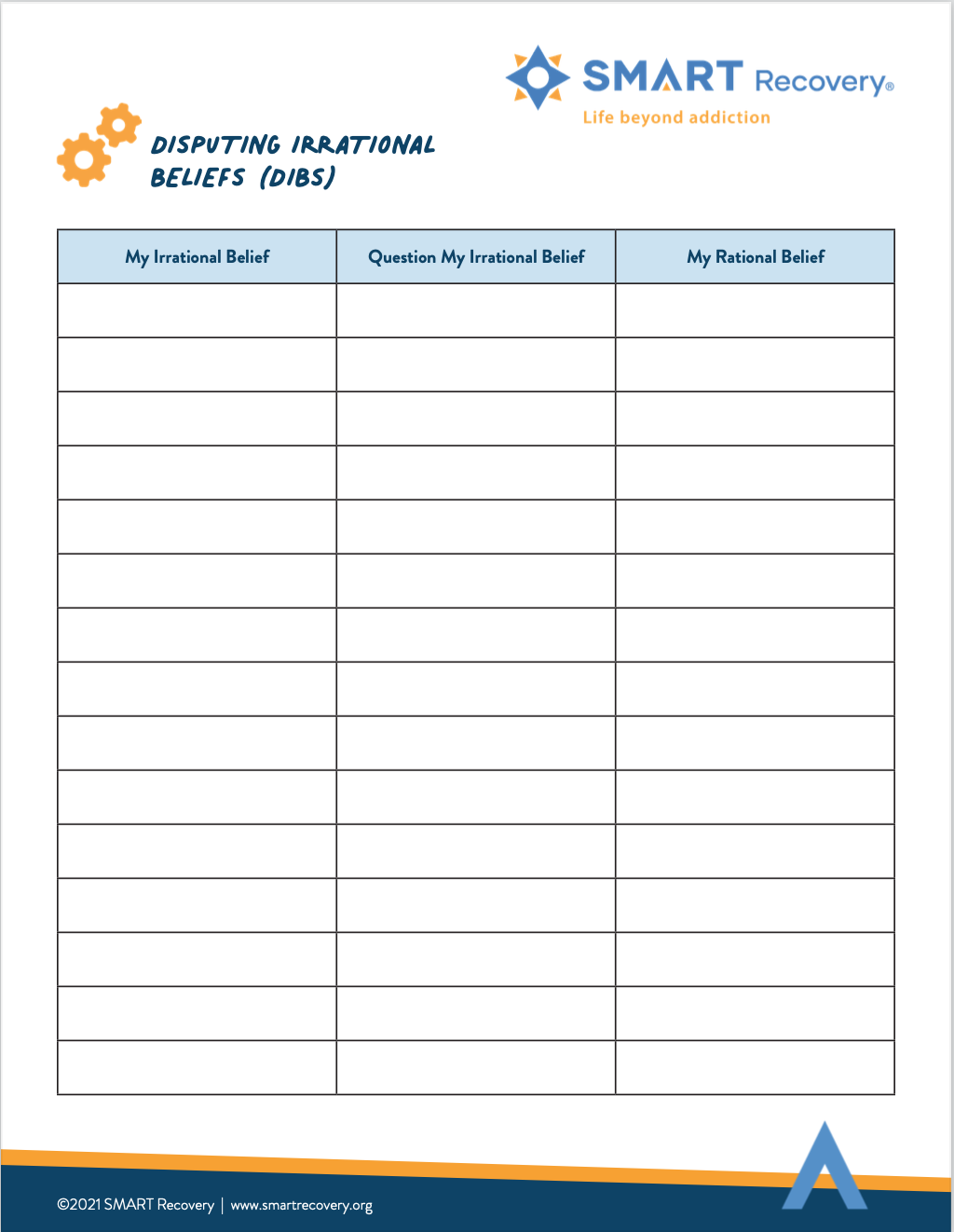
SMART Recovery adds D (Disputing) and E (Effective New Beliefs) to this model. Participants learn to challenge their irrational beliefs. Is it actually "unbearable" to be stressed? Is a drink the only way to cope? By disputing irrational thoughts, individuals can create a new, more effective philosophy (E) that leads to healthier emotional outcomes.
Emotional Regulation
Managing Point 3 involves recognizing "emotional fires" before they become "infernos." In 2026, the application of Point 3 often includes mindfulness-informed cognitive therapy techniques, where individuals learn to observe their thoughts without judgment. This prevents the "catastrophizing" and "must-erbation" (the belief that things must be a certain way) that often precedes a lapse. By mastering their internal environment, participants find they no longer need to use external substances to regulate their moods.
Point 4: Living a Balanced Life
While the first three points focus largely on stopping the addictive behavior, Point 4 is about creating a life where the behavior is no longer necessary. Recovery is not just the absence of addiction; it is the presence of a fulfilling, balanced lifestyle.
Establishing the "New Normal"
Long-term recovery requires a fundamental shift in how one spends their time and energy. Point 4 encourages participants to inventory their current life balance across several domains:
- Physical Health: Sleep, nutrition, and exercise.
- Social Connections: Building relationships that are not centered around the addiction.
- Productivity: Career goals, education, or volunteer work.
- Leisure: Finding joy in activities that do not involve substances.
Vital Absorbing Creative Interest (VACI)
A cornerstone of Point 4 is the VACI. A VACI is an activity that is so engaging and meaningful that it provides a natural "high" or a sense of flow. This could be anything from gardening and painting to coding or long-distance running. The goal is to fill the void left by addiction with something that provides genuine satisfaction and purpose.
In 2026, the concept of a balanced life also accounts for "digital hygiene"—managing the consumption of social media and online content to ensure that digital habits do not become a secondary addiction. Point 4 is about sustainability; it is the process of building a life that you don't feel the need to escape from.
Comparing SMART Recovery and 12-Step Programs
To better understand the niche that SMART Recovery fills, it is helpful to compare its core components with the more traditional 12-step approach (such as Alcoholics Anonymous or Narcotics Anonymous).
| Feature | SMART Recovery (4-Point Program) | 12-Step Programs (AA/NA) |
|---|---|---|
| Core Philosophy | Self-Empowerment and Self-Reliance | Surrender to a Higher Power |
| View of Addiction | A maladaptive behavior or habit | A progressive, lifelong disease |
| Meeting Format | Discussion-based, interactive | Primarily sharing personal stories |
| Tools Used | CBT, REBT, CBA, ABC Model | The 12 Steps, Sponsorship |
| Duration of Program | Completion is a goal; "graduation" | Lifelong commitment to the program |
| Spirituality | Secular; focuses on science and logic | Spiritual; focuses on a "Higher Power" |
| Labels | Discourages labels (e.g., "I am an addict") | Encourages labels for identity |
Practical Implementation: The SMART Recovery Toolbox
The efficiency of the 4-Point Program lies in its "toolbox." Beyond the primary exercises mentioned above, several other techniques are commonly utilized in 2026 meetings and self-help materials:
- Brainstorming: Group sessions often involve collective problem-solving for specific challenges faced by members.
- Role-Playing: Practicing how to say "no" in social situations or how to handle a difficult conversation without resorting to old behaviors.
- The Change Plan Worksheet: A structured document where the individual outlines specific goals, potential obstacles, and support systems.
- USA (Unconditional Self-Acceptance): Moving away from self-blame and shame, which are significant triggers for relapse, and instead accepting oneself as a "fallible human being."
- UOA (Unconditional Other-Acceptance): Learning to accept others as they are, which reduces the anger and resentment that often drive addictive urges.
Accessing SMART Recovery in 2026
In the current year of 2026, SMART Recovery has expanded its reach through a robust hybrid model. While in-person meetings remain a staple for local community support, the organization has pioneered advanced virtual meeting rooms that offer near-seamless interaction.
- SMART Recovery Mobile App: The official app now includes AI-assisted "urge tracking," which identifies patterns in a user's cravings and suggests specific Point 2 or Point 3 tools based on the time of day or location.
- Online Meetings: Global meetings are available 24/7, catering to various time zones and specific demographics (e.g., Veterans, LGBTQ+, First Responders).
- Self-Help Manuals: The SMART Recovery Handbook, now in its latest updated edition, serves as a comprehensive workbook for those who prefer self-directed recovery.
For more information on the scientific backing of these methods, the National Institute on Drug Abuse (NIDA) provides extensive resources on the efficacy of CBT in treating substance use disorders. Additionally, the American Psychological Association (APA) offers insights into how REBT helps in emotional regulation and habit change.
Frequently Asked Questions
Is SMART Recovery only for drug and alcohol addiction?
No. SMART Recovery is designed to address any addictive or harmful behavior. This includes substance use (alcohol, drugs, tobacco) as well as behavioral addictions such as gambling, food-related issues, shopping, and compulsive internet or social media use. The 4-point framework is universally applicable to any habit that an individual wishes to change.
Can I attend SMART Recovery while also participating in AA?
Yes. Many individuals use a "hybrid" approach, finding value in the community of 12-step programs while utilizing the practical, cognitive tools of SMART Recovery. SMART Recovery does not require an "all or nothing" commitment to its specific philosophy, though it does emphasize self-empowerment as the primary driver of change.
Is there a cost to attend SMART Recovery meetings?
SMART Recovery is a non-profit organization. Most meetings are free to attend, although they often pass a hat or provide a digital link for voluntary donations to cover the costs of meeting spaces, literature, and website maintenance. No one is turned away for an inability to contribute.
Do I have to be "sober" to attend a meeting?
The primary requirement for attending a meeting is a desire to change the behavior. While it is requested that participants do not attend a meeting while currently under the influence (out of respect for the group and to ensure they can participate effectively), being "currently sober" is not a prerequisite for joining the community or starting the program.
How long does it take to complete the program?
Unlike 12-step programs, which are often viewed as a lifelong commitment, SMART Recovery views recovery as a process with a beginning, middle, and end. The goal is to gain the tools necessary to live a balanced life (Point 4) and eventually "graduate" from the program, though many choose to stay on as facilitators to help others.
Recommendation for Next Actions
If you or someone you know is struggling with an addictive behavior, the first practical step is to familiarize yourself with the Cost-Benefit Analysis (CBA). Take a piece of paper, divide it into four quadrants, and honestly list the short-term and long-term pros and cons of your current behavior. This simple exercise can provide the clarity needed to move from ambivalence to action.
Once you have completed a CBA, visit the official SMART Recovery website to find a meeting. In 2026, meetings are available both in-person and online at almost any time of day. Attending a meeting as an "observer" is a low-pressure way to see if the 4-point approach resonates with your personal goals and values.