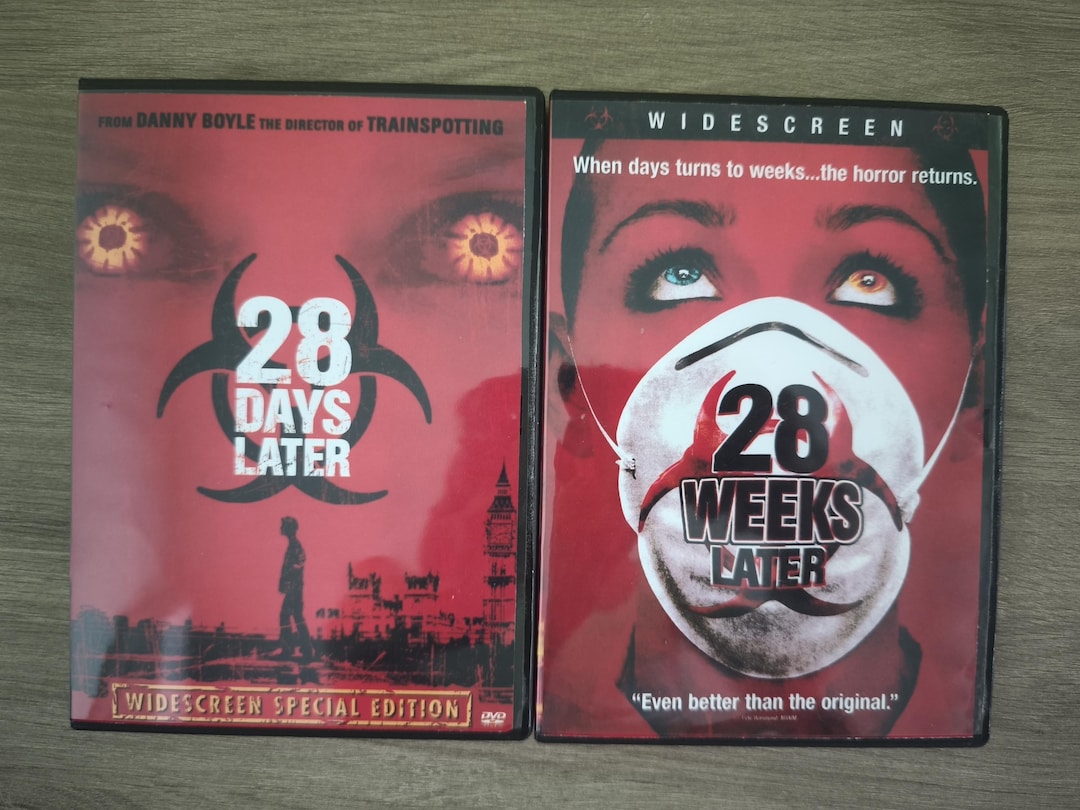
To experience the 28 Days Later series in its intended narrative sequence, you should follow the chronological order: start with the graphic novel 28 Days Later: The Aftermath, followed by the original 2002 film, the Boom! Studios comic series, 28 Weeks Later, and finally the 2025 revival, 28 Years Later.
The 28 Days Later franchise, spearheaded by director Danny Boyle and writer Alex Garland, redefined the horror genre in the early 2000s. By replacing the lumbering "undead" with hyper-aggressive, virus-infected "fast zombies," the series introduced a visceral sense of panic that had been missing from cinema for decades. As of 2026, the franchise has expanded significantly beyond its cult-classic beginnings, encompassing multiple films, a deep-dive graphic novel, and a long-running comic book series that fills the gaps between the cinematic entries.
Understanding the order of this series is essential for fans who want to track the evolution of the Rage Virus and the collapse of society across three decades. Whether you are a newcomer or a returning fan looking to refresh your memory before diving into the latest trilogy, this guide provides the definitive roadmap for the entire series.
Chronological Order of the 28 Days Later Universe
While the release dates of the various media entries are relatively straightforward, the narrative timeline is more complex. The stories jump between the initial outbreak, the immediate aftermath, the attempted recolonization of London, and the long-term survival of the human race decades later.
1. 28 Days Later: The Aftermath (Graphic Novel)
Although published in 2007 to coincide with the release of the second film, The Aftermath serves as the functional "Day Zero" for the franchise. This graphic novel is divided into four chapters, each exploring a different phase of the infection’s spread. It provides the necessary backstory on the development of the Rage Virus in the Cambridge laboratory and the initial chaotic hours of the London outbreak. If you want to understand the science and the initial failure of containment, this is the starting point.
2. 28 Days Later (2002 Film)
This is the entry that started it all. Set exactly four weeks after the initial escape of the virus, the story follows Jim (Cillian Murphy) as he wakes from a coma in a deserted London hospital. The film documents the immediate survival struggle as Jim joins Selena and Hannah. This chapter is vital for establishing the "rules" of the Rage Virus—specifically that it is a blood-borne pathogen with a near-instantaneous incubation period.
3. 28 Days Later: Boom! Studios Comic Series (2009–2011)
Set between the events of the first and second films, this 24-issue comic series focuses on Selena, one of the survivors of the original movie. It explores her life after the events of the 2002 film and her eventual return to the quarantined British Isles with a team of American journalists. This series bridges the gap between the total collapse seen in the first film and the arrival of NATO forces in the second.
4. 28 Weeks Later (2007 Film)
The timeline jumps forward to roughly six months after the initial outbreak. The Rage Virus has seemingly "burned out" due to the starvation of the infected. NATO forces, led by the United States military, establish a "Green Zone" in London to begin the process of repopulating the country. However, a carrier of the virus—an asymptomatic individual—is discovered, leading to a secondary and even more devastating outbreak.
5. 28 Years Later (2025 Film)
Released in mid-2025, this film marks a massive time jump in the series. It moves the perspective away from the immediate aftermath of the infection and into a world that has been fundamentally reshaped by the long-term presence of the Rage Virus. By 2026, this entry has become a cornerstone of the franchise's lore, reconnecting with original characters like Jim while introducing a new generation of survivors navigating a "post-outbreak" world.
6. 28 Years Later Part II: The Bone Temple (2026 Film)
Picking up almost immediately after the events of the 2025 film, The Bone Temple continues the new trilogy’s narrative. Directed by Nia DaCosta, this entry delves deeper into the societal structures that have formed in the decades since the collapse of the UK government and the various factions vying for control over the remaining safe territories.
Comprehensive Release Date Order
If you prefer to watch and read the series as it was originally presented to the public, the release order provides a different perspective. This method allows you to see how the filmmakers' vision of the "zombie apocalypse" evolved alongside real-world advancements in film technology and storytelling.
| Title | Release Year | Media Format | Key Focus |
|---|---|---|---|
| 28 Days Later | 2002 | Feature Film | The initial outbreak and Jim's survival. |
| 28 Days Later: The Aftermath | 2007 | Graphic Novel | Prequel lore and the origin of the Rage Virus. |
| 28 Weeks Later | 2007 | Feature Film | NATO's failed attempt to rebuild London. |
| 28 Days Later (Comics) | 2009–2011 | Comic Series | Selena's journey back to Great Britain. |
| 28 Years Later | 2025 | Feature Film | The long-term state of the world 28 years post-infection. |
| 28 Years Later Part II | 2026 | Feature Film | Direct sequel to the 2025 revival. |
Detailed Breakdown of Key Entries
28 Days Later (2002): The Foundation of Modern Horror
The 2002 film remains a landmark in cinema. Directed by Danny Boyle and shot primarily on Canon XL-1 digital cameras, the film’s grainy, low-resolution look perfectly captured the gritty, desolate atmosphere of an abandoned London.
The story follows Jim, a bicycle courier who awakens from a coma to find the world has ended. He eventually meets Selena (Naomie Harris) and Mark (Noah Huntley), who explain that a virus called "Rage" was released by animal rights activists who freed infected chimpanzees. The film is notable for its exploration of human nature under pressure, particularly in its second half, where the threat shifts from the infected to a rogue group of soldiers led by Major Henry West (Christopher Eccleston).
28 Days Later: The Aftermath (2007): Bridging the Gap
For those looking for deep lore, The Aftermath is indispensable. It was written by Steve Niles and serves as a companion piece to the first two films.
- Phase 1 (Development): Shows the scientists at the heart of the research and why they felt compelled to create a virus that essentially weaponizes anger.
- Phase 2 (Outbreak): Captures the first day in London, showing the terrifying speed of the infection in a crowded urban environment.
- Phase 3 (Survival): Follows a family trying to escape the city, highlighting the breakdown of the military and emergency services.
- Phase 4 (The Bridge): Provides context for the "cleanup" operations that NATO eventually undertakes, leading directly into the opening scenes of 28 Weeks Later.
28 Weeks Later (2007): The Failure of Systems
While the first film was an intimate survival story, the sequel is a large-scale military disaster movie. Directed by Juan Carlos Fresnadillo, it focuses on the concept of the "Green Zone"—a secure area in the Isle of Dogs intended to be the seed of a new civilization.
The film introduces the tragic figures of Don (Robert Carlyle) and Alice (Catherine McCormack). The discovery of Alice, who is an asymptomatic carrier, leads to a catastrophic breach of protocol. The military’s response—"Code Red"—which involves the indiscriminate execution of all civilians to contain the virus, serves as a searing critique of military intervention and collateral damage.
28 Years Later (2025) and The Bone Temple (2026): A New Era
The 2025 release of 28 Years Later represented one of the most anticipated horror revivals in history. By bringing back Cillian Murphy and reuniting the original creative team of Boyle and Garland, the film successfully transitioned the series from "post-apocalyptic survival" to "world-building horror."
In this era, the Rage Virus is no longer a surprise; it is a permanent fixture of the landscape. The Bone Temple, released in 2026, continues this trajectory by exploring how human geography has shifted. Major cities are avoided, and the remnants of humanity live in highly fortified, isolated communities. The technical depth of these films is significantly higher, utilizing modern cinematography to contrast the decaying "old world" with the rugged, functional "new world" that has emerged.
Critical Differences: The Rage Virus vs. Traditional Zombies
To fully appreciate the series, one must understand the technical specifications of the Rage Virus. Unlike the zombies of George A. Romero’s films, the infected in the 28 Days Later series are not dead.
- Metabolism: The infected are living human beings with highly elevated adrenaline levels. They can die from starvation, dehydration, or physical trauma just like any other person.
- Transmission: The virus is transmitted through blood, saliva, or other bodily fluids. The transition occurs within 10 to 20 seconds of exposure.
- Intelligence: While they are driven by blind, uncontrollable rage, the infected retain basic motor skills and can run, climb, and navigate obstacles at full speed.
- The Burnout: In the original film and 28 Weeks Later, it is established that the infected eventually die off if they cannot find fresh hosts to "infect" (or rather, attack), leading to the periods of dormancy seen in the timeline.
Frequently Asked Questions
Do I need to read the comics to understand the movies?
No, the movies are designed to stand alone. However, the comics (especially the Boom! Studios series) provide significant character development for Selena and explain what happened to the survivors of the first film during the gap between the movies. If you are a fan of Naomie Harris's character, the comics are highly recommended.
Is "28 Months Later" part of the series?
"28 Months Later" was the long-rumored title for a third film that never materialized in that specific form. Instead, the creators decided to skip ahead to 28 Years Later to allow for a more significant shift in the world-state and to facilitate the start of a new trilogy.
Are the "infected" actually dead?
No. This is a common misconception. The infected are living humans suffering from a permanent state of homicidal psychosis caused by the virus. This is why the infection eventually "clears" in Great Britain—the infected simply starved to death because they were too enraged to care for themselves.
Who directed the new 2025 and 2026 films?
Danny Boyle returned to direct 28 Years Later (2025). For the second part of the new trilogy, 28 Years Later Part II: The Bone Temple (2026), Nia DaCosta took over the director's chair, with Alex Garland remaining as the primary screenwriter for the trilogy to ensure narrative consistency.
Can the Rage Virus be cured?
Throughout the series, there is no known "cure" for an active infection due to the speed at which it rewires the brain. However, 28 Weeks Later introduces the concept of genetic immunity/asymptomatic carriers, which becomes a major plot point in the subsequent films.
Final Recommendations for Viewers
To get the most out of the 28 Days Later series in order, your best course of action is to follow the chronological path. Start with The Aftermath graphic novel to understand the "how" and "why" of the collapse. Then, proceed through the films and comics as they progress through the years.
If you are watching in 2026, the release of The Bone Temple offers the perfect opportunity to marathon the entire franchise. Pay close attention to the shifting tone—from the claustrophobic horror of the 2002 original to the sprawling, epic survivalism of the most recent trilogy. The series remains one of the most consistent and thought-provoking explorations of societal collapse ever filmed.