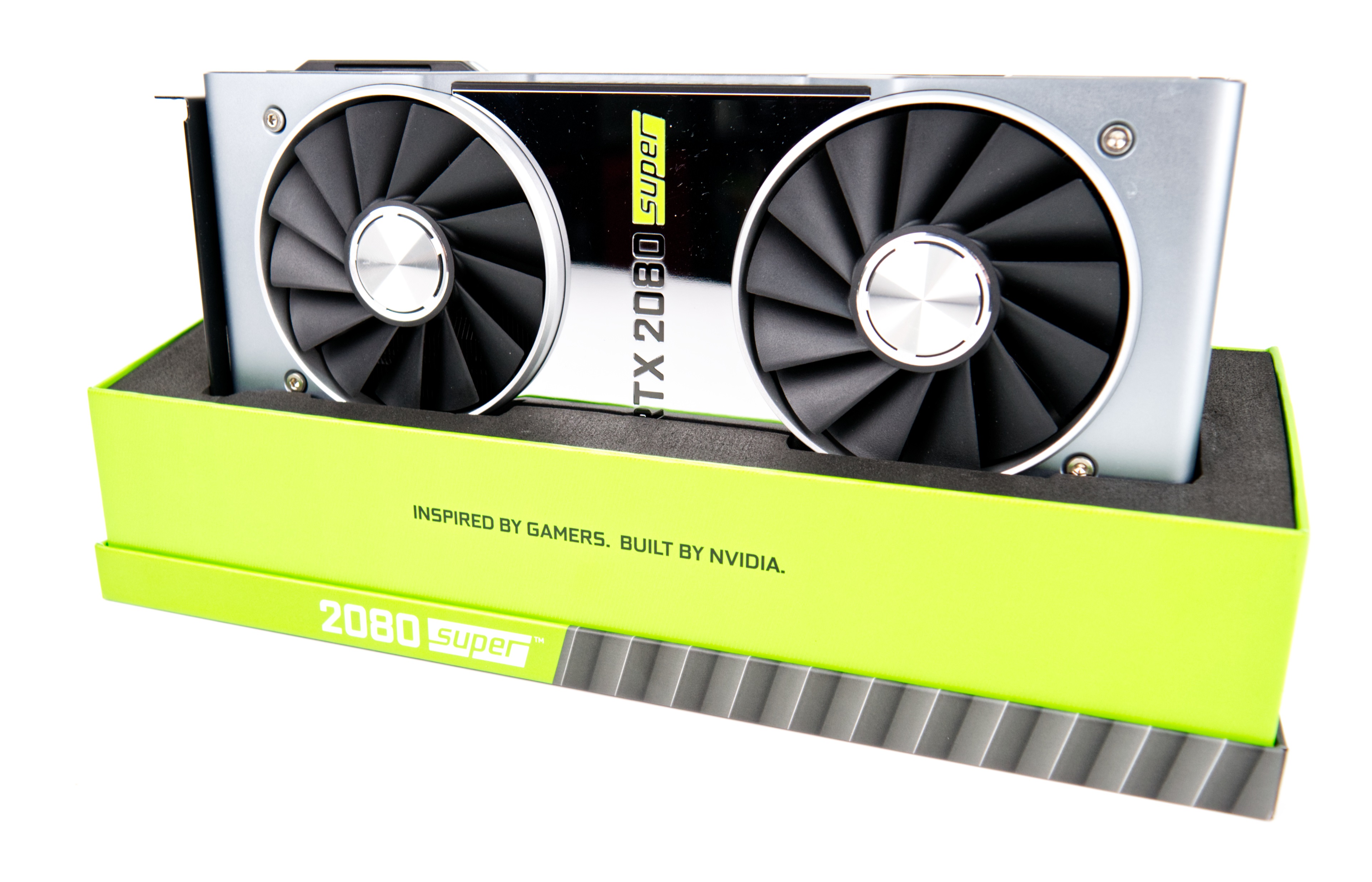
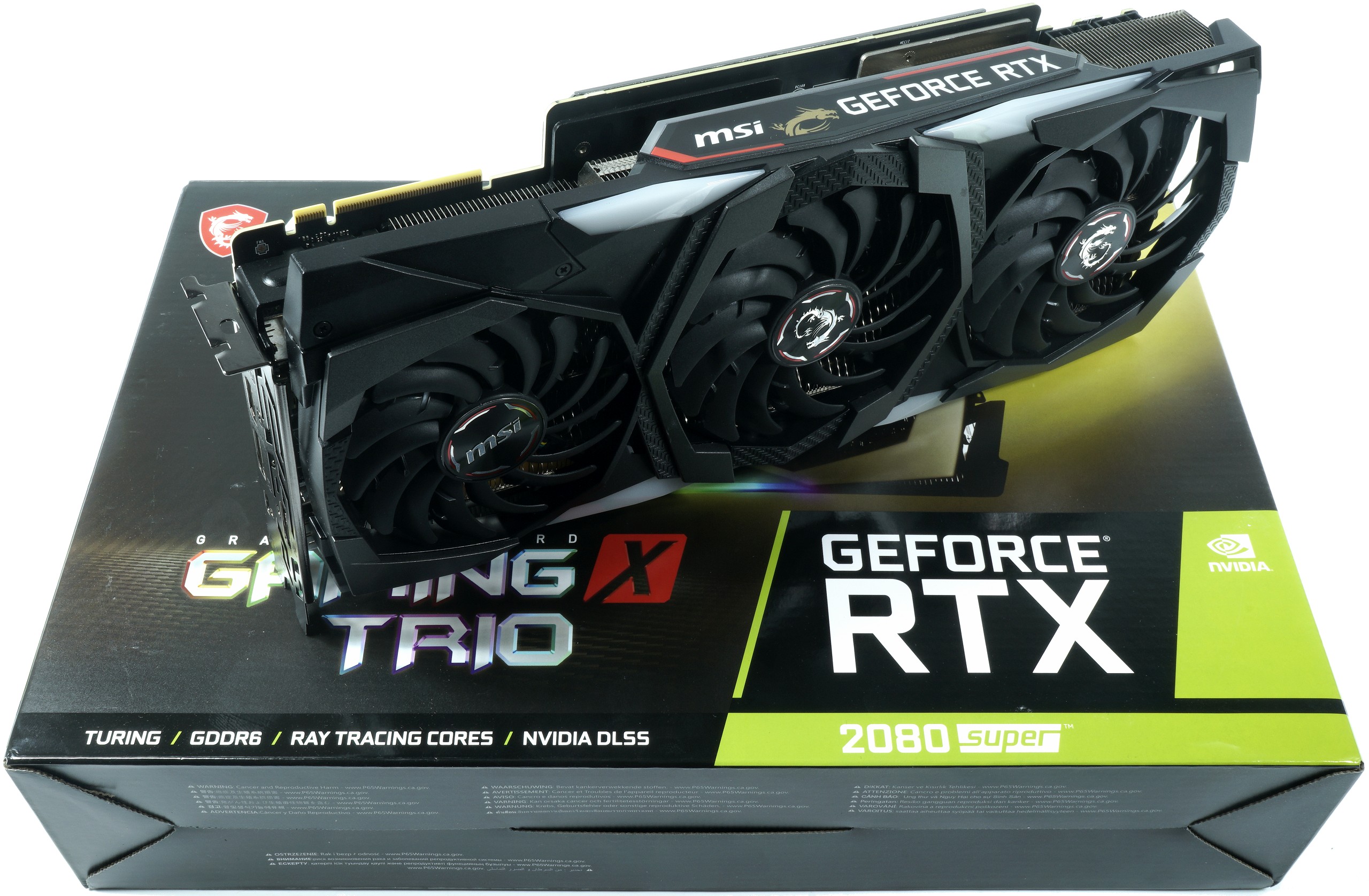
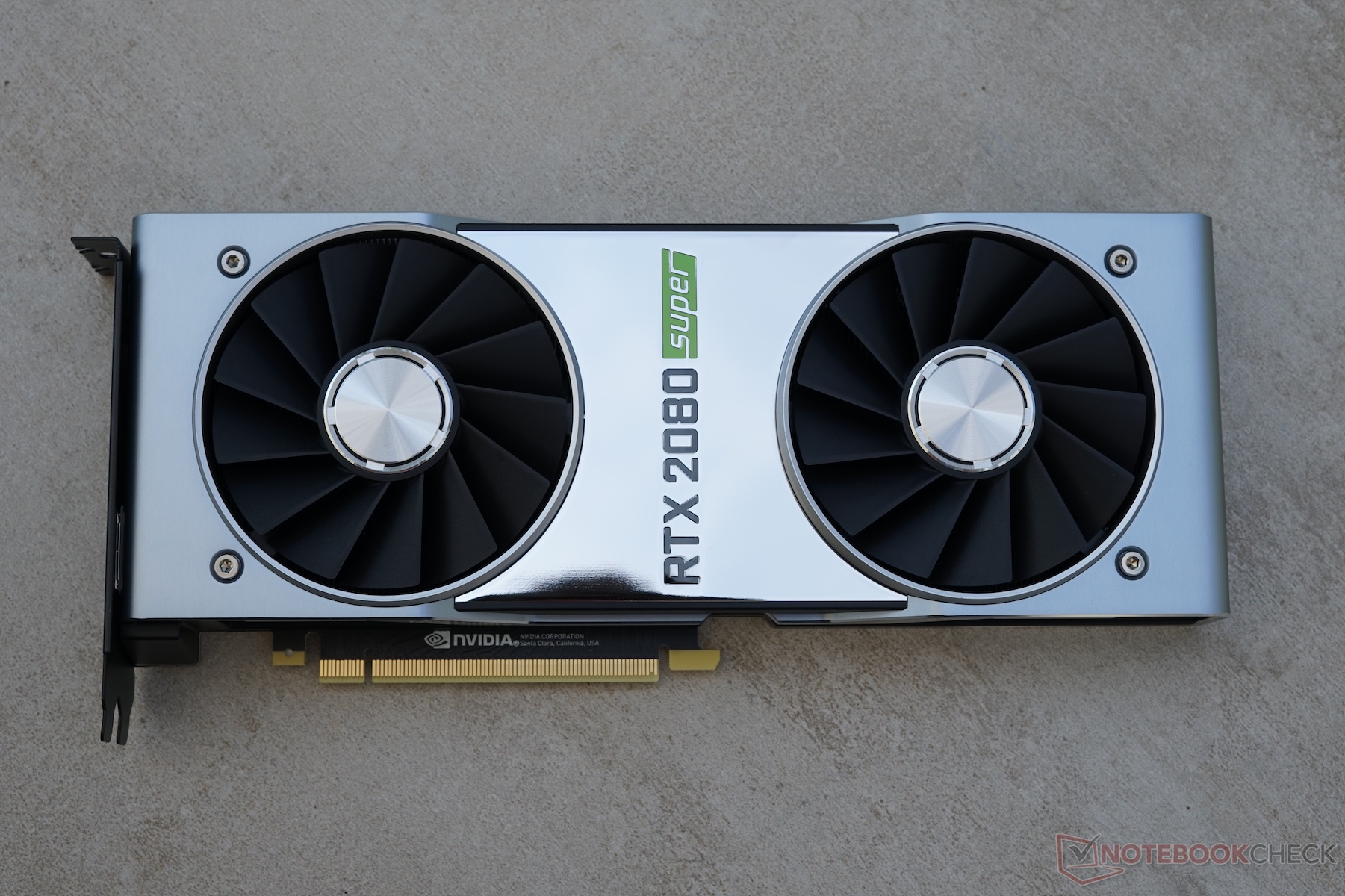
The NVIDIA GeForce RTX 2080 Super delivers solid 1080p and 1440p gaming performance, outperforming the base RTX 2080 by roughly 5 to 10 percent while matching or slightly trailing the RTX 2080 Ti depending on the title and optimization. In contemporary gaming benchmarks, it continues to handle modern rasterized titles at medium-to-high settings, though its 8GB VRAM buffer and first-generation ray tracing architecture show limitations in heavy modern releases.
Evaluating hardware from previous generations requires looking past launch-day reviews to understand how architecture ages under newer software standards, heavier graphics pipelines, and shifting resolution targets. Released in July 2019 as part of NVIDIA's Turing refresh, the GeForce RTX 2080 Super sat comfortably between the standard RTX 2080 and the flagship RTX 2080 Ti. Years after its initial market debut, builders, budget-conscious gamers, and second-hand market enthusiasts frequently turn to benchmark suites to determine whether this mid-to-high-end card still holds practical utility.
Understanding the true capabilities of the RTX 2080 Super involves analyzing raw computational power, thermal characteristics, driver optimization, and how its feature set interacts with modern graphics APIs like DirectX 12 Ultimate and Vulkan.
Technical Specifications and Architecture Overview
To understand any benchmark result, one must examine the silicon underneath. The RTX 2080 Super utilizes the TU104 graphics processor, manufactured on a 12-nanometer FinFET process developed by TSMC specifically for NVIDIA's Turing architecture. Unlike the base RTX 2080, which used a cut-down version of the TU104 die, the Super variant unlocked the full complement of 3,072 CUDA cores, matching the core count configuration found in professional-grade workstation cards of that era.
In addition to increased CUDA cores, the card features 384 Tensor cores dedicated to matrix math and machine learning tasks, along with 48 Ray Tracing (RT) cores designed to accelerate bounding volume hierarchy (BVH) traversal for real-time ray tracing. The memory subsystem consists of 8GB of GDDR6 video memory operating across a 256-bit bus width. By utilizing faster 15.5 Gbps memory modules, the RTX 2080 Super achieved a total memory bandwidth of 496 GB/s, a notable step up from the 448 GB/s bandwidth of the original RTX 2080.
| Specification | GeForce RTX 2080 | GeForce RTX 2080 Super | GeForce RTX 2080 Ti |
|---|---|---|---|
| CUDA Cores | 2,944 | 3,072 | 4,352 |
| Boost Clock (GHz) | 1.71 | 1.82 | 1.54 |
| VRAM Capacity | 8GB GDDR6 | 8GB GDDR6 | 11GB GDDR6 |
| Memory Bus Width | 256-bit | 256-bit | 352-bit |
| Memory Bandwidth | 448 GB/s | 496 GB/s | 616 GB/s |
| TDP (Watts) | 215W | 250W | 250W |
Synthetic Benchmarks: Measuring Raw Compute Power
Synthetic testing suites provide a controlled environment to measure raw mathematical computation, physics processing, and rendering pipeline efficiency without the variance introduced by game engines, background operating system tasks, or inconsistent driver optimizations.
In standard synthetic suites like UL Benchmarks' Time Spy and Fire Strike, the RTX 2080 Super demonstrates predictable scaling. In Time Spy, which simulates a DirectX 12 gaming workload at 1440p resolution, a well-cooled RTX 2080 Super paired with a competent CPU typically achieves a graphics score hovering around 11,500 to 12,200 points, depending on factory overclocks and power limits. This places it safely ahead of the original RTX 2080 and close to the performance tier occupied by later mid-range hardware.
Port Royal, UL's dedicated ray tracing benchmark, reveals the limitations of first-generation hardware. While the Turing architecture introduced hardware-accelerated ray tracing to the consumer market, the first-gen RT cores lack the throughput efficiency found in later architectures. In Port Royal, the card delivers playable framerates only when assisted by spatial upscaling technologies, highlighting why raw ray tracing performance drops significantly in titles featuring heavy reflection and global illumination calculations.
1080p and 1440p Gaming Performance
For the vast majority of users evaluating this GPU, real-world gaming benchmarks at 1080p and 1440p resolutions matter most. At 1080p Full HD, the RTX 2080 Super acts as a high-refresh-rate powerhouse. In competitive esports titles—such as Counter-Strike 2, Valorant, and Apex Legends—the card easily sustains framerates well above 144 frames per second, pairing exceptionally well with high-refresh monitors.
When moving to 1440p Quad HD, which has become a standard sweet spot for PC gaming, the card continues to deliver respectable results. In heavily optimized rasterized titles using the DirectX 12 API, players can expect average framerates well above 60 frames per second on high or ultra settings.
However, modern game engines utilizing Nanite, Lumen, or aggressive texture streaming can push the 8GB VRAM buffer to its absolute limits. When VRAM capacity is saturated, texture pop-in, stuttering, and frame-time spikes can occur, requiring users to dial back specific settings—such as texture quality, shadow resolution, or volumetric fog—to maintain a consistent visual experience.
Ray Tracing and Upscaling Technologies
Operating ray tracing features on an RTX 2080 Super requires careful setting management. Because first-generation RT cores impose a heavy performance penalty, enabling native ray-traced reflections or shadows often cuts framerates in half.
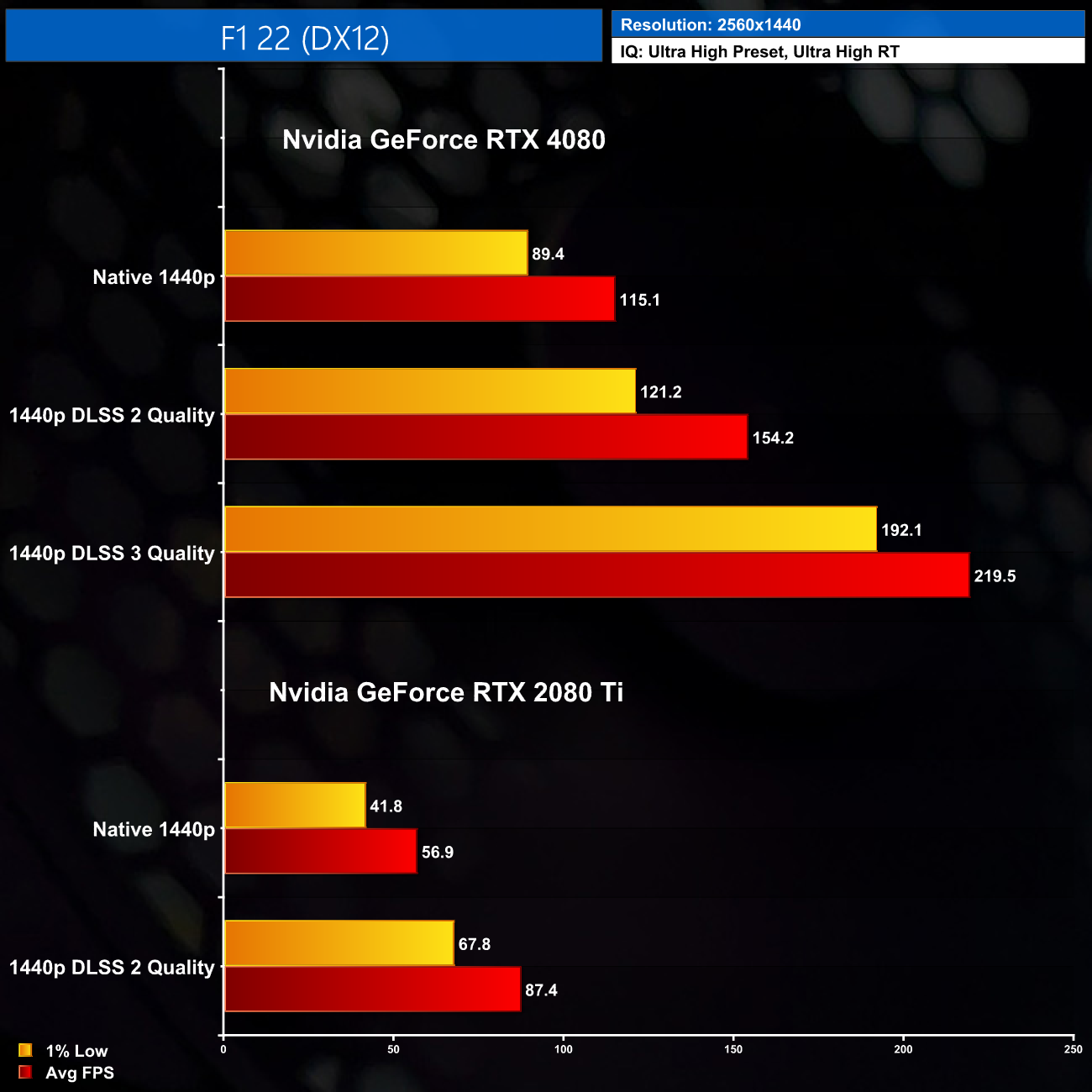
Fortunately, the card benefits heavily from spatial and temporal upscaling technologies. While NVIDIA's Deep Learning Super Sampling (DLSS) was initially introduced alongside the Turing architecture, early versions (DLSS 1.0) suffered from noticeable image softness. Subsequent driver updates and engine integrations improved DLSS 2.0+ support, allowing RTX 2000-series cards to leverage AI-assisted upscaling.
Running a demanding game at 1440p rendered from a 720p or 1080p internal resolution via DLSS provides a viable workaround for the hardware's ray tracing limitations. By offloading pixel generation to the Tensor cores, the card can achieve playable framerates in ray-traced environments that would otherwise stutter natively. Users must note, however, that DLSS 3 frame generation remains hardware-locked to the RTX 40-series and newer architectures, meaning RTX 2080 Super owners cannot utilize frame generation features without third-party modifications or relying entirely on traditional upscaling methods.
Power Consumption, Thermals, and Acoustics
Performance figures never exist in a vacuum; thermal management and power delivery dictate how long a GPU can sustain its boost clocks during extended gaming sessions. The RTX 2080 Super carries a Total Graphics Power (TGP) rating of 250 watts, consuming slightly more power than the base RTX 2080 due to its fully unlocked core configuration and faster memory chips.
During prolonged benchmark loads, reference (Founders Edition) and partner-custom cards (such as those from ASUS, MSI, EVGA, and Gigabyte) typically operate within a temperature range of 65°C to 78°C, depending on ambient room temperature, case airflow, and cooler design. Dual-fan and triple-fan custom variants generally maintain lower temperatures and quieter acoustic profiles compared to the blower or dual-axial configurations found on early reference boards.
Power supply unit (PSU) requirements remain an important consideration for anyone installing or maintaining this hardware. NVIDIA recommended a minimum 650-watt power supply for systems equipped with an RTX 2080 Super, paired with adequate 8-pin and 6-pin PCIe power connectors. Ensuring a stable, high-quality power supply prevents voltage droop and maintains consistent boost clock behavior, avoiding performance throttling during intensive synthetic workloads.
Comparative Market Position and Value Analysis
Evaluating the RTX 2080 Super requires contextualizing its position against subsequent hardware generations. On the used and secondary markets, this card frequently competes with newer mid-range silicon.
While newer entry-level and mid-range GPUs often match or exceed the rasterization performance of older high-end cards while consuming less power and offering newer software features, older flagship silicon often maintains advantages in memory bus width and raw multi-processing capability. However, the lack of official support for newer architectural features—such as hardware-based AV1 video encoding or advanced frame generation—means buyers must weigh upfront savings against long-term software compatibility.
| Feature / Metric | NVIDIA GeForce RTX 2080 Super | Modern Mid-Range Equivalents |
|---|---|---|
| Architecture | Turing (12nm) | Ada Lovelace / RDNA 3 |
| VRAM Buffer | 8GB GDDR6 (256-bit) | 8GB to 16GB GDDR6 |
| Ray Tracing Capability | 1st Generation (Basic) | 3rd or 4th Generation (Advanced) |
| Upscaling Support | DLSS 2 (No Frame Generation) | DLSS 3 / FSR 3 with Frame Generation |
| Encoding Support | H.264 / HEVC (NVENC) | H.264 / HEVC / AV1 (Dual NVENC) |
Common Bottlenecks and System Pairing
Benchmarking results demonstrate that an RTX 2080 Super can easily become bottlenecked by supporting system components if not balanced correctly. Pausing to examine the rest of the testing rig reveals several key considerations:
- CPU Selection: Pairing the GPU with an older processor (such as an Intel Core i7-8700K or AMD Ryzen 7 2700X) will frequently create a CPU bottleneck in high-refresh-rate 1080p scenarios. Upgrading to a modern platform with high IPC (Instructions Per Cycle) is necessary to unlock the full potential of the graphics card.
- Memory Bandwidth: System RAM speed and latency play a noticeable role in 1% and 0.1% low framerates. Utilizing dual-channel memory running at 3200MHz or higher minimizes stuttering during asset loading.
- Storage Speed: Modern open-world games rely heavily on fast NVMe solid-state drives. Running texture-heavy titles from a traditional mechanical hard drive will cause severe hitching regardless of GPU performance.
Frequently Asked Questions
Is the RTX 2080 Super still good for 1440p gaming?
Yes, the card handles most 1440p rasterized games at high settings with playable framerates above 60 FPS. However, demanding modern titles with aggressive ray tracing or extreme VRAM requirements may require lowering graphical settings or utilizing DLSS.
Does the RTX 2080 Super support DLSS 3 frame generation?
No. Official DLSS 3 frame generation is hardware-restricted to NVIDIA RTX 40-series GPUs and newer architectures. The RTX 2080 Super supports DLSS 2 for spatial and temporal upscaling, which helps improve performance in supported titles.
What is the power supply requirement for an RTX 2080 Super?
NVIDIA recommends a minimum 650-watt power supply with proper PCIe power connectors (typically one 8-pin and one 6-pin connector, depending on the specific board partner model). Using a reputable power supply brand ensures stable voltage delivery.
How does the RTX 2080 Super compare to the base RTX 2080?
The Super variant is roughly 5 to 10 percent faster than the standard RTX 2080. This performance increase comes from a fully unlocked TU104 core with more CUDA cores and faster GDDR6 memory bandwidth.
Can the RTX 2080 Super handle video editing and content creation?
Yes, the card features robust CUDA acceleration for applications like Adobe Premiere Pro, DaVinci Resolve, and Blender. However, its 8GB VRAM buffer can become a constraint when working with high-resolution 4K timelines or complex 3D rendering scenes.
Conclusion and Recommendations
The NVIDIA GeForce RTX 2080 Super remains a capable piece of engineering that delivers dependable 1080p and competent 1440p gaming performance. While first-generation ray tracing and an 8GB VRAM limit restrict its viability for uncompromised ultra-settings in the newest releases, it continues to serve users well in rasterized workloads, competitive titles, and productivity applications. Prospective buyers or current owners looking to maximize their hardware should ensure proper CPU pairing, adequate cooling, and sensible in-game setting management to extend the operational lifespan of the system.