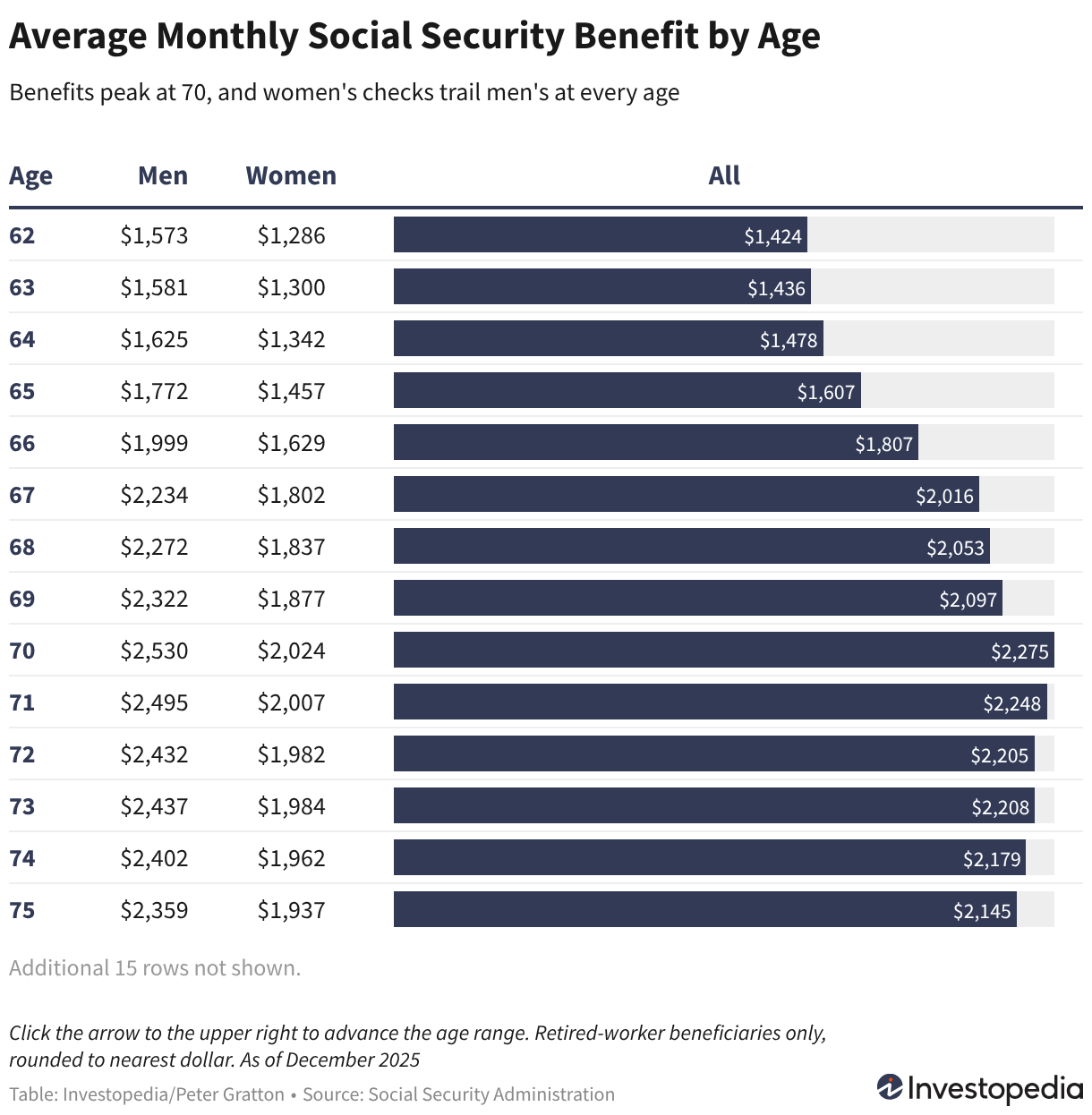
In 2026, the maximum monthly Social Security payment for an individual retiring at age 62 is approximately $2,910. This amount is reserved for "high earners" who have reached the maximum taxable earnings limit for at least 35 years of their career and choose to claim benefits at the earliest possible age.
Social Security remains the cornerstone of retirement planning for millions of Americans. However, the system is designed with a specific architecture that rewards those who delay their claims. For those considering early retirement in 2026, understanding the ceiling of these payments—and the rigorous requirements to reach it—is essential for accurate financial forecasting. The maximum benefit is not a standard rate but a peak achievement based on decades of maximum contributions into the Social Security Trust Funds.
Understanding the 2026 Social Security Landscape
As we navigate through 2026, the Social Security Administration (SSA) continues to adjust its figures based on the national average wage index and the Cost-of-Living Adjustment (COLA). For individuals reaching age 62 this year, the landscape is defined by the Full Retirement Age (FRA) guidelines established by the Social Security Amendments of 1983.
If you were born in 1964, you turn 62 in 2026. Your Full Retirement Age is 67. This distinction is critical because claiming at 62 represents a "permanent reduction" in your monthly benefit compared to waiting until age 67. The SSA applies a reduction of approximately 30% for those who claim five years early. Therefore, even if you are a maximum earner, your monthly check at 62 will be significantly smaller than if you waited.
The Role of the 2026 COLA
The maximum benefit at age 62 is influenced by the annual Cost-of-Living Adjustment. For 2026, the COLA reflects the inflationary trends observed in the previous year's Consumer Price Index for Urban Wage Earners and Clerical Workers (CPI-W). This adjustment ensures that the purchasing power of benefits does not erode. While the COLA increases the checks for existing beneficiaries, it also shifts the "bend points" and formulas used to calculate the Primary Insurance Amount (PIA) for new retirees entering the system in 2026.
How the Maximum Benefit is Calculated for 2026
To understand why the 2026 maximum at age 62 sits near $2,910, one must look at the three-pillar calculation method used by the SSA. This is not a flat-rate pension; it is an earned benefit that tracks your lifetime earnings history.
1. The 35-Year Rule
The SSA looks at your highest 35 years of earnings. Each year’s earnings are indexed to account for changes in average wages over time. If you have fewer than 35 years of work, the SSA enters "zeroes" into the calculation for the missing years. To hit the 2026 maximum, a worker must have 35 years where their income met or exceeded the taxable maximum—the ceiling on which Social Security taxes are paid.
2. The Taxable Maximum (Wage Base)
The maximum taxable earnings change annually. In 2024, the limit was $168,600. In 2025, it rose to $176,100. For 2026, the limit has been adjusted upward again to reflect wage growth. To qualify for the $2,910 monthly maximum at age 62, a worker must have earned at or above these specific limits every single year for 35 years. This is a feat achieved by a very small percentage of the American workforce, often referred to as "max earners."
3. The AIME and PIA Formula
The SSA converts your 35 highest indexed years into the Average Indexed Monthly Earnings (AIME). They then apply a formula to the AIME to find your Primary Insurance Amount (PIA). The formula uses "bend points"—dollar thresholds that determine the percentage of your AIME you receive.
- 90% of the first bracket
- 32% of the second bracket
- 15% of the third bracket
For a 62-year-old in 2026, the resulting PIA is then slashed by 30% because they are claiming 60 months before their FRA of 67.
2026 Maximum Benefit Comparison by Claiming Age
Choosing when to claim is perhaps the most significant financial decision a 62-year-old will make in 2026. The disparity between the maximum payment at age 62 and age 70 is vast, representing thousands of dollars in difference annually.
| Claiming Age | Percent of PIA Received | Estimated 2026 Max Monthly Payment |
|---|---|---|
| 62 (Early) | 70% | $2,910 |
| 67 (Full Retirement Age) | 100% | $4,100 |
| 70 (Delayed Credits) | 124% | $5,130 |
Note: Figures are estimates based on 2026 SSA formula adjustments and assume the worker hit the maximum taxable earnings for 35 years.
Why Most People Do Not Receive the Maximum
While $2,910 is the 2026 "ceiling" for 62-year-olds, the average benefit is substantially lower. Several factors prevent most workers from reaching the maximum payment:
Inconsistent High Earnings
To reach the maximum, a worker cannot have "off years." If a worker earned $150,000 in a year where the taxable maximum was $168,600, that year does not contribute the maximum possible amount to the AIME. Even high-level professionals often have early career years where their income was below the cap, which pulls down the final average.
The Impact of Early Career Years
The SSA indexes your wages, but the cap remains a hard limit. Many people earn significantly more in their 50s than they did in their 20s. However, because the calculation requires 35 years, those lower-earning years from the start of a career often remain in the calculation, preventing the worker from reaching the absolute maximum benefit.
Inflation vs. Wage Growth
The maximum benefit is also tied to the national average wage index. In years where wage growth is stagnant but inflation is high, the relative "value" of the maximum benefit may shift, though the COLA is designed to mitigate this.
Strategic Considerations for 62-Year-Olds in 2026
If you are eligible for the maximum benefit in 2026, you are in a unique financial position. However, claiming early still carries risks that require careful navigation.
The 2026 Earnings Test
If you claim Social Security at 62 in 2026 but continue to work, you are subject to the Social Security Earnings Test. For 2026, the SSA withholds $1 in benefits for every $2 you earn above a certain limit (which is adjusted annually). If your earnings are high enough to qualify for the maximum benefit, they are likely high enough to trigger the earnings test, potentially resulting in the temporary suspension of your benefits until you reach FRA.
Taxability of Benefits
For high earners, Social Security benefits are not tax-free. If your "combined income" (adjusted gross income + tax-exempt interest + half of your Social Security benefits) exceeds $34,000 (individual) or $44,000 (joint), up to 85% of your Social Security benefits may be subject to federal income tax. Max earners in 2026 will almost certainly fall into the 85% tax bracket for their benefits.
Longevity and the Break-Even Point
The "break-even point" is the age at which the total value of higher monthly payments (from waiting) surpasses the total value of lower monthly payments (from starting early). For most, this point occurs in their late 70s or early 80s. If you are in excellent health and have a family history of longevity, taking the maximum $2,910 at age 62 might result in hundreds of thousands of dollars in "lost" lifetime income compared to waiting until age 70.
Common Pitfalls and Misconceptions
"The Maximum Benefit is Guaranteed"
Many workers believe that if they earn a high salary (e.g., $200,000), they are automatically entitled to the maximum benefit. This is false. The benefit is based on 35 years of history. One or two years of high earnings cannot compensate for three decades of average earnings.
"Claiming at 62 is Always the Best Move if the Market is Down"
In 2026, some retirees may look at market volatility and decide to claim Social Security to "protect" their 401(k) or IRA. While this can be a valid strategy, it is a permanent decision. Once you claim at 62, the 30% reduction is locked in for life, regardless of how the stock market performs in subsequent years.
"Spousal Benefits Add to the Maximum"
A common misconception is that a high-earning individual can receive the maximum benefit plus a portion of their spouse's benefit. In reality, you receive the higher of the two amounts, not both. If your own earned benefit is the 2026 maximum of $2,910, it is highly unlikely that a spousal benefit would increase your check.
Frequently Asked Questions
What is the primary factor that determines the 2026 maximum benefit?
The primary factor is the Social Security Taxable Maximum. For 2026, this is the cap on earnings subject to the 6.2% FICA tax. To get the maximum benefit, your earnings must have met or exceeded this cap in 35 different years. This ensures you have contributed the maximum possible amount into the system.
Can I increase my benefit after claiming at 62 in 2026?
Generally, no. Once you claim at 62, your benefit is permanently reduced. However, if you continue to work and your current earnings are higher than one of the 35 years used in your original calculation, the SSA will automatically recalculate your benefit and may provide a small increase. Additionally, you will still receive annual COLA increases.
Is the 2026 maximum benefit at age 62 the same for everyone?
No. The "maximum" refers to the highest possible amount allowed by law for someone with a maximum earnings history. Most individuals will see a personal maximum that is much lower, based on their specific AIME. The $2,910 figure is the absolute ceiling for the 2026 cohort of 62-year-olds.
Does the maximum benefit include Medicare deductions?
No, the $2,910 figure is the gross benefit. If you are 62, you are not yet eligible for Medicare (which starts at 65). Once you turn 65, your Medicare Part B premiums will typically be deducted directly from your Social Security check, reducing the net amount you receive.
How does the 2026 maximum compare to 2025?
The 2026 maximum is higher than the 2025 maximum (which was $2,831) due to the Cost-of-Living Adjustment and the increase in the national average wage index. These annual adjustments are designed to keep the "maximum" relevant to current economic conditions.
Next Actions for 2026 Retirees
If you are turning 62 in 2026 and aiming for the maximum benefit, your first step should be to verify your earnings record. Access your "My Social Security" account on the official SSA.gov website. Review your 35-year history for any errors; a single missing year of high income can lower your monthly payment by a significant margin.
Secondly, consult with a financial advisor to run a "break-even" analysis. While the $2,910 monthly payment is substantial, waiting just three more years to age 65, or five years to age 67, can increase that monthly check by hundreds of dollars. In the context of a 20- or 30-year retirement, the decision made at age 62 in 2026 will have a compound effect on your total lifetime wealth and survivor benefit protections for your spouse.
Disclaimer: This information is for educational purposes and reflects 2026 Social Security guidelines. Social Security regulations are subject to legislative changes. Consult with the Social Security Administration or a certified financial planner for personalized advice.