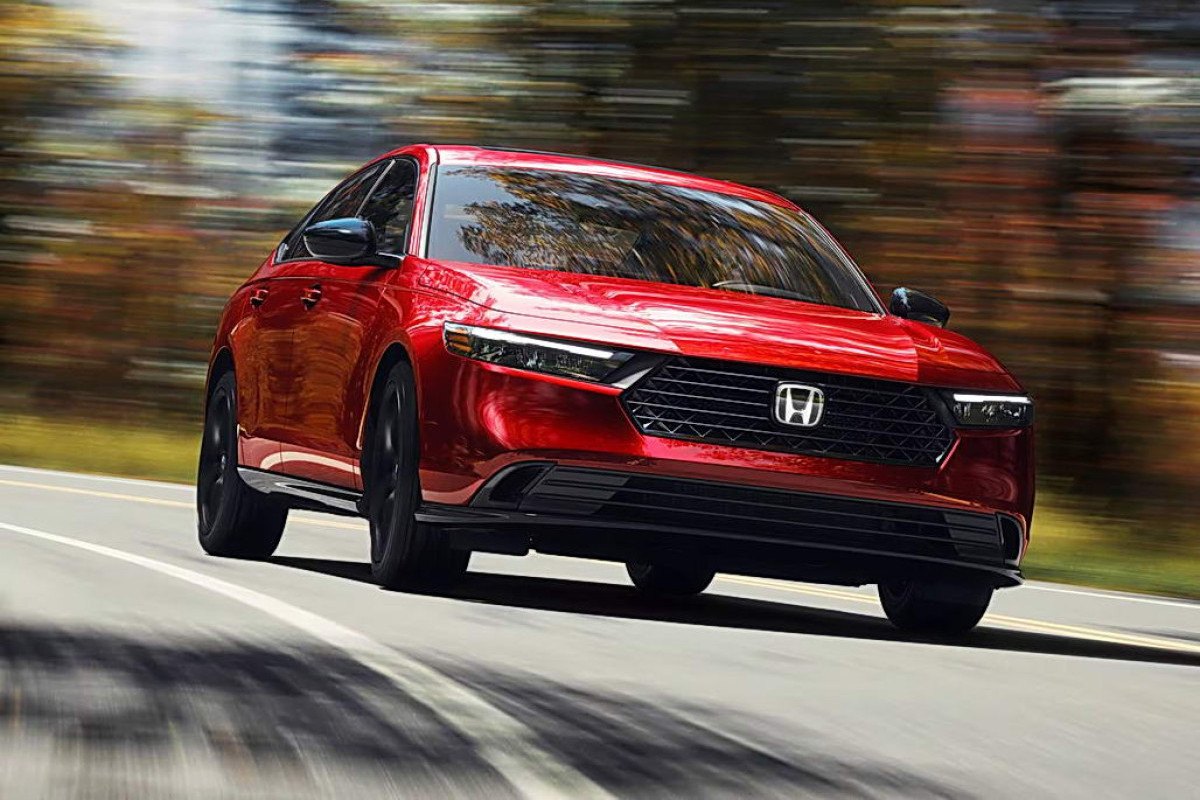
The 2025 V6 sedan market represents a final, refined era of internal combustion power, emphasizing balanced performance and sophisticated engineering. While global automotive trends lean heavily toward electrification, the 2025 model year provides enthusiasts with a curated selection of naturally aspirated and turbocharged six-cylinder engines that prioritize responsive torque, linear power delivery, and driver-centric dynamics.
The Shift Toward Six-Cylinder Specialization
The automotive industry has spent the last decade aggressively downsizing engines in favor of turbocharged four-cylinder units and full-electric powertrains. However, the 2025 V6 sedan remains a vital segment for manufacturers who cater to drivers seeking a specific balance of mechanical refinement and highway composure. A V6 architecture offers inherent advantages in terms of secondary balance, reducing vibration compared to high-output inline-four engines, and providing a more melodic, less strained acoustic signature during acceleration.
In 2025, the "V6" designation is no longer the default choice for premium sedans; it has become a deliberate engineering choice used to provide a "mid-tier" performance option. These vehicles bridge the gap between entry-level luxury economy and high-performance V8 or electrified flagships. Manufacturers have refined these engines with advanced thermal management, variable valve timing, and direct injection systems, ensuring that even older V6 architectures remain competitive in terms of emissions compliance and fuel efficiency.
Key Players in the 2025 V6 Sedan Segment
Understanding the current landscape requires identifying the specific vehicles that carried the V6 configuration into the 2025 model year. The following models represent the most prominent examples of this engineering choice:
- Toyota Camry (TRD/XSE variants): The 2025 Camry solidified its reputation for reliability by retaining the 3.5-liter V6, a powerplant praised for its longevity and consistent power band.
- Acura TLX (Type S): Utilizing a turbocharged 3.0-liter V6, the TLX Type S focuses on torque-vectoring performance, aiming for a driving experience that feels more connected to the road than traditional luxury cruisers.
- Genesis G70 (3.3T): Offering a twin-turbocharged 3.3-liter V6, the G70 remains a performance-oriented alternative to European benchmarks, focusing on a raw, athletic feel.
- Infiniti Q50: Serving as a long-standing stalwart, the Q50 utilizes a 3.0-liter twin-turbo V6, focusing on smooth highway power and a traditional luxury sedan aesthetic.
Comparative Performance Metrics
When selecting a 2025 V6 sedan, the primary differentiator lies in the implementation of the engine—specifically whether it is naturally aspirated (NA) or forced induction (turbocharged/supercharged).
Naturally Aspirated vs. Forced Induction
Naturally aspirated V6 engines, such as those found in the late-cycle versions of the Toyota Camry, provide immediate throttle response. Without the complexity of turbochargers, the power delivery is linear, making these vehicles highly predictable and reliable for daily commuting. The trade-off is often lower peak torque compared to modern turbocharged counterparts, requiring higher engine speeds to achieve maximum acceleration.
Conversely, turbocharged V6 engines, such as the 3.3L twin-turbo in the Genesis G70 or the 3.0L in the Acura TLX, provide a "wave" of torque at lower RPMs. This makes the vehicle feel faster and more effortless during passing maneuvers. However, these systems introduce more mechanical complexity, potentially increasing long-term maintenance requirements as components like turbocharger seals and cooling lines age.
| Model | Engine Configuration | Typical Power (hp) | Drive Layout |
|---|---|---|---|
| Toyota Camry V6 | 3.5L Naturally Aspirated | 301 | FWD |
| Acura TLX Type S | 3.0L Twin-Turbo V6 | 355 | AWD |
| Genesis G70 3.3T | 3.3L Twin-Turbo V6 | 365 | RWD/AWD |
| Infiniti Q50 | 3.0L Twin-Turbo V6 | 300-400 | RWD/AWD |
Engineering Trends: Thermal Management and Efficiency
The 2025 models highlight significant leaps in thermal management. Turbocharged V6 sedans now utilize sophisticated intercooling strategies and electric water pumps to prevent heat soak, a common historical complaint regarding forced induction engines. By decoupling the water pump from the engine's rotation, these systems can provide cooling even when the engine is at idle, significantly extending the lifespan of critical components.
Furthermore, direct-injection technology has reached a point of maturity. By spraying fuel directly into the combustion chamber rather than the intake manifold, these engines extract more energy from every drop of fuel. This allows 2025 V6 models to achieve highway fuel economy figures that were previously only possible with smaller four-cylinder engines, effectively mitigating the efficiency penalty traditionally associated with larger displacement powerplants.
The Role of Chassis Dynamics and All-Wheel Drive
A V6 engine is only as capable as the chassis that manages its power. In 2025, there is a clear trend toward integrating intelligent all-wheel drive (AWD) systems with V6 powertrains. Manufacturers are moving away from simple "slip-and-grip" systems toward torque-vectoring setups. These systems can actively distribute power not just between the front and rear axles, but between the left and right wheels as well.
For the driver, this means that even if a V6 sedan has significant power, it is far easier to manage in adverse weather conditions. The integration of electronic dampers and drive-mode selectors allows the driver to toggle between a comfort-oriented suspension setup—ideal for city driving—and a firm, performance-focused setting for winding roads. This versatility is the hallmark of the modern premium V6 sedan.
Common Maintenance and Ownership Considerations
Owning a 2025 V6 sedan requires a different approach to maintenance compared to the increasingly common battery-electric or hybrid options. While electric motors require minimal moving parts, the V6 internal combustion engine is a complex assembly of hundreds of interacting pieces.
- Oil Specifications: High-output turbocharged V6 engines are extremely sensitive to oil quality. Using the manufacturer-recommended synthetic oil is critical, as the heat generated by turbochargers can cause rapid breakdown of lower-quality lubricants.
- Cooling System Health: With the increased thermal loads on modern engines, coolant flushes are more important than ever. Overlooking the cooling system can lead to plastic component degradation and subsequent leaks.
- Spark Plug Intervals: Many performance-oriented V6 engines use "colder" heat-range spark plugs. Replacing these at the recommended interval is essential to prevent engine misfires and maintain optimal fuel economy.
- Air Intake Management: Turbocharged V6 models rely on precise mass airflow data. Ensuring that engine air filters are replaced on schedule is a low-cost step that prevents long-term damage to sensitive sensors and turbocharger impellers.
Assessing Suitability: Who Should Choose a V6?
A V6 sedan is an ideal choice for the driver who covers significant highway mileage and values the "character" of a traditional internal combustion engine. Unlike electric vehicles, which often feel disconnected from the road due to the absence of mechanical feedback, a V6 engine provides audible and tactile cues that many enthusiasts find essential to the driving experience.
However, if your primary usage is short-distance urban commuting with limited access to home charging or high-grade fueling infrastructure, the V6 may prove inefficient. The fuel economy penalties of a V6 in stop-and-go traffic remain higher than those of hybrid or EV alternatives. For the buyer who prioritizes long-term reliability and linear power, the 2025 V6 sedan market offers a "greatest hits" collection of mature, refined engineering.
Frequently Asked Questions
Are V6 engines becoming obsolete in 2026? While manufacturers are pivoting toward hybrid and electric platforms, V6 engines are not obsolete. They continue to serve as the high-performance core for many flagship and mid-range luxury vehicles where customers prioritize traditional mechanical feedback over pure efficiency.
Is it better to buy a naturally aspirated or a turbocharged V6? The choice depends on your priorities. Naturally aspirated engines generally offer higher long-term reliability and more predictable throttle response. Turbocharged engines provide more "usable" low-end torque for daily driving and highway passing but introduce more complex systems that may require more frequent maintenance as the vehicle ages.
How does the fuel economy of a 2025 V6 compare to newer 4-cylinder turbos? Generally, a 2025 V6 will consume slightly more fuel in city conditions compared to a modern 4-cylinder turbo. However, on the highway, the efficiency gap narrows significantly, as V6 engines often operate at a more efficient load point during sustained cruising speeds.
Will the maintenance costs for a 2025 V6 be higher than a standard sedan? Yes. Because V6 engines are often utilized in premium or performance-oriented models, they frequently require premium fuel, higher-grade synthetic oil, and more expensive replacement parts like ignition coils and specialized air filters.
Can I expect high resale value for a V6 sedan in the coming years? As the automotive market shifts toward electrification, well-maintained V6 sedans—particularly those with naturally aspirated engines—are increasingly viewed as "analog" classics. This may stabilize their resale value among enthusiasts who prefer traditional internal combustion over modern battery-electric alternatives.
Next Steps for Prospective Buyers
If you are currently evaluating a 2025 V6 sedan for purchase, prioritize a comprehensive test drive that includes both highway and secondary road conditions. Pay close attention to the transmission's behavior; the marriage of the V6 engine to the transmission is what defines the vehicle's character. Ask for a service history report if buying used to confirm that the previous owner adhered to strict oil-change intervals, as this is the single most important factor in the longevity of any V6 powerplant.
For the ultimate driving experience, compare the power-to-weight ratio of your top two choices. A slightly less powerful engine in a lighter chassis often provides a more engaging experience than a high-horsepower engine burdened by a heavy, non-performance-oriented frame.