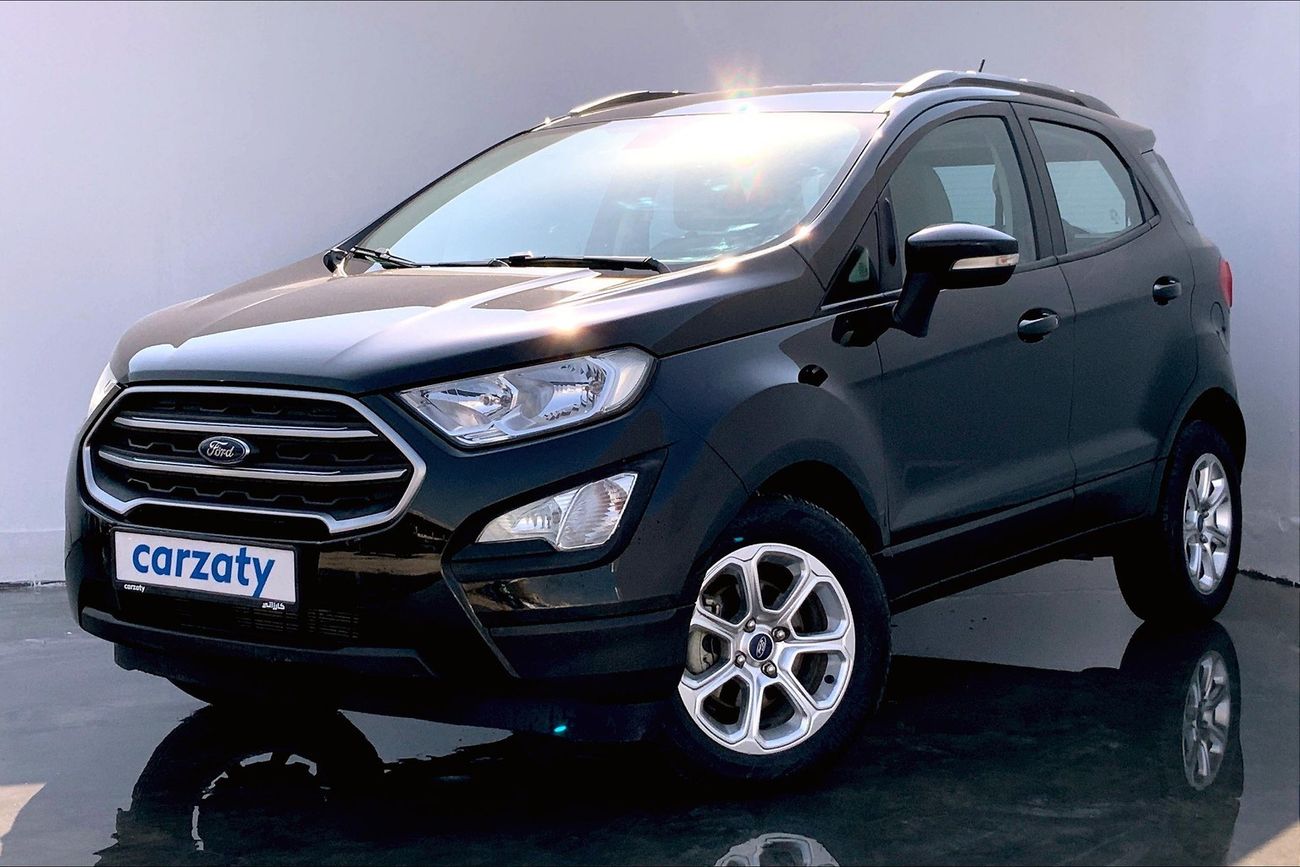
The 2018 Ford EcoSport offers two distinct engine choices: a 1.0-liter turbocharged three-cylinder engine producing 123 horsepower and a larger 2.0-liter four-cylinder engine generating 166 horsepower. These power figures define the vehicle's driving dynamics, towing capacity, and overall performance characteristics across its different trim levels.
When the Ford EcoSport arrived in the North American market for the 2018 model year, it entered a fiercely competitive subcompact crossover segment. Buyers seeking a nimble, high-riding urban runabout were met with a configuration strategy that tied engine output directly to the vehicle's drivetrain layout. Understanding the horsepower ratings, torque curves, and real-world implications of the EcoSport's powerplants helps prospective buyers, current owners, and automotive enthusiasts evaluate what these numbers mean for daily driving conditions.
Overview of the 2018 Ford EcoSport Powertrain Lineup
Ford structured the 2018 EcoSport's mechanical offerings around two primary engines. Each engine is paired exclusively with a 6-speed automatic transmission, though the drivetrain availability shifts dramatically between front-wheel drive (FWD) and intelligent four-wheel drive (4WD).
The base powerplant is an EcoBoost unit designed to maximize fuel efficiency while utilizing turbocharging to deliver usable low-end power. The step-up engine is a naturally aspirated four-cylinder that comes bundled exclusively with the 4WD system, adding weight and complexity but yielding a noticeable bump in peak horsepower.
Examining these powertrains requires looking beyond mere peak figures. Horsepower tells only part of the story; torque delivery, transmission gearing, and vehicle curb weight heavily influence how the 2018 Ford EcoSport accelerates from a standstill, passes traffic on the highway, and manages inclines.
The 1.0-Liter EcoBoost Three-Cylinder Engine
The 1.0-liter EcoBoost engine is standard equipment on the S, SE, and Titanium front-wheel-drive models of the 2018 Ford EcoSport. Despite its diminutive physical size and three-cylinder architecture, this engine incorporates direct fuel injection and a turbocharger to punch above its weight class.
Horsepower and Torque Specifications
The 1.0-liter EcoBoost engine produces 123 horsepower at 6,000 rpm and 125 lb-ft of torque at 3,500 rpm.
- Horsepower (123 hp): Delivered relatively high in the rev range, requiring the transmission to downshift during rapid passing maneuvers.
- Torque (125 lb-ft): The peak torque arrives at a modest 3,500 rpm, giving the light front-wheel-drive crossover a responsive feel when pulling away from stoplights in city traffic.
Real-World Driving Dynamics
Because turbochargers rely on exhaust gases to spin the turbine and force compressed air into the cylinders, drivers may notice a slight momentary delay—commonly known as turbo lag—when stepping hard on the accelerator from a dead stop. Once the turbo spools, the engine delivers steady, willing acceleration suited for urban commuting and suburban errand running.
However, when fully loaded with passengers and cargo, the 1.0-liter EcoSport works hard at highway speeds. Passing at 65 mph requires planning, as the small displacement engine reaches its upper limits when battling aerodynamic drag and highway inclines.
The 2.0-Liter Ti-VCT Four-Cylinder Engine
For buyers requiring more muscle or the added security of four-wheel drive, Ford fitted the 2018 EcoSport with a larger, naturally aspirated powerplant. The 2.0-liter Twin-independent Independent Variable Cam Timing (Ti-VCT) four-cylinder engine is standard on all models equipped with the 4WD system, which includes the SES trim and serves as an optional upgrade on other trim levels.
Horsepower and Torque Specifications
The 2018 EcoSport's 2.0-liter engine generates 166 horsepower at 6,500 rpm and 149 lb-ft of torque at 4,500 rpm.
- Horsepower (166 hp): A substantial 43-horsepower increase over the 1.0-liter engine, providing more confident highway merging and passing capability.
- Torque (149 lb-ft): Achieved higher in the rev range at 4,500 rpm, meaning the driver must rev the engine deeper into its power band to access maximum twisting force.
Real-World Driving Dynamics
Unlike the turbocharged three-cylinder, the 2.0-liter naturally aspirated engine offers linear, predictable throttle response. There is no turbo lag; power delivery builds smoothly as engine speed increases.
The trade-off for this added muscle is weight and fuel efficiency. The 4WD system and the heavier block add pounds to the vehicle's curb weight, blunting some of the performance gains. While 166 horsepower is respectable for a subcompact crossover of this era, the engine must be revved hard to deliver its peak output, resulting in noticeable engine noise under heavy acceleration.
Comparative Specifications Table
To clearly illustrate how the two engines differ, the following table compares key technical metrics for the 2018 Ford EcoSport powertrains:
| Metric | 1.0L EcoBoost I3 | 2.0L Ti-VCT I4 |
|---|---|---|
| Drivetrain | Front-Wheel Drive (FWD) | Four-Wheel Drive (4WD) |
| Horsepower | 123 hp @ 6,000 rpm | 166 hp @ 6,500 rpm |
| Torque | 125 lb-ft @ 3,500 rpm | 149 lb-ft @ 4,500 rpm |
| Transmission | 6-speed automatic | 6-speed automatic |
| Max Towing Capacity | 1,400 lbs (properly equipped) | 2,000 lbs (properly equipped) |
| Fuel Economy (EPA Est.) | ~27 city / 29 highway mpg | ~23 city / 29 highway mpg |
Transmission Pairing and Performance Impact
Both versions of the 2018 Ford EcoSport utilize a 6-speed SelectShift automatic transmission. This torque-converter-based automatic replaced the dual-clutch transmissions found in some concurrent Ford passenger cars, addressing reliability concerns associated with dry clutch systems of that era.
The transmission programming prioritizes fuel economy, shifting up early in urban settings to keep engine rpm low. With the 1.0-liter engine, this can occasionally result in the transmission hunting for gears on rolling hills, as the small engine tries to balance maintaining speed with conserving fuel. The 2018 Ford EcoSport SES trim, which features the 2.0-liter engine exclusively, includes steering-wheel-mounted paddle shifters, giving the driver manual control over gear selection when navigating winding roads or descending steep grades.
Towing Capacities and Structural Load
Horsepower and torque ratings directly dictate the towing capabilities of the 2018 Ford EcoSport. Owners planning to pull small utility trailers or lightweight pop-up campers must note the strict limitations set by Ford:
- 1.0L FWD Models: Rated for a maximum towing capacity of up to 1,400 pounds when properly equipped with a dealer-installed trailer tow package. This capacity is suitable for small personal gear trailers or lightweight aluminum utility carts.
- 2.0L 4WD Models: Rated for a maximum towing capacity of up to 2,000 pounds. The combination of 166 horsepower, 149 lb-ft of torque, and all-wheel traction makes this variant better suited for hauling heavier loads, though drivers should always consult the owner's manual for tongue weight limits and payload restrictions.
Common Questions About 2018 Ford EcoSport Horsepower
Is the 2018 Ford EcoSport 1.0-liter engine powerful enough for highway driving?
Yes, but with caveats. The 123-horsepower 1.0-liter engine can maintain highway speeds of 65 to 75 mph without difficulty once cruising. However, passing slower traffic or merging onto short highway on-ramps requires full throttle input, and acceleration slows significantly when the vehicle carries multiple passengers or heavy cargo.
Why does the 2018 EcoSport tie its engines to specific drivetrain layouts?
Ford engineered the packaging to optimize weight and space within the subcompact footprint. The 1.0-liter three-cylinder is physically compact, leaving room for front-wheel-drive components, while the heavier 2.0-liter four-cylinder was deemed necessary to offset the mechanical drag and weight of the intelligent 4WD system, ensuring acceptable performance parity across trims.
How does fuel economy compare between the two horsepower options?
The lower-horsepower 1.0L FWD model achieves better city fuel economy, rated around 27 mpg city and 29 mpg highway. The higher-horsepower 2.0L 4WD model trades city efficiency for traction and power, dropping to approximately 23 mpg city while maintaining a similar 29 mpg highway rating under optimal conditions.
Can the horsepower of a 2018 Ford EcoSport be upgraded aftermarket?
While aftermarket performance tuners, cold-air intakes, and exhaust systems exist for Ford's EcoBoost engines, modifying the 1.0-liter or 2.0-liter engines in the EcoSport yields limited gains. Enthusiasts looking for significant power increases typically look toward engine swaps or vehicle upgrades, as subcompact crossovers are not heavily supported by performance aftermarket manufacturers.
Does high altitude affect the 2018 EcoSport horsepower?
Naturally aspirated engines, such as the 2.0-liter four-cylinder, lose approximately 3% of their horsepower for every 1,000 feet of elevation gain due to lower air density. The 1.0-liter EcoBoost engine compensates better at high altitudes because its turbocharger can spin faster to compress thinner air, mitigating some of the power loss experienced in mountainous regions.
Practical Next Actions for Prospective Buyers
When shopping for a used 2018 Ford EcoSport, prospective owners should test-drive both engine variants on roads that mimic their daily commute. Buyers living in flat, congested urban environments will find the 1.0-liter EcoBoost engine adequate, more fuel-efficient, and responsive at low speeds. Conversely, drivers residing in snowy climates, mountainous terrain, or those who frequently travel with a full cabin should prioritize the 2.0-liter engine and its 4WD capability to ensure satisfactory throttle response and traction. Always verify the vehicle identification number (VIN) and window sticker to confirm which engine and drivetrain are installed before finalizing a purchase.