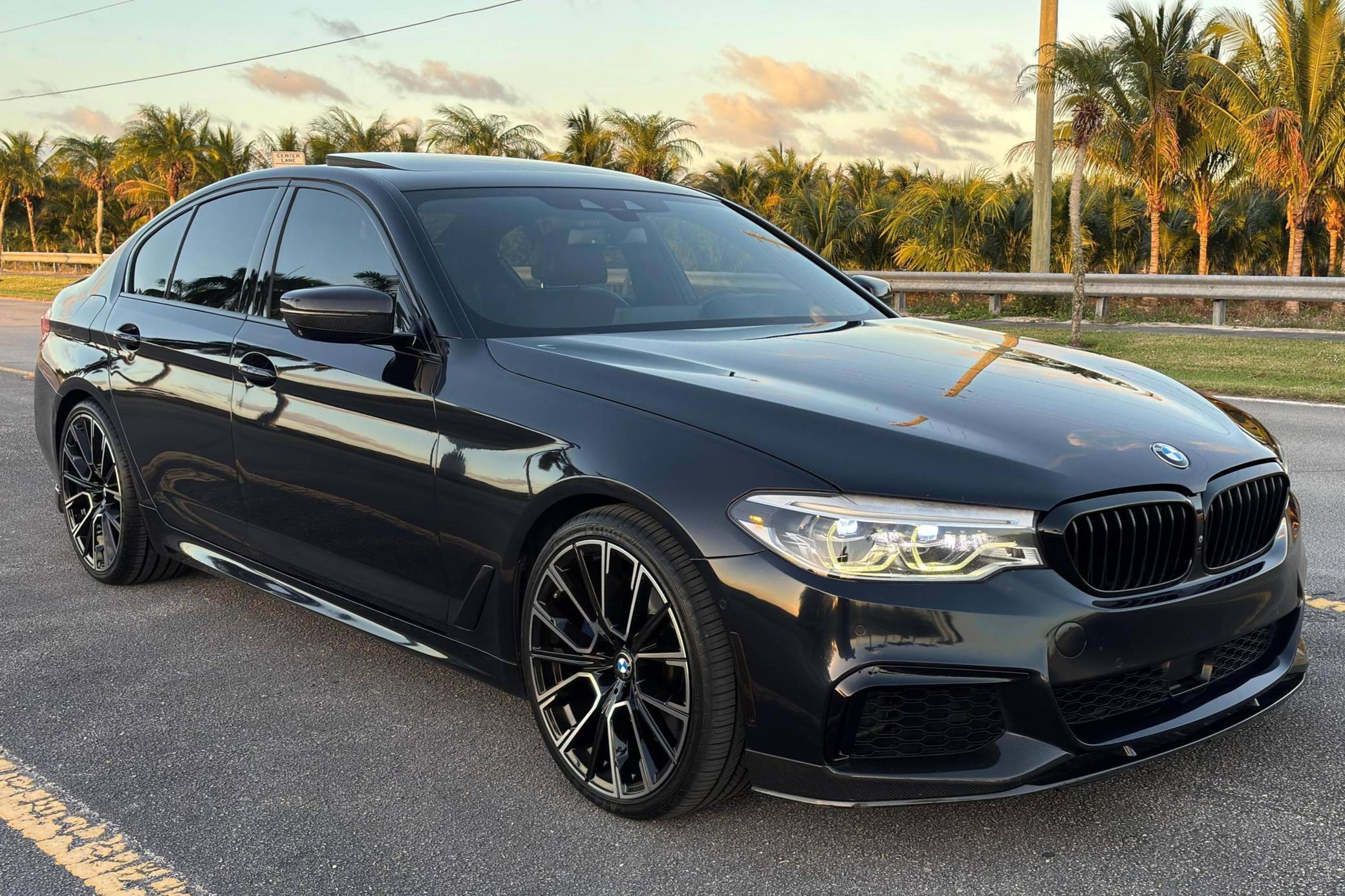
The 2018 BMW M550i xDrive produces 456 horsepower and 480 lb-ft of torque from its 4.4-liter twin-turbocharged V8 engine, propelling the executive sedan from 0 to 60 mph in a brisk 3.9 to 4.0 seconds. Positioned strategically between the standard 540i and the high-performance M5, this model bridges daily executive comfort with track-adjacent capability.
Evaluating a high-performance luxury sedan requires looking past surface-level marketing to examine the powertrain architecture, suspension dynamics, real-world maintenance considerations, and market positioning. For enthusiasts and prospective buyers navigating the pre-owned market, understanding the mechanical depth of the 2018 BMW M550i xDrive clarifies why this variant remains a benchmark for turbocharged V8 executive sedans.
Powertrain Architecture: The N63TU2 V8 Engine
At the heart of the 2018 BMW M550i xDrive is a heavily revised iteration of BMW's modular V8 architecture, internally designated as the N63TU2 (Technical Update 2). While earlier iterations of the N63 family faced well-documented scrutiny regarding reliability and oil consumption, BMW implemented substantial engineering updates for this generation to enhance thermal management, combustion efficiency, and durability.
The engine displaces 4.395 liters and utilizes a "hot-V" configuration. This layout places the twin-scroll turbochargers inside the cylinder bank V-valley rather than on the outer flanks of the engine block. This design shortens the exhaust paths, significantly reducing turbo lag and providing near-instantaneous throttle response. Combined with direct fuel injection and VALVETRONIC fully variable valve control, the power delivery is remarkably linear, avoiding the spikey torque delivery typical of older turbo setups.
Furthermore, the N63TU2 features upgraded engine management software, higher-pressure fuel injectors, and improved cooling circuits. An indirect air-to-water intercooler setup drops the temperature of the compressed intake air before it enters the combustion chambers, ensuring consistent power output even under sustained load.
Detailed Output and Performance Metrics
The horsepower rating of 456 hp is delivered across a broad band from 5,500 to 6,000 rpm, while the substantial 480 lb-ft of torque peaks early, kicking in at just 1,800 rpm and holding flat until 4,750 rpm. This flat torque curve allows the vehicle to surge forward effortlessly from low RPMs without requiring aggressive downshifts.
| Performance Metric | Specification |
|---|---|
| Engine Type | 4.4-Liter Twin-Turbocharged V8 (N63TU2) |
| Horsepower | 456 hp @ 5,500 – 6,000 rpm |
| Torque | 480 lb-ft @ 1,800 – 4,750 rpm |
| Transmission | 8-Speed Sport Automatic (ZF 8HP75) with Paddle Shifters |
| Drivetrain | Rear-Biased xDrive Intelligent All-Wheel Drive |
| 0–60 mph Time | 3.9 – 4.0 seconds (Independent Testing) |
| Top Speed | 155 mph (Electronically Limited) |
| Curb Weight | Approx. 4,277 lbs |
Power is routed through a beefed-up ZF 8-speed automatic transmission (ZF 8HP75). This gearbox is widely regarded as one of the best torque-converter automatics on the market, offering lightning-fast shifts in Sport mode while executing buttery-smooth gear changes during standard highway cruising.
Drivetrain and Handling Dynamics: xDrive and Integral Active Steering
The "xDrive" badge indicates BMW’s intelligent all-wheel-drive system. Unlike front-wheel-drive-based systems that react to slip, the system in the 550i is permanently active and continuously monitors steering angle, wheel speed, and lateral acceleration to distribute torque dynamically between the front and rear axles.
Despite utilizing all-wheel drive for maximum traction off the line, the system maintains a distinct rear-wheel-drive character. In optimal driving conditions, the multi-plate clutch pack sends a larger percentage of power to the rear wheels, preserving the neutral handling dynamics expected from a BMW M Performance automobile.
Handling is further aided by standard M Sport brakes, a lowered M Sport suspension (which drops the vehicle by 10 millimeters compared to a standard G30 5 Series), and variable-ratio steering. Optional features such as Adaptive Drive—which combines active roll stabilization with dynamic damper control—read road conditions using navigation data and optical cameras to preemptively adjust suspension stiffness.
Comparison: M550i vs. 540i and F90 M5
To contextualize the performance of the M550i, it helps to compare it directly with its stablemates within the G30 5 Series generation.
[Standard 540i] ---------> [M550i xDrive (456 HP)] ---------> [F90 M5 (600+ HP)] (Inline-6 Daily Driver) (V8 Executive / Sports Sedan) (Track-Ready Super Sedan)
The 540i serves as an efficient, refined inline-six daily driver, while the F90 M5 is a dedicated track weapon equipped with a high-strung S63 engine and a switchable rear-wheel-drive drift mode. The M550i bridges this gap perfectly. It borrows the effortless V8 thrust and acoustic presence of an M car while retaining the plush ride quality, quiet cabin insulation, and subtle exterior styling appropriate for corporate settings.
Common Maintenance Considerations and Ownership Realities
While the N63TU2 engine is significantly more robust than its predecessors, owning a high-output German V8 requires proactive maintenance. Prospective buyers should be aware of several operational realities:
- Coolant Consumption: The secondary cooling system for the turbochargers can occasionally experience minor leaks or consumption. Regular fluid level checks are mandatory.
- Brake and Tire Wear: Due to the vehicle's substantial curb weight (over 4,200 lbs) and high torque output, rear tires and brake pads tend to wear at an accelerated rate compared to standard six-cylinder sedans.
- Battery Health: Modern BMWs feature complex electrical architectures. A failing battery can trigger a cascade of ghost error codes across the iDrive system.
- Warm-Up Discipline: Like all forced-induction performance engines, oil operating temperatures must reach optimal levels before heavy throttle application to protect turbocharger bearings and internal components.
Adhering to strict oil change intervals—ideally every 5,000 to 7,500 miles rather than the factory-recommended long-life service intervals—greatly extends the operational lifespan of the valvetrain and timing components.
Frequently Asked Questions
Is the 2018 BMW M550i faster than an older BMW M5?
Yes, in real-world driving conditions, the 2018 M550i xDrive matches or exceeds the straight-line acceleration of older V10-powered (E60) and twin-turbo V8 (F10) M5 generations. Its all-wheel-drive launch traction allows it to hit 60 mph in roughly 3.9 seconds, catching many older performance cars off guard.
Can the horsepower on a 2018 M550i be easily increased?
The N63TU2 engine responds exceptionally well to ECU tuning (often referred to as a flash tune or piggyback box). Because the engine is factory-derated to leave room for the flagship M5, minor software adjustments can push horsepower well past the 500-hp mark without altering hard parts. However, tuners should account for added stress on the transmission and cooling components.
Does the M550i xDrive come with a manual transmission?
No. The 2018 M550i is exclusively paired with the ZF 8-speed sport automatic transmission. A manual transmission option was not offered for the V8 variant of the G30 5 Series in global markets due to low demand and torque capacity limitations.
How does the M550i differ aesthetically from a standard 5 Series?
Distinguishing features include Cerium Grey exterior trim accents (on the kidney grille surrounds, mirror caps, and air breathers), unique 19-inch or optional 20-inch M light-alloy wheels, a subtle rear trunk spoiler, trapezoidal exhaust tips, and M-badged door sills and steering wheels.
Conclusion and Next Actions
The 2018 BMW M550i xDrive delivers an exceptional balance of luxury, everyday usability, and effortless V8 performance. Producing 456 horsepower, it provides more than enough real-world capability while avoiding the harsher ride and higher operating costs of a full-fledged M5. For prospective buyers or enthusiasts evaluating this model, reviewing comprehensive service records, performing a pre-purchase inspection focusing on the cooling and turbo systems, and verifying fluid maintenance history are the essential next steps before finalizing a purchase.