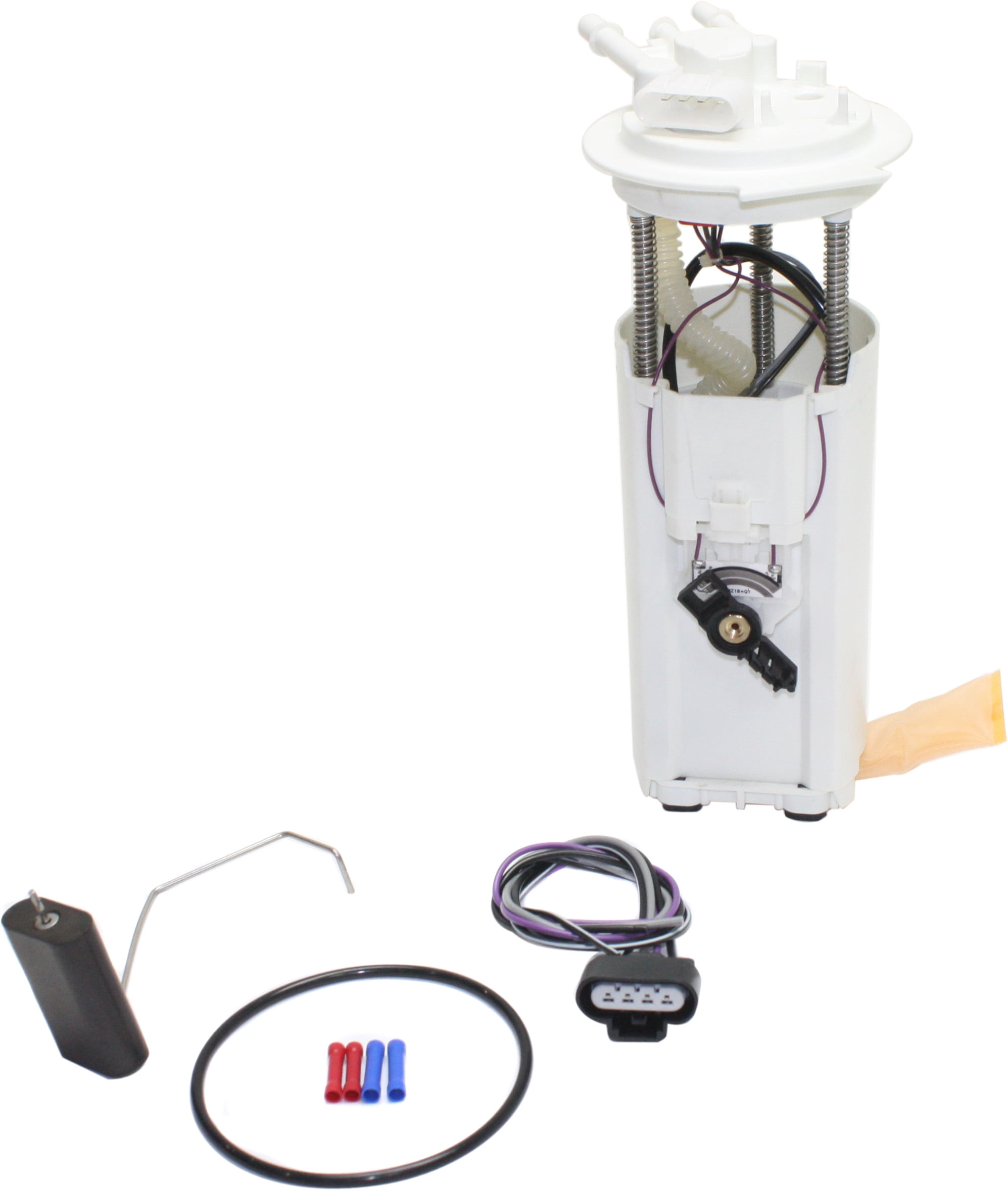
The 2012 Chevrolet Equinox features a standard fuel tank capacity of 18.8 US gallons (approximately 71 liters). This capacity is consistent across all major trim levels, including the LS, 1LT, 2LT, and LTZ, regardless of whether the vehicle is equipped with the 2.4L inline-4 engine or the 3.0L V6 engine.
Understanding the fuel capacity of the 2012 Chevy Equinox is essential for calculating travel range, estimating refueling costs, and maintaining the vehicle's long-term health. While the tank size remains fixed at 18.8 gallons, the real-world distance you can travel on a single fill-up varies significantly based on your engine choice and drivetrain configuration (Front-Wheel Drive vs. All-Wheel Drive).
Technical Specifications of the Fuel System
The 2012 Equinox was designed during the peak of the second-generation (2010–2017) platform. Chevrolet engineers opted for a saddle-style fuel tank design, which is common in crossovers. This design allows the tank to straddle the driveshaft in All-Wheel Drive (AWD) models while maintaining a low center of gravity and maximizing interior cabin space.
Unlike some competitors that offer different tank sizes for different engines, General Motors standardized the 18.8-gallon tank for the 2012 Equinox. This simplifies manufacturing and ensures that even the thirstier V6 models have a respectable cruising range.
Fuel Type and Octane Requirements
The 2012 Equinox is designed to run on regular unleaded gasoline with a pump octane rating of 87 or higher. Using premium fuel (91-93 octane) is generally not required and will not provide a significant boost in performance or efficiency for the naturally aspirated engines found in this model year.
Many 2012 Equinox units, particularly those with the 2.4L Ecotec engine and some 3.0L V6 models, are FlexFuel capable. These vehicles can be identified by a yellow fuel cap or a "FlexFuel" badge on the rear tailgate. These models can run on E85 (a blend of 85% ethanol and 15% gasoline), though it is important to note that E85 has a lower energy density, leading to a roughly 25-30% decrease in fuel economy.
Range and Efficiency by Configuration
While the capacity is fixed at 18.8 gallons, your "distance to empty" will depend on your specific setup. In 2012, the Equinox offered two distinct engines, each with different EPA ratings.
The 2.4L I4 Ecotec Engine
This was the most popular engine choice, focused on maximizing efficiency.
- FWD Efficiency: Approximately 22 mpg city / 32 mpg highway.
- AWD Efficiency: Approximately 20 mpg city / 29 mpg highway.
- Estimated Max Highway Range: Up to 600 miles (under ideal conditions).
The 3.0L V6 Engine
This engine was chosen by drivers who prioritized towing capacity (up to 3,500 lbs) and passing power over raw fuel economy.
- FWD Efficiency: Approximately 17 mpg city / 24 mpg highway.
- AWD Efficiency: Approximately 16 mpg city / 23 mpg highway.
- Estimated Max Highway Range: Approximately 430–450 miles.
Fuel Capacity and Range Comparison Table
| Engine Configuration | Drivetrain | Tank Capacity (Gal) | EPA Combined MPG | Estimated Total Range |
|---|---|---|---|---|
| 2.4L 4-Cylinder | FWD | 18.8 | 26 | 488 Miles |
| 2.4L 4-Cylinder | AWD | 18.8 | 23 | 432 Miles |
| 3.0L V6 | FWD | 18.8 | 20 | 376 Miles |
| 3.0L V6 | AWD | 18.8 | 19 | 357 Miles |
Note: Range estimates are based on a full 18.8-gallon tank; however, practical range is lower as drivers typically refuel when the "Low Fuel" light illuminates.
The "Reserve" and the Low Fuel Warning
When the low fuel warning light illuminates on your dashboard, you have not actually run out of gas. Like most GM vehicles of this era, the 2012 Equinox includes a "reserve" portion of the tank.
Typically, the low fuel light triggers when there are approximately 2.0 to 2.5 gallons of fuel remaining in the tank. This is a safety margin designed to give the driver enough time to find a gas station. If you are driving the 2.4L FWD model on the highway, this could mean an additional 50–60 miles of range. However, if you are in a V6 AWD model in stop-and-go traffic, that reserve might only last 30 miles.
Caution: It is not recommended to frequently drive the vehicle until the fuel light comes on. The fuel pump is located inside the tank and relies on the gasoline itself for cooling and lubrication. Frequently running the tank near empty can cause the fuel pump to overheat, potentially leading to premature failure and a costly repair.
Factors Affecting Real-World Fuel Capacity
You may occasionally notice that you cannot pump a full 18.8 gallons into your tank even when the gauge is near empty. There are several technical reasons for this:
- Vapor Space: Fuel tanks are designed with an expansion area at the top to accommodate gasoline vapors. This prevents the tank from rupturing due to pressure changes caused by temperature fluctuations.
- The EVAP System: The 2012 Equinox uses an Evaporative Emission (EVAP) system to capture gasoline vapors and prevent them from escaping into the atmosphere. The charcoal canister, a key component of this system, can be damaged if you "top off" your tank after the pump clicks off.
- Fuel Pump Displacement: The fuel pump assembly occupies a small amount of physical volume inside the tank, slightly reducing the total amount of liquid fuel the tank can hold.
- Inaccurate Fuel Level Sensors: A common issue reported by some 2012 Equinox owners involves the fuel level sensor (part of the fuel pump assembly). Over time, sulfur deposits from gasoline can build up on the sensor's contact points, causing the gauge to read incorrectly. If your gauge shows "empty" but you can only pump 14 gallons, your sensor may be failing.
Maximizing Your 2012 Equinox's Range
To get the most out of every 18.8-gallon fill-up, consider the following maintenance and driving habits:
1. Monitor the High-Pressure Fuel Pump (2.4L Models)
The 2.4L engine in the 2012 Equinox uses Direct Injection. This system relies on a High-Pressure Fuel Pump (HPFP). In some units, the HPFP can develop internal leaks, allowing raw gasoline to enter the engine oil. This not only degrades lubrication but also negatively impacts fuel efficiency. If you smell gasoline on your oil dipstick, have the vehicle inspected immediately.
2. Tire Pressure and Rolling Resistance
The 2012 Equinox is sensitive to tire pressure. Under-inflated tires increase the contact patch with the road, creating more friction (rolling resistance) and forcing the engine to work harder. Keeping tires at the manufacturer-recommended PSI (usually 35 PSI for the Equinox) can improve fuel economy by up to 3%.
3. Use the "Eco" Mode (2.4L Models)
The 4-cylinder Equinox features an "Eco" button located on the center console near the shifter. When engaged, this alters the transmission shift points and reduces the idle speed to save fuel. While it makes the vehicle feel slightly less responsive, it is an effective way to stretch your 18.8 gallons during highway cruising.
4. Clean the Fuel System
As these vehicles age, carbon deposits can build up on the fuel injectors, particularly in the Direct Injection 2.4L and 3.0L engines. Using a high-quality fuel system cleaner that contains Polyetheramine (PEA) every few thousand miles can help maintain an efficient spray pattern, ensuring you get the most energy out of every drop of fuel.
Common Refueling Issues
Owners of the 2012 Equinox occasionally report difficulty when refueling, such as the gas pump "clicking off" repeatedly before the tank is full. This is rarely an issue with the tank capacity itself and is usually a fault in the venting system.
- Clogged Vent Line: If the vent line that allows air to escape as fuel enters is pinched or clogged with debris (like spider webs or dust), the pump will sense back-pressure and shut off.
- Saturated Charcoal Canister: If a previous owner frequently "topped off" the tank, liquid fuel may have entered the charcoal canister. This prevents the system from breathing correctly and can cause refueling headaches and a Check Engine Light (often throwing codes P0442 or P0446).
Frequently Asked Questions
Does the AWD Equinox have a smaller gas tank than the FWD version?
No. In many vehicles, the addition of All-Wheel Drive components requires a smaller fuel tank to make room for the rear differential. However, the 2012 Chevy Equinox was engineered to accommodate the AWD system without compromising fuel capacity. All models utilize the same 18.8-gallon tank.
What happens if I put E85 in my 2012 Equinox?
You should only use E85 if your Equinox is a designated FlexFuel vehicle (look for the yellow gas cap or the FlexFuel badge). If it is a FlexFuel model, the engine computer will automatically adjust the fuel trim to compensate for the ethanol content. If your vehicle is not FlexFuel rated, putting a large amount of E85 in the tank can cause the engine to run lean, trigger a Check Engine Light, and potentially damage fuel system seals over time.
Why does my 2012 Equinox take less than 18.8 gallons when the light is on?
The fuel gauge is calibrated to show "Empty" well before the tank is physically dry. This is a safety buffer. Most drivers find they can only pump 15 to 16.5 gallons when the needle hits the red line. This means you still have roughly 2 to 3 gallons of reserve fuel.
How much does it cost to fill a 2012 Chevy Equinox?
Refueling costs depend entirely on local gas prices. To calculate the cost of a full tank from empty, multiply 18.8 by the current price per gallon. For example, at $3.50 per gallon, a full fill-up would cost approximately $65.80.
Does the 2012 Equinox require premium gas?
No, the 2012 Equinox does not require premium gasoline. Both the 2.4L and 3.0L engines are optimized for 87-octane regular unleaded. Using premium fuel is generally a waste of money for this specific vehicle unless you are experiencing "engine knock" or "pinging," which usually indicates a separate mechanical issue.
Final Recommendation
To maintain the efficiency and longevity of your 2012 Chevy Equinox's fuel system, it is best to refuel when you reach a quarter-tank rather than waiting for the low fuel light. This protects the internal fuel pump from overheating and prevents any sediment at the bottom of the tank from being drawn into the system. If you notice a sudden drop in your driving range, check for common 2012 Equinox issues such as a failing high-pressure fuel pump or a clogged engine air filter, as these are the most likely culprits for decreased mileage.
For official documentation regarding your specific VIN, you can refer to the Chevrolet Owner Center or consult the original 2012 Chevrolet Equinox Owner’s Manual.