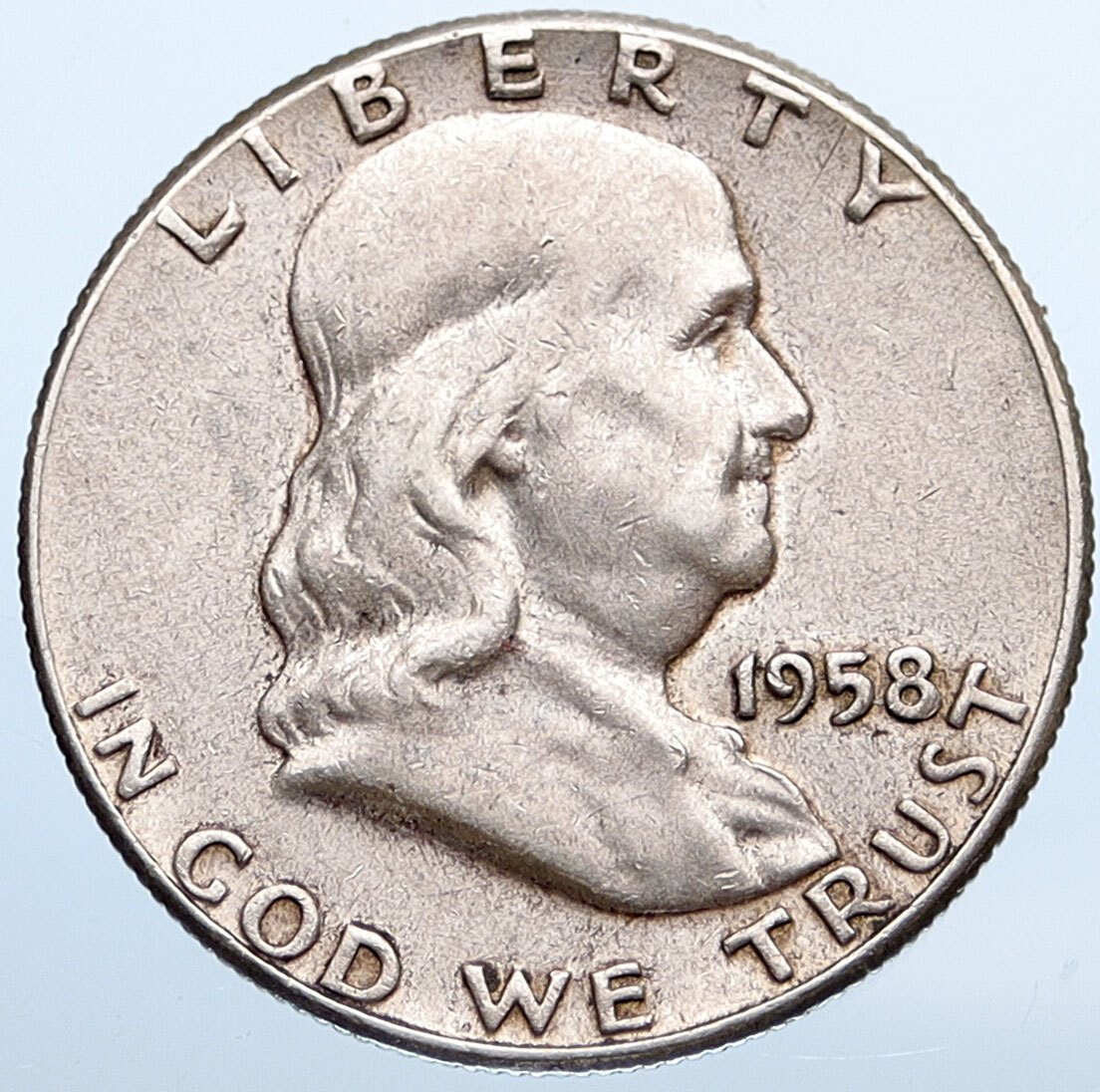
The 1958 Liberty Half Dollar actually refers to the Franklin Half Dollar, featuring Benjamin Franklin on the obverse and the Liberty Bell on the reverse, struck in 90% silver with a value determined by its condition, mint mark, and prevailing bullion prices.
Introduction to the Franklin Half Dollar Series
When numismatists and casual collectors refer to a "Liberty Half Dollar" from the mid-20th century, they are almost universally speaking of the Franklin Half Dollar. Minted by the United States Mint from 1948 to 1963, this coin replaced the Walking Liberty Half Dollar. While the Walking Liberty design featured a full-length figure of Lady Liberty, the Franklin Half Dollar introduced a portrait of Founding Father Benjamin Franklin on the obverse and the iconic Liberty Bell on the reverse.
Understanding the 1958 issue requires looking at the broader context of United States coinage during the post-World War II era. The United States economy was expanding, and the demand for circulating coinage was high. The Franklin Half Dollar, designed by Chief Engraver John R. Sinnock, was controversial at its launch due to opposition from the Commission of Fine Arts and concerns over the inclusion of a small eagle required by law on the reverse. Despite initial aesthetic debates, the coin became a staple of American commerce and remains a favorite among silver stackers and numismatists alike.
For collectors evaluating a 1958-dated specimen, several factors come into play: mint marks, total mintage numbers, strike quality, preservation state, and the presence or absence of full bell lines on the reverse. This comprehensive guide explores every facet of the 1958 Franklin Half Dollar, helping you determine whether your coin is a common bullion piece or a rare numismatic treasure.
Historical Context and Design Specifications
To understand the 1958 half dollar, one must examine its specifications and the design choices made by John R. Sinnock, whose initials "JRS" appear at the base of Franklin's shoulder truncation. Following Sinnock's death in 1947, his assistant Gilroy Roberts finished the design adjustments required for mass production.
Technical Specifications
- Composition: 90% Silver, 10% Copper
- Silver Weight: 0.36169 troy ounces of pure silver
- Total Weight: 12.50 grams
- Diameter: 30.61 millimeters
- Edge: Reeded
- Mint Locations: Philadelphia (no mint mark), Denver (D)
The composition is a critical element for modern buyers. Because the coin contains 90% silver, its base intrinsic value fluctuates daily alongside the spot price of silver on international commodities markets.
Mintage Figures and Mint Marks for 1958
The United States Mint produced Franklin Half Dollars at two primary facilities in 1958: Philadelphia and Denver. Unlike earlier or later series, San Francisco did not strike half dollars in 1958.
| Mint Location | Mint Mark | Business Strike Mintage | Proof Mintage |
|---|---|---|---|
| Philadelphia | None | 4,042,000 | 875,652 |
| Denver | D | 23,962,412 | None |
Philadelphia Mint (No Mint Mark)
Business strikes produced at the Philadelphia Mint in 1958 had a relatively low mintage of just over 4 million pieces. In the numismatic world, lower business strike mintage figures often translate to higher scarcity in pristine, uncirculated grades. However, because many rolls were saved by contemporary collectors, finding mid-to-high uncirculated specimens is not exceptionally difficult.
Denver Mint (D)
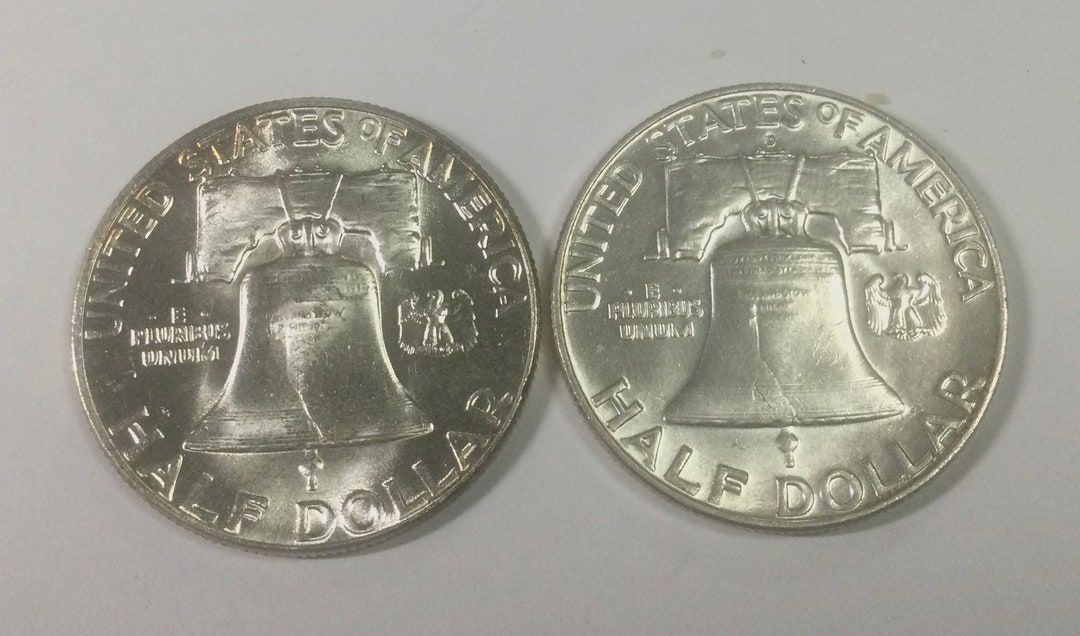
The Denver Mint produced nearly 24 million coins in 1958, making the 1958-D half dollar readily available in circulated and lower uncirculated grades. The "D" mint mark is located on the reverse of the coin, directly above the yoke of the Liberty Bell.
Proof Issues
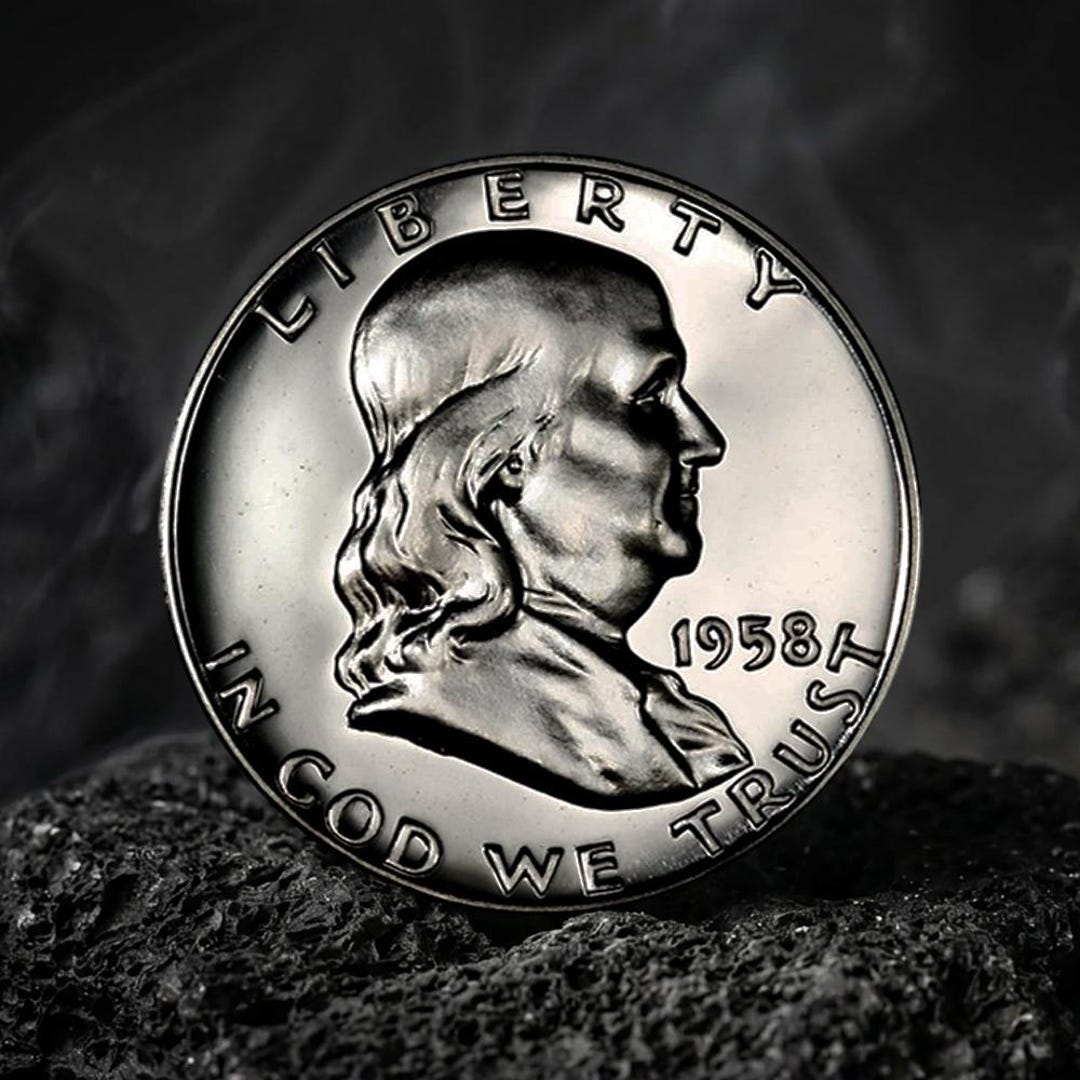
In 1958, the Philadelphia Mint also struck 875,652 proof coins for collectors. These proof coins were struck on specially prepared, highly polished planchets using polished dies, resulting in mirror-like fields and sharply frosted devices.
Evaluating Condition: Grading and the Significance of "Full Bell Lines"
The market value of a 1958 half dollar is heavily dependent on its numerical grade on the Sheldon Scale (ranging from 1 to 70) and specific strike characteristics.
Understanding Wear and Grades
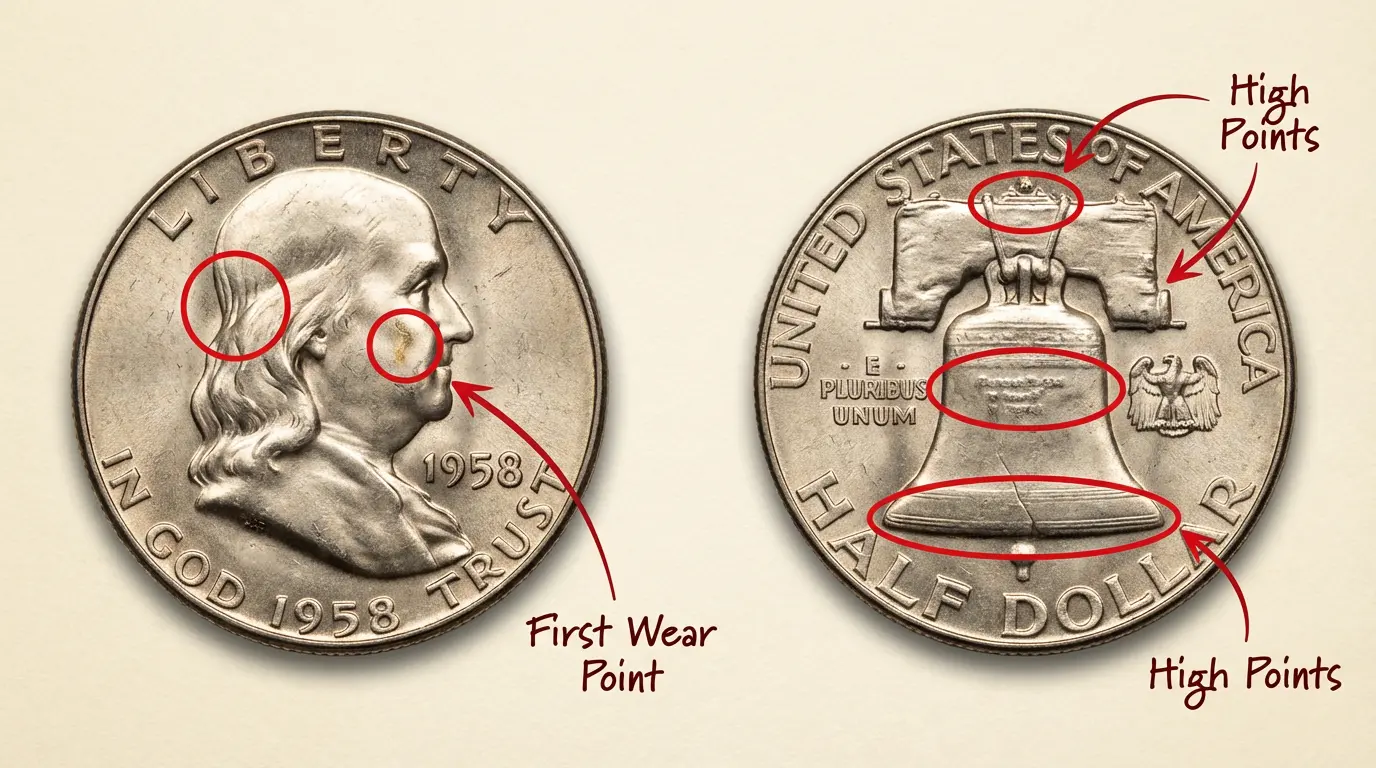
- Circulated Grades (VG to AU): Coins that spent time in commerce show wear on Franklin’s hair, cheek, and jawline, as well as on the high points of the Liberty Bell on the reverse, such as the crack and the lower lines. These coins primarily trade based on their silver melt value plus a modest numismatic premium.
- Uncirculated Grades (MS60 to MS70): Mint State coins show no trace of wear from circulation. However, bag marks—scratches and abrasions caused by coins rubbing against each other in canvas mint bags—are common. An MS63 or MS65 coin commands a significantly higher price than a slider or cleaned specimen.
The Importance of Full Bell Lines (FBL)
For uncirculated Franklin Half Dollars, grading services like Professional Coin Grading Service (PCGS) and Numismatic Guaranty Company (NGC) evaluate the completeness of the lines across the bottom of the Liberty Bell.
- To achieve the coveted Full Bell Lines (FBL) designation, the parallel lines near the base of the bell must be completely uninterrupted by strike weakness or contact marks.
- Because the Franklin design features high-relief elements that were difficult for mint presses to fill completely, striking weakness on the bell lines is common.
- Coins exhibiting true FBL characteristics command a substantial price premium, particularly in grades of MS65 and higher.
Market Value and Pricing Dynamics
When buying or selling a 1958 liberty half dollar, it is essential to distinguish between bullion value and collector value.
Silver Melt Value
Every Franklin half dollar contains 0.36169 troy ounces of pure silver. To calculate the baseline melt value, multiply the current spot price of silver per ounce by 0.36169. This represents the absolute floor for the coin's economic value, ensuring that even heavily damaged or worn specimens retain substantial worth.
Numismatic Premiums by Grade Category
- Circulated (Good to About Uncirculated): Typically trades close to silver melt value or with a minor collector markup (roughly $12 to $18 USD, depending on fluctuations in the silver market).
- Common Uncirculated (MS60 - MS64): Valued between $25 and $60 USD.
- Choice Uncirculated (MS65): Often commands $80 to $150 USD, provided the surfaces are free of distracting blemishes.
- Proof Coins (PR65 - PR68): 1958 proof issues preserved in high grades generally trade between $40 and $150 USD, though ultra-high-grade cameo or deep cameo proofs can command higher figures at specialized auctions.
Note: Coin values fluctuate based on precious metals markets, collector demand, and third-party authentication.
Common Mistakes to Avoid When Buying and Selling
Navigating the market for vintage US silver coinage requires caution to avoid costly errors.
- Cleaning Coins: Never clean a vintage half dollar. Cleaning leaves microscopic hairline scratches across the surface that are instantly detected by grading services and experienced numismatists. A cleaned coin generally loses 50% or more of its numismatic value, reducing it to mere bullion worth.
- Ignoring Counterfeits: While common date Franklin half dollars are rarely faked because of their relatively low individual value, rare high-grade specimens or altered mint marks can occasionally appear. Always buy authenticated coins from reputable dealers if investing significant sums.
- Improper Storage: Storing 90% silver coins in improper holders containing PVC (polyvinyl chloride) can cause green, damaging residue to form on the coin over time. Use inert, archival-quality flips, tubes, or slabs.
Frequently Asked Questions
What makes a 1958 half dollar rare?
A 1958 half dollar is only rare when found in exceptional, certified uncirculated condition with the Full Bell Lines (FBL) designation, or as a high-grade proof specimen. Standard circulated and common uncirculated examples are readily available.
How much silver is in a 1958 half dollar?
A 1958 Franklin Half Dollar contains 90% silver and 10% copper, yielding an exact precious metal weight of 0.36169 troy ounces of pure silver.
How can I tell if my 1958 half dollar was minted in Denver?
Look at the reverse side of the coin. Locate the Liberty Bell, and look just above the wooden yoke at the top center of the bell. If you see a small "D" stamped there, it was struck at the Denver Mint. If there is no letter, it was minted in Philadelphia.
Should I clean my old half dollars before selling them?
No. Cleaning a coin alters its original surfaces and removes the natural mint luster, which destroys its numismatic value. Collectors and coin shops prefer coins in original, untouched condition, even if they are toned or tarnished.
Are proof 1958 half dollars worth more than regular business strikes?
Generally, 1958 proof coins in standard condition command a higher premium than average circulated business strikes due to their low mintage (875,652) and specially prepared mirrored finishes. However, pristine uncirculated business strikes in top numerical grades (such as MS66 FBL) can far exceed proof values.
Conclusion and Next Actions
The 1958 Franklin Half Dollar is a fascinating piece of mid-century American numismatics, bridging the gap between historical coin artistry and practical bullion investing. Whether you are assembling a complete date-and-mint set of Franklin half dollars or simply accumulating 90% constitutional silver for its intrinsic worth, proper identification and grading are essential. Inspect your coins under good magnification and adequate lighting, handle them by the edges to protect their surfaces, and consult verified price guides before making buying or selling decisions.