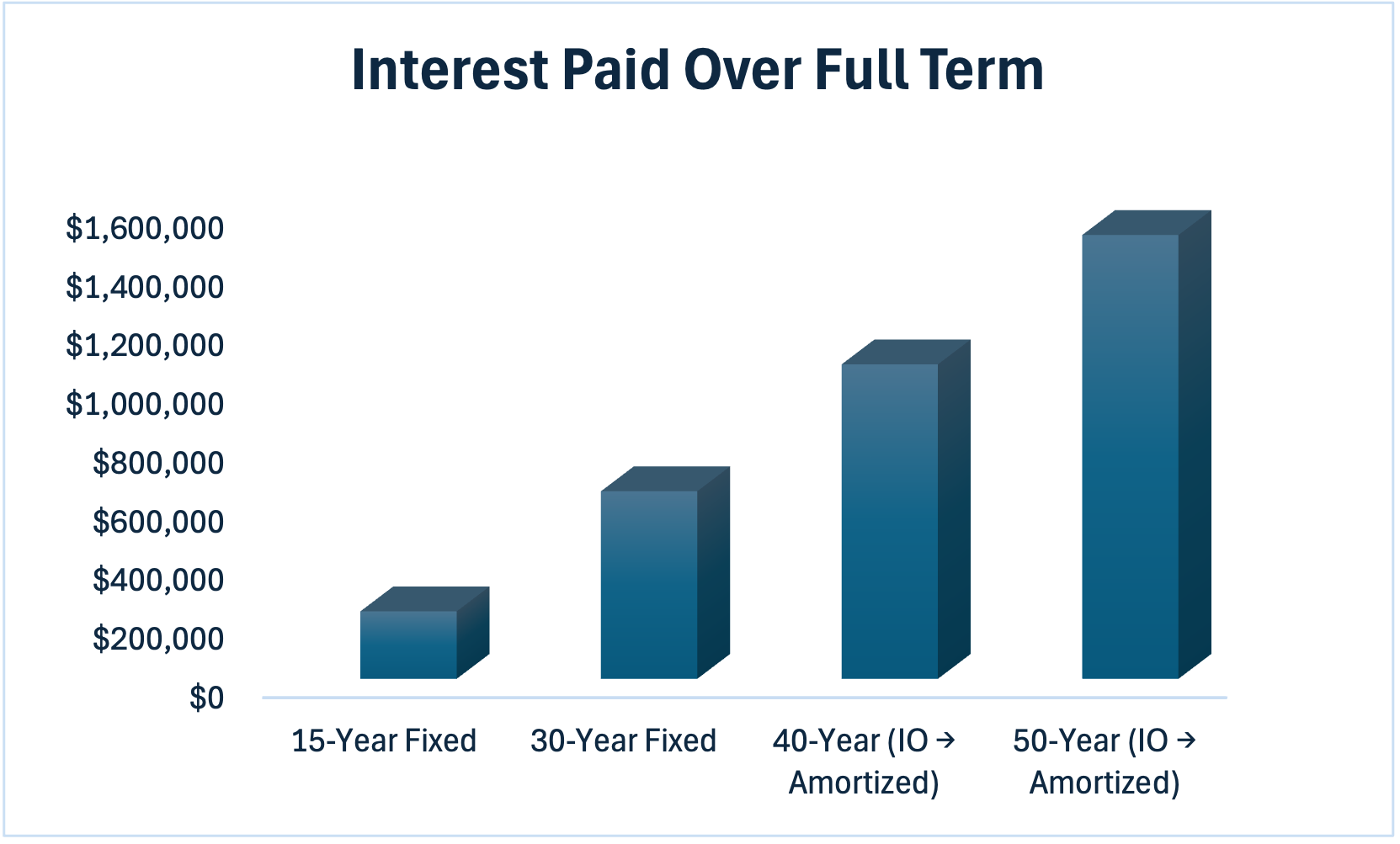
Choosing a 15-year fixed-rate mortgage means securing a higher monthly payment in exchange for a significantly lower interest rate, substantial long-term interest savings, and a rapid path to complete homeownership. This financial vehicle forces disciplined equity accumulation, though it requires room in the monthly budget to handle the compressed amortization schedule.
Navigating the landscape of home financing requires a careful weighing of options, particularly when deciding between the traditional 30-year term and a shorter-term alternative. A 15-year fixed-rate loan stands out as a powerful financial tool for borrowers prioritizing long-term wealth accumulation and minimizing total interest paid over the life of the debt. However, the structural mechanics of this loan type introduce distinct financial trade-offs that every prospective homebuyer or refinancing applicant must understand before signing a promissory note.
Mechanics of a 15-Year Fixed-Rate Mortgage
To evaluate 15-year loan options properly, one must first understand how the underlying structure differs from standard 30-year alternatives. A fixed-rate mortgage ensures that the interest rate established at closing remains constant for the entire duration of the loan. This guarantees that the principal and interest portion of the monthly payment will never fluctuate, protecting the borrower against macroeconomic interest rate spikes.
By compressing the repayment window from 30 years down to 15 years, lenders take on significantly less duration risk. Because the capital is tied up for half the time, lenders routinely offer lower interest rates on 15-year loans compared to 30-year loans. Historical market data from sources like Freddie Mac consistently show a spread of 0.25 to 0.75 percentage points lower for 15-year fixed products.
Monthly Payment Comparison (Hypothetical Example) Loan Amount: $300,000
| Metric | 30-Year Fixed | 15-Year Fixed |
|---|---|---|
| Interest Rate | 6.50% | 5.88% |
| Monthly P&I | $1,896 | $2,497 |
| Total Interest | $382,561 | $149,493 |
| Total Cost | $682,561 | $449,493 |
Amortization Schedules and Equity Accumulation
The speed at which equity builds in a 15-year mortgage is vastly superior to a 30-year term. In a 30-year loan, the majority of early monthly payments go toward servicing interest rather than paying down the principal balance. Conversely, a 15-year amortization schedule applies a much larger portion of every monthly payment directly to the principal from day one.
For households aiming to transition from renters to unencumbered property owners, this rapid amortization acts as a forced savings plan. Within five years, a substantial percentage of the original debt is eradicated, insulating the homeowner against local real estate market downturns and providing a robust foundation for future borrowing power through home equity lines of credit or loans.
Primary Advantages of 15-Year Fixed Loans
Opting for a 15-year repayment term yields several mathematical and psychological benefits that attract financially conservative borrowers.
Massive Interest Savings
The most compelling argument for a 15-year fixed loan is the reduction in total borrowing costs. Because the interest rate is lower and the principal is paid down twice as fast, the cumulative interest paid over the life of the loan is a fraction of what a 30-year mortgage demands. As illustrated in the comparison table above, a borrower can save hundreds of thousands of dollars over the life of the debt simply by choosing the shorter term.
Accelerated Debt Freedom
Reaching retirement or financial independence without a housing payment is a primary goal for many families. Securing a 15-year loan ensures that the property is completely paid off by a definitive, predictable date. This eliminates a major monthly overhead expense, freeing up cash flow for retirement investments, healthcare, or leisure during later life stages.
Core Trade-Offs and Risks
While the financial savings are undeniable, 15-year fixed loans demand structural compromises that can create vulnerability under adverse economic conditions.
Higher Monthly Payments
The most immediate trade-off is cash flow compression. Because the principal must be repaid in half the time, the required monthly principal and interest payment is significantly higher than that of a 30-year loan for the exact same purchase price. Borrowers must qualify based on strict debt-to-income (DTI) ratios, meaning a 15-year loan reduces the maximum purchase price a household can qualify to borrow.
Reduced Financial Flexibility
Locking a higher percentage of monthly income into a mandatory housing payment reduces discretionary income and liquid savings capacity. If a household experiences a job loss, medical emergency, or income reduction, servicing a higher fixed monthly payment becomes much more challenging than servicing a lower 30-year payment.
Strategic Alternatives: 30-Year Loan with Voluntary Prepayments
An important nuance in mortgage planning is the comparison between a mandatory 15-year fixed loan and a flexible 30-year fixed loan treated as a 15-year loan.
Borrowers who want the interest savings of a 15-year term without the rigid contractual obligation often choose a 30-year fixed mortgage and voluntarily make higher monthly payments matching the 15-year amortization schedule.
- Flexibility Advantage: If financial circumstances tighten, the borrower can drop their payment back down to the required 30-year minimum without facing default or foreclosure risk.
- Cost Disadvantage: The interest rate on the 30-year loan will almost always be higher than the rate on a true 15-year product, meaning the borrower pays a slight premium for that financial flexibility.
Qualification Requirements and Lender Underwriting
Securing a 15-year fixed-rate mortgage requires navigating rigorous underwriting standards. Because the monthly payments are higher, lenders scrutinize a borrower's income stability, credit history, and asset reserves with heightened intensity.
Debt-to-Income Ratio Constraints
Lenders enforce strict caps on front-end and back-end debt-to-income ratios. The front-end ratio (housing costs relative to gross monthly income) and back-end ratio (total debt obligations relative to income) must comfortably accommodate the higher monthly payment of the 15-year term. Borrowers with high existing student loan debt, auto loans, or credit card balances may find it difficult to qualify for a 15-year mortgage without substantial down payments.
Credit Scores and Interest Rate Pricing
While both 15-year and 30-year loans utilize standard tiering for credit scores, securing the most competitive interest rates on a shorter-term product often demands pristine credit profiles (typically FICO scores of 740 or higher). Lenders evaluate risk dynamically, and the compressed timeline places a premium on verified, stable employment history and documented liquid asset reserves.
Frequently Asked Questions
Can I refinance a 30-year mortgage into a 15-year mortgage later?
Yes. Many homeowners initially choose a 30-year fixed-rate mortgage to maintain lower mandatory payments, and later refinance into a 15-year fixed loan once their income increases or interest rates drop favorably. Keep in mind that refinancing involves closing costs, appraisal fees, and new underwriting fees, which should be factored into the long-term financial equation.
Is the interest rate on a 15-year fixed loan always lower than a 30-year loan?
In the vast majority of economic cycles, yes. Lenders price 15-year loans lower because the capital is exposed to market and inflation risks for half the duration. However, yield curve inversions or unusual macroeconomic conditions can occasionally narrow or temporarily distort this spread.
What happens if I cannot make the higher monthly payment on a 15-year loan?
Failing to make mortgage payments on a 15-year loan carries the exact same legal and financial consequences as a 30-year loan, culminating in potential default and foreclosure. Because the mandatory payment is higher, the threshold for financial distress is reached more quickly if income is interrupted.
Are closing costs higher for a 15-year fixed loan?
No. Origination fees, title insurance, recording fees, and appraisal costs are generally dictated by the loan amount and property value rather than the length of the repayment term. Consequently, closing costs for a 15-year loan are typically comparable to or slightly lower than those of a 30-year loan of equivalent principal size.
Conclusion and Next Actions
Selecting a 15-year fixed-rate loan requires balancing aggressive debt elimination against monthly cash flow security. Prospective borrowers should evaluate their employment stability, long-term savings goals, and total budget before committing to a compressed repayment schedule. To take the next step, obtain detailed loan estimates from multiple lenders comparing both 15-year and 30-year options side-by-side, factoring in current interest rates, projected closing costs, and your personal risk tolerance.