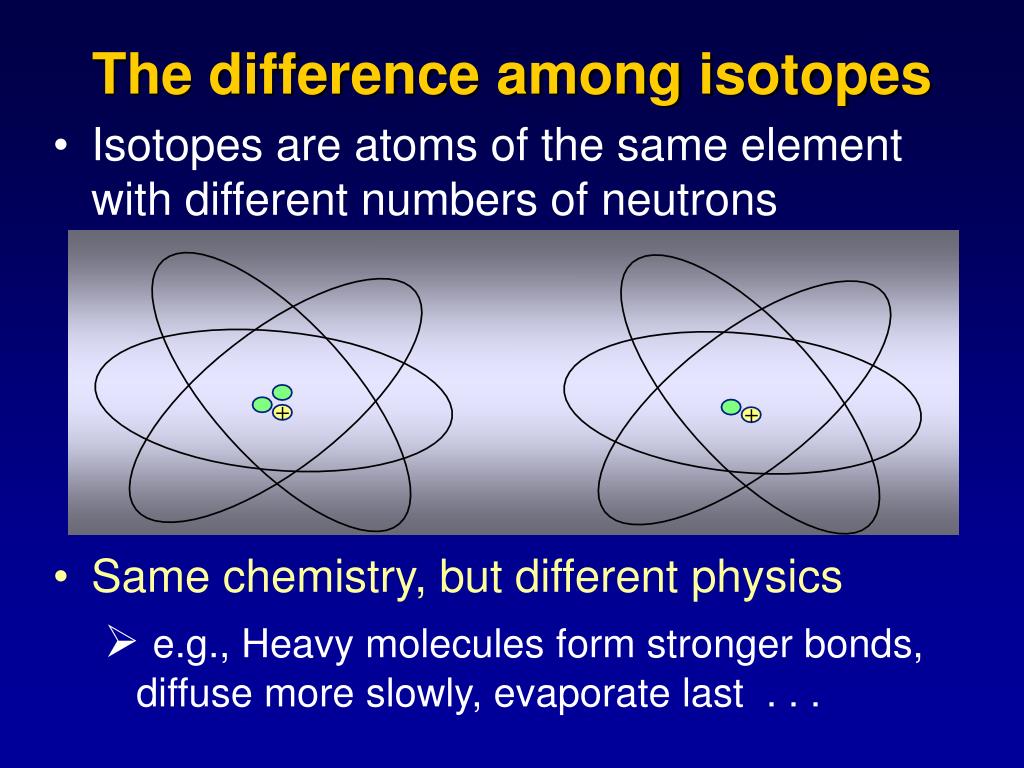
Carbon-13 ($^{13}C$) is a naturally occurring, stable isotope of carbon characterized by having six protons and seven neutrons. Unlike Carbon-14, it is not radioactive. As of 2026, it remains an indispensable tool in medical diagnostics, structural chemistry, and environmental science due to its unique nuclear spin and measurable mass difference.
Understanding the Carbon-13 Isotope: Definition and Atomic Structure
To understand Carbon-13, one must first look at the fundamental structure of the element carbon. In the periodic table, carbon is defined by its six protons. However, the number of neutrons in a carbon nucleus can vary, resulting in different isotopes. While Carbon-12 ($^{12}C$) is the most abundant, making up approximately 98.9% of all natural carbon, Carbon-13 is the primary stable "heavy" isotope, accounting for roughly 1.1% of the carbon found on Earth.
The addition of that single extra neutron gives $^{13}C$ an atomic mass of approximately 13.00335 atomic mass units (amu). This mass difference, though seemingly slight, is the foundation for Isotope Ratio Mass Spectrometry (IRMS). Because $^{13}C$ is slightly heavier than $^{12}C$, it moves more slowly in physical processes and reacts at slightly different rates in chemical reactions—a phenomenon known as the kinetic isotope effect.
Unlike Carbon-14, which is a radioisotope used for carbon dating, Carbon-13 is stable. It does not decay over time. This stability makes it safe for human ingestion in medical tests and allows it to serve as a permanent marker in geological records. In 2026, scientific standards continue to rely on the "Vienna Pee Dee Belemnite" (VPDB) as the international reference standard for measuring the relative abundance of $^{13}C$ in various samples.
The Physical and Chemical Significance of Nuclear Spin
One of the most critical distinctions of Carbon-13 is its nuclear spin. The most common isotope, Carbon-12, has a nuclear spin of zero, which renders it "invisible" to Nuclear Magnetic Resonance (NMR) spectroscopy. In contrast, Carbon-13 has a nuclear spin of 1/2.
This property allows chemists and biologists to use $^{13}C$ NMR spectroscopy to map the framework of organic molecules. By observing how $^{13}C$ nuclei respond to radiofrequency pulses in a magnetic field, researchers can determine the exact environment of every carbon atom in a complex protein, pharmaceutical compound, or synthetic polymer.
Because the natural abundance of $^{13}C$ is low, the signals in NMR are inherently weaker than those of Hydrogen-1 (Proton NMR). However, by 2026, advancements in cryogenic probe technology and high-field magnets (reaching 1.2 GHz and beyond) have significantly mitigated these sensitivity issues. Furthermore, scientists often "label" molecules by synthesizing them with enriched $^{13}C$ (up to 99% concentration) to amplify the signal and track specific metabolic or chemical pathways with high precision.
Isotopic Fractionation: The Fingerprint of Nature
Isotopic fractionation is the process by which the relative abundance of $^{13}C$ and $^{12}C$ changes as carbon moves through the environment. This occurs because physical and chemical processes—such as evaporation, diffusion, and photosynthesis—slightly favor one isotope over the other due to their mass difference.
In biology, the most famous example of fractionation occurs during photosynthesis. Most terrestrial plants follow the C3 photosynthetic pathway, which strongly discriminates against $^{13}C$, resulting in tissues that are significantly "depleted" of the heavy isotope compared to atmospheric $CO_2$. Conversely, plants like corn and sugarcane use the C4 pathway, which discriminates less.
Scientists express these differences using "delta notation" ($\delta^{13}C$), measured in parts per thousand (per mil, ‰). By measuring the $\delta^{13}C$ value of a substance, researchers can identify its biological origin. This "isotopic fingerprint" is used in 2026 to detect food fraud, trace migratory patterns of animals, and reconstruct ancient climates by analyzing the carbon trapped in ice cores or fossilized organic matter.
Key Applications of Carbon-13 in Medicine
The medical field leverages the stability and safety of Carbon-13 for non-invasive diagnostic testing. Because it is not radioactive, it poses no ionizing radiation risk to patients, including children and pregnant women.
The Urea Breath Test ($^{13}C$-UBT)
The most common clinical application is the diagnosis of Helicobacter pylori infections, a primary cause of stomach ulcers and gastric cancer. In this procedure, a patient ingests a dose of urea labeled with $^{13}C$. If H. pylori is present, the bacteria’s urease enzyme breaks down the urea into ammonia and labeled carbon dioxide ($^{13}CO_2$). The patient then breathes into a collection bag. If the exhaled air shows an enrichment of $^{13}C$ above baseline levels, the infection is confirmed.
Metabolic and Kinetic Studies
Researchers use $^{13}C$-labeled glucose, amino acids, and lipids to study how the body processes nutrients. By administering a labeled substrate and monitoring its appearance in the breath or blood, clinicians can assess:
- Insulin sensitivity: Tracking how quickly labeled glucose is oxidized.
- Liver function: Using the $^{13}C$-methacetin breath test to evaluate the metabolic capacity of hepatocytes.
- Fat malabsorption: Identifying digestive disorders by tracking labeled triglycerides.
Drug Development and Protein Synthesis
In pharmaceutical research, $^{13}C$ is used to determine the metabolic fate of new drugs. By placing a $^{13}C$ atom at a specific position in a drug molecule, scientists can use mass spectrometry to see exactly where the drug is broken down in the liver and how long the metabolites remain in the system. This is crucial for safety profiling and determining dosage guidelines in 2026.
Carbon-13 in Environmental Science and Geochemistry
As the global community monitors climate change in 2026, Carbon-13 serves as a vital tracer for the carbon cycle.
Tracking Fossil Fuel Emissions
Fossil fuels (coal, oil, and gas) are derived from ancient plant matter, which is naturally depleted in $^{13}C$. When we burn these fuels, the $CO_2$ released into the atmosphere has a lower $^{13}C/^{12}C$ ratio than the background atmosphere. This phenomenon, known as the Suess Effect, allows scientists to prove that the rising concentration of atmospheric $CO_2$ is primarily due to human industrial activity rather than natural volcanic or oceanic degassing.
Paleo-oceanography and Climate Reconstruction
Geologists analyze the $^{13}C$ content in the calcium carbonate shells of tiny marine organisms called foraminifera found in ocean floor sediments. The ratio of $^{13}C$ to $^{12}C$ in these shells reflects the nutrient levels and carbon circulation of the ocean at the time the organism lived. By drilling deep sediment cores, scientists can reconstruct the Earth's climate history over millions of years, providing context for modern temperature shifts.
Industrial and Forensic Applications
The unique signature of Carbon-13 provides a layer of "chemical intelligence" that is widely used in industry and law enforcement.
Food Authenticity and Quality Control
Food fraud is a multi-billion dollar global issue. $^{13}C$ analysis is the gold standard for verifying the purity of high-value products:
- Honey: Pure honey comes from C3 plants. If honey is "stretched" with cheap high-fructose corn syrup (a C4 plant), IRMS will immediately detect the shift in the $^{13}C$ ratio.
- Olive Oil and Vanilla: Synthetic flavorings or cheaper oils can be identified by their isotopic signatures, which differ from natural, cold-pressed, or plant-derived sources.
Forensic Science and Anti-Doping
In 2026, the World Anti-Doping Agency (WADA) continues to use Carbon-13 Isotope Ratio Mass Spectrometry to distinguish between natural testosterone produced by the body and synthetic testosterone derived from plant sterols. Even if the chemical structure is identical, the synthetic version carries the isotopic signature of the plant source (usually soy or yams), which differs significantly from human-produced hormones.
Forensic investigators also use $^{13}C$ to trace the origin of explosives or illicit drugs. The carbon in these substances reflects the environment where the raw materials were grown or manufactured, helping law enforcement map international trafficking routes.
Comparison of Carbon Isotopes
| Feature | Carbon-12 ($^{12}C$) | Carbon-13 ($^{13}C$) | Carbon-14 ($^{14}C$) |
|---|---|---|---|
| Abundance | ~98.9% | ~1.1% | Trace amounts |
| Stability | Stable | Stable | Radioactive (Half-life ~5,730 yrs) |
| Neutrons | 6 | 7 | 8 |
| Nuclear Spin | 0 (NMR Inactive) | 1/2 (NMR Active) | 0 (NMR Inactive) |
| Primary Use | Biological standard | Structural NMR, Breath Tests | Radiocarbon Dating |
| Safety | Inert | Safe for ingestion | Radioactive emitter |
Practical Considerations and Sourcing in 2026
For laboratories and medical facilities, the acquisition of $^{13}C$ requires specialized suppliers. Because $^{13}C$ must be separated from $^{12}C$ via cryogenic distillation of carbon monoxide or chemical exchange, the "enriched" isotope is significantly more expensive than standard carbon.
As of 2026, the market for stable isotopes is strictly regulated to ensure purity and prevent contamination. Facilities ordering $^{13}C$-labeled compounds for medical use must ensure the products are manufactured under Good Manufacturing Practice (GMP) standards. For research applications, the level of enrichment (e.g., 98 atom % $^{13}C$) must be verified via mass spectrometry to ensure the accuracy of the resulting data.
Frequently Asked Questions
Is Carbon-13 harmful to humans?
No, Carbon-13 is a stable, non-radioactive isotope. It is naturally present in your body and the food you eat every day. In medical breath tests, the amount of $^{13}C$ administered is very small and is processed by the body in the same way as regular carbon.
How is Carbon-13 measured?
The two primary methods are Isotope Ratio Mass Spectrometry (IRMS) and Nuclear Magnetic Resonance (NMR) Spectroscopy. IRMS measures the ratio of $^{13}C$ to $^{12}C$ by ionizing a sample and accelerating it through a magnetic field, while NMR detects the magnetic properties of the $^{13}C$ nucleus to determine molecular structure.
Why is Carbon-13 used instead of Carbon-14 in breath tests?
While Carbon-14 was used in the past, Carbon-13 is now the preferred choice because it does not emit radiation. This allows the tests to be conducted safely in a wider range of patients, including pregnant women and children, without the regulatory hurdles and disposal issues associated with radioactive materials.
Can Carbon-13 be used for carbon dating?
No. Carbon dating relies on the decay of the radioactive Carbon-14 isotope over time. Because Carbon-13 is stable and does not decay, its concentration does not change based on the age of the sample. However, it is often used alongside $^{14}C$ dating to correct for "fractionation effects" that might skew the results.
Why is corn syrup detected so easily using $^{13}C$ analysis?
Corn is a C4 plant, which has a specific way of processing $CO_2$ that incorporates more $^{13}C$ than the C3 plants (like beets or flowers) used for most honey or sugar production. This creates a distinct "heavy" carbon signature in corn products that stands out when analyzed in a lab.
Recommendation for Researchers and Clinicians
When implementing $^{13}C$ analysis in a clinical or laboratory setting, prioritize the use of high-purity, certified reference materials. For medical diagnostics, ensure that breath-test kits are compatible with modern infrared spectrometers (IRIS) for rapid, point-of-care results. For structural chemists, utilizing "Uniformly Labeled" ($U-^{13}C$) substrates is recommended when mapping complex metabolic pathways to ensure no carbon position is overlooked.