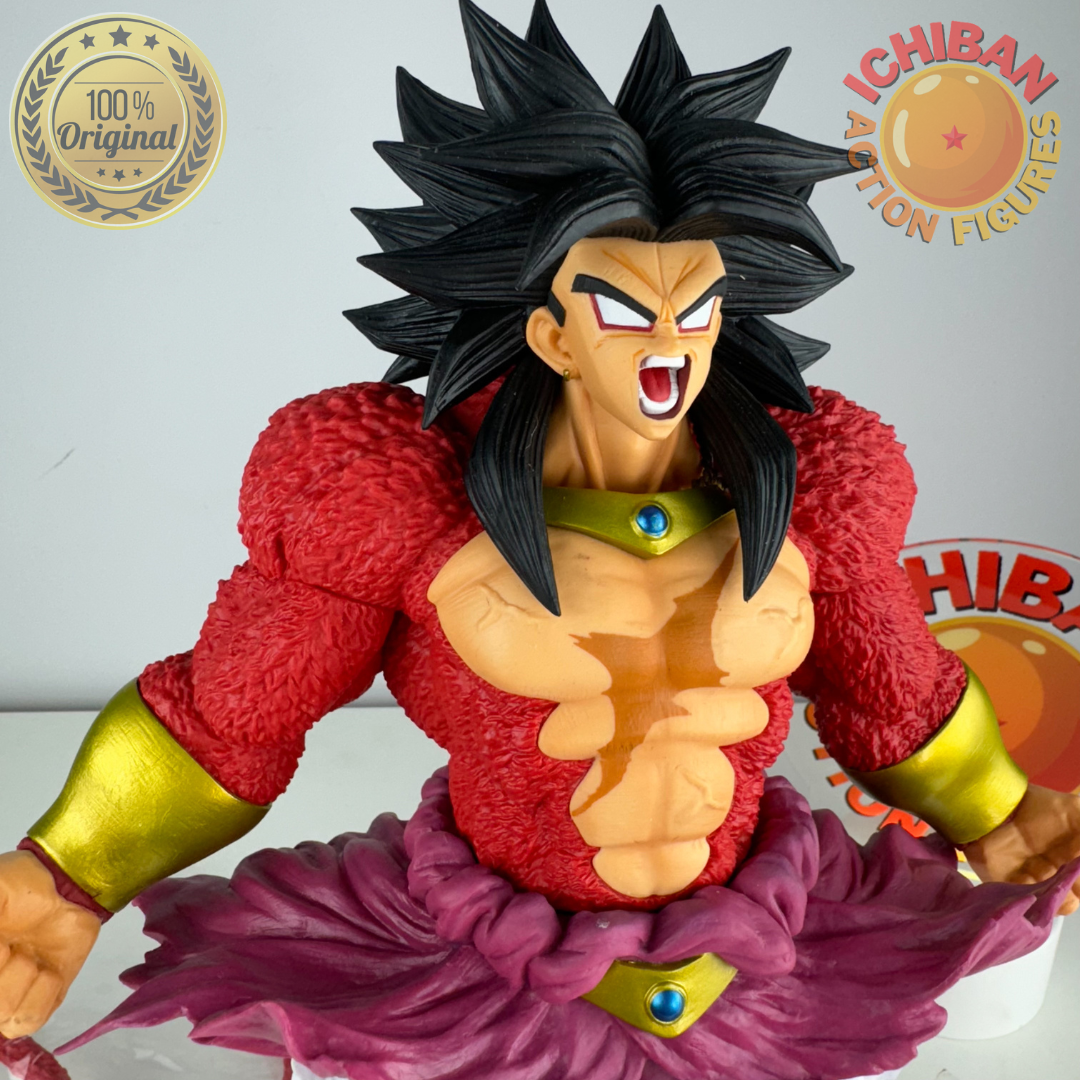
Super Saiyan 4 (SSJ4) in Super Dragon Ball Heroes represents a unique convergence of nostalgic character designs and modern, multiversal power scaling that sets it apart from traditional anime canon. While the transformation originally debuted in the non-canon Dragon Ball GT series, Super Dragon Ball Heroes—the promotional anime series and card-based arcade game—reimagined, expanded, and supercharged the form. This evolution introduced unique concepts like Limit Breaker transformations, Xeno counterparts, and reality-warping fusion techniques that every dedicated fan needs to understand.
1. The Xeno Paradigm: A Multiversal Origin for SSJ4
To understand Super Dragon Ball Heroes SSJ4, viewers must first understand the concept of "Xeno" variants. In the Heroes continuity, history and timelines branch out wildly due to the actions of the Time Breakers and the Demon Realm. The Goku and Vegeta who wield the SSJ4 transformation are officially designated as "Xeno Goku" and "Xeno Vegeta." These versions originate from an alternate timeline where the events of Dragon Ball GT occurred, leading them to join the Time Patrol under the Supreme Kai of Time rather than participating in the contemporary events of Dragon Ball Super.
This distinction is crucial because Xeno Goku and Xeno Vegeta retain the memories and experiences of their GT adventures. They remember battling Baby, Super 17, and the Shadow Dragons, yet their power levels have scaled exponentially beyond what was ever shown in GT. Operating outside normal historical boundaries, they possess specialized equipment and techniques, such as the Time Patroller insignia, setting them apart from their main-series counterparts who pursue God Ki (Super Saiyan God and Super Saiyan Blue).
2. The Mechanics of the Primal Transformation
Unlike the divine path of Ki chosen by mainstream Dragon Ball Super characters—which focuses on tranquility, inner god-level essence, and refined energy control—SSJ4 represents the ultimate mastery of the Saiyan's primal, biological roots. The transformation requires a Saiyan to possess a tail and harness the power of the Golden Great Ape (Oozaru), regaining consciousness within that berserk state to compress the energy inward.
In Super Dragon Ball Heroes, this primal heritage is celebrated as an alternative evolutionary peak. Rather than discarding the tail like most modern Saiyans, Xeno Goku and Xeno Vegeta rely on their primal biology to tap into ancient energy reserves. This form merges the ferocious strength of the Great Ape with human-like self-control, coating the user in distinctive pinkish-red fur, dark hair, and golden-yellow irises, complete with dramatic eye-shadow markings.
3. Limit Breaker Super Saiyan 4: Breaking Past Primal Limits
One of the most significant additions in Super Dragon Ball Heroes is the Limit Breaker Super Saiyan 4 (often abbreviated as LBSSJ4) state. Regular SSJ4, while immensely powerful, eventually met its match against the escalating threats of the Universe Mission and Big Bang Mission arcs. To bridge this power gap, Xeno Goku and Xeno Vegeta had to push past their absolute maximums.
Achieving Limit Breaker SSJ4 requires an infusion of external, concentrated Ki. In practice, this is typically achieved when multiple Saiyans—such as Xeno Goku, Xeno Vegeta, Xeno Gohan, and Xeno Gotenks—pool their life energy and righteous Ki together and channel it into the subjects. Visually, the transformation alters the standard SSJ4 aesthetic: the aura turns a blazing, multi-colored crimson and magenta, the hair spikes up more aggressively, and the overall energy pressure distorts space-time around the user.
4. The Power Scale: SSJ4 vs. God Ki
A perpetual debate within the Dragon Ball fandom involves comparing the mortal, primal strength of Super Saiyan 4 against the celestial, divine power of Super Saiyan Blue (SSJB). Super Dragon Ball Heroes deliberately blurs these lines to level the playing field for fans of both eras. In the promotional anime and game, Limit Breaker SSJ4 is depicted as roughly equal to, or even exceeding, higher-tier divine transformations like Super Saiyan Blue Evolution or Ultra Instinct Sign, depending on the narrative context.
Because Heroes functions primarily as fan-service entertainment without strict canon constraints, it elevates SSJ4 to match contemporary multiversal threats. Xeno Goku in Limit Breaker SSJ4 goes toe-to-toe with reality-warping villains like Mechikabura, Hearts, and Demon God Demigra, proving that primal evolution can rival divine ascension.
| Transformation | Core Energy Source | Key Visual Indicators | Primary Affiliation |
|---|---|---|---|
| Standard Super Saiyan 4 | Primal Saiyan biology & Golden Oozaru mastery | Red fur, black hair, golden eyes | Time Patrol (Xeno) |
| Limit Breaker SSJ4 | Consolidated Saiyan Ki infusion | Crimson/magenta aura, intensified hair spike | Time Patrol (Xeno) |
| SSJ4 Vegito / Gogeta | Fusion of two SSJ4 Saiyans | Combined physical traits, magnified aura | Fusion Warriors |
| Super Saiyan Blue | Divine God Ki | Cyan hair, luminous white-blue aura | Main Timeline (DBS) |
5. Fusion Supremacy: Xeno Vegito and Xeno Gogeta
When individual SSJ4 power levels are not enough to defeat catastrophic threats, the Saiyans resort to fusion. Super Dragon Ball Heroes features both the Potara Earrings (creating Xeno Vegito) and the Fusion Dance (creating Xeno Gogeta) executed while both participants are already transformed into Super Saiyan 4 or Limit Breaker Super Saiyan 4.
These fusion warriors represent some of the most powerful entities in the entire Dragon Ball franchise. SSJ4 Limit Breaker Vegito and Gogeta display staggering offensive outputs, capable of tearing through dimensional barriers with casual energy blasts. Their inclusion highlights how the Heroes platform explores hypothetical scenarios that official canon manga and television series rarely touch.
6. The Unique Arsenal of SSJ4 Techniques
While standard moves like the Kamehameha and Final Flash remain staple weapons in their arsenal, SSJ4 users in Heroes employ specialized, amplified techniques tailored to their primal state. Xeno Goku and Xeno Vegeta utilize variations such as the 10x Kamehameha and the Atomic Flash, which combine their signature attacks with the concentrated fury of the Great Ape.
Furthermore, fusion entities like SSJ4 Gogeta introduce reality-bending attacks like the Ultimate Impact and the 100x Big Bang Kamehameha. These techniques often incorporate unique visual properties, such as cosmic shockwaves and dimensional fracturing, emphasizing the immense, unrestrained output of stacked transformations and cooperative Ki channeling.
7. The Role of the Time Patrol and Dark Empire Conflict
Context matters when examining Super Dragon Ball Heroes SSJ4, as these characters operate within a structured narrative framework distinct from traditional tournament formats. Xeno Goku and Xeno Vegeta are seasoned law enforcers of time and space. Their missions frequently pit them against the Dark Empire, historical anomalies, and rogue Makaioshin (Demon Realm gods).
This dynamic gives SSJ4 a unique thematic weight. Instead of fighting merely to test their limits or protect a single planet, Xeno Goku and Xeno Vegeta utilize SSJ4 to protect the stability of the entire multiverse across space-time. Their veteran status, tactical teamwork, and absolute trust in one another highlight a mature dynamic forged through decades of simulated and actual multi-timeline conflict.
8. Broly and Bardock: Expanding the SSJ4 Roster
One of the most striking aspects of the Super Dragon Ball Heroes arcade game and manga adaptations is the distribution of the SSJ4 transformation beyond just Goku and Vegeta. Heroes introduces alternate versions of legendary Saiyans who also achieve the form, most notably Broly and Bardock.
- Xeno Bardock: Goku's father achieves SSJ4 during his battles against the Time Breakers, sporting a scarred, battle-hardened appearance that elevates his legendary status. His mastery of the form bridges the gap between low-class warriors and elite bloodlines.
- Xeno Broly: The Legendary Super Saiyan is also given the SSJ4 treatment, creating a terrifying fusion of his berserk green energy scaling and the controlled primal fury of the red-furred transformation.
These expanded rosters provide players and readers with fresh interpretations of classic characters, fulfilling long-standing fan requests for alternative evolutionary pathways.
9. Fan Service vs. Canon: Understanding the Heroes Identity
It is essential to evaluate Super Dragon Ball Heroes with the correct expectations. The project began as a promotional, card-dispensing arcade game in Japan before expanding into promotional anime episodes, manga, and Nintendo Switch ports. It is explicitly designed as a sandbox for high-octane fan service, bringing together characters from Dragon Ball, Dragon Ball Z, Dragon Ball GT, Dragon Ball Super, and the various movies into a single narrative melting pot.
Consequently, strict continuity rules do not apply. Power scaling fluctuates to serve the dramatic pacing of brief promotional episodes, and character interactions prioritize spectacle over slow-burn character development. Accepting this premise allows viewers to appreciate SSJ4 for what it is: an uninhibited celebration of Dragon Ball lore where nostalgia meets unbridled creative freedom.
10. Cultural Impact and Legacy in the Franchise
Despite not belonging to Akira Toriyama's primary manga canon, Super Saiyan 4 remains one of the most beloved character designs in anime history. Super Dragon Ball Heroes revitalized this affection by rescuing the form from Dragon Ball GT's mixed critical reception and giving it a modern, high-budget showcase.
By introducing Limit Breaker variants, expanding the user base to include Bardock and Broly, and pitting the form against multiversal gods, Heroes ensured that SSJ4 maintained a permanent, influential footprint in pop culture. It stands as proof that a well-executed design combined with creative storytelling can transcend its original narrative boundaries and captivate generations of fans.
Frequently Asked Questions
Is Super Saiyan 4 canon in the main Dragon Ball timeline?
No, Super Saiyan 4 is not part of the official canon established by Akira Toriyama's original manga, Dragon Ball Z, or Dragon Ball Super. It originated in Dragon Ball GT and is featured prominently in the non-canon promotional series Super Dragon Ball Heroes, which operates as an independent multiversal sandbox.
How do Xeno Goku and Xeno Vegeta achieve Limit Breaker SSJ4?
Limit Breaker SSJ4 is achieved when Saiyans who have already mastered standard Super Saiyan 4 receive a massive influx of external, concentrated righteous Ki from other Saiyan allies. This process pushes their primal transformation past its normal biological threshold, resulting in a significantly enhanced power output and altered aura colors.
Can main-timeline Goku and Vegeta use Super Saiyan 4?
In standard continuity, main-timeline Goku and Vegeta do not use Super Saiyan 4 because they pursued the path of God Ki, unlocking Super Saiyan God and Super Saiyan Blue instead. However, Super Dragon Ball Heroes occasionally features crossover scenarios where different versions of characters interact across timelines.
Who is stronger: SSJ4 Limit Breaker or Super Saiyan Blue Vegito?
Within the narrative rules of Super Dragon Ball Heroes, power levels are balanced to ensure high-stakes battles, meaning Limit Breaker SSJ4 and Super Saiyan Blue variants operate on comparable multiversal tiers. Heroes prioritizes narrative spectacle over rigid power scaling, allowing both transformation lines to achieve incredible feats.
Where can I watch Super Dragon Ball Heroes?
Super Dragon Ball Heroes is distributed primarily as a web-based promotional anime series. Episodes are regularly released on the official Japanese Dragon Ball YouTube channel and various streaming platforms with fan and official translations, serving as promotional media for the arcade and console card games.
Recommendation
If you want to fully experience the lore and visual spectacle of Super Saiyan 4 outside of the original Dragon Ball GT series, start by watching the promotional Super Dragon Ball Heroes anime specials or exploring the digital card-battle missions available on home consoles. Pay close attention to the Universe Mission arcs to see how Limit Breaker transformations change the multiversal power dynamic.