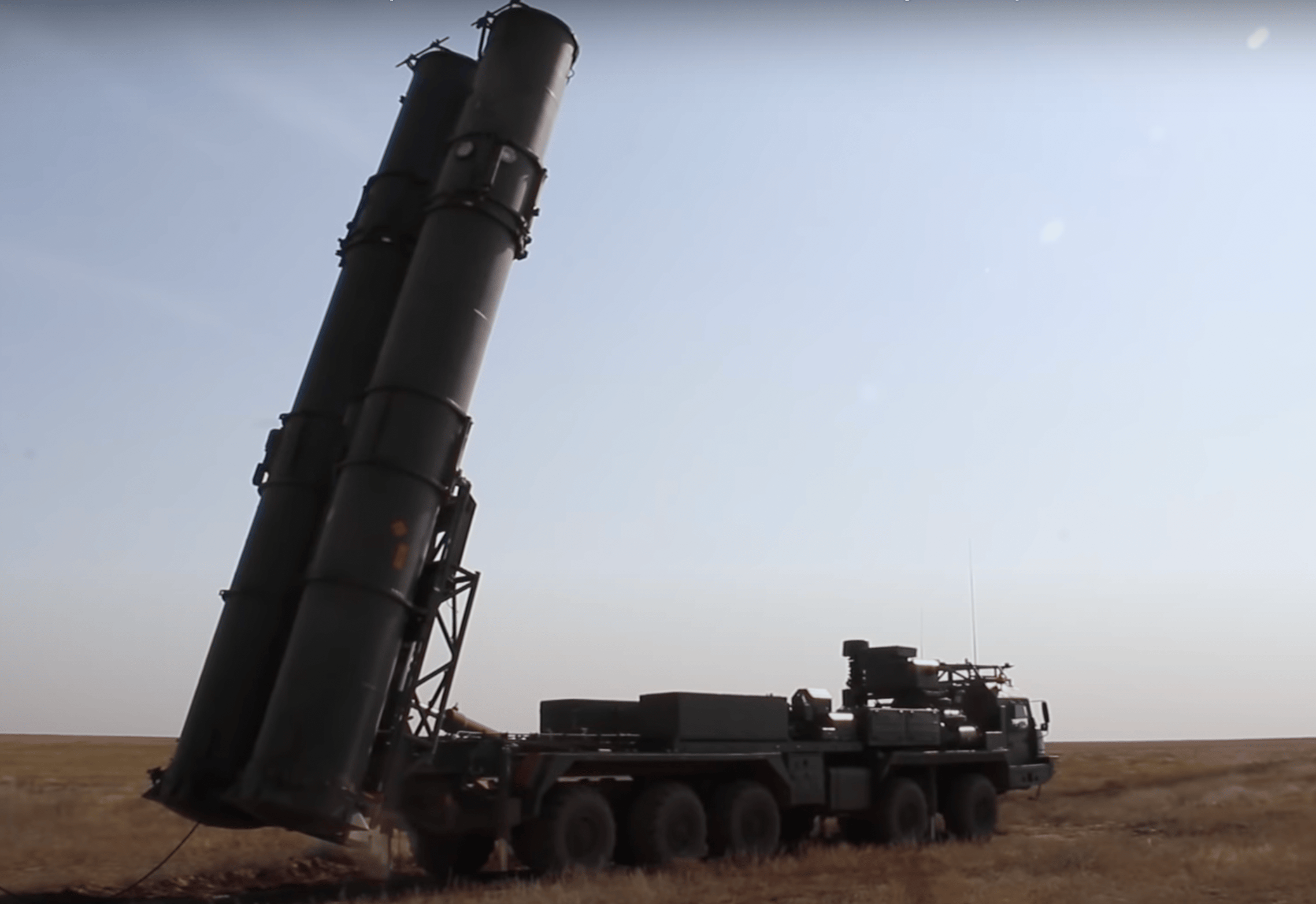
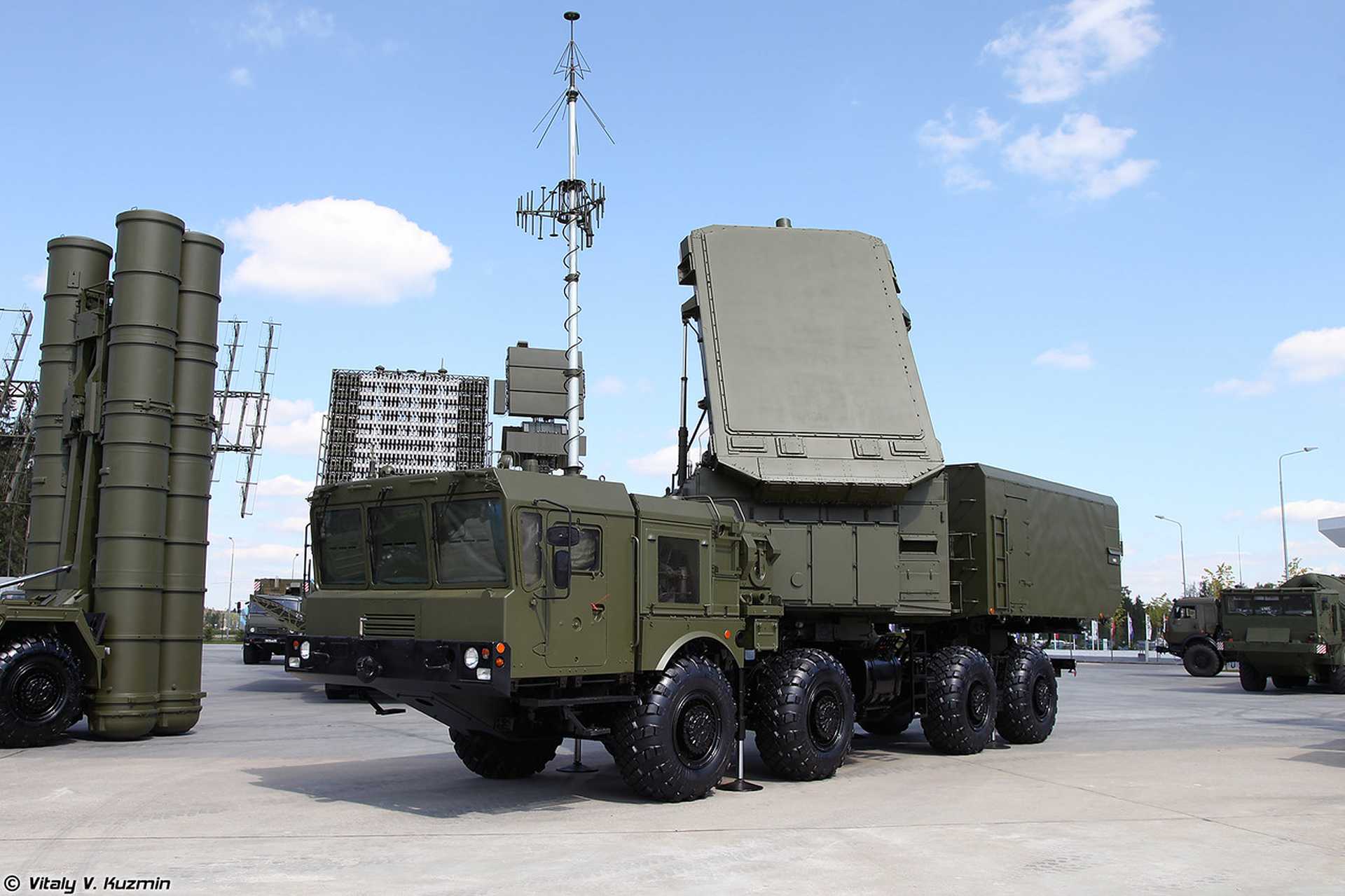
The S-500 Prometey (Prometheus), designated as the 55R6M Triumfator-M, represents a pinnacle in modern Russian military engineering, designed to bridge the gap between traditional surface-to-air missile systems and advanced strategic ballistic and space defense. Understanding its operational capabilities, technical architecture, and strategic implications requires analyzing its multifaceted design, radar systems, and interceptor integration within modern multi-layered defense networks.
1. Evolution and Heritage from the S-400 Architecture
The development of the S-500 did not occur in a vacuum; it represents a generational leap forward from the highly successful S-400 Triumf system. While the S-400 excelled at intercepting conventional aerodynamic targets, cruise missiles, and medium-range ballistic threats, military strategists recognized the need for a system capable of handling targets at the edge of space.
Engineered by JSC Concern VKO Almaz-Antey, the S-500 was conceptualized to operate not merely as an air defense battery, but as an aerospace defense system. It incorporates lessons learned from decades of Soviet and Russian surface-to-air missile (SAM) development, inheriting mobility and modularity principles while introducing entirely new digital processing cores, advanced phased-array radars, and specialized high-altitude interceptors. This evolutionary design ensures that legacy logistics and command structures can interface with the new system, even though its internal electronics and kinetic capabilities are radically modernized.
2. Dual-Role Capability: Air Defense Versus Aerospace Defense
A defining characteristic of the S-500 is its unique ability to counter both traditional aerodynamic threats and extreme exoatmospheric targets. Traditional air defense systems specialize in low-to-high altitude engagement of aircraft, helicopters, and cruise missiles. Strategic missile defense systems, conversely, focus on incoming ballistic missiles during their mid-course or terminal phases.
The S-500 combines these missions into a single unified architecture. It can engage stealth fighters, Unmanned Aerial Vehicles (UAVs), and airborne warning and control system (AWACS) platforms with high-precision aerodynamic interceptors. Simultaneously, it tracks and destroys intercontinental ballistic missile (ICBM) warheads, fractional orbital bombardment systems, and low-Earth orbit (LEO) satellites. This dual-role capability reduces the logistical footprint required to defend a strategic zone, as a single battery can manage a diverse spectrum of threats simultaneously without requiring disparate, non-communicating networks.
3. Advanced Radar and Target Acquisition Suite
To engage targets moving at hypersonic velocities across multiple atmospheric layers, the S-500 relies on an advanced, highly sophisticated sensor suite. The radar complex separates target acquisition, tracking, and fire control across distinct frequency bands to mitigate the effects of electronic countermeasures (ECM) and stealth coatings.
The system typically incorporates:
- Aquisition Radars: Long-range active electronically scanned array (AESA) systems designed to sweep vast sectors of airspace for high-speed signatures and stealth aircraft.
- Engagement and Fire Control Radars: High-frequency, multi-band tracking radars capable of illuminating multiple targets and guiding high-speed interceptors with extreme precision.
- C4ISR Integration: Advanced data-link architectures that allow the S-500 to ingest targeting data from external airborne early warning aircraft (such as the A-50U) and space-based early warning constellations, extending its effective engagement horizon far beyond its local radar horizon.
4. Interceptor Missile Diversity
The operational flexibility of the S-500 stems from its diverse arsenal of specialized interceptor missiles. Rather than relying on a single missile type to cover all engagement envelopes, the system utilizes a tiered family of munitions tailored for specific altitudes, speeds, and kinetic profiles.
| Interceptor Class | Primary Target Profile | Approximate Range | Engagement Altitude |
|---|---|---|---|
| Short/Medium Range | Cruise missiles, tactical aircraft, UAVs | Up to 100–200 km | Troposphere / Low Stratosphere |
| Long Range (e.g., 40N6M derivatives) | Strategic bombers, stealth fighters, hypersonic cruise missiles | Up to 400–600 km | Stratosphere |
| Exoatmospheric (e.g., 77N6 series) | ICBM warheads, intermediate-range ballistic missiles, LEO satellites | Up to 500–600 km | Upper Stratosphere to Thermosphere |
This tiered munition strategy ensures cost-efficiency and operational effectiveness, preventing the waste of ultra-expensive exoatmospheric interceptors on lower-priority aerodynamic targets.
5. Countering Hypersonic and Stealth Threats
The proliferation of fifth-generation stealth aircraft and high-speed hypersonic glide vehicles (HGV) has rendered many legacy air defense networks obsolete. The S-500 was explicitly engineered to counter these modern technological developments.
Stealth aircraft rely on radar-absorbent materials and faceted geometries to minimize their Radar Cross Section (RCS), particularly in the X-band and C-band frequencies commonly used by fire-control radars. The S-500 utilizes lower-frequency acquisition radars (such as VHF and UHF bands) that can detect disturbances caused by stealth platforms, even if they cannot achieve a direct fire-control lock. Once the general coordinates are established, specialized multispectral optical and high-frequency tracking systems take over, neutralizing the effectiveness of stealth coatings. Furthermore, the system's rapid reaction time and high-acceleration interceptors are designed to calculate and intercept unpredictable trajectories executed by hypersonic glide vehicles within the upper atmosphere.
6. Strategic Mobility and Deployment Infrastructure
Despite its immense capability, the S-500 is built on a heavy wheeled-chassis configuration designed for high strategic and tactical mobility. Operating primarily on specialized heavy transport vehicles (such as the BAZ-69096 series of multi-axle trucks), the system can reposition across varied terrain without requiring permanent fixed-site fortification.
This mobility is vital for survivability in modern warfare, where stationary installations are highly vulnerable to precision strike munitions, satellite surveillance, and cyber-reconnaissance. The self-propelled launchers and radar masts can emplace, integrate into the network, and prepare for firing in a matter of minutes, before rapidly relocating once an engagement sequence is completed. This "shoot-and-scoot" capability drastically reduces vulnerability to counter-battery fire.
7. Integration into Automated Multi-Tiered Air Defense
The S-500 does not operate in isolation; it functions as the upper tier of Russia's integrated aerospace defense network. Tactical doctrine places the system at the top of a layered defensive umbrella that includes systems such as the S-400, S-350 Vityaz, and short-range point-defense systems like the Pantsir-S1.
- Space / ICBM Threat
- S-500 Prometey (Upper Tier)
- Aircraft / Cruise Missile
- S-400 / S-350 (Mid Tier)
- Precision Munitions / Drones
- Pantsir-S1 (Lower / Point Defense)
Through automated battle management systems, data is shared seamlessly across these disparate platforms. If a target penetrates or bypasses the outer S-500 umbrella, lower tiers are automatically cued with intercept coordinates, optimizing resource allocation and preventing redundant firing at the same target.
8. Anti-Satellite and Space Warfare Potential
One of the most debated aspects of the S-500 is its capability as a direct-ascent anti-satellite (ASAT) weapon. By utilizing its heavy exoatmospheric interceptors, such as the 77N6-N missile family, the system possesses the kinematic velocity required to reach low-Earth orbit (LEO).
While primarily designed to intercept incoming ballistic warheads traveling on sub-orbital trajectories, the altitude and velocity parameters of these missiles allow them to target reconnaissance, communication, and navigation satellites operating in LEO. This dual-use capability alters the strategic calculus of military space assets, placing low-orbit constellations within the engagement envelope of a mobile, ground-based surface-to-air platform.
9. Operational Challenges and Production Complexities
Developing and fielding a system as technologically ambitious as the S-500 presents significant industrial and economic challenges. The transition from initial research and development to serial production involves complex supply chains, advanced microelectronics, and stringent quality control.
Key challenges include:
- Microelectronic Dependency: Advanced AESA radars and high-speed digital signal processors require high-performance semiconductor components, presenting manufacturing hurdles under international sanctions and technological restrictions.
- Cost Prohibitions: The high unit cost of specialized exoatmospheric interceptors and advanced radar arrays limits the total number of batteries that can be produced and deployed simultaneously.
- Complex Testing Regimes: Verifying the reliability of intercepting hypersonic and orbital targets requires extensive, highly controlled test firings that demand vast telemetry ranges and safety corridors.
10. Strategic Impact on Global Air Defense Doctrine
The deployment of the S-500 influences military modernization programs worldwide, prompting defense planners in Western and allied nations to adapt their tactical doctrines. The existence of a mobile system capable of reaching into the upper atmosphere forces military aviators to rethink traditional stand-off attack profiles, electronic warfare tactics, and satellite dependency.
Air forces are increasingly investing in electronic countermeasures, swarm drone tactics, distributed command structures, and hypersonic delivery systems designed to saturate or bypass complex integrated air defense systems. Consequently, the S-500 serves not just as a defensive shield for its operators, but as a technological benchmark driving the ongoing evolution of global aerospace warfare capabilities.
Frequently Asked Questions
What is the maximum range of the S-500 air defense system?
The maximum operational range of the S-500 varies depending on the specific interceptor missile utilized. For aerodynamic targets and strategic aircraft, ranges can extend up to 600 kilometers. For ballistic and space-based targets, the engagement envelope is determined by the kinematic performance of exoatmospheric interceptors operating at extreme altitudes.
Can the S-500 intercept stealth aircraft?
Yes. The S-500 is designed to counter fifth-generation stealth fighters by employing multi-band radar suites. While stealth coatings reduce radar cross-sections in high-frequency bands, lower-frequency acquisition radars can detect the presence of such aircraft, cueing high-precision tracking and optical systems to complete the engagement.
How does the S-500 differ from the S-400?
While the S-400 focuses primarily on advanced air defense, anti-aircraft, and theater ballistic missile defense within the atmosphere, the S-500 is engineered as an aerospace defense system. The S-500 adds specialized capabilities for intercepting intercontinental ballistic missile warheads in the exoatmosphere and engaging low-Earth orbit satellites.
Is the S-500 mobile?
Yes, the S-500 is fully mobile. It utilizes heavy multi-axle wheeled chassis transporters that allow the command posts, radar units, and missile launchers to relocate rapidly between firing positions, enhancing survivability against modern precision strike weapons.
What types of targets can the S-500 engage?
The system engages a diverse spectrum of targets, including tactical aircraft, strategic bombers, stealth fighters, cruise missiles, hypersonic glide vehicles, intercontinental ballistic missile warheads during their terminal phase, and low-Earth orbit satellites.
Conclusion and Next Actions
To deepen your understanding of modern aerospace defense architectures, examine official technical documentation from defense analysts, study the mechanics of multi-tiered radar networks, and review comparative assessments of global anti-ballistic missile systems to evaluate how technological innovations continue to shape strategic military balance.