Starting a fitness journey requires a structured approach that balances consistency, safety, and gradual progression. A well-designed weekly exercise plan for beginners helps build foundational strength, improves cardiovascular health, and establishes sustainable habits without risking injury or burnout.
Understanding the Fundamentals of Beginner Fitness
Beginning a fitness routine can feel overwhelming due to the sheer volume of conflicting advice, trendy workout programs, and complex equipment. However, the core of an effective beginner routine is remarkably simple. It relies on fundamental human movements—such as squatting, pushing, pulling, and walking—that translate directly to improved daily functioning and long-term metabolic health.
Before diving into a structured weekly schedule, it is vital to understand the foundational components that make up a balanced exercise program. Fitness is not merely about lifting heavy weights or running long distances; it is a multi-dimensional practice encompassing cardiovascular conditioning, muscular strength, flexibility, and adequate rest. When you design or follow a weekly schedule, these elements must be balanced thoughtfully to prevent overuse injuries and ensure steady physical adaptations.
Furthermore, medical safety should always precede physical ambition. According to guidelines from health organizations such as the American College of Sports Medicine (ACSM), adults should consult a qualified healthcare provider before starting a vigorous exercise program, especially if they have existing chronic conditions, cardiovascular symptoms, or a sedentary history. Establishing a baseline with a healthcare professional ensures that your exercise intensity matches your current physiological capacity.
Key Components of a Balanced Weekly Routine
A comprehensive weekly exercise plan for beginners should integrate distinct types of physical activity. Relying solely on one form of exercise—such as only walking or only lifting light dumbbells—leaves gaps in your physical development. A well-rounded week incorporates the following pillars:
- Cardiovascular Exercise: Elevates your heart rate, strengthens your heart and lungs, and improves overall endurance. For beginners, this can range from brisk walking to light cycling or swimming.
- Muscular Strength Training: Involves working muscles against resistance (using body weight, resistance bands, or dumbbells) to build functional strength, support joint health, and enhance metabolic function.
- Flexibility and Mobility: Focuses on lengthening muscles and improving the active range of motion around joints, which reduces stiffness and supports proper exercise form.
- Active Recovery and Rest: Dedicated time off from structured exercise allows muscle fibers to repair, rebuild, and grow stronger, while reducing the risk of chronic fatigue and burnout.
Neglecting any of these components can lead to imbalances. For instance, high cardiovascular volume without strength training can leave joints vulnerable to impact forces, while heavy strength training without proper mobility work can result in movement restrictions and postural tightness.
Essential Preparation and Equipment
One of the greatest advantages of a beginner exercise plan is that it does not require an expensive gym membership or sophisticated machinery. You can achieve fantastic foundational results using your own body weight and minimal, cost-effective equipment.
To set yourself up for success, gather a few basic items before your first official week begins:
- Footwear: A supportive pair of cross-training or running shoes with adequate cushioning and a stable base is essential for protecting your feet, ankles, and knees during movement.
- Clothing: Breathable, moisture-wicking athletic clothing that allows a full range of motion prevents chafing and regulates body temperature.
- Hydration Gear: A reusable water bottle helps ensure you maintain proper fluid balance before, during, and after your workouts.
- Optional Resistance Tools: A set of light resistance bands and a pair of adjustable or fixed dumbbells (ranging from 2 to 10 pounds depending on current strength) can add progressive challenge as your body adapts.
- Comfort Surface: An exercise or yoga mat provides traction and cushioning for floor-based movements like core work and stretching.
Setting up a dedicated, clutter-free space in your home or identifying a local park or community center also removes friction when it is time to work out. Reducing logistical hurdles makes you significantly more likely to stick with your routine over the long term.
The 7-Day Beginner Exercise Schedule
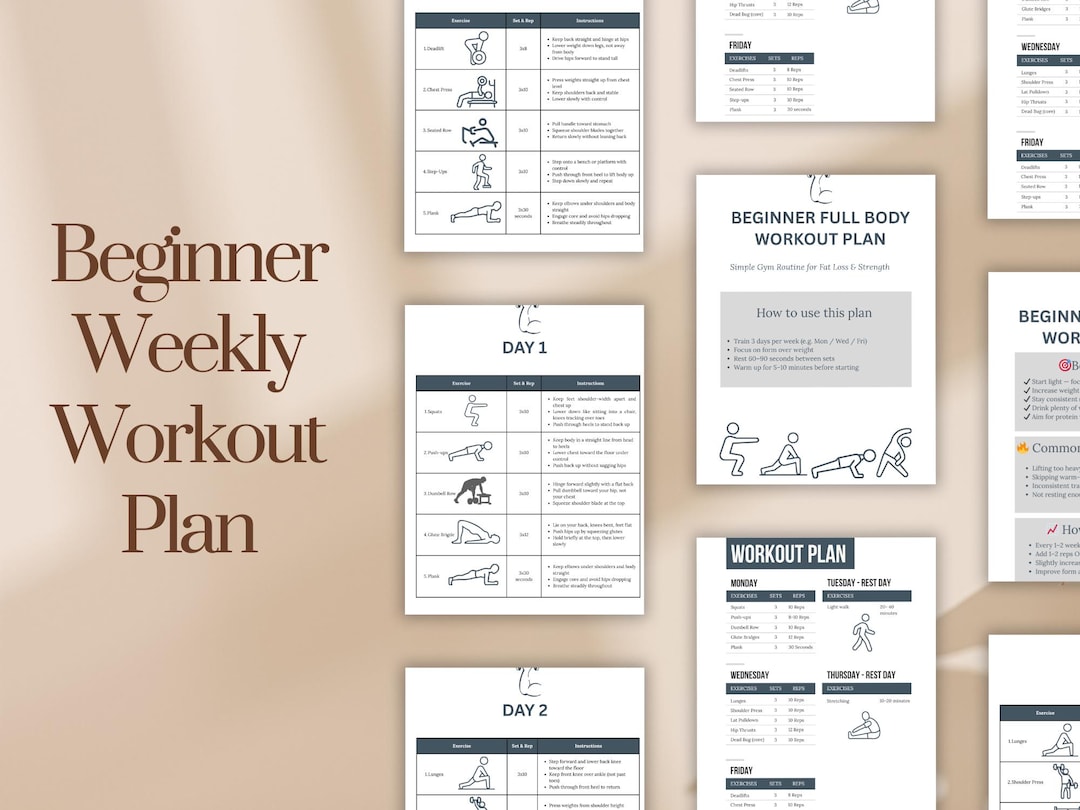
This balanced weekly blueprint is designed for absolute beginners. It alternates between full-body strength training and low-impact cardiovascular activity, ensuring that you target every major muscle group while allowing adequate recovery time between sessions.
| Day | Workout Type | Focus Area | Recommended Duration & Intensity |
|---|---|---|---|
| Monday | Strength Training | Full Body (Bodyweight & Light Resistance) | 30 minutes, moderate effort |
| Tuesday | Cardiovascular | Steady-State Aerobic (Brisk Walking/Cycling) | 20–30 minutes, conversational pace |
| Wednesday | Active Recovery | Mobility, Stretching, and Core Stability | 15–20 minutes, gentle effort |
| Thursday | Strength Training | Full Body (Functional Movements) | 30 minutes, moderate effort |
| Friday | Cardiovascular | Intervals or Steady-State Cardio | 20–30 minutes, light-to-moderate effort |
| Saturday | Active Recovery / Leisure | Recreational Movement (Hiking, Swimming, Yoga) | 30–45 minutes, low intensity |
| Sunday | Rest | Complete Physical Rest | 0 minutes |
Detailed Breakdown of Weekly Sessions
To execute this plan safely and effectively, let us examine the specific structure and execution of each workout type throughout the week.
Monday and Thursday: Full-Body Strength Sessions
Strength training forms the cornerstone of metabolic health and structural integrity. On these days, focus on mastering form rather than rushing through repetitions.
- Warm-up (5 minutes): Arm circles, torso twists, gentle marching in place, and bodyweight hip hinges to lubricate the joints.
- Circuit (Perform 2 to 3 rounds, resting 60 seconds between exercises):
- Bodyweight Squats: 10 to 12 repetitions. Focus on keeping your chest up and weight in your heels.
- Incline Push-ups (Hands on a sturdy table or wall): 8 to 10 repetitions. Keeps shoulders safe while building upper-body strength.
- Glute Bridges: 12 repetitions lying on your back, lifting your hips to engage glutes and hamstrings.
- Standing Dumbbell Rows (or bodyweight rows): 10 repetitions to strengthen the upper back.
- Cool-down (5 minutes): Static stretching for major muscle groups, holding each stretch for 20 to 30 seconds.
Tuesday and Friday: Cardiovascular Conditioning
Cardiovascular exercise improves the efficiency of your circulatory system. The key for beginners is keeping the intensity at a "conversational pace"—meaning you should be breathing faster than normal, but still able to speak in complete sentences without gasping for air.
- Brisk walking outdoors or on a treadmill.
- Stationary cycling at a comfortable resistance level.
- Low-impact elliptical training.
- Begin with 20 consecutive minutes in Week 1, and gradually increase by 2 to 3 minutes each subsequent week until you comfortably reach 30 to 40 minutes.
Wednesday and Saturday: Mobility and Active Recovery
Active recovery prevents the sluggishness associated with complete rest while keeping joint stress low. This is the ideal time to focus on posture, flexibility, and core stability without placing heavy loads on your muscles.
- Dedicate 15 minutes to a beginner-friendly mobility or yoga flow.
- Focus on opening tight hip flexors, chest muscles, and hamstrings, which often become stiff from prolonged sitting or daily sedentary habits.
Sunday: Complete Rest
Rest is not a sign of laziness; it is an active physiological requirement. During rest days, your central nervous system recovers, and microscopic tears in muscle fibers repair themselves, resulting in stronger, more resilient tissue. Listen to your body and avoid structured exercise entirely on this day.
Progression and Scaling for Different Fitness Levels
As you progress through your first month of exercise, your body will adapt. Exercises that once felt challenging will begin to feel manageable. This phenomenon, known as physiological adaptation, means it is time to safely apply the principle of progressive overload.
However, progression should never be rushed. If you experience sharp joint pain, extreme exhaustion, or persistent soreness that lasts more than 72 hours, you are progressing too quickly. Scale back your intensity, reduce your repetitions, or add an extra rest day.
- To make an exercise easier (Regressions): Perform push-ups against a higher elevated surface like a wall, reduce your squat depth by sitting down onto a chair and standing back up, or shorten your walking duration.
- To make an exercise harder (Progressions): Hold a light dumbbell during bodyweight squats, increase your walking pace or tackle a gentle hill, or increase your working sets from two to three rounds.
Common Mistakes to Avoid as a Beginner
Navigating your first exercise plan successfully also involves knowing what not to do. Many well-intentioned beginners stall their progress or trigger injuries by falling into common traps.
- Skipping the Warm-up: Jumping straight into high-intensity movement cold increases muscle strain and joint discomfort. Always allocate at least five minutes to elevate your core temperature and prepare your nervous system.
- Chasing Intensity Too Soon: Pting for maximal effort on day one often leads to debilitating soreness and psychological burnout. Build your consistency first; intensity can be introduced gradually over months.
- Ignoring Proper Form: Lifting heavier weights or moving faster with sloppy form compromises structural safety. Prioritize clean execution over speed or resistance.
- Neglecting Nutrition and Hydration: Exercise is only one piece of the puzzle. Fuelling your body with whole foods, adequate protein, and proper hydration supports recovery and energy levels.
Frequently Asked Questions
How soon will I see results from a beginner exercise plan?
Most beginners notice improvements in daily energy, mood, and sleep quality within the first two weeks of consistent exercise. Noticeable changes in physical strength and cardiovascular endurance typically appear within 4 to 6 weeks, while visible body composition changes take around 8 to 12 weeks of sustained consistency combined with balanced nutrition.
What should I do if I miss a workout during the week?
Do not try to "double up" or cram two workouts into one day, as this drastically increases injury risk. Simply let the missed workout go, resume your schedule on the next planned day, and treat consistency as a long-term average rather than a rigid, unbroken chain.
Is it normal to feel sore after starting a new exercise routine?
Mild to moderate muscle soreness—known as delayed onset muscle soreness (DOMS)—is entirely normal 24 to 48 hours after starting new movements, especially strength training. This soreness should gradually subside within a few days. However, sharp, localized joint pain or swelling is not normal and indicates that you should stop and consult a professional.
Can I do this workout plan at home without any equipment?
Yes. Every strength movement listed in the schedule can be performed using purely body weight. Resistance bands and light dumbbells are entirely optional additions meant to enhance challenge as you grow stronger over time.
How do I stay motivated when starting a new routine?
Motivation naturally fluctuates over time. Instead of relying solely on fleeting bursts of inspiration, focus on building identity-based habits. Schedule your workouts in your calendar like essential appointments, keep your workout gear visible, and track your non-scale victories, such as carrying groceries more easily or sleeping more deeply.
Next Actions for Starting Your Journey
The most effective exercise plan is the one you actually follow. To take action today, review your weekly calendar, block out specific 30-minute windows for your workouts, and prepare your workout gear the night before. Start gently, prioritize consistent execution over perfection, and allow your body the time it needs to adapt and thrive.