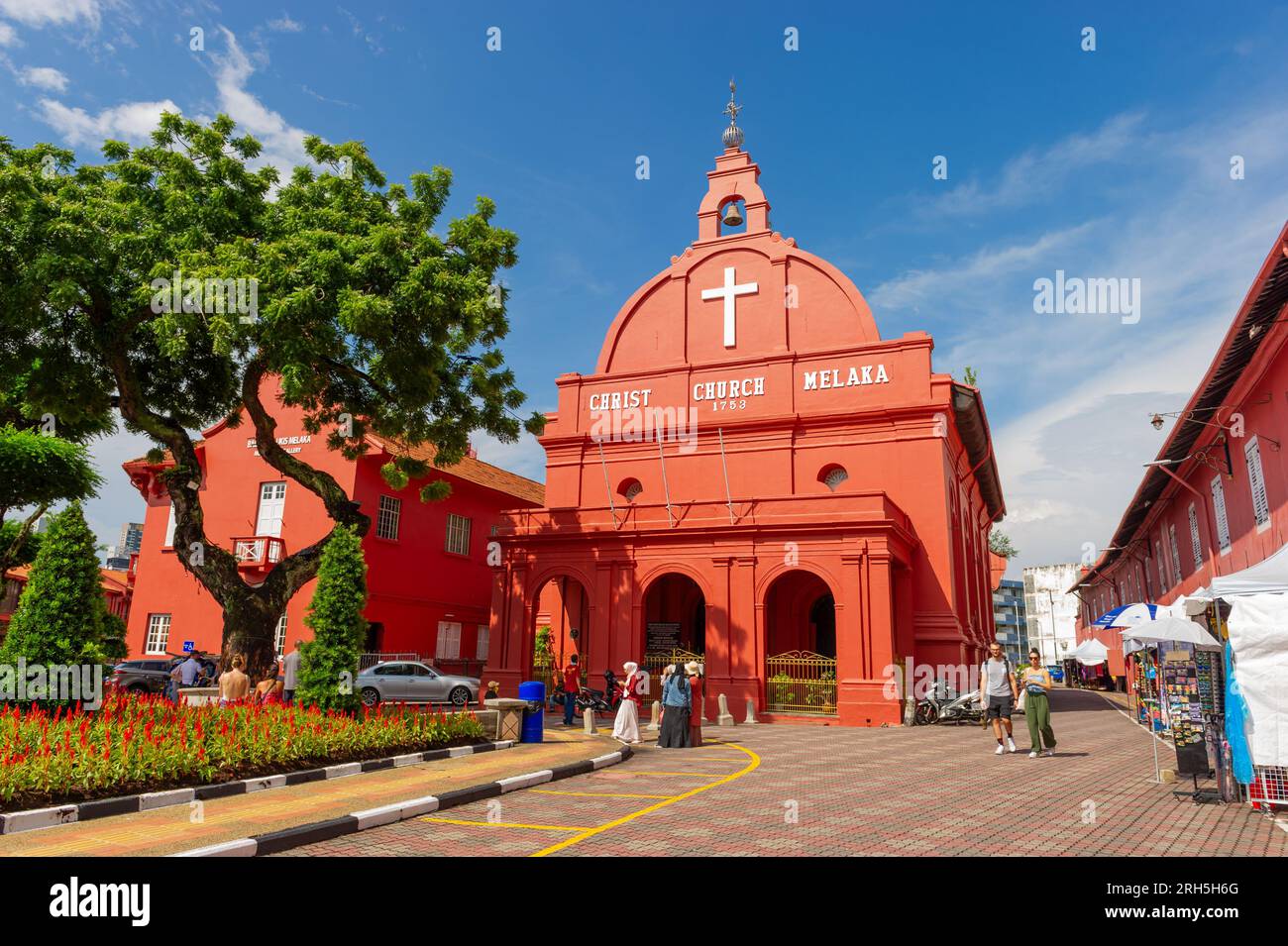
The surprising truth about church in Malaysia is that despite being a Muslim-majority nation where Islam is the religion of the Federation, the Christian community is remarkably diverse, vibrant, and legally protected under the Federal Constitution. While often perceived as a minority faith restricted to urban Chinese and Indian populations, the majority of Malaysian Christians are actually indigenous "Bumiputera" groups in East Malaysia who have used the word "Allah" in their worship for centuries.
The Constitutional Reality and Freedom of Religion
To understand the status of the church in Malaysia in 2026, one must first look at the legal framework that governs religious practice. Malaysia operates under a dual legal system where Civil Law and Sharia Law coexist, though the latter applies only to Muslims. The Federal Constitution serves as the supreme law of the land.
Article 3(1) of the Federal Constitution states that "Islam is the religion of the Federation; but other religions may be practised in peace and harmony in any part of the Federation." This "peace and harmony" clause is the bedrock upon which the Malaysian church stands. It grants Christian denominations the right to establish places of worship, manage their own religious affairs, and own property.
However, this freedom is not absolute. Article 11(4) of the Constitution allows State law (and Federal law for Federal Territories) to control or restrict the propagation of any religious doctrine or belief among persons professing the religion of Islam. This means that while churches are free to minister to their own congregations and non-Muslims, proselytization toward Muslims is legally prohibited. Understanding this distinction is crucial for any observer of the Malaysian religious landscape, as it shapes the boundaries of interfaith interaction and church activities.
The East-West Divide: A Tale of Two Regions
A common misconception is that the Malaysian church is a monolith. In reality, there is a significant geographical and demographic divide between Peninsular Malaysia and the East Malaysian states of Sabah and Sarawak on the island of Borneo.
The Indigenous Heartbeat of East Malaysia
The "surprising truth" for many visitors is that Christianity is the largest religion in Sarawak and the second largest in Sabah. Unlike the Peninsula, where Christians are predominantly of Chinese or Indian descent, the Christians in East Malaysia are largely indigenous (Bumiputera) peoples, such as the Iban, Kadazan-Dusun, Bidayuh, and Murut.
These communities have a deep-rooted Christian heritage dating back to the 19th century. Because their primary medium of instruction and communication is Bahasa Malaysia (the national language), their liturgy, Bibles (the Al-Kitab), and hymns are in Malay. This leads to the most significant theological and legal talking point in Malaysian Christianity: the use of the word "Allah" by non-Muslims. For these indigenous Christians, "Allah" has been the standard term for God for generations, a fact that has occasionally sparked legal disputes with authorities in the Peninsula who view the term as exclusive to Islam.
The Urban Diversity of Peninsular Malaysia
In Peninsular Malaysia, the church is a melting pot of languages and ethnicities. It is common to find a single church building hosting four different services on a Sunday: one in English, one in Mandarin, one in Tamil, and one in Bahasa Malaysia (to cater to the large number of East Malaysians working in the Peninsula). This multilingualism is a necessity in a nation with such a complex ethnic fabric and reflects the church's role as a unifying force across racial lines.
The Rise of the Shoplot Church
If you walk through the streets of Kuala Lumpur, Petaling Jaya, or Penang in 2026, you might not see many traditional steeples or Gothic cathedrals. Instead, you will see "shoplot churches." This is one of the most practical and visible realities of modern Malaysian Christianity.
Due to the high cost of land and the historical difficulty in obtaining government permits to build dedicated religious structures, many independent and evangelical congregations rent or buy commercial shoplots. These spaces are converted into sophisticated worship centers with high-tech audio-visual systems, soundproofing, and air conditioning.
The shoplot church phenomenon has allowed the Christian community to remain agile and present in the heart of residential and commercial hubs. It bypasses the "red tape" associated with zoning laws for traditional religious buildings while providing a discreet environment for worship. For many young Malaysians, the "church" is not a building with a bell tower, but the second floor of a building above a pharmacy or a café.
Major Denominations and Organizational Bodies
The Malaysian church is organized into several key bodies that represent their interests to the government and coordinate social efforts. The two most prominent are the Council of Churches of Malaysia (CCM) and the National Evangelical Christian Fellowship (NECF).
| Organization/Denomination | Focus & Membership | Primary Language(s) | Key Characteristics |
|---|---|---|---|
| Roman Catholic Church | Largest single denomination; under the Archdioceses of KL, Kuching, etc. | English, BM, Mandarin, Tamil | Highly structured, strong focus on education (Mission schools). |
| Methodist Church | Significant presence in both East and West Malaysia. | English, Mandarin, Iban | Known for social work, schools, and historical heritage. |
| Anglican Church | Part of the Province of the Anglican Church in South East Asia. | English, BM | Traditional liturgy; strong presence in Sarawak (Diocese of Kuching). |
| SIB (Sidang Injil Borneo) | The largest Protestant denomination in Malaysia. | Bahasa Malaysia | Indigenous-led; primarily in Sabah and Sarawak; evangelical. |
| Independent/Pentecostal | Thousands of autonomous churches (e.g., City Harvest, DUMC). | English, Mandarin | Modern worship styles; often based in shoplots; rapid growth. |
The Christian Federation of Malaysia (CFM) acts as an umbrella body that includes the Roman Catholics, the CCM (Mainline Protestants), and the NECF (Evangelicals). This unified front is essential for navigating the complex political landscape of 2026, ensuring that the rights of the Christian minority are advocated for at the federal level.
The Enduring Legacy of Mission Schools
A surprising truth about the cultural impact of the church in Malaysia is the role of Christian Mission Schools. Institutions founded by the La Salle Brothers, the Sisters of the Holy Infant Jesus, and Methodist missionaries have educated generations of Malaysians, including many of the nation's top political and business leaders—both Muslim and non-Muslim.
Names like St. John’s Institution, Victoria Institution, and Convent Bukit Nanas are synonymous with academic excellence and character building. While these schools are now part of the national education system and follow the government curriculum, they retain their "mission" status, and the church continues to have a say in their administration through Board of Governors. These schools represent a "soft power" of the church, fostering a sense of pluralism and multi-racial harmony that is rare in the region.
Challenges and Modern Pressures
Despite the "peace and harmony" mentioned in the Constitution, the Malaysian church faces several ongoing challenges in 2026.
1. Administrative Hurdles
Obtaining permits for new church buildings remains a significant challenge. Many local councils have strict quotas or zoning requirements that make it difficult for new congregations to find permanent homes. This is why the "shoplot church" model continues to be the default for the majority of new church plants.
2. Sensitivity Over Terminology
While court rulings in the early 2020s affirmed the right of Christians to use the word "Allah" for educational and internal religious purposes, the issue remains socially sensitive in the Peninsula. The church must constantly balance its religious identity with the need to maintain social cohesion in a climate where religious topics can be easily politicized.
3. Brain Drain and Migration
Like many other sectors in Malaysia, the church is affected by the migration of young professionals to countries like Singapore, Australia, and the UK. Maintaining leadership succession and youth engagement is a primary focus for many Malaysian pastors in 2026.
Practical Information for Visitors and Newcomers
If you are visiting a church in Malaysia for the first time, there are several cultural norms to keep in mind.
- Dress Code: While some modern evangelical churches are casual (jeans and t-shirts), many mainline churches (Catholic, Anglican, Methodist) prefer "smart casual" or modest attire. In East Malaysia, traditional cultural dress is often worn during major festivals like Gawai or Harvest Festival.
- Security and Discretion: Most churches are very welcoming, but they may have discreet security measures in place. It is generally polite to avoid discussing sensitive political-religious topics in the foyer unless you are with close friends.
- Service Times: Sunday morning is the standard, but many urban churches offer Saturday evening services to accommodate busy work schedules.
- Language: Ensure you check the language of the service. Many large churches have simultaneous translation via headsets or separate halls for different languages.
Frequently Asked Questions
Can a Muslim attend a church service in Malaysia?
While there is no law explicitly forbidding a Muslim from entering a church building, the propagation laws (Article 11(4)) make it a very sensitive issue. Churches are generally careful not to be seen as proselytizing to Muslims. Most churches are open to the public, but the focus remains on the existing Christian community and non-Muslim visitors.
Is the Bible banned in Malaysia?
No, the Bible is not banned. However, Bibles in the Malay language (the Al-Kitab) historically faced restrictions in Peninsular Malaysia regarding the use of certain terms. These Bibles are widely available and used legally, especially in Sabah and Sarawak, and for the indigenous communities in the Peninsula.
How do I find a church in Kuala Lumpur?
Most churches have a strong digital presence. You can search for the "Christian Federation of Malaysia" or specific denominations like "Methodist Church in Malaysia" or "Archdiocese of Kuala Lumpur" to find a directory of services. Most urban churches in the Klang Valley conduct services in English.
Do Malaysian churches pay taxes?
Religious organizations in Malaysia, including churches, can apply for tax-exempt status for their religious and charitable activities under Section 44(6) of the Income Tax Act 1967. However, they must strictly comply with reporting requirements and ensure funds are used for the stated purposes.
What is the most common language for worship?
In the Peninsula, English and Mandarin are very common in urban areas. In East Malaysia (Sabah and Sarawak), Bahasa Malaysia is the dominant language for worship among the indigenous Christian majority.
Summary of Next Actions
For those looking to engage with or learn more about the church in Malaysia in 2026, the following steps are recommended:
- Identify the Region: Recognize that the experience of a church in Kota Kinabalu will be vastly different from one in Kuala Lumpur.
- Contact Umbrella Bodies: For official inquiries or research, reach out to the Christian Federation of Malaysia (CFM) or the Council of Churches of Malaysia (CCM).
- Visit Local Services: If you are a visitor, attending an English-speaking service in a major city is the easiest way to experience the local church culture.
- Respect Local Sensitivities: Be mindful of the constitutional boundaries regarding proselytization and the historical context of religious terminology in the country.