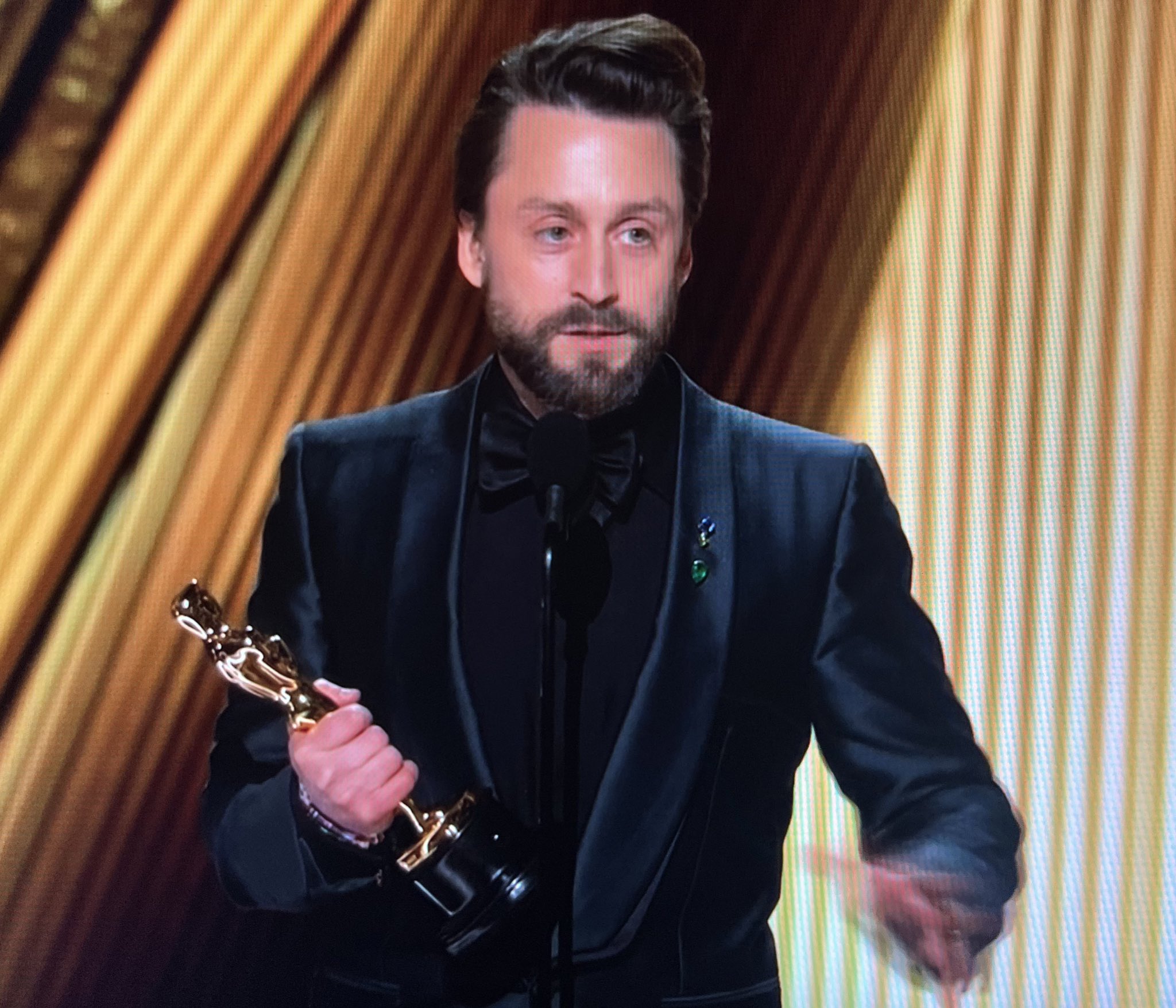
When discussing the cultural and cinematic impact of Jesse Eisenberg’s sophomore directorial feature, the phrase "a real pain oscars nominations revealed" captures the intense anticipation surrounding its awards season potential. The film—a sharp, bittersweet tragicomedy following two mismatched cousins touring Poland to honor their late grandmother—generated significant critical momentum from its Sundance Film Festival premiere through its theatrical release, positioning it as a formidable contender in major Academy Award categories such as Best Original Screenplay and Best Supporting Actor.
Understanding the Scope and Context of "A Real Pain"
To understand why searches regarding the film's Oscar prospects generated such substantial interest, it is necessary to examine the production's journey from an independent project to a major player on the international film festival circuit. Written, directed, produced by, and starring Jesse Eisenberg alongside Kieran Culkin, the film premiered in the U.S. Dramatic Competition at the Sundance Film Festival in January 2024. Searchlight Pictures subsequently acquired the worldwide distribution rights in a high-profile deal, signaling early confidence in its commercial appeal and critical standing.
The narrative centers on David (Eisenberg), an over-anxious, tightly wound advertising executive, and Benji (Culkin), his charismatic, deeply erratic, and emotionally volatile cousin. Together, they embark on a heritage tour through Poland, visiting historical sites including Majdanek concentration camp alongside a diverse tour group led by an eager British guide named James (Will Sharpe). This premise blends broad comedic awkwardness with poignant explorations of generational trauma, historical memory, and the friction between modern comfort and historical devastation.
| Production Aspect | Detail / Participant |
|---|---|
| Director & Writer | Jesse Eisenberg |
| Main Cast | Jesse Eisenberg, Kieran Culkin, Will Sharpe, Jennifer Grey |
| Premiere Venue | Sundance Film Festival (U.S. Dramatic Competition) |
| Distributor | Searchlight Pictures |
| Primary Genre | Tragicomedy / Independent Drama |
Critical Reception and Festival Circuit Momentum
Awards season viability relies heavily on early festival validation, and A Real Pain established an exceptionally strong foundation during its initial exhibition run. At Sundance, Jesse Eisenberg received the Waldo Salt Screenwriting Award, marking a crucial early milestone that immediately ignited critical conversations about the film's screenplay eligibility. Reviewers praised the script's ability to balance acute social awkwardness with profound emotional weight, avoiding the sentimental clichés that often plague cinematic treatments of Holocaust-adjacent tourism.
Following Sundance, the film screened at major international showcases, including the Traverse City Film Festival, the Sarajevo Film Festival, and the BFI London Film Festival. Throughout these engagements, Kieran Culkin’s performance as Benji emerged as the standout element driving the conversation. Critics noted that Culkin’s portrayal combined the manic energy of his work in television with a raw, unpredictable vulnerability that set it apart from conventional supporting actor turns. This sustained critical praise established the film as a fixture in precursor award discussions, directly fueling public interest in its official Academy Award prospects.
Key Oscar Categories and Eligibility Analysis
When tracking Academy Award recognition for independent features, industry analysts evaluate several distinct categories based on release timelines, guild support, and competitive landscapes. A Real Pain was positioned primarily within three major areas: Best Original Screenplay, Best Supporting Actor, and, less frequently, Best Picture.
Best Original Screenplay
Jesse Eisenberg’s script operates on a razor-thin narrative wire, contrasting deeply articulated philosophical dilemmas with biting, naturalistic dialogue. The screenplay examines how contemporary individuals process historical trauma through the lens of privilege and personal neurosis. Because the Academy's writers branch traditionally rewards voice-driven, highly specific character studies that do not rely on standard genre mechanics, original screenplay proved to be the film's most frequently cited competitive category by industry prognosticators.
Best Supporting Actor
Kieran Culkin’s performance as Benji served as the emotional engine of the promotional and critical campaign. The supporting actor field often favors transformative performances or deeply charismatic turns that dominate the screen whenever the character appears. Culkin's ability to pivot instantaneously from disarming charm to paralyzing self-destruction provided Academy voters with the exact type of high-wire character work that historically succeeds in this branch.
Best Picture and Below-the-Line Considerations
While securing a Best Picture nomination for a mid-budget independent tragicomedy remains challenging amid heavily financed studio campaigns, Searchlight Pictures' distribution apparatus provided the necessary visibility. Furthermore, discussions occasionally touched upon the film's sharp editing, which managed pacing across abrupt tonal shifts, and its authentic on-location cinematography in Warsaw and Lublin.
Distribution Strategies and the Academy Voting Window
The trajectory of any film seeking Academy recognition depends heavily on its theatrical rollout and availability to voting members. Searchlight Pictures scheduled A Real Pain for a targeted theatrical release in late 2024, positioning it squarely in the traditional "awards corridor." This timing ensured that the film remained fresh in the minds of Academy voters during the voting windows for nominations, which typically occur in early January.
Independent films often rely on specialized platform releases—opening in select theaters in major media markets like New York and Los Angeles before expanding nationwide—to build word-of-mouth momentum. For A Real Pain, this strategy leveraged strong per-screen averages and enthusiastic audience reception to prove commercial viability alongside critical acclaim. Ensuring Academy members had access to secure screeners and special guild screenings was essential in maintaining visibility against competing blockbusters and heavily marketed streaming releases.
Comparative Positioning Against Contemporary Contenders
Navigating the competitive landscape of an awards season requires understanding how a film stacks up against its peers in parallel genres. The table below outlines how A Real Pain intersected with typical awards season profiles during its competitive cycle.
| Film Attribute | A Real Pain Profile | Typical Major Contender Profile |
|---|---|---|
| Budget Scale | Independent / Mid-to-Low | Frequently High-Budget or Studio-Backed |
| Release Strategy | Platform theatrical to wide expansion | Wide theatrical or prominent streaming debut |
| Primary Strength | Writing voice and standout supporting performance | Sweeping technical scale or massive ensemble casts |
| Audience Target | Arthouse, prestige comedy-drama, festivalgoers | Broad demographic, franchise followers, event-movie audiences |
Common Misconceptions Regarding Independent Oscar Campaigns
Navigating the discourse around awards nominations often leads to persistent misunderstandings about how films qualify, campaign, and secure nods from the Academy of Motion Picture Arts and Sciences.
- Misconception: Festival awards guarantee Oscar nominations. While winning a prize at Sundance or another major festival provides vital momentum and critical validation, voting bodies operate independently. Guild branches vote based on their specific professional criteria rather than festival prestige alone.
- Misconception: Distributors can buy nominations outright. While a robust FYC (For Your Consideration) campaign involving targeted advertising, guild screenings, and screener distribution is necessary for visibility, money cannot force academy members to vote for a film that fails to resonate with their professional tastes.
- Misconception: Directorial dual roles dilute writing credit. Eisenberg writing, directing, and starring in the feature actually highlighted his comprehensive authorship, a factor that historically draws respect from the writers branch.
Frequently Asked Questions
What is the premise of A Real Pain?
The film follows two mismatched cousins, David and Benji, who reunite to tour Poland as part of a heritage trip honoring their late grandmother. Along the way, unresolved family tensions surface against the backdrop of historical landmarks.
Who wrote and directed the film?
Jesse Eisenberg wrote, directed, and starred in the film, drawing in part on his own family background and travels to Poland.
Which major awards did the film win prior to Oscar consideration?
At the 2024 Sundance Film Festival, Jesse Eisenberg received the Waldo Salt Screenwriting Award for the film's script.
How did Searchlight Pictures handle the release?
Searchlight acquired worldwide rights at Sundance and deployed a specialized theatrical rollout in late 2024 to position the film within the standard awards season window.
Where can viewers watch A Real Pain?
Following its theatrical run, the film transitioned to digital rental platforms and streaming services associated with Searchlight's distribution agreements.
Practical Next Steps for Film Enthusiasts
For viewers interested in exploring the film and its broader cinematic context, several steps can provide a deeper appreciation of its craftsmanship:
- Examine the Screenplay: Review published interviews and discussions with Jesse Eisenberg regarding the writing process, particularly how he balanced dark thematic elements with comedic timing.
- Explore Related Independent Cinema: Watch other titles distributed by Searchlight Pictures or emerging from the Sundance Film Festival's contemporary dramatic competitions to understand the current landscape of American indie cinema.
- Track Guild Awards: Look beyond Academy announcements to check nominations and wins from the Writers Guild of America (WGA) and Screen Actors Guild (SAG), which often serve as reliable indicators of industry sentiment.