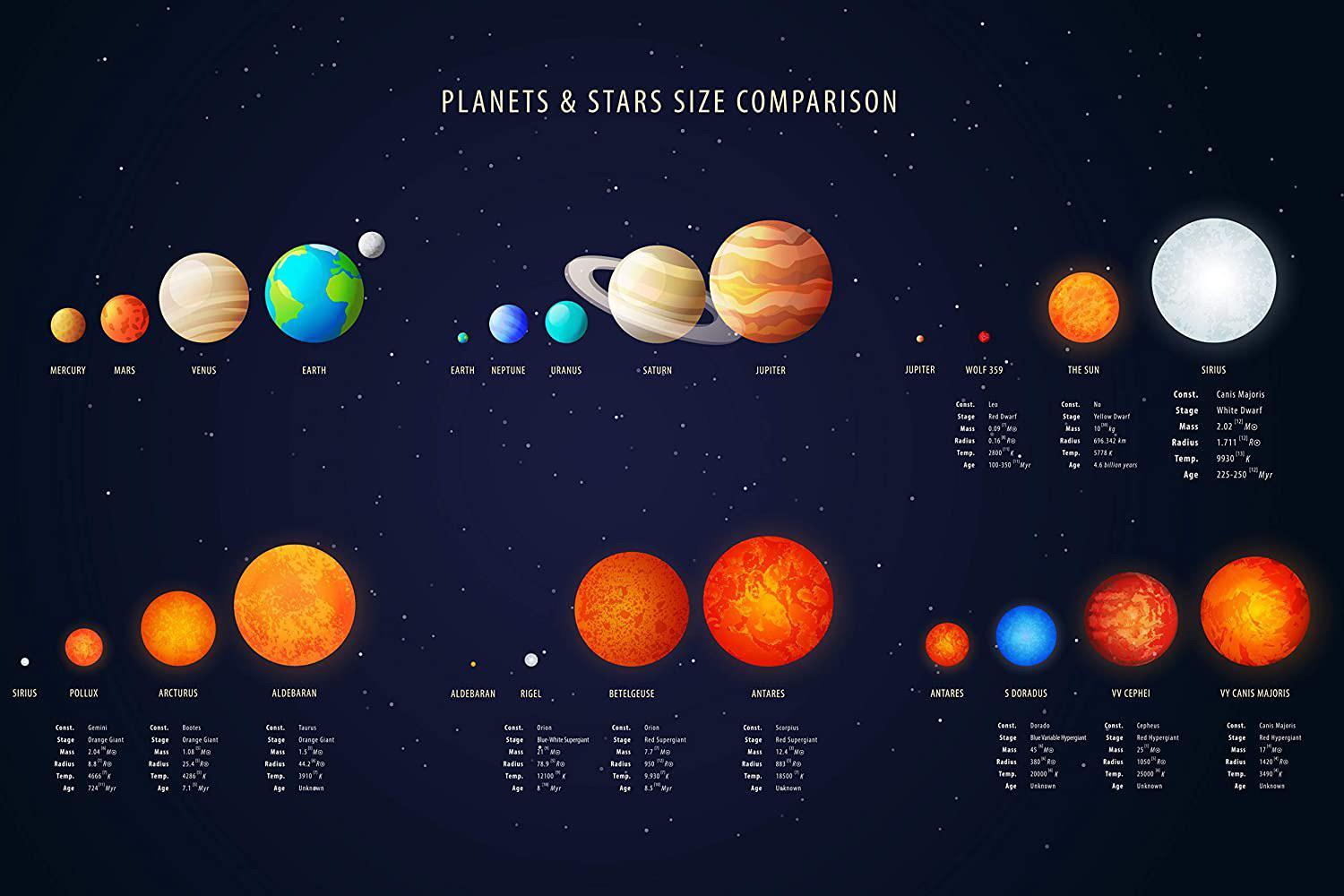
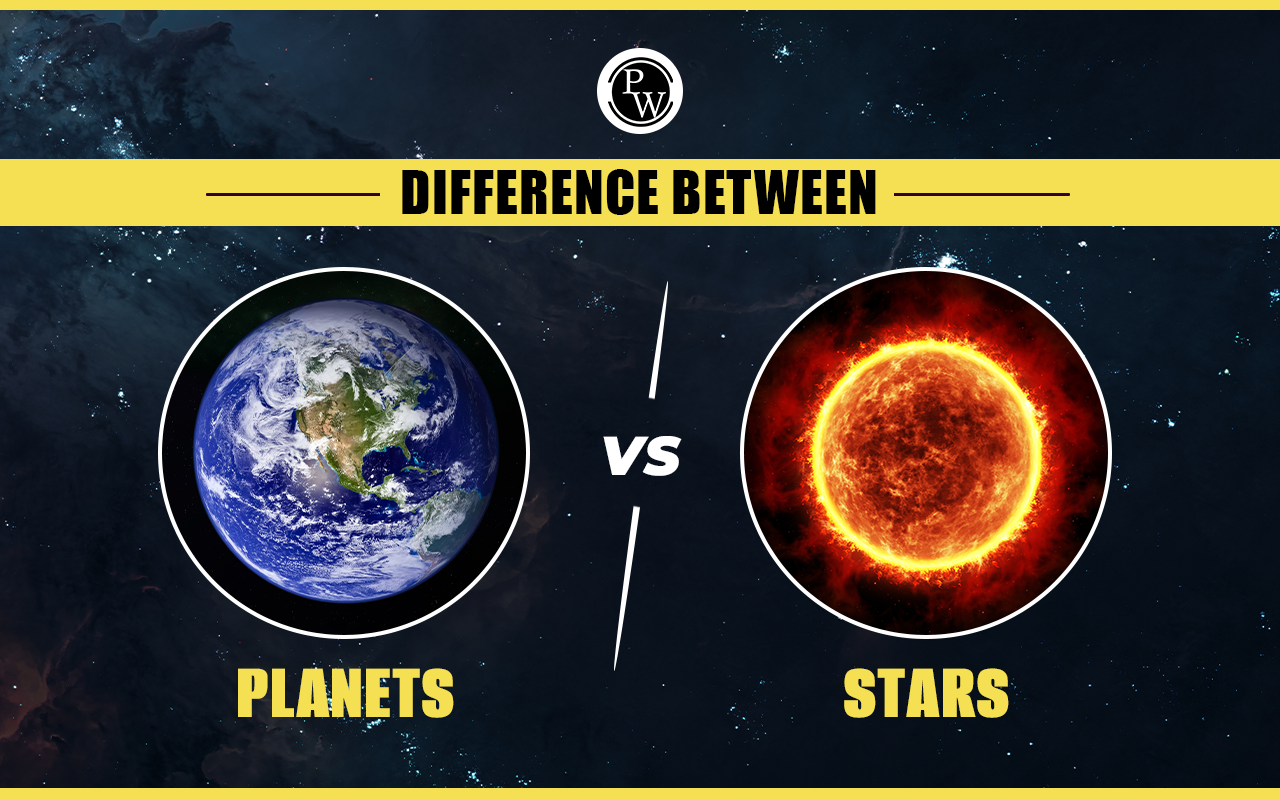
No, planets are not considered stars. While both planets and stars are celestial bodies found in space, they are fundamentally different objects defined by their mass, composition, energy production, and life cycles. Stars are massive, luminous spheres of plasma that generate energy through nuclear fusion, whereas planets are smaller, non-luminous bodies that orbit stars and do not undergo nuclear fusion in their cores.
The Fundamental Distinction: Nuclear Fusion
The primary scientific differentiator between a star and a planet is the process of nuclear fusion. For an object to be classified as a star, it must possess enough mass—typically at least 75 to 80 times the mass of Jupiter—to exert sufficient gravitational pressure on its core. This pressure creates the extreme temperatures necessary to fuse hydrogen atoms into helium. This fusion reaction releases vast amounts of energy in the form of light and heat, which is what makes stars shine.
Planets, by contrast, lack the necessary mass to reach the core temperatures required for hydrogen fusion. Even the largest gas giants in our solar system remain "failed stars" in a sense; they may be composed of similar elements to stars, such as hydrogen and helium, but they simply do not have the gravitational "squeeze" to ignite. Because they do not produce their own visible light through fusion, planets are considered non-luminous bodies that are only visible to us because they reflect the light of the star they orbit.
Defining Planets vs. Stars by Composition and Formation
The formation process also sets these two celestial bodies apart. Stars typically form within dense clouds of interstellar gas and dust known as molecular clouds. Gravity causes these regions to collapse, and as the material falls inward, it heats up until fusion begins. The leftover material—dust and gas—that swirls around a newly formed star often flattens into a protoplanetary disk.
Planets form within these disks. Through a process called accretion, small dust particles collide and stick together, eventually growing into planetesimals and then full-sized planets. Because stars are the "parents" of this process, they are composed primarily of the lightest elements (hydrogen and helium) that make up the vast majority of the universe's mass. Planets are more diverse; while gas giants like Jupiter and Saturn resemble stars in their hydrogen-heavy composition, terrestrial planets like Earth and Mars are composed of heavier elements like silicates and metals that were too hot to condense near the forming star.
Comparing Celestial Characteristics
To clarify the differences, it is helpful to look at how these objects behave and appear within a system. The following table highlights the critical distinctions between stars and planets.
| Feature | Star | Planet |
|---|---|---|
| Energy Source | Nuclear fusion (Hydrogen to Helium) | Reflects light from a host star |
| Luminosity | Emits visible light and heat | Does not emit significant visible light |
| Mass | Very high (typically > 0.08 solar masses) | Low (insufficient for sustained fusion) |
| Orbit | Centers of systems (or orbit galactic centers) | Orbits a star or stellar remnant |
| Composition | Primarily Hydrogen and Helium | Varies: Rock, metal, ice, or gas |
| Surface | No solid surface (plasma sphere) | Can be solid, liquid, or gas-based |
Understanding Brown Dwarfs: The "Missing Link"
One area that often causes confusion regarding the definition of a star is the existence of brown dwarfs. Often referred to as "substellar objects," brown dwarfs occupy the mass gap between the heaviest gas giants and the lightest red dwarf stars.
A brown dwarf is not heavy enough to sustain the stable hydrogen fusion that powers a main-sequence star like our Sun. However, they are massive enough to briefly fuse deuterium (an isotope of hydrogen) in their early stages. Because they do not sustain long-term hydrogen fusion, astronomers generally classify them as substellar objects rather than true stars. This distinction is vital because it proves that the transition from a planet-like object to a star-like object is a spectrum defined by mass, rather than a simple binary choice.
Why Stars Twinkle and Planets Do Not
A common observational question is why stars appear to twinkle while planets remain steady. This visual phenomenon is a consequence of Earth's atmosphere and the nature of the light sources. Stars are effectively point sources of light; they are so distant that even the most powerful telescopes perceive them as single points. As this light travels through the turbulent layers of Earth's atmosphere, the light is refracted and scattered, causing the "twinkle" or scintillation effect.
Planets, however, are much closer to Earth. They appear as small disks rather than pinprick points of light. While the light from a planet is still affected by atmospheric turbulence, the disk of the planet is large enough that the rays of light from different parts of the disk cancel out the twinkling effect. Therefore, a steady, non-flickering light in the night sky is often a strong indicator that you are viewing a planet rather than a distant star.
The Impact of Orbital Dynamics
Stars and planets play very different roles in the architecture of space. A star acts as the gravitational anchor for its system. The vast majority of the mass in any solar system is concentrated within its host star. This gravitational dominance keeps planets, asteroids, and comets in stable, predictable orbits.
Planets are defined by their subordinate relationship to stars. According to the International Astronomical Union (IAU) definition established in 2006, a planet must orbit a star, be massive enough to achieve hydrostatic equilibrium (a near-spherical shape), and have cleared its orbital neighborhood of other debris. While rogue planets exist—these are planetary-mass objects that wander through space without a host star—they are still classified as planets because they do not have the mass to be stars, regardless of whether they have an anchor.
Common Misconceptions
A persistent source of confusion is the term "Morning Star" or "Evening Star," which historically refers to the planet Venus. Ancient civilizations often named these bright objects "stars" because they were unaware of the difference between solar system bodies and distant stellar entities. In modern astronomy, this is strictly a naming convention rather than a classification. Venus is a terrestrial planet, not a star.
Another misconception involves the sun itself. Because it is a massive, glowing object in the sky, people sometimes conflate its classification with the planets that orbit it. The Sun is a G-type main-sequence star. It is the engine of our solar system, while the planets are the secondary bodies formed from the cooling debris left over from the Sun’s own birth.
Frequently Asked Questions
Can a planet ever become a star? No, a planet cannot turn into a star on its own. To become a star, an object needs significantly more mass than any planet currently possesses. Even if a gas giant were to collect more mass from space, it would require a massive influx of material—effectively becoming a new celestial body entirely—to reach the threshold for nuclear fusion.
Are all planets made of gas like stars? No. While gas giants like Jupiter and Saturn have compositions somewhat similar to stars, terrestrial planets like Earth, Venus, Mars, and Mercury are primarily composed of rock and metal. These planets lack the massive, hydrogen-rich envelopes required to even resemble the chemical makeup of a star.
Is it possible for a star to be smaller than a planet? Generally, no. The smallest stars, known as red dwarfs, are still significantly more massive than the largest planets. While a very small red dwarf might have a physical radius similar to a large gas giant, its mass—and therefore its gravitational pressure and internal density—will be much higher, which is the defining characteristic of a star.
Why do we say the Sun is a star but the Earth is a planet? We make this distinction based on the Sun's ability to produce energy through nuclear fusion. The Earth is a cold, rocky body that relies on the Sun's radiation for its temperature. The Sun is the central, energy-producing power plant of the system, whereas the Earth is a beneficiary of that energy.
Are there planets outside our solar system? Yes. These are known as exoplanets. Since the first confirmed discovery of exoplanets in the early 1990s, thousands have been identified orbiting other stars in our galaxy. Like the planets in our solar system, these exoplanets orbit their host stars and do not produce their own light through fusion.
Next Steps for Observational Astronomy
If you are interested in exploring the night sky to identify the differences between stars and planets, the best starting point is to use a mobile astronomy application or a planisphere. These tools provide real-time mapping of the sky, allowing you to distinguish between fixed stars and the wandering paths of planets like Mars, Jupiter, and Saturn.
Begin by observing the sky over several weeks. You will notice that stars appear in the same relative positions to one another throughout the year, while planets change their positions against the background of "fixed" stars. This movement is a direct result of their orbits within our solar system. By understanding that planets are non-luminous, orbiting, rocky or gaseous bodies, you gain a clearer perspective on the complex, mechanical nature of the universe.