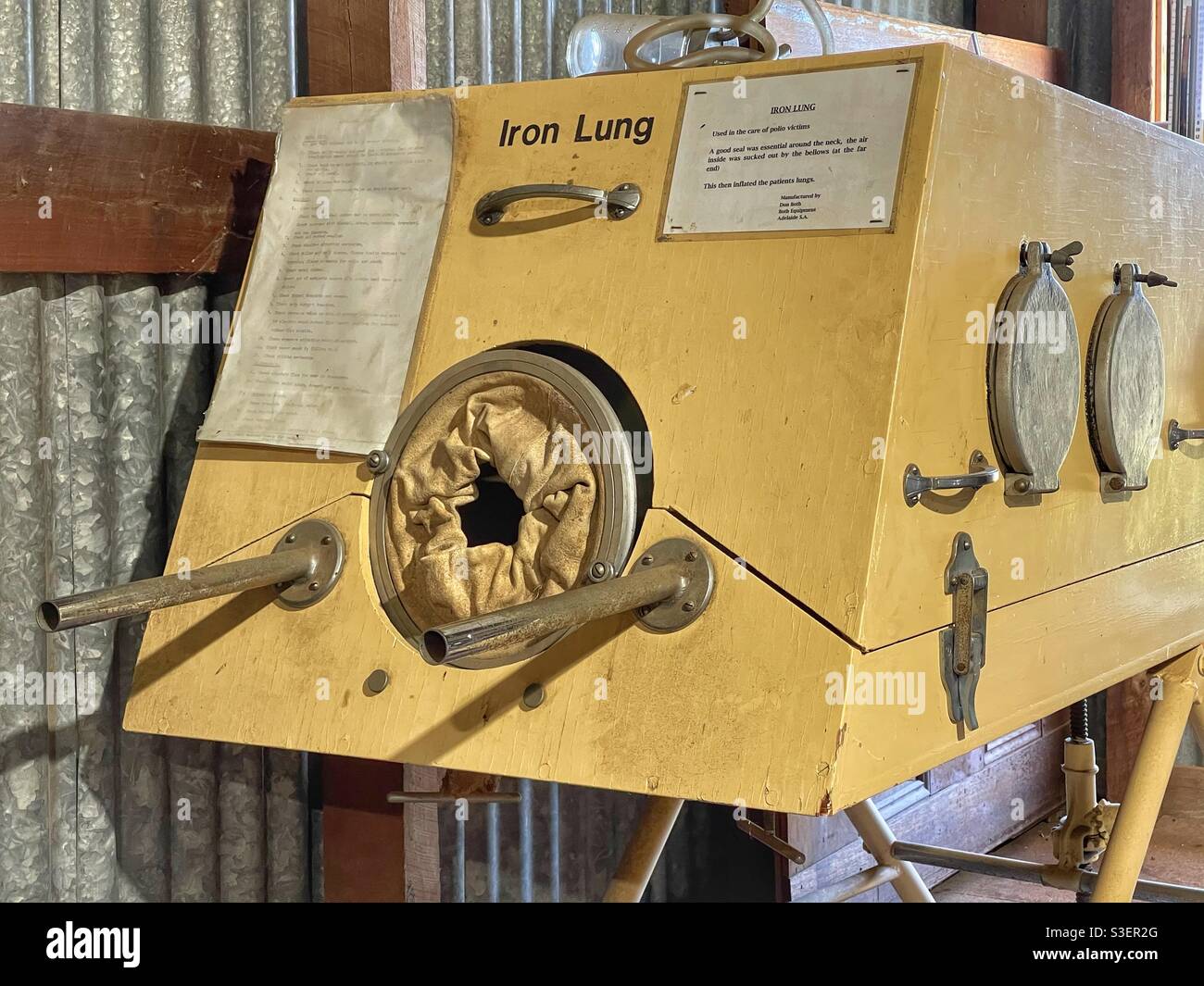
As of 2026, iron lungs are virtually extinct in clinical medical practice, though a handful of individuals globally continue to rely on them for survival. While modern hospitals transitioned to positive pressure ventilation decades ago, these massive steel cylinders remain operational for a very small number of polio survivors who cannot physiologically or psychologically adapt to contemporary respiratory technology.
The Mechanism of the Iron Lung: How Negative Pressure Works
To understand why the iron lung is largely a relic of the past, one must first understand how it functions. Formally known as a negative pressure ventilator (NPV), the iron lung was the first mechanized way to help people breathe when their own muscles failed.
Unlike modern ventilators that "push" air into the lungs through a tube in the airway (positive pressure), the iron lung mimics the natural physiological process of breathing. When a person breathes naturally, the diaphragm moves down, creating a vacuum (negative pressure) in the chest cavity, which causes the lungs to expand and draw in air.
The iron lung consists of a large, airtight horizontal cylinder. The patient lies inside with only their head protruding through a specialized rubber seal. An external bellows or motor cyclically changes the air pressure inside the tank.
- Inspiration: The machine pumps air out of the tank, creating a partial vacuum. This negative pressure causes the patient’s chest to expand, drawing air into their lungs through the nose and mouth.
- Expiration: The machine allows air back into the tank, increasing the pressure. This pushes the chest cavity inward, forcing the air out of the lungs.
This method is remarkably effective for patients with paralyzed respiratory muscles but intact lungs, which was the primary clinical profile of paralytic poliomyelitis.
The History and Evolution of Respiratory Support
The most famous iteration of the iron lung was the Drinker respirator, developed in 1928 by Philip Drinker and Louis Agassiz Shaw at Harvard University. It was later refined by John Haven Emerson, who made the design simpler, quieter, and more affordable—much to the chagrin of Drinker, who attempted to sue for patent infringement but lost.
The "Golden Age" of the iron lung occurred during the 1940s and 1950s, when polio epidemics paralyzed thousands of children and adults. Hospital wards were often filled with rows of these machines, humming in unison. However, two major developments led to their rapid decline:
1. The Development of Positive Pressure Ventilation (PPV)
During the 1952 polio outbreak in Copenhagen, the mortality rate was staggering. Dr. Bjørn Ibsen, an anesthesiologist, suggested that instead of pulling the chest open from the outside, doctors should blow air directly into the lungs using a technique called positive pressure ventilation. This required a tracheostomy (a hole in the neck) but was far more efficient at clearing secretions and keeping patients alive. This discovery marked the beginning of modern intensive care and the eventual obsolescence of the iron lung.
2. The Polio Vaccine
The introduction of the Salk vaccine (1955) and the Sabin oral vaccine (1961) virtually eradicated polio in the Western world. As the number of new cases plummeted, the demand for iron lungs vanished. Manufacturers stopped producing the machines by the late 1960s, and most hospitals scrapped their units in favor of smaller, portable positive pressure ventilators.
Why Are a Few People Still Using Iron Lungs in 2026?
As of 2026, the number of active iron lung users is estimated to be in the single digits. These individuals are almost exclusively "polio pioneers"—survivors of the mid-century epidemics who have spent seven decades or more using the machine.
There are several reasons why these individuals have not switched to modern equipment:
- Physiological Tolerance: Some patients find that positive pressure ventilation causes irritation to the airway or that their lungs, having been supported by negative pressure for a lifetime, do not respond well to air being forced inward.
- Anatomy: Decades of polio-related muscle atrophy and scoliosis (curvature of the spine) can make the fitting of modern masks or the insertion of tracheostomy tubes difficult or dangerous.
- Psychological Comfort: For many long-term users, the "whoosh" of the iron lung is the sound of life. Transitioning to a different machine after 70 years is a daunting prospect that many choose to avoid.
- Non-Invasive Nature: The iron lung does not require a tube in the throat, which reduces the risk of certain types of infections and allows the user to speak more naturally while the machine is at rest.
The Challenges of Maintaining an Obsolete Technology
The primary obstacle for the remaining iron lung users in 2026 is not medical, but mechanical. Because the machines have not been manufactured for over 50 years, they are no longer supported by any medical device company.
In 2004, Philips Respironics, which had inherited the service contracts for many of these machines, notified users that they would no longer be able to provide parts or repairs. This left the remaining users in a precarious position. Today, maintaining an iron lung requires:
- Salvaging Parts: Users often buy or receive donated machines from museums or old hospital basements to "cannibalize" them for motors, bellows, and seals.
- Custom Fabrication: Some users rely on local machinists or specialized engineers who use 3D printing and custom metalwork to recreate gaskets and mechanical linkages.
- Specialized Seals: The rubber collar that creates the seal around the neck is a "wear item" that degrades over time. Modern synthetic rubbers are now used to create custom collars that are more durable than the original latex versions.
Iron Lung vs. Modern Ventilators: A Technical Comparison
While the iron lung is a fascinating piece of history, modern technology offers significant advantages for the vast majority of patients.
| Feature | Iron Lung (Negative Pressure) | Modern Ventilator (Positive Pressure) |
|---|---|---|
| Airflow Mechanism | Vacuum expands chest cavity | Air is pushed into the lungs |
| Invasiveness | Non-invasive (entire body in tank) | Can be invasive (Intubation) or non-invasive (CPAP/BiPAP) |
| Portability | None (weighs 600-800 lbs) | Highly portable (handheld to backpack size) |
| Patient Access | Difficult (requires opening the tank) | Easy (patient is fully accessible) |
| Speech | Easier during certain phases | Difficult with invasive tubes |
| Power Needs | High; requires specialized motors | Low; can run on internal batteries |
| Current Availability | Obsolete; custom maintenance only | Standard in all healthcare settings |
Modern Successors: The Cuirass Ventilator
While the full-body iron lung is nearly gone, the principle of negative pressure ventilation is not entirely dead. A modern, smaller version known as a cuirass ventilator (such as the Hayek RTX) is still used in specific clinical niche cases.
A cuirass ventilator consists of a plastic shell that fits over the patient’s chest and abdomen. A vacuum pump is attached to the shell, creating negative pressure only over the torso rather than the whole body. This allows for the benefits of negative pressure ventilation—such as improved cardiac output and better secretion clearance—without the massive footprint of a steel tank. In 2026, these are occasionally used in pediatric intensive care or for patients with specific neuromuscular disorders who do not tolerate traditional ventilation well.
Medical and Practical Limitations
The decline of the iron lung was driven by several insurmountable practical flaws. For healthcare providers, the iron lung was a "nursing nightmare." To bathe a patient, change a bandage, or use a bedpan, the tank had to be opened, which meant the patient had to be able to breathe on their own for a few minutes or be manually ventilated with a hand-pump.
Furthermore, "tank lung" or "iron lung syndrome" was a known complication where the patient’s cardiovascular system was affected by the pressure changes on the entire body, not just the chest. Modern PPV allows doctors to precisely control the volume and pressure of air delivered to the lungs, minimizing damage to delicate lung tissue (barotrauma) and allowing for better oxygenation in diseased lungs.
Frequently Asked Questions
Can you still buy an iron lung?
No, iron lungs are no longer commercially available. The remaining units are either in museums, private hands, or in the basements of older hospitals. When a unit is needed for parts, it is usually acquired through specialized networks of collectors and respiratory historians.
Is polio making a comeback in 2026?
While there have been sporadic cases of vaccine-derived poliovirus in various parts of the world over the last decade, the massive outbreaks of the 1950s have not returned. Modern medical protocols for any new cases of respiratory paralysis would involve modern ventilators, not iron lungs.
How do iron lung users sleep?
Users sleep inside the machine. The rhythmic sound and movement of the bellows become a natural part of their sleep cycle. Most long-term users have a mirror positioned above their heads so they can see the room around them and interact with visitors while inside the tank.
What happens during a power outage?
Power outages are a life-threatening emergency for iron lung users. Most have backup generators and a manual hand-crank system. In an emergency, a caregiver can pump the bellows by hand to keep the patient breathing until power is restored.
Are iron lungs used for COVID-19 or other modern illnesses?
During the height of the COVID-19 pandemic, there was a brief resurgence of interest in negative pressure technology due to ventilator shortages. Some prototypes were developed, but they were not true iron lungs; they were mostly modern cuirass designs. Ultimately, they were not widely adopted for COVID-19 treatment.
Practical Recommendation
If you are a student of medical history or a healthcare professional, the iron lung serves as a powerful reminder of the transition from "supportive care" to "interventional technology." For those interested in the history of the device, many medical museums, such as the Smithsonian Institution or the Science Museum in London, have preserved units on display.
For anyone currently dealing with chronic respiratory failure or neuromuscular disorders, the standard of care in 2026 remains Non-Invasive Positive Pressure Ventilation (NIPPV), such as BiPAP or portable volume ventilators. These devices offer a quality of life, mobility, and medical safety that the iron lung simply cannot match. If you have a specific medical interest in negative pressure, consult a pulmonologist specializing in neuromuscular ventilation to discuss modern cuirass options.