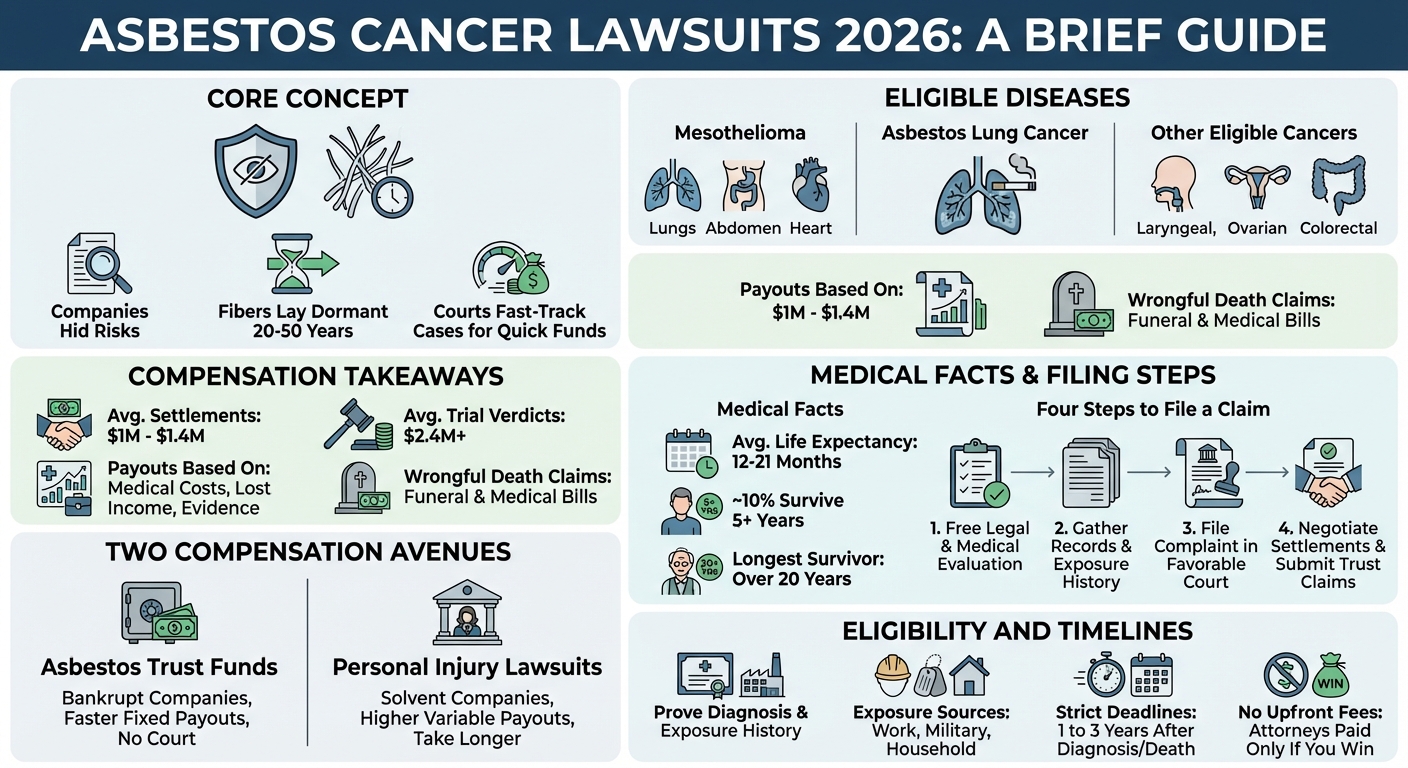
Asbestos settlement amounts are highly individualized figures determined by the severity of the victim's medical diagnosis, the victim’s age, the strength of the exposure evidence, and the financial health of the liable entities. While average payouts often range from $1 million to $2.4 million for mesothelioma cases, actual compensation is dictated by specific jurisdictional laws, the number of defendants involved, and whether the case reaches a trial verdict or concludes via private negotiation.
The Mechanism of Asbestos Compensation
Asbestos litigation in 2026 continues to function primarily through two channels: private lawsuits against manufacturers or premises owners and claims filed against established asbestos bankruptcy trusts. When an individual is diagnosed with an asbestos-related disease—such as mesothelioma, asbestosis, or lung cancer—the legal process begins with a detailed investigation into their occupational and environmental history.
The "settlement amount" is not a fixed government-issued payment but rather a result of adversarial negotiations. Defendants aim to minimize their exposure, while plaintiffs seek to recover costs for medical bills, lost wages, pain and suffering, and loss of consortium. Because asbestos-related diseases often have latency periods ranging from 20 to 50 years, the documentation phase is critical. Establishing the exact brand, location, and timeframe of exposure is the primary driver of settlement value.
Key Factors Influencing Settlement Valuation
No two asbestos cases are identical. The variance in settlement amounts is rooted in several non-negotiable variables that defense counsel and insurance adjusters evaluate before offering a resolution.
Medical Diagnosis Severity
The type of illness is the most significant factor. Mesothelioma, a rare and aggressive cancer, almost always commands the highest settlement valuations because of its direct link to asbestos and its universally poor prognosis. Asbestosis or pleural plaques, while debilitating, often result in lower settlements because they are typically non-malignant or progress more slowly.
Exposure History and Defendant Accountability
Legal teams must identify the specific products that caused the exposure. If a plaintiff worked at a job site where multiple manufacturers provided asbestos-containing materials, the case may involve dozens of defendants. In such scenarios, the "settlement amount" represents the total sum of contributions from all parties. If the exposure can be linked to a company that is currently solvent, the settlement potential is significantly higher than if the exposure is limited to companies that have already filed for bankruptcy.
The Role of Age and Economic Loss
Courts and mediators examine the "economic loss" of the plaintiff. A younger plaintiff with a spouse and dependent children is viewed as having a higher potential for lost future wages and greater impact on family life. This demographic profile typically increases the settlement value compared to a retiree who was exposed decades ago, though the pain and suffering component remains substantial for all age groups.
Asbestos Bankruptcy Trusts
Because many companies that manufactured asbestos products faced thousands of lawsuits, they sought Chapter 11 bankruptcy protection. As a condition of these reorganizations, they were required to fund asbestos personal injury trusts. These trusts contain billions of dollars specifically allocated for future claimants.
Trusts operate on a "schedule" of values. They have predetermined payment percentages that fluctuate based on the trust's total assets and the number of incoming claims. For example, a trust might determine that a mesothelioma claim is worth $500,000, but due to its current financial status, it may only pay out at a "payment percentage" of 25%, resulting in a final settlement of $125,000 from that specific entity. Most victims file claims with multiple trusts simultaneously to aggregate their recovery.
The Trial vs. Settlement Dilemma
A common question among claimants is whether they should pursue a trial or accept a settlement. A trial verdict can theoretically result in a much larger award, as juries may include significant punitive damages meant to punish the defendant for negligence. However, trials are high-risk. Defendants often appeal large verdicts, which can delay payment for years, or they may win the case outright, leaving the plaintiff with nothing.
Settlements are essentially the purchase of certainty. By accepting a settlement, the plaintiff receives a guaranteed, immediate sum of money without the risk of an unfavorable jury decision or an exhausting appeals process. In 2026, the overwhelming majority of asbestos cases are resolved through settlements rather than jury verdicts.
Comparative Overview of Claim Types
| Claim Type | Primary Source | Valuation Likelihood | Process Timeframe |
|---|---|---|---|
| Mesothelioma Lawsuit | Solvent Companies | High ($1M+) | 12–24 Months |
| Trust Fund Claim | Bankruptcy Trusts | Moderate ($50k–$250k) | 6–12 Months |
| Workers' Compensation | State Insurance | Low (Statutory limits) | Immediate/Ongoing |
| VA Benefits | Federal Government | Moderate (Tax-free) | Variable |
Practical Steps for Claimants
If you or a loved one have been diagnosed with an asbestos-related condition, the following steps are standard for initiating a claim:
- Medical Documentation: Ensure you have a pathology report from a qualified physician confirming an asbestos-related diagnosis. Misdiagnosis is common in the early stages; specialized oncology verification is essential.
- Work History Audit: Compile a detailed list of every workplace, military branch, and residential location where you were present. Include brand names of products if possible.
- Legal Consultation: Engage with a law firm that specializes in asbestos litigation. These firms maintain extensive internal databases of thousands of job sites and known asbestos-containing products, which speeds up the identification of responsible parties.
- Statute of Limitations Awareness: Every jurisdiction has strict time limits for filing claims. These "statutes of limitations" usually begin on the date of diagnosis or the date of death. Missing these deadlines permanently bars the right to recovery.
Common Pitfalls and Troubleshooting
A frequent mistake claimants make is signing a release of liability too early. Once a settlement is finalized, it is generally impossible to reopen the case if the medical condition worsens or if new evidence of exposure arises. Ensure that your legal counsel has performed a thorough "look-back" at all potential defendants before finalizing any agreement.
Additionally, claimants should be wary of predatory "claims assistance" companies that are not law firms. These entities may charge high fees for services that a qualified asbestos attorney would handle as part of their standard contingency fee agreement. In legal matters, always prioritize licensed attorneys who are held to ethical standards and fiduciary duties.
Frequently Asked Questions
Are asbestos settlements subject to federal income tax? Generally, in the United States, damages received for physical injuries or sickness are excluded from gross income under Section 104(a)(2) of the Internal Revenue Code. However, portions of a settlement designated as punitive damages or compensation for lost wages may have different tax treatments. Consult with a tax professional regarding your specific settlement distribution.
How long does it take to receive a settlement payment? Once a settlement is agreed upon, the time to receive funds depends on how many defendants are involved and how quickly they process the paperwork. Most payments are issued within 30 to 90 days after the execution of the release agreement.
Can I file a claim if the company I worked for is out of business? Yes. Asbestos claims are generally filed against the manufacturers of the asbestos-containing products, not necessarily your direct employer. If the manufacturer is defunct, their bankruptcy trust fund is the primary target for your claim.
Do I have to travel for court appearances? Most asbestos cases are settled through depositions rather than live court testimony. Many law firms can conduct depositions via video conference or at a location convenient to the plaintiff, minimizing the burden on the patient.
What if I don't know exactly when or where I was exposed? It is not uncommon for individuals to be uncertain about the specific timeline of exposure. Experienced asbestos counsel can use your work history and known product data to construct a "case narrative" that links your medical condition to the most likely sources of exposure.
Does a family member have the right to file after a victim has passed away? Yes. In cases of wrongful death, the surviving spouse, children, or estate representative may file a lawsuit on behalf of the deceased. These claims often include the same categories of damages as those filed by living victims, such as funeral expenses and loss of financial support.
Recommendation
If you are pursuing compensation, the most critical next action is to secure a comprehensive review of your work and medical history by an experienced asbestos litigation firm. Do not attempt to navigate the bankruptcy trust claim process or negotiate with corporate legal departments alone. The complexity of asbestos law necessitates specialized counsel who can maximize the value of your claims across all available legal channels.