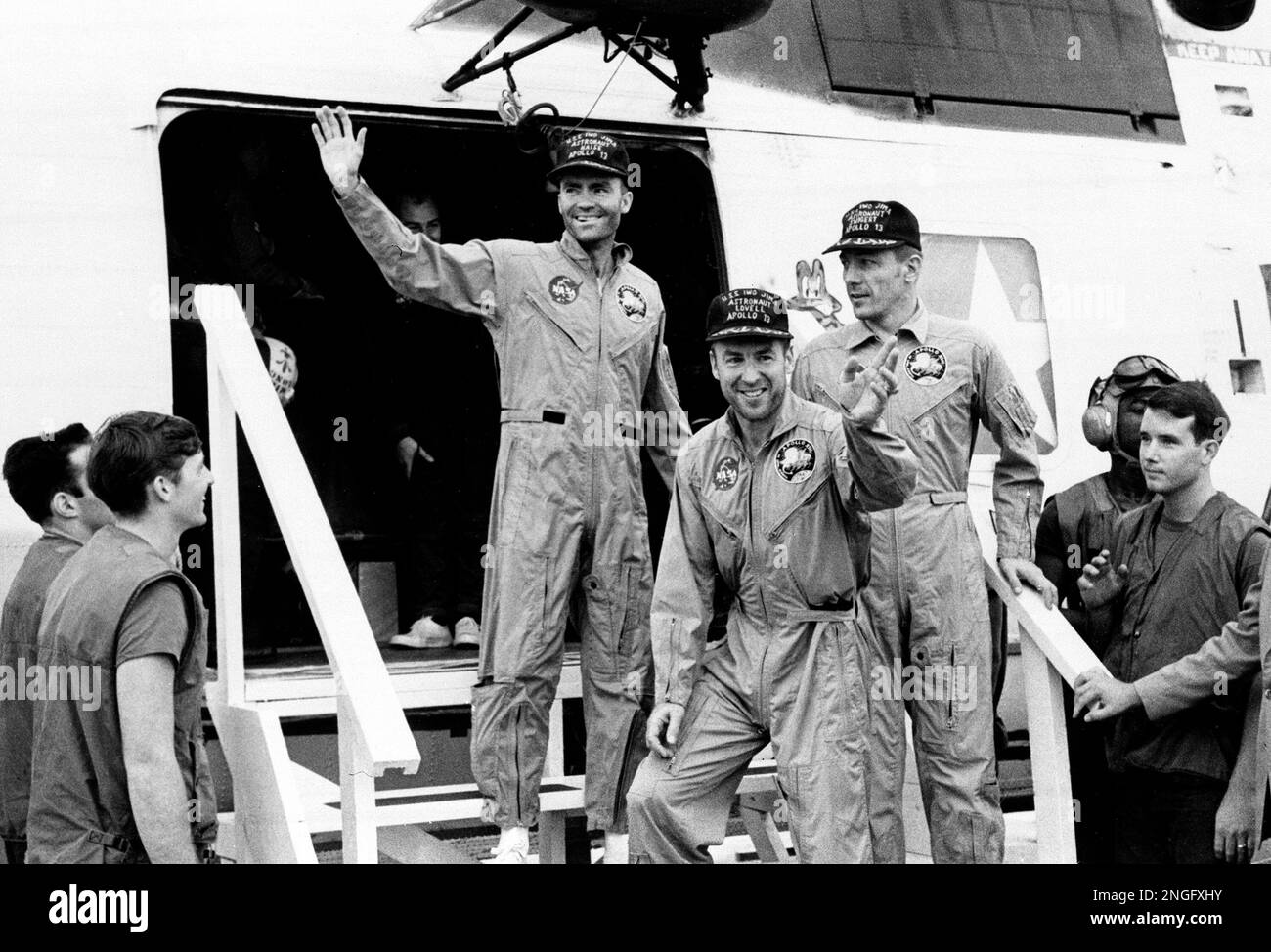
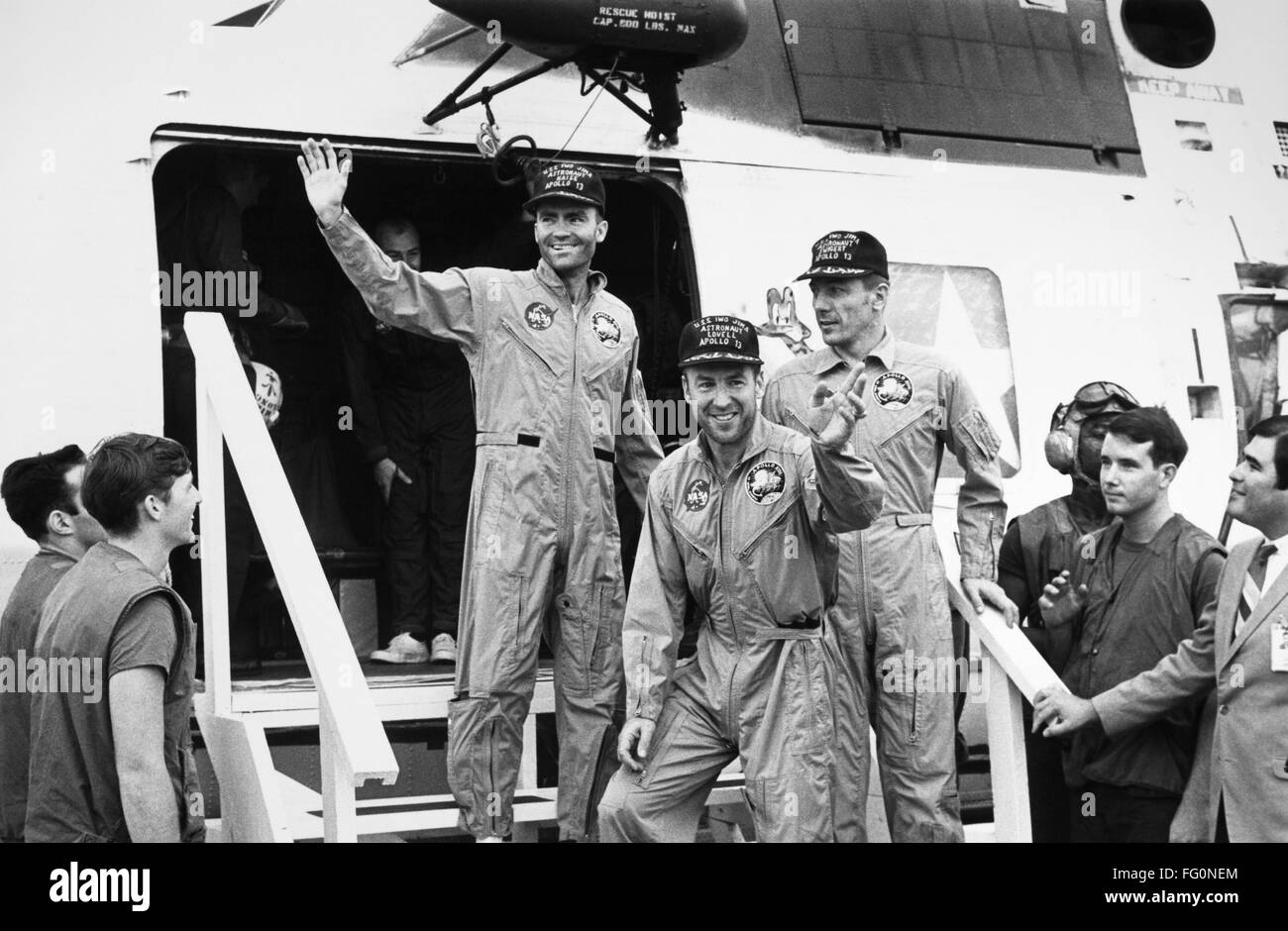
The Apollo 13 crew comprised Commander James A. Lovell Jr., Command Module Pilot Jack L. Swigert Jr., and Lunar Module Pilot Fred W. Haise Jr. Launched on April 11, 1970, their lunar landing mission transformed into a deep-space rescue after an oxygen tank exploded in orbit. Through precise crew management, innovative engineering, and ground support, all three crew members survived and landed safely on April 17, 1970.
Mission Overview and Flight Plan Objectives
Apollo 13 was designated as the third manned lunar landing mission in the United States Apollo program. Scheduled to land in the Fra Mauro formation—a hilly geological region selected to sample highland materials older than those retrieved during Apollo 11 and Apollo 12—the mission represented a shift from proof-of-concept landings to dedicated lunar science.
The spacecraft configuration consisted of two primary vehicles:
- Command and Service Module (CSM-109), named Odyssey: Responsible for crew transportation, life support during transit, orbital maneuvering, and atmospheric re-entry.
- Lunar Module (LM-7), named Aquarius: Designed to transport Commander James Lovell and Lunar Module Pilot Fred Haise to the lunar surface while Command Module Pilot Jack Swigert remained in lunar orbit.
The flight plan called for a translunar injection (TLI) burn to send the stack toward the Moon, followed by a hybrid trajectory insertion to target the Fra Mauro site. Had the mission proceeded as planned, Lovell and Haise would have executed two moonwalks (Extravehicular Activities or EVAs), deploying the Apollo Lunar Surface Experiments Package (ALSEP) and collecting drill core samples.
However, 55 hours and 54 minutes into the flight, an electrical short circuit inside Service Module Oxygen Tank 2 triggered an explosion that ruptured Oxygen Tank 1 and severed critical fuel cell power. The objective immediately transitioned from lunar exploration to deep-space survival and abort trajectory execution.
Biographies and Roles of the Apollo 13 Crew
Each member of the Apollo 13 crew brought specialized flight experience, engineering backgrounds, and technical training critical to surviving the mid-mission disaster.
- Commander: James A. Lovell Jr.
- CMP: Jack L. Swigert Jr.
- LMP: Fred W. Haise Jr.
Commander James A. Lovell Jr.
James Arthur Lovell Jr. was one of NASA's most experienced astronauts at the time of the mission. Selected in NASA's second astronaut group in 1962, Lovell had already logged more spaceflight time than any other human prior to Apollo 13.
- Previous Flight Experience: Lovell served as Pilot on Gemini 7 (1965), Command Pilot on Gemini 12 (1966), and Command Module Pilot on Apollo 8 (1968)—the first human mission to orbit the Moon.
- Role on Apollo 13: As Mission Commander, Lovell held ultimate responsibility for crew safety, spacecraft command, and operational decision-making. During the crisis, his experience in orbital mechanics and manual flight control was essential for executing emergency engine burns using the Lunar Module’s Descent Propulsion System (DPS).
- Post-Apollo Career: Lovell retired from NASA and the U.S. Navy in 1973. He entered the private sector as an executive in the telecommunications and maritime industries and authored Lost Moon, the memoir upon which the 1995 feature film Apollo 13 was based.
Command Module Pilot Jack L. Swigert Jr.
John Leonard "Jack" Swigert Jr. joined NASA with the fifth astronaut selection class in 1966. Holding a Bachelor of Science in Mechanical Engineering and Master's degrees in Aerospace Science and Business Administration, Swigert was a former Air Force fighter pilot and civilian engineering test pilot.
- Role on Apollo 13: As Command Module Pilot, Swigert was responsible for navigation, systems monitoring, and operating the Command Module during solo lunar orbital operations. When the anomaly occurred, Swigert was the astronaut who transmitted the famous phrase: "Houston, we've had a problem here."
- Critical Contribution: Swigert had spent years developing emergency procedures and checklists for the Command Module. His familiarity with CSM systems enabled him to execute the cold-cockpit power-up sequence during re-entry—a complex procedure created on the fly by Mission Control to restore power to a frozen, damp spacecraft using limited reserve battery power.
- Post-Apollo Career: Swigert took a leave of absence from NASA in 1973 and later entered politics. He was elected to the U.S. House of Representatives for Colorado's 6th congressional district in 1982, but passed away from bone cancer in December 1982 before taking office.
Lunar Module Pilot Fred W. Haise Jr.
Fred Wallace Haise Jr. was selected as a NASA astronaut in 1966 after serving as a U.S. Marine Corps fighter pilot and a civilian research test pilot at NASA's Flight Research Center at Edwards Air Force Base and Langley Research Center.
- Role on Apollo 13: As Lunar Module Pilot, Haise was the primary technical expert on the Lunar Module's systems. He was slated to become the sixth human to walk on the Moon.
- Critical Contribution: When Aquarius was activated as a emergency lifeboat, Haise managed its limited electrical power, water reserves, and environmental control systems. His deep understanding of LM system architecture allowed the crew to stretch 45 hours of nominal life support to cover more than 84 hours of emergency operation.
- Post-Apollo Career: Haise served as Commander for the Space Shuttle Enterprise Approach and Landing Tests in 1977. He was designated to command the Apollo-Soyuz Test Project follow-up or early Shuttle missions, but left NASA in 1979 to become an executive at Grumman Aerospace Corporation.
The Pre-Launch Crew Roster Change: Mattingly to Swigert
One of the most consequential aspects of the Apollo 13 mission was the last-minute change to the prime crew roster seven days before launch.
The original prime crew consisted of:
- James A. Lovell Jr. (Commander)
- Thomas K. "Ken" Mattingly II (Command Module Pilot)
- Fred W. Haise Jr. (Lunar Module Pilot)
Jack Swigert was assigned as the Command Module Pilot on the backup crew, alongside Charles M. Duke Jr. (backup LMP) and John W. Young (backup CDR).
Exposure to Rubella
Seven days prior to launch, backup Lunar Module Pilot Charles Duke inadvertently exposed the prime and backup crews to German measles (rubella) after contracting the virus from a friend's child. Medical exams revealed that Lovell and Haise had natural immunity from childhood exposure, but Mattingly lacked antibodies.
NASA Flight Surgeon Dr. Charles Berry expressed concern that Mattingly could break out with active rubella during the critical lunar orbit phase of the mission, potentially compromising flight safety.
The Decision and Simulator Validation
NASA leadership presented Commander James Lovell with an ultimatum: either replace Mattingly with backup CMP Jack Swigert, or delay the mission to the next launch window in May 1970. A delay would require extensive rescheduling, propellant tank re-servicing, and significant operational costs.
Lovell initially resisted replacing Mattingly, as the prime crew had spent over two years training together as a cohesive unit. However, after Swigert underwent intense simulator evaluations at the Kennedy Space Center and Manned Spacecraft Center in Houston to prove his integration with Lovell and Haise, NASA management officially replaced Mattingly with Swigert 48 hours before launch.
Mattingly remained on the ground in Houston during the flight, playing a key role in developing and verifying the emergency procedures inside the flight simulators to save his crewmates.
Timeline of the Anomaly and Emergency Survival Phase
The Apollo 13 mission changed from a routine landing mission to an in-flight crisis on April 13, 1970.
- Launch: April 11, 1970 - 13:13 CST
- Anomaly: April 13, 1970 - 55:54:53 GET (Oxygen Tank 2 Explosion)
- LM Activation: Spacecraft "Aquarius" activated as Lifeboat
- PC+2 Burn: Execution of mid-course burn for fast free-return trajectory
- CM Power-Up: Swigert executes cold-start sequence for re-entry
- Splashdown: April 17, 1970 - South Pacific Ocean
The Explosion (55:54:53 GET)
At 55 hours, 54 minutes, and 53 seconds Ground Elapsed Time (GET), Mission Control requested that the crew perform a routine cryo-stir of the Service Module oxygen tanks to prevent stratification of the supercold liquid propellants.
When Jack Swigert flipped the switch to activate the fan heaters in Oxygen Tank 2, damaged Teflon insulation on the internal wiring ignited. The resulting fire pressurized the tank beyond its structural limit, causing it to explode. The blast blew off outer SM Panel 4, damaged Oxygen Tank 1, and closed reactant valves feeding the spacecraft's fuel cells.
Within minutes, two of the three fuel cells failed, and the Command Module Odyssey began running exclusively on its entry batteries, which contained only a few hours of power required for atmospheric re-entry.
The Lifeboat Concept (Aquarius)
Flight Director Eugene F. Kranz and his flight control team in Houston initiated emergency lifeboat procedures. The crew powered down the Command Module to preserve its batteries and attitude control propellants, transferring control to the Lunar Module Aquarius.
The Lunar Module was designed to support two astronauts for approximately 45 hours on the lunar surface. To bring three astronauts home over an 84-hour return transit, ground control and the crew executed severe resource rationing protocols:
- Electrical Power: Current draw was reduced to less than 20 amperes (one-fifth of normal consumption), turning off non-essential avionics, heaters, and guidance systems.
- Water Management: Water, used to cool electronic systems via sublimation as well as for crew consumption, was strictly rationed. The crew ingested less than 6 ounces of water per person per day, causing severe dehydration and weight loss.
- Thermal Control: Turning off spacecraft heaters caused interior temperatures to drop to near freezing (approx. 38°F / 3°C). Moisture from crew respiration condensed on all internal surfaces, instruments, and wiring harnesses.
Engineering Innovations and Emergency Procedures
The rescue of the Apollo 13 crew required rapid engineering solutions created by ground personnel and implemented under physical distress by the astronauts.
Carbon Dioxide Scrubbing: Square Pegs in Round Holes
The LM environmental control system (ECS) used cylindrical lithium hydroxide (LiOH) canisters to remove carbon dioxide from the cabin atmosphere. These canisters were designed to support two men for two days. As CO2 levels rose toward toxic thresholds, the supply of primary LM canisters was exhausted.
Although extra LiOH canisters were available in the powered-down Command Module, they were cube-shaped and physically incompatible with the round sockets in the LM ECS.
Engineers at the Manned Spacecraft Center developed an impromptu adapter using equipment available on board:
- Square CM lithium hydroxide canisters
- Plastic suits storage bags
- Cardboard covers torn from flight manuals
- Standard gray space-grade duct tape
- Hoses from the crew's pressure suits
Ground controllers radioed step-by-step instructions to Swigert and Haise, who constructed the apparatus within hours. The improvised modification successfully drew cabin air through the CM canisters, dropping CO2 levels back to safe operating ranges.
Orbital Mechanics: Pericynthion Plus 2 (PC+2) Burn
Following the explosion, Apollo 13 was on a trajectory that would have missed Earth's atmospheric entry corridor or left the spacecraft in a highly elliptical Earth orbit without enough life support left to survive.
To ensure a safe return, Commander Lovell executed a series of engine burns using the Lunar Module's Descent Propulsion System (DPS):
- Looping the Moon: The spacecraft performed a circumlunar trajectory, using the Moon's gravity to swing back toward Earth.
- The PC+2 Burn: Two hours after pericynthion (closest approach to the Moon), the crew performed a major 4-minute, 24-second DPS engine burn. This burn increased the spacecraft's velocity, cutting the remaining transit time to Earth by 10 hours and targeting a splashdown zone in the South Pacific Ocean where U.S. Navy recovery forces were deployed.
Because the main guidance computer was powered down to save electricity, Lovell aligned the spacecraft manually using the sun-Earth terminator line visible through his optical window—a maneuvering technique never previously tested in flight.
Cold Cockpit Power-Up and Re-Entry Sequence
Prior to Apollo 13, no Apollo Command Module had ever been shut down completely in deep space and subsequently powered back up for re-entry.
Working in simulator facilities in Houston, astronaut Ken Mattingly, backup crew members, and flight controllers drafted a condensed re-entry power-up sequence. The procedure had to be executed using only the limited power remaining in the CM entry batteries, without blowing any fuses or exceeding electrical limits.
Jack Swigert systematically restored power to Odyssey's systems while wiping condensation off instruments with towels.
Before entering the atmosphere, the crew jettisoned the crippled Service Module. As the SM detached, the astronauts photographed the extensive damage, observing that an entire outer panel had been blown away by the explosion. Shortly thereafter, the crew transferred back into Odyssey and jettisoned the Lunar Module Aquarius, which burned up harmlessly over the Pacific Ocean.
Apollo 13 Crew Technical Comparison and Emergency Roles
| Feature / Metric | Commander James A. Lovell Jr. | Command Module Pilot Jack L. Swigert Jr. | Lunar Module Pilot Fred W. Haise Jr. |
|---|---|---|---|
| Primary Assignment | Mission Commander (CDR) | Command Module Pilot (CMP) | Lunar Module Pilot (LMP) |
| Assigned Vessel | Spacecraft / LM Aquarius | CSM Odyssey | LM Aquarius |
| Pre-Apollo 13 Spaceflights | Gemini 7, Gemini 12, Apollo 8 | None (Rookie) | None (Rookie) |
| Key Emergency Task | Manual alignment & DPS burn execution | CM system power-down & emergency power-up sequence | LM environmental management & power rationing |
| Medical Impact | Dehydration, weight loss (14 lbs) | Dehydration, weight loss | Dehydration, severe kidney infection, weight loss |
| Post-Apollo Career | Navy Captain, Corporate Executive | U.S. Congressman-elect (CO-06) | Grumman Aerospace Executive |
Legacy, System Redesigns, and Spaceflight Impact
The emergency return of Apollo 13 is evaluated in aerospace engineering and operational management as a case study in system redundancy, contingency planning, and crew resource management (CRM).
Spacecraft Modifications for Apollo 14 and Beyond
Following the Apollo 13 investigation board report (chaired by NASA Langley Director Edgar Cortright), NASA mandated major modifications to the Apollo Command and Service Modules:
- Third Oxygen Tank: A third independent oxygen tank was added to the Service Module, isolated from the primary two tanks so that a single failure could not drain total oxygen reserves.
- Wiring and Heater Redesign: Thermostat switches on the tank heaters were updated to handle higher voltage loads, and internal wiring insulation was changed to stainless-steel-sheathed Teflon.
- Auxiliary Battery: An auxiliary 400-ampere-hour battery was installed in the Service Module to provide emergency power to the Command Module if main fuel cells failed.
- Water and Fuel Cell Valves: Emergency shutoff valves were modified to allow crew isolation of internal fluid and gas lines directly from the cabin controls.
Historical Status of the Astronauts
- Jack Swigert died on December 27, 1982. A statue of Swigert represents the state of Colorado in National Statuary Hall at the U.S. Capitol.
- James Lovell and Fred Haise remained active in historical preservation, education, and public engagements following their corporate careers. Detailed operational records of their flight are maintained by the NASA History Division and displayed at the National Air and Space Museum.
Frequently Asked Questions
Why was Ken Mattingly replaced by Jack Swigert on Apollo 13?
Ken Mattingly was replaced three days before launch because he was exposed to German measles (rubella) by backup LMP Charles Duke. Because medical tests showed Mattingly lacked immunity, NASA flight surgeons feared he would become acutely ill during the mission. Jack Swigert, the trained backup CMP, stepped in after completing emergency simulator validation.
What caused the explosion on Apollo 13?
The explosion was caused by exposed, damaged Teflon insulation on electrical wiring inside Service Module Oxygen Tank 2. When CMP Jack Swigert activated the oxygen tank stir fan, an electrical short ignited the insulation. The resulting fire rapidly increased pressure within the tank until it ruptured violently, damaging adjacent systems.
How did the Apollo 13 crew survive without full Command Module power?
The crew survived by using the Lunar Module (Aquarius) as a "lifeboat." The LM provided basic electrical power, oxygen, and propulsion. The crew shut down the Command Module to conserve its batteries for atmospheric re-entry, severely rationed food and water, and used an improvised duct-tape-and-cardboard adapter to run Command Module carbon dioxide scrubbers inside the LM.
Did any of the Apollo 13 crew walk on the Moon later?
None of the three Apollo 13 crew members ever walked on the Moon. Lovell retired from spaceflight after Apollo 13, as did Swigert. Haise was slated to command Apollo 19, but that mission was canceled due to budget cuts. Haise later flew test flights for the Space Shuttle program.
How long was the Apollo 13 crew in space during the emergency?
The Apollo 13 mission lasted 142 hours, 54 minutes, and 41 seconds (roughly 5 days and 23 hours). The crew operated under emergency survival conditions for over 80 hours between the explosion on April 13 and splashdown on April 17, 1970.
What happened to the Lunar Module Aquarius after the crew left it?
After the crew transferred back into the Command Module Odyssey for re-entry, the Lunar Module Aquarius was jettisoned. It re-entered Earth's atmosphere on April 17, 1970, and burned up safely over the South Pacific Ocean. Its radioisotope thermoelectric generator (RTG), containing plutonium fuel, detached as designed and landed intact in the deep ocean Trench area near Tonga, where it remains uncompromised.
Recommended Historical Resources
To further examine the technical logs, voice transcripts, and engineering reports of the Apollo 13 flight:
- Review official telemetry data and mission timelines provided in the NASA Apollo 13 Mission Report.
- Consult primary flight transcripts via the Apollo Flight Journal maintained by the NASA History Division.
- Examine spacecraft structural components and restored artifacts at the National Air and Space Museum and the Cosmosphere in Hutchinson, Kansas, where Command Module Odyssey is currently preserved.