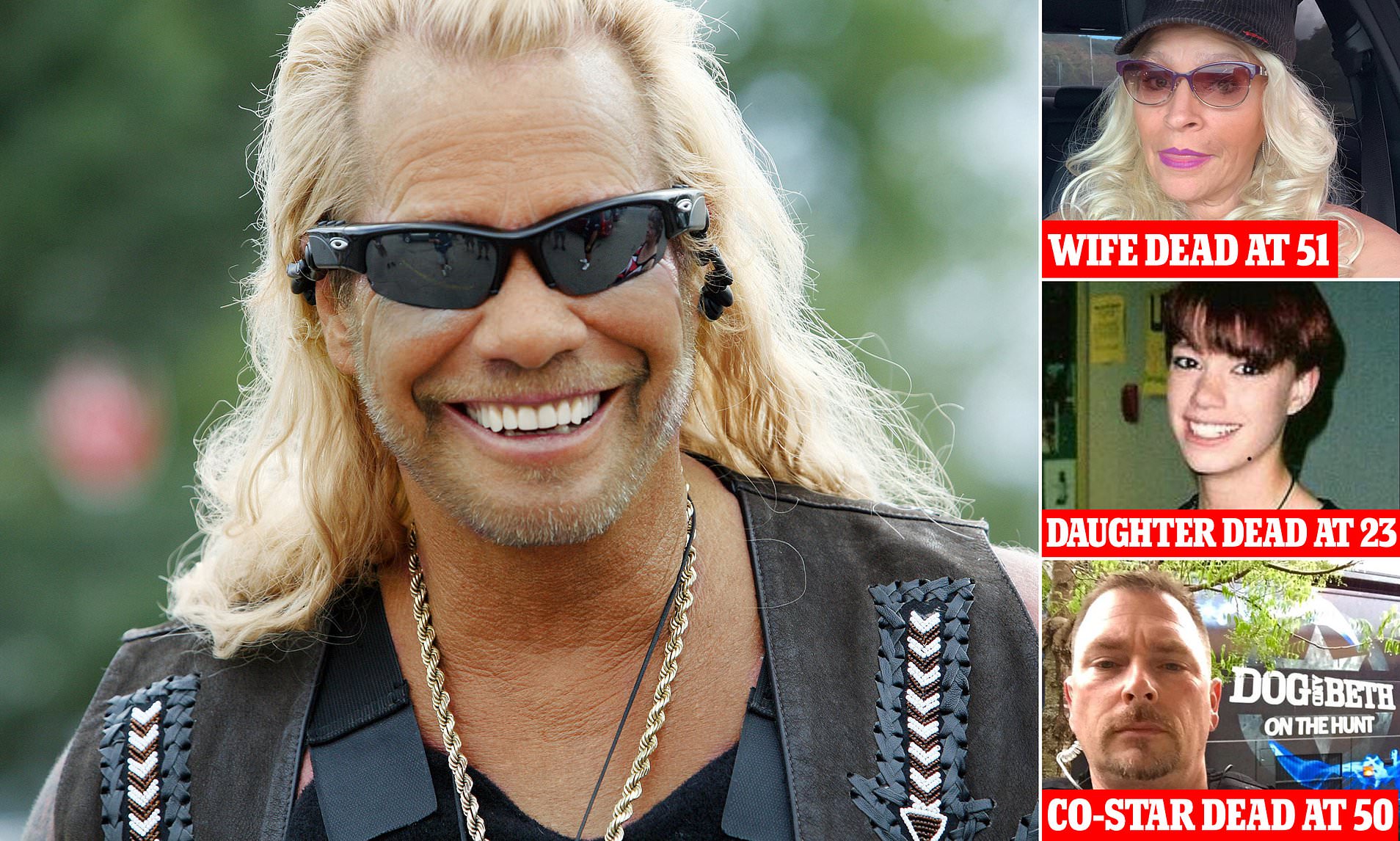
In June 2003, fugitive cosmetics heir Andrew Luster was captured in Puerto Vallarta, Mexico, by celebrity bail bondsman Duane "Dog" Chapman and his team. Luster had fled the United States during his trial for multiple drug-facilitated sexual assaults. The capture triggered a complex international legal dispute, as bounty hunting is illegal under Mexican law, ultimately transforming Chapman into a household television personality while permanently altering international bail enforcement dynamics.
Background of the Case: Who Is Andrew Luster?
Andrew Luster is the great-grandson of cosmetics pioneer Max Factor. Born into substantial wealth, Luster resided in a beachfront home in Mussel Shoals, California. In 2000, California authorities arrested Luster following allegations that he had drugged and sexually assaulted multiple women at his property. Investigators discovered video recordings inside Luster's home documenting the assaults, in which victims were incapacitated using gamma-hydroxybutyrate (GHB).
Luster was charged with 86 criminal counts, including rape, drug-facilitated sexual assault, poisoning, and drug possession. Released on a $1 million bail bond, Luster attended the initial stages of his criminal trial in Ventura County Superior Court. However, in January 2003, while jury deliberations were underway, Luster forfeited his bond and fled the jurisdiction.
Under California law, trial proceedings continued in Luster's absence. In February 2003, the jury convicted Luster of 86 counts, including 20 counts of drug-facilitated rape. Ventura County Superior Court Judge Edward Brodie sentenced Luster in absentia to 124 years in state prison. The conviction established Luster as one of the most high-profile fugitives in the United States, prompting law enforcement agencies and commercial bail enforcement agents to initiate global searches.
Duane "Dog" Chapman’s Pursuit and Capture in Puerto Vallarta
Duane Chapman, a experienced bail enforcement agent based in Hawaii, took an interest in locating Luster. While Chapman did not write the original $1 million bail bond, capturing a fugitive of Luster’s profile offered significant public visibility and potential commercial rewards. Working alongside his son Leland Chapman, brother Tim Chapman, and a production crew, Chapman conducted an independent intelligence operation to track Luster's movements.
Chapman’s team traced Luster to Puerto Vallarta, Jalisco, Mexico, where Luster was living under the alias "David Carrera." Luster had established a routine, spending time surfing and visiting local establishments.
On the morning of June 18, 2003, Chapman’s team confronted Luster outside a taco stand in downtown Puerto Vallarta. A physical struggle ensued as Chapman’s crew subdued Luster, placed him in handcuffs, and loaded him into an SUV with the intention of driving him to the U.S. border or a nearby airport for transport back to California.
International Legal Conflict and Mexican Arrests
The apprehension of Andrew Luster immediately highlighted severe jurisdictional conflicts between U.S. bail enforcement practices and international law. Unlike the United States, where licensed bail enforcement agents operate under established state statutes and rights recognized under common law precedent (such as Taylor v. Taintor), Mexico does not recognize the legal authority of private bounty hunters.
Under Article 16 of the Political Constitution of the United Mexican States and the Mexican Federal Penal Code, private individuals who detain someone without a judicial warrant or direct law enforcement authority commit a felony—specifically, criminal deprivation of liberty or illegal detention.
Minutes after Chapman’s team seized Luster, local Puerto Vallarta police intercepted their vehicle. Mexican police officers detained Luster along with Duane Chapman, Leland Chapman, Tim Chapman, and members of their camera crew.
| Aspect | United States Jurisdiction | Mexican Jurisdiction |
|---|---|---|
| Bounty Hunting Status | Permitted under state regulations and contract law | Strictly illegal; treated as kidnapping/illegal detention |
| Private Citizen Arrest Rights | Allowed for felonies committed in presence or under valid bail bond warrants | Highly restricted; requires immediate handoff during an in flagrante delicto crime |
| Extradition Process | Formal treaty process managed by U.S. Department of Justice | Formal treaty process managed by Secretariat of Foreign Affairs (SRE) |
| Legal Status of Extraterritorial Apprehension | Recognized by some state courts if lawful under local rules, but rejected by foreign sovereign law | Violation of national sovereignty under Mexican Penal Code Article 300+ |
Upon verifying Luster’s identity through international police databases, Mexican federal authorities processed Luster for immediate deportation due to his illegal immigration status and outstanding U.S. criminal convictions. On June 19, 2003, Mexican authorities handed Luster over to U.S. Marshals, who flew him to California to begin serving his prison sentence.
However, Mexican law enforcement retained custody of Duane Chapman and his team, charging them with criminal deprivation of liberty.
The Extradition Battle and Rise of Dog the Bounty Hunter
After spending several days in a Mexican jail, Duane Chapman and his crew posted bail in Mexico and immediately returned to the United States. Following their departure, Mexican prosecutors continued pursuing the criminal charges against them, eventually securing formal arrest warrants when Chapman failed to return for scheduled court appearances in Mexico.
For several years, the legal conflict remained dormant. However, in September 2006, U.S. Marshals arrested Duane, Leland, and Tim Chapman in Honolulu, Hawaii, acting on a formal extradition request submitted by the Mexican government. The extradition request sought to compel the trio to stand trial in Mexico, where they faced potential prison sentences of up to four years.
- June 2003: Capture in Mexico
- Chapman Team Bailed Out
- 2004: Reality TV Series Premiere
- 2006: Arrested in Hawaii on Extradition Warrant
- July 2007: Mexican Charges Dismissed
The 2006 arrest ignited a public debate over international extradition priorities, sovereignty, and the legal limits of bounty hunting. Legal defense teams for Chapman argued that extraditing American citizens for capturing a convicted, dangerous sex offender set a problematic precedent. U.S. media coverage brought widespread attention to the case.
In July 2007, a Mexican appellate judge in Guadalajara ruled that the statute of limitations on the criminal charges against the Chapmans had expired. The Mexican court formally dismissed the charges, prompting U.S. federal judges in Hawaii to cancel the extradition proceedings and discharge the Chapmans' bail conditions.
The media coverage surrounding the 2003 capture of Andrew Luster proved transformational for Duane Chapman’s career. Cable television executives took interest in the footage recorded by Chapman’s film crew during the Mexican operation. This footage served as the pilot material for the A&E Network reality television series Dog the Bounty Hunter, which premiered in 2004 and ran for eight seasons, establishing Chapman as an international television figure.
Legal Status and Resentencing of Andrew Luster
Following his return to California in June 2003, Andrew Luster was remanded to the custody of the California Department of Corrections and Rehabilitation (CDCR) to begin serving his 124-year sentence. Luster’s appellate attorneys mounted multiple legal challenges against both his original conviction and sentence.
Initial appeals challenging the in absentia trial were rejected because Luster’s fugitive status during the original trial triggered the "fugitive disentitlement doctrine," a legal rule under which appellate courts may dismiss appeals filed by individuals who flee the court's jurisdiction.
However, in 2012, Luster filed a petition for a writ of habeas corpus focusing on sentencing structure. His legal team argued that the trial court erred in calculating consecutive sentences under California Penal Code Section 667.6(d) without proper judicial findings on specific statutory factors.
In April 2013, Ventura County Superior Court Judge Hayden Gomez granted partial relief on the sentencing petition, vacating the original 124-year sentence. During the resentencing hearing in April 2013, the court restructured the terms, sentencing Luster to 50 years in state prison.
Under California prison guidelines and credit regulations applicable to violent offenders, Luster is required to serve a substantial portion of his 50-year term before becoming eligible for parole consideration. Luster remains incarcerated within the California state prison system.
Timeline of Key Events
| Date | Event | Legal Implications |
|---|---|---|
| December 2000 | Andrew Luster arrested in Ventura County, California | Charged with 86 criminal counts involving drug-facilitated sexual assault. |
| January 2003 | Luster jumps $1 million bail and flees to Mexico | Jury trial continues in absentia; $1 million bail bond forfeited. |
| February 2003 | Luster convicted and sentenced to 124 years in absentia | Sentence established; arrest warrants issued for global apprehension. |
| June 18, 2003 | Duane Chapman and team detain Luster in Puerto Vallarta | Mexican police arrest both Luster and Chapman's team. |
| June 19, 2003 | Luster deported from Mexico to the United States | Luster begins serving sentence at California Department of Corrections. |
| Late June 2003 | Chapman team posts bail in Mexico and returns to U.S. | Mexican courts issue outstanding warrants after missed hearings. |
| August 2004 | Dog the Bounty Hunter premieres on A&E | Capture of Luster serves as foundational media coverage for the franchise. |
| September 2006 | U.S. Marshals arrest Chapman team in Hawaii | Extradition proceedings initiated based on Mexican diplomatic requests. |
| July 2007 | Mexican appellate court dismisses charges against Chapman | Extradition order revoked; statute of limitations cited by Mexican court. |
| April 2013 | Ventura County court resentences Luster to 50 years | Sentence reduced from 124 years following successful habeas corpus petition. |
Legal and Ethical Implications of Cross-Border Bounty Hunting
The capture of Andrew Luster by private U.S. bail enforcement agents in a foreign nation established critical legal precedents regarding foreign sovereignty, extradition, and extraterritorial arrests.
Sovereignty and International Law
International treaties dictate that law enforcement actions taken within a sovereign nation's borders must be carried out by that nation's authorized personnel or through formal international legal channels, such as Interpol notices or bilateral extradition treaties. Private citizens who cross foreign borders to execute arrests violate domestic laws unless explicit legal exemptions exist within the host country.
Practical Cautions for Bail Enforcement Agents
Following the Chapman-Luster incident, professional bail enforcement associations, including the National Association of Bail Enforcement Agents (NABEA), issued guidelines warning agents against undertaking recovery operations outside U.S. territorial boundaries. Key considerations include:
- Foreign Criminal Liability: Entering a foreign country to apprehend a fugitive exposes agents to charges ranging from illegal entry to kidnapping, regardless of the fugitive's U.S. criminal status.
- Inadmissibility of Rendition: Extrajudicial abductions risk compromising legal proceedings in foreign jurisdictions and can lead to diplomatic disputes between governments.
- Insurance and Bond Forfeiture: Most commercial liability policies for bail agents explicitly exclude coverage for acts committed outside the United States.
Frequently Asked Questions
Who is Andrew Luster?
Andrew Luster is an heir to the Max Factor cosmetics fortune who was convicted in 2003 of multiple counts of drug-facilitated sexual assault, rape, and poisoning in Ventura County, California.
Is bounty hunting legal in Mexico?
No. Bounty hunting is strictly illegal under Mexican federal law. Apprehending individuals without official government authorization or judicial orders is classified as criminal deprivation of liberty or kidnapping.
How did Dog Chapman locate Andrew Luster in Mexico?
Duane "Dog" Chapman and his team used private surveillance, localized intelligence gathering, and tips to locate Luster, who was living under the alias "David Carrera" in Puerto Vallarta, Mexico.
Did Dog Chapman receive the bounty reward for capturing Luster?
Chapman did not receive the official $1 million bail bond payout because he was not the designated bail agent of record who wrote Luster's original bond, and private extraterritorial recovery is not recognized for formal bond payouts under international law.
Why was Andrew Luster's 124-year prison sentence reduced?
In 2013, a Ventura County Superior Court judge granted a petition for writ of habeas corpus regarding how Luster's consecutive sentences were calculated under California law, restructuring his total sentence to 50 years.
Conclusion and Key Takeaways
The case of Andrew Luster and Duane "Dog" Chapman remains a landmark case study at the intersection of criminal law, international diplomacy, and commercial bail enforcement. While Chapman's actions brought a convicted felon to justice and launched a successful television franchise, they also emphasized the legal boundaries governing national sovereignty and private law enforcement.
For legal professionals and bail enforcement operators, the case demonstrates that U.S. bail enforcement rights end at the nation's borders. Anyone attempting extrajudicial arrests abroad faces severe criminal penalties under international law, regardless of the target's underlying convictions.