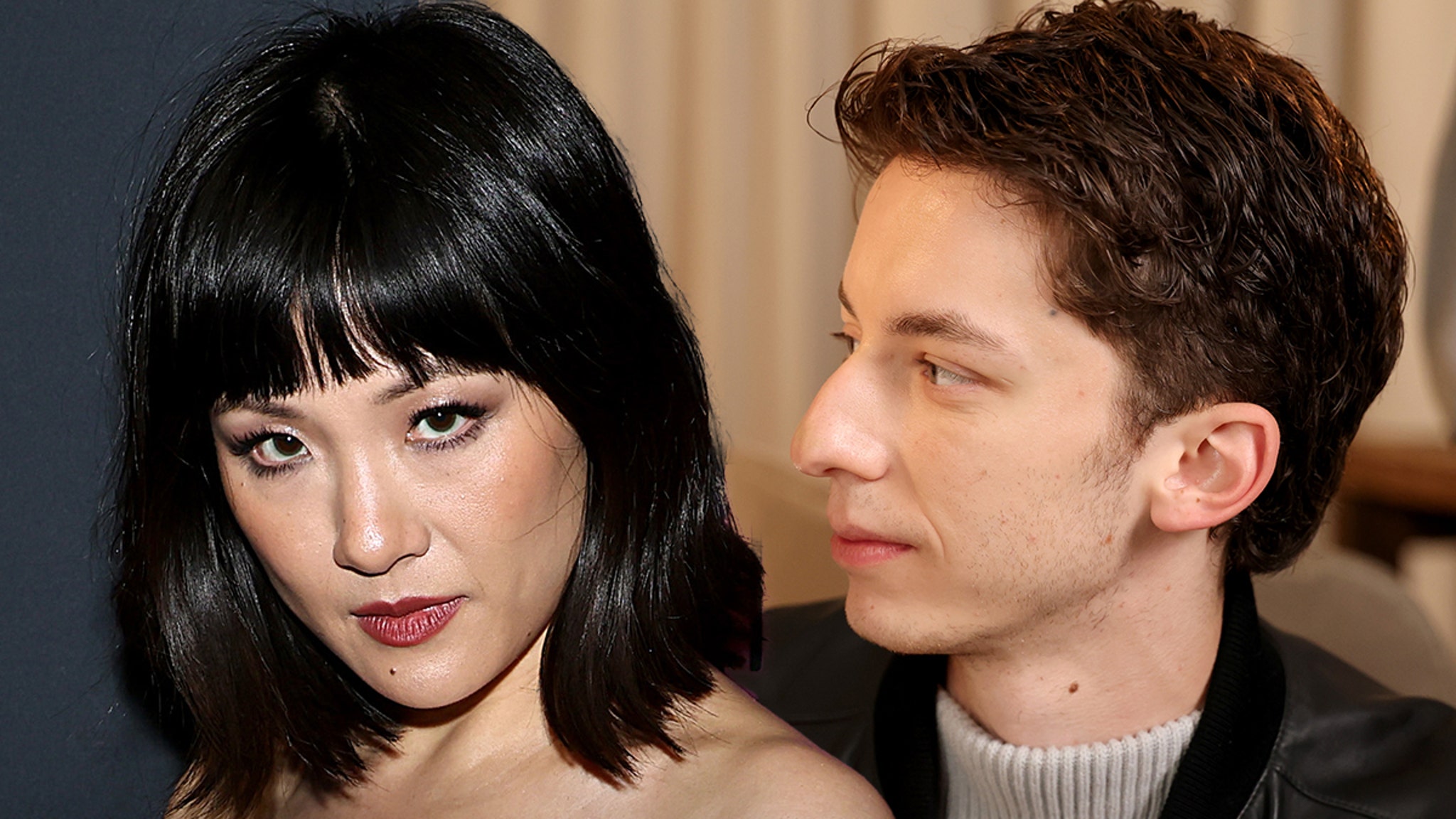
In the landmark Broadway production of the musical Maybe Happy Ending, Andrew Barth Feldman and Helen J Shen star as Oliver and Claire, two "Helperbots" living in a decommissioned robot housing complex in future Seoul. Directed by Tony Award winner Michael Arden, the show officially opened at the Belasco Theatre in late 2024, bringing a unique blend of science fiction and jazz-infused romance to the New York stage.
The casting of Andrew Barth Feldman and Helen J Shen represents a pivotal moment for contemporary musical theater, merging a seasoned Broadway veteran with a breakout star in a story that explores the fragility of connection in an increasingly automated world. Set in the mid-21st century, the musical follows two obsolete robots who discover that while their hardware may be failing, their capacity for human-like emotion is unexpectedly resilient. By 2026, the production has solidified its place in theater history as a masterclass in intimate storytelling and technical innovation.
The Cultural Significance of "Maybe Happy Ending"
The journey of Maybe Happy Ending (originally titled Eojjeomyeon Haepiending in South Korea) to Broadway is a testament to the global nature of modern theater. Written by Will Aronson (music) and Hue Park (lyrics and book), the show first captivated audiences in Seoul before being translated and adapted for English-speaking audiences.
The Broadway production marks a significant milestone: it is one of the first major musicals on the Great White Way to feature a predominantly Asian-led creative team and cast while originating from the thriving South Korean theater scene. For Andrew Barth Feldman and Helen J Shen, the production was not just a performance opportunity but a chance to anchor a narrative that bridges the gap between high-concept sci-fi and deeply personal character study.
Profile: Andrew Barth Feldman as Oliver
Andrew Barth Feldman’s portrayal of Oliver is a nuanced exploration of obsolescence and neurodivergence-coded behavior. Oliver is a "Helperbot 5," an older model of robot designed to assist the elderly. He is characterized by his rigid adherence to routine, his obsession with 1940s-era jazz records, and his unwavering—if misplaced—loyalty to his former owner, James.
Feldman, who rose to fame as the youngest actor to play the title role in Dear Evan Hansen on Broadway, brings a specific brand of earnest vulnerability to the role. His performance captures the mechanical precision of a robot while slowly introducing the "glitches" of emotion that define his character’s growth. Prior to Maybe Happy Ending, Feldman gained widespread recognition for his role in the film No Hard Feelings (2023) alongside Jennifer Lawrence, which showcased his comedic timing and screen presence. On Broadway, however, his ability to convey deep interiority through song remains his greatest asset.
In Maybe Happy Ending, Feldman’s vocal performance is grounded in the soft-jazz and chamber-pop style of Aronson’s score. Songs like "My Favorite Love Story" highlight his ability to navigate complex lyrical phrasing while maintaining the physical discipline required to play a non-human entity.
Profile: Helen J Shen as Claire
The casting of Helen J Shen as Claire was a breakout moment for the actress, who made her Broadway debut with this production. Claire is a "Helperbot 6," a newer, more cynical model than Oliver. Unlike Oliver’s optimistic belief in a reunion with his owner, Claire is acutely aware of her expiration date and the limitations of her programming.
Shen, a graduate of the University of Michigan’s prestigious musical theater program, had previously earned acclaim for her work in the off-Broadway production of The Lonely Few. Her Claire is the perfect foil to Feldman’s Oliver; she is sharp, pragmatic, and initially resistant to the idea of "feeling."
The chemistry between Shen and Feldman is the engine that drives the show. As Claire and Oliver embark on a road trip to find fireflies—a mission that serves as a metaphor for seeking beauty in a dying world—Shen’s transformation from a guarded machine to a vulnerable being is performed with remarkable subtlety. Her vocal prowess is particularly evident in the show’s more contemporary, driving numbers, providing a modern contrast to Oliver’s vintage aesthetic.
The Creative Vision of Michael Arden
Director Michael Arden, known for his visionary revivals of Spring Awakening and Parade, was the ideal choice to helm the Broadway premiere of Maybe Happy Ending. Arden’s approach to the material emphasizes the "uncanny valley"—the space where robots become almost, but not quite, human.
Working with scenic designer Dane Laffrey, Arden utilized the Belasco Theatre’s unique architecture to create a world that feels both expansive and claustrophobic. The staging relies heavily on digital projections and sleek, minimalist furniture to represent the year 2064, while maintaining a sense of warmth through the "vintage" items Oliver collects.
Arden’s direction focuses on the physical vocabulary of the actors. Feldman and Shen do not move like caricatures of robots; instead, their movements are characterized by a slight lack of fluid momentum and a specific way of processing sensory input. This technical precision makes the moments when they finally touch or share a genuine human gesture all the more impactful for the audience.
Themes of Obsolescence and Connection
At its core, Maybe Happy Ending asks a fundamental question: Is love worth the inevitable pain of loss, especially when you know exactly when your "battery" will run out?
The show explores several key themes that resonate with 2026 audiences:
- Technological Loneliness: As AI becomes more integrated into daily life, the musical mirrors our own anxieties about being replaced by newer models.
- The Beauty of the Temporary: Much of the plot revolves around the concept of "expiration." The fireflies they seek represent the ephemeral nature of life and joy.
- Cross-Cultural Narrative: By setting the story in Seoul but performing it in English, the show highlights universal emotions that transcend language and borders.
The musical avoids the tropes of "evil AI" or "robotic takeovers." Instead, it treats the Helperbots as sentient beings who are simply trying to navigate a world that has moved on without them. This focus on the "ordinary" lives of extraordinary beings provides a refreshing perspective on the sci-fi genre.
Technical Specifications and Production Details
The Broadway production of Maybe Happy Ending is a technical marvel, requiring high levels of synchronization between the performers and the lighting/sound systems. The score itself is unique, featuring a small orchestra that incorporates traditional musical theater instruments with electronic textures to mimic the "beeps and boops" of the robots' internal systems.
| Feature | Details |
|---|---|
| Theater | Belasco Theatre, New York City |
| Lead Actors | Andrew Barth Feldman (Oliver), Helen J Shen (Claire) |
| Director | Michael Arden |
| Music/Lyrics | Will Aronson & Hue Park |
| Setting | Seoul, South Korea, circa 2064 |
| Cast Size | Small (3 Principals: Oliver, Claire, James) |
| Runtime | Approximately 1 hour and 40 minutes (No Intermission) |
| Key Technical Elements | Integrated LED scenic panels, binaural soundscapes |
The Soundtrack and Musical Style
The music of Maybe Happy Ending is often described as "chamber-jazz." Unlike the "wall of sound" found in many modern Broadway hits, Will Aronson’s score is delicate and intimate. The orchestration frequently uses a string quartet and piano, occasionally interrupted by the mechanical sounds of the robots "powering down" or "charging."
Key musical highlights include:
- "Goodbye, My Love": A heartbreaking jazz standard sung by Oliver as he remembers his owner.
- "The Way It Has To Be": Claire’s pragmatic anthem about the reality of being a machine.
- "Fireflies": The soaring duet that serves as the emotional climax of the road trip.
Feldman’s background in contemporary musical theater allows him to handle the rhythmic complexities of the score, while Shen’s crystalline soprano brings a sense of wonder to the firefly sequences. The cast recording, released shortly after the opening, became a favorite for fans of "patter songs" and atmospheric theater music.
Impact on Broadway Diversity and Representation
The arrival of Maybe Happy Ending on Broadway is a significant step forward for Asian representation. While shows like Miss Saigon or The King and I have historically featured Asian casts, they are often set in the past and revolve around Western perceptions of the East. In contrast, Maybe Happy Ending is a contemporary (future-set) story where the characters' ethnicity is part of their identity but not a source of conflict.
Helen J Shen’s casting as the female lead is particularly noteworthy. As a young Asian-American woman leading a major Broadway musical, she has become an inspiration for the next generation of performers. The production also employed numerous Asian-American creatives in the lighting, costume, and stage management departments, ensuring that the cultural nuances of the Seoul setting were handled with authenticity.
Comparison to Other Two-Person Musicals
While the show features a few supporting characters, it is primarily a two-hander between Feldman and Shen. This places it in the company of classic shows like The Last Five Years or I Do! I Do!. However, Maybe Happy Ending differs in its use of environment.
While The Last Five Years focuses on the chronology of a failing marriage, Maybe Happy Ending focuses on the discovery of emotion by beings who weren't supposed to have it. The stakes are uniquely high because, for a Helperbot, a "broken heart" is often literal hardware failure. The intimacy of the Belasco Theatre enhances this feeling, making the audience feel as though they are intruding on a private, metallic world.
Frequently Asked Questions
Is "Maybe Happy Ending" based on a movie?
No, it is an original musical. It was first developed in South Korea and had a highly successful run in Seoul and Japan before being adapted for Broadway. While it shares some thematic DNA with films like WALL-E or Her, the story and characters are entirely original to the creators Will Aronson and Hue Park.
How did Andrew Barth Feldman and Helen J Shen prepare to play robots?
The actors worked closely with a movement coach to develop a "Helperbot" vocabulary. This involved studying the subtle differences between the older model (Oliver) and the newer model (Claire). Feldman’s movement is slightly more mechanical and "jerky," while Shen’s is smoother but remains distinctly non-human. They had to learn how to sing and express emotion without the typical human "tells" like heavy breathing or certain facial tics.
What is the significance of the Belasco Theatre for this show?
The Belasco is one of Broadway’s most historic and intimate houses. Its smaller size allows the subtle performances of Feldman and Shen to reach the back of the house without losing the "smallness" that makes the story work. The theater is also rumored to be haunted, which adds a layer of "old-world" charm that contrasts beautifully with the futuristic sci-fi setting of the play.
Who is the creative team behind the Broadway production?
The show is directed by Michael Arden, with music by Will Aronson and lyrics/book by Hue Park. The design team includes Dane Laffrey (Scenic and Costume), Ben Stanton (Lighting), and Peter Hylenski (Sound). The production was produced by Jeffrey Richards and Hunter Arnold, among others.
Is the show appropriate for children?
Yes, the show is generally considered family-friendly. It deals with mature themes such as loneliness, aging, and death, but it does so with a gentle touch. There is no significant profanity or violence. Children who enjoy sci-fi or stories about robots will likely find the technical aspects of the show fascinating.
Final Recommendation: Why You Should Experience the Show
In 2026, looking back at the initial run of Maybe Happy Ending, it is clear that the collaboration between Andrew Barth Feldman and Helen J Shen was a "lightning in a bottle" moment. Their ability to make audiences weep for a pair of decommissioned robots is a testament to the power of live theater.
For those interested in the future of musical theater, this production is essential viewing. It proves that sci-fi can be just as "human" as any traditional drama and that the next generation of Broadway stars is more than capable of carrying complex, innovative narratives. Whether you are a fan of Feldman’s previous work or are discovering Helen J Shen for the first time, their performances in Maybe Happy Ending are a reminder that even in a world of circuits and steel, the most important thing we can do is find someone to hold onto before our time runs out.