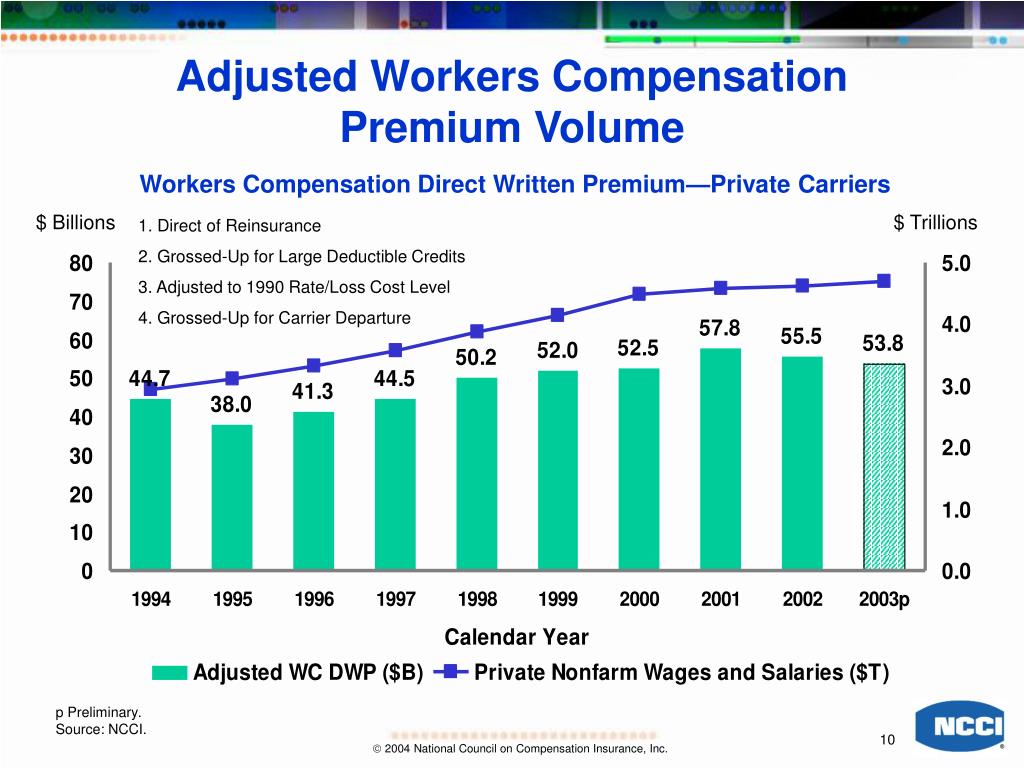
AmTrust Financial’s workers' compensation premium fee structure in Maryland combines base manual premiums—derived from NCCI payroll classification rates per $100 of gross payroll—with standard policy fees, state-mandated assessments, and administrative service charges. Final policy costs reflect individual employer experience modification factors, applicable schedule credits, expense constants, and installment or audit-adjustment fees regulated by the state.
Overview of AmTrust Workers' Compensation in Maryland
AmTrust Financial Services is one of the nation's largest underwriters of small-to-midsize business insurance, holding a major share of the commercial workers' compensation market. In Maryland, AmTrust operates through its authorized insurance subsidiaries (such as Technology Insurance Company, Inc., AmTrust Insurance Company, and Security National Insurance Company).
Workers' compensation insurance in Maryland provides statutory wage replacement and medical benefits to employees who suffer work-related injuries or illnesses. While the state operates a competitive market where private carriers compete alongside the state-created entity (Chesapeake Employers' Insurance Company), private insurers like AmTrust must adhere strictly to Maryland insurance laws, statutory benefit levels, and rate filing rules enforced by the Maryland Insurance Administration.
AmTrust structures its pricing around risk evaluation parameters established by the National Council on Compensation Insurance (NCCI), which acts as the licensed advisory rating organization in Maryland. Understanding how AmTrust converts standard payroll data into a final billed premium—including mandatory policy fees, optional installment plan surcharges, and annual audit adjustments—helps business owners manage their operational expenses effectively.
Disclaimer: This article provides general educational information regarding workers' compensation billing and insurance structures. Insurance rates, state assessment percentages, and underwriting guidelines are subject to change. Consult a licensed insurance producer or financial advisor for policy-specific advice.
Key Formula of the AmTrust Premium Structure
Workers' compensation policies are not billed as simple flat-rate subscriptions. AmTrust calculates base coverage through a standardized actuarial formula before applying fixed operational fees and state surcharges.
[ (Gross Payroll ÷ 100) × NCCI Class Rate ] × Experience Modification Factor (E-Mod) ± Schedule Rating Credits/Debits
- Expense Constant (Fixed Policy Fee)
- Maryland State Statutory Assessments = Total Annual Billed Premium
Each variable in this formula represents a specific layer of AmTrust's pricing architecture:
- Gross Remuneration (Payroll Base): The primary exposure measure, calculated per $100 of direct employee compensation.
- Classification Rate: The base price assigned to specific job duties based on historical hazard and claim data.
- Experience Rating Modification (E-Mod): A multiplier based on an employer’s individual claim history relative to industry averages.
- Schedule Rating Adjustments: Underwriting discounts or debits based on workplace safety programs, premises upkeep, or management controls.
- Fixed Administrative Charges: Mandatory operational fees billed on every active policy term regardless of company size.
Detailed Components of AmTrust Premium & Fee Pricing
1. NCCI Job Classification Rates and Payroll Exposure
AmTrust utilizes the NCCI classification system, which assigns four-digit numerical codes to distinct business activities and job duties (e.g., Code 8810 for Clerical Office Employees vs. Code 5645 for Residential Carpentry). Each code carries an assigned rate per $100 of gross payroll.
Payroll calculations encompass most direct compensation types, including:
- Hourly wages and gross salaries
- Performance bonuses and commissions
- Holiday, vacation, and sick pay
- Profit-sharing payments treated as income
Certain items are generally excluded from premium calculations, such as tips, third-party meals, uniform allowances, and employer-matched 401(k) contributions, provided payroll accounting is maintained according to NCCI rules.
2. Experience Modification Factor (E-Mod / EMR)
Employers with annual premiums exceeding Maryland’s experience rating eligibility threshold receive an Experience Modification Factor (EMR). Calculated independently by NCCI based on three years of historical loss data:
- EMR of 1.00: Indicates average loss history (no premium change).
- EMR below 1.00 (e.g., 0.85): Indicates a favorable loss history, yielding a 15% discount on manual premium.
- EMR above 1.00 (e.g., 1.25): Indicates higher-than-average losses, applying a 25% surcharge to manual premium.
AmTrust applies this multiplier directly to the manual premium before assessing administrative fees.
3. Schedule Rating Credits and Debits
Under Maryland insurance regulations, underwriters at AmTrust have limited discretion to adjust premiums using schedule rating plans. These adjustments compensate for qualitative factors not reflected in raw historical data. AmTrust may grant schedule credits (discounts up to 15–25%) or apply schedule debits (surcharges) based on:
- Implementation of a formal safety committee and written safety protocols.
- Superior medical management and return-to-work modified duty programs.
- Exceptional building condition and machinery guarding.
- Low employee turnover and formal employee screening procedures.
4. Expense Constant (Policy Administrative Fee)
Every AmTrust workers' compensation policy issued in Maryland includes a flat administrative fee known as the Expense Constant. This fee covers basic issuing, servicing, and auditing expenses incurred by the carrier.
In Maryland, AmTrust’s approved expense constant generally ranges between $150 and $250 per policy term, depending on the specific underwriting company issuing the policy. The expense constant is non-negotiable, fully earned over the policy term, and applied regardless of whether the policy premium is $500 or $50,000.
Maryland State-Mandated Assessments and Taxes
Insurance carriers do not retain all line items listed on an invoice. The state of Maryland imposes statutory surcharges that carriers are legally required to collect directly from policyholders and remit to state funds.
| AMTRUST INVOICE BREAKDOWN |
|---|
| 1. Base Manual Premium (Payroll / 100 × Class Rate) |
| 2. E-Mod & Schedule Rating Adjustments |
| 3. Policy Expense Constant (Carrier Fee) |
| SUBTOTAL: Net Carrier Premium |
| 4. Maryland WCC Assessment Fee (State Surcharge) |
| 5. Uninsured Employers' Fund Surcharge (If Active) |
| TOTAL AMOUNT DUE |
Maryland Workers' Compensation Commission (WCC) Assessment
The Maryland Workers' Compensation Commission funds its administrative operational budget by levying an annual assessment on all workers' compensation insurance premiums written in the state.
- Assessment Rate: Adjusted annually by the WCC based on statutory operational budgets.
- Application: Applied as a percentage surcharge on net written premiums.
- Collection: AmTrust itemizes this assessment as a separate line item on billing statements. It does not count toward agent commissions or carrier revenue.
Uninsured Employers' Fund (UEF) Assessment
When mandated by Maryland legislature to replenish the state’s Uninsured Employers' Fund—which pays benefits to injured workers whose employers illegally failed to secure insurance—a temporary surcharge (often 1% to 2%) may be added to insurance invoices statewide.
AmTrust Payment Options and Billing Administrative Fees
AmTrust offers multiple premium billing methods in Maryland. Depending on the payment schedule selected, additional service fees may apply.
1. Pay-As-You-Go (AmTrust EZ Pay)
AmTrust EZ Pay links workers' compensation policy billing directly to an employer's payroll processing software (such as ADP, Paychex, or QuickBooks) or via a digital self-reporting portal.
- How Premium is Charged: Instead of estimating annual payroll upfront, actual gross payroll is submitted every pay period (weekly, bi-weekly, or semi-monthly).
- Fee Structure: Eliminates traditional down payments (down payments on standard plans typically range from 15% to 25%). Reduces or waives monthly installment administration fees.
- Audit Impact: Minimizes year-end audit adjustments, as premium payments adjust automatically throughout the policy year alongside actual payroll fluctuations.
2. Direct Billing Installment Schedules
Employers preferring traditional direct billing choose from several structured payment plans. AmTrust assesses an administrative installment fee (typically $5 to $7 per billing statement) on direct billing schedules:
- Annual Pay (1 Payment): 100% upfront down payment. No installment fees.
- Semi-Annual (2 Payments): 50% down payment, followed by 1 installment ($5–$7 fee).
- Quarterly (4 Payments): 25% down payment, followed by 3 installments ($5–$7 fee per cycle).
- Monthly (10-Pay or 12-Pay): 10% to 15% down payment, followed by monthly invoices ($5–$7 fee per cycle).
3. Late Fees, Cancel Charges, and Reinstatement Fees
Failure to adhere to agreed payment terms triggers contractual service fees under AmTrust billing guidelines:
- Late Payment Fee: A charge (typically $20 to $25) applied when payment is not received by the due date listed on the billing statement.
- Notice of Cancellation (NOC) Fee: Issued when non-payment triggers an automated statutory cancellation notice to the state.
- Reinstatement Fee: If a policy lapses due to non-payment and AmTrust agrees to reinstate coverage without a gap, a reinstatement fee (typically $25 to $50) is assessed.
Executive Officer & Owner Payroll Rules in Maryland
For business owners, corporate officers, and LLC members, workers' compensation rules dictate specific payroll bounds (minimums and maximums) for premium calculation purposes, regardless of actual draw or salary.
In Maryland, executive officer payroll rules follow guidelines set forth by NCCI and approved by state regulators:
Corporate Officers
- Inclusion Status: Corporate officers are automatically included in coverage under Maryland law unless they formally file an exclusion waiver with the insurer and state.
- Payroll Caps (State Limits): For included officers, AmTrust does not rate exposure on actual salary if it falls outside statutory boundaries. The state sets annual minimum and maximum payroll caps (e.g., a mandatory minimum of around $50,000/year and a maximum cap around $150,000–$200,000/year per officer, subject to annual state index adjustments).
Sole Proprietors and Partners
- Inclusion Status: Sole proprietors and members of a partnership are automatically excluded from coverage in Maryland unless they explicitly elect to be included by filing an election endorsement.
- Fixed Assigned Payroll: If included, their premium is calculated on a fixed, pre-determined annual payroll set by state guidelines rather than actual net earnings.
LLC Members
- Inclusion Status: Treated similarly to corporate officers or partners depending on management structure and elections filed under Maryland statutory provisions.
Annual Premium Audits and Non-Compliance Penalties
Because workers' compensation policies are written on an estimated payroll basis at inception, AmTrust conducts a mandatory annual audit at the close of every policy term to reconcile estimated costs against actual financial records.
- Policy Inception
- Estimated Payroll
- Down Payment Paid
- Policy Period
- Coverage active under estimated terms
- Policy Expiration
- Expiration date final invoice set
- Audit Phase
- Actual payroll verified
- Premium adjusted ±
Types of Audits Conducted by AmTrust
- Mail/Self-Audit: Sent to smaller, low-hazard risks. The policyholder completes a form detailing actual payroll and submits payroll records (Quarterly Federal 941s, Maryland Unemployment Quarterly Reports - DLLR/MWA, W-2s, 1099s).
- Digital/Online Audit: Completed via AmTrust’s secure online portal where digital payroll registers and tax forms are uploaded directly.
- Physical/Field Audit: An auditor visits the business premises or conducts a remote live verification for larger, complex, or high-hazard enterprises to audit payroll ledgers, job duties, and subcontractor records.
Audit Premium Adjustments
- Audit Return (Credit): If actual payroll was lower than estimated at policy inception, AmTrust refunds the overpaid premium or applies a credit to the active policy.
- Audit Bill (Debit): If actual payroll exceeded estimates, AmTrust issues an audit invoice for the additional premium owed.
Audit Non-Compliance Charge (ANC)
Ignoring audit requests leads to financial penalties. Under NCCI guidelines approved in Maryland, if an employer fails to provide access to payroll records during an audit, AmTrust is authorized to issue an Audit Non-Compliance Charge (ANC).
- Penalty Surcharge: The ANC can multiply the original policy's estimated annual premium by up to 200% to 300% as an administrative penalty.
- Cancellation & Collections: Unpaid audit bills result in policy cancellation for non-compliance, entry into commercial collection agencies, and reporting to NCCI, which can block the business from obtaining coverage through other standard commercial carriers.
AmTrust Maryland Fee Structure Summary Table
The following matrix provides an overview of standard fees, billing options, and payroll rules applicable to AmTrust workers' compensation policies in Maryland:
| Fee / Component Category | Fee / Rule Details | Operational Impact / Frequency |
|---|---|---|
| Expense Constant | Flat $150 – $250 per policy term | Fixed fee added to every active policy term |
| Installment Service Fee | $5.00 – $7.00 per paper invoice | Billed per billing cycle on direct pay plans (waived or reduced on EZ Pay) |
| Late Payment Charge | $20.00 – $25.00 per occurrence | Assessed when premium payments pass grace period |
| Policy Reinstatement Fee | $25.00 – $50.00 | Assessed to restore coverage after cancellation for non-payment |
| Maryland WCC Assessment | Variable percentage (set annually by state) | Mandatory state surcharge added to net carrier premium |
| AmTrust EZ Pay | $0 down payment; variable vendor setup fees | Pay-as-you-go program tied to actual payroll runs |
| Executive Officer Minimum | State-mandated minimum annual cap | Minimum payroll assigned per included officer regardless of lower actual draw |
| Executive Officer Maximum | State-mandated maximum annual cap | Ceiling on payroll assigned per included officer regardless of higher actual draw |
| Audit Non-Compliance Charge | 200% to 300% of estimated annual premium | Penalty assessed for failing to complete required annual premium audit |
Strategies to Manage and Lower AmTrust Workers' Comp Costs
Employers in Maryland can apply specific operational controls to minimize extra fees and manage overall premium expenses on AmTrust policies:
1. Maintain Accurate Classification Codes
Ensure workers are correctly classified under appropriate NCCI codes. Avoid placing administrative staff under field codes (e.g., putting a receptionist under a construction code), as manual rates for high-risk codes are significantly higher.
2. Implement Pay-As-You-Go (EZ Pay)
Utilizing AmTrust's EZ Pay option eliminates large upfront deposit requirements and prevents unexpected year-end audit bills caused by rapid payroll growth during the business year.
3. Track Subcontractor Certificates of Insurance (COIs)
If your business utilizes independent contractors or subcontractors, collect valid Certificates of Insurance proving they carry their own workers' compensation coverage. Under Maryland audit rules, if a subcontractor lacks proof of insurance, AmTrust must bill your policy for their exposure as if they were direct employees.
4. Establish formal Return-to-Work Programs
Lowering claim frequency and total claim payouts directly improves your E-Mod score over time. AmTrust underwriters frequently apply favorable schedule credits to businesses with formal safety programs and light-duty return-to-work protocols.
Frequently Asked Questions
What is the expense constant on an AmTrust Maryland policy?
The expense constant is a flat, non-refundable administrative fee (typically between $150 and $250) included on all AmTrust policies to cover basic policy issuance, underwriting administrative costs, and recordkeeping. It applies regardless of policy size.
Does AmTrust charge a fee for monthly installment payments?
Yes. If you choose a standard direct-billing payment plan (such as 4-pay or 10-pay direct billing), AmTrust charges an administrative installment service fee, usually between $5 and $7 per statement. Transitioning to AmTrust EZ Pay (pay-as-you-go payroll integration) can reduce or eliminate these periodic fees.
How does Maryland calculate executive officer payroll caps?
Maryland establishes statutory minimum and maximum payroll limits for corporate officers covered under workers' compensation policies. Regardless of how much or how little actual compensation an officer draws, AmTrust must calculate premium using payroll figures that fall within these state-mandated bounds.
What happens if I ignore AmTrust's annual payroll audit?
If you fail to submit required payroll documentation during the end-of-term audit, AmTrust applies an Audit Non-Compliance Charge (ANC). This penalty can double or triple your original policy premium, trigger policy cancellation, and lead to collections reporting that complicates purchasing coverage with other insurers.
Are state assessments included in the base rate from AmTrust?
No. State assessments, such as the Maryland Workers' Compensation Commission (WCC) assessment fee, are calculated as separate statutory surcharges. AmTrust lists these fees as distinct line items on policy statements and remits the funds directly to state governing agencies.
Next Steps for Maryland Business Owners
To maintain compliance and optimize your insurance costs with AmTrust in Maryland, take the following steps:
- Review Your Current Declaration Page: Examine your policy's audit terms, class rates, expense constant, and any applied schedule rating credits.
- Audit Subcontractor Files: Ensure all active certificates of insurance (COIs) for independent contractors are logged prior to your annual AmTrust audit date.
- Evaluate Billing Options: If your payroll fluctuates seasonally, speak with your independent insurance agent about transitioning your policy to AmTrust EZ Pay to streamline cash flow and eliminate installment service charges.