Alpha, Omega, and Beta represent the first, second, and final letters of the Greek alphabet, serving as fundamental symbols across theology, science, and sociology. While "Alpha and Omega" signifies eternal totality in religious contexts, "Alpha" and "Beta" often denote hierarchies in social dynamics, software development stages, and types of nuclear radiation.
The Greek alphabet serves as more than just a linguistic tool; it provides a framework for categorization that has permeated Western thought for millennia. To understand the meanings of Alpha, Omega, and Beta, one must look past their phonetic values and explore how they have been adopted as metaphors for power, sequence, and scientific phenomena. In 2026, these terms remain central to how we categorize human behavior, technological progress, and the very nature of the universe.
The Linguistic and Historical Foundation
The Greek alphabet, established around the late 9th or early 8th century BC, was derived from the Phoenician script. It was the first alphabet to include distinct symbols for vowels, making it a precursor to most modern Western writing systems.
Alpha (Α, α)
Alpha is the first letter. Its name is derived from "aleph," the Phoenician word for "ox." In ancient times, the symbol was often inverted to resemble the head of an ox with horns. As the first of the sequence, it naturally came to represent the beginning, the primary, or the most important element in any given set. In classical mathematics and logic, Alpha is frequently used to represent the first variable or a primary coefficient.
Beta (Β, β)
Beta is the second letter, derived from "beth," the Phoenician word for "house." Because it follows Alpha, it has historically been used to denote the secondary or the subordinate. However, in modern usage, particularly in technology and finance, Beta has taken on a more nuanced meaning regarding testing phases and market volatility.
Omega (Ω, ω)
Omega is the 24th and final letter of the Greek alphabet. Its name literally means "great O" (o-mega), distinguishing it from "Omicron" (o-mikron), which means "small O." Because it sits at the end of the alphabet, Omega is the universal symbol for the end, the ultimate, or the limit of a series.
Theological Significance: Alpha and Omega
The most famous pairing of these letters occurs in the Christian New Testament, specifically in the Book of Revelation. The phrase "I am the Alpha and the Omega" is used as a title for God and for Jesus Christ.
The Concept of Totality
In Revelation 1:8, 21:6, and 22:13, the phrase is used to express the idea that God is the beginning and the end of all things. This encompasses the entirety of time and existence. It suggests a divine sovereignty that predates the creation of the universe and continues after its conclusion.
Artistic and Liturgical Use
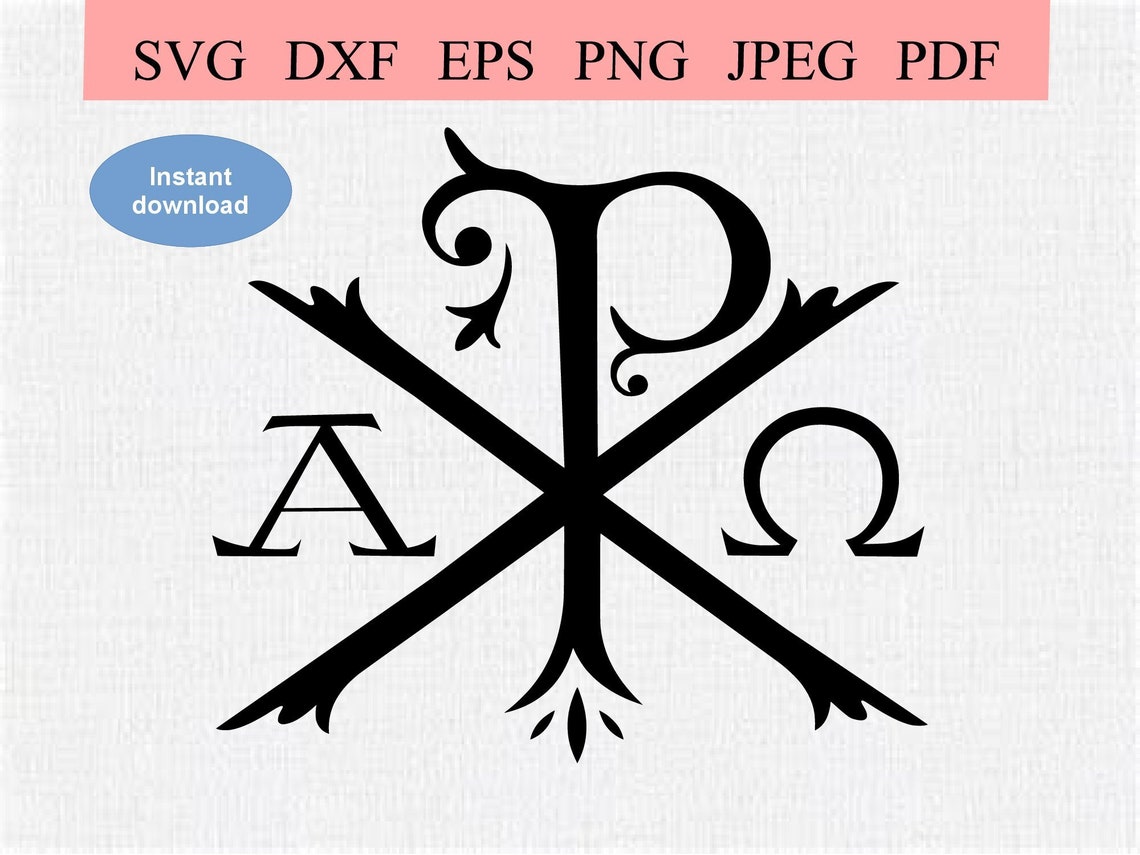
In Christian iconography, the letters Alpha and Omega are often depicted flanking the "Chi-Rho" symbol (a monogram representing Christ). These symbols appear on ancient gravestones, church murals, and modern liturgical vestments. By 2026, these symbols continue to be used in ecumenical settings to represent the timelessness of spiritual truths.
Social Dynamics: Alpha, Beta, and Omega Archetypes
In the late 20th and early 21st centuries, the terms Alpha, Beta, and Omega became popularized in the study of animal behavior and, eventually, in pop psychology and social commentary regarding human personality types.
The Alpha Archetype
The concept of the "Alpha" originated in studies of captive wolves, where researchers identified a dominant pair that led the pack. In human social terms, an Alpha is viewed as a leader—someone who is assertive, outgoing, and assumes control of social or professional situations. However, it is important to note that the scientist who popularized the term "Alpha wolf," L. David Mech, later spent decades trying to correct the record, noting that in the wild, wolf packs are families led by parents, not by aggressive "alphas" who fought for dominance.
The Beta Archetype
In social hierarchies, the Beta is traditionally seen as the "second-in-command" or the follower. In the context of the "manosphere" or modern dating discourse, "Beta" is often used pejoratively to describe men who are perceived as passive, risk-averse, or subordinate. However, a more balanced sociological view identifies Betas as the "glue" of social groups—the collaborators who value harmony and support the organizational structure without the need for constant dominance.
The Omega Archetype
The Omega sits outside the traditional hierarchy altogether. In animal behavior, the Omega is often the individual at the bottom of the social ladder. In human personality theory, however, the "Omega" has been reclaimed to describe individuals who are highly independent, indifferent to social status, and comfortable being "lone wolves." Unlike the Alpha, who needs a group to lead, or the Beta, who needs a group to belong to, the Omega finds validation internally.
Technical and Scientific Applications
Outside of social and religious contexts, Alpha, Beta, and Omega serve as precise technical descriptors.
Software Development: Alpha and Beta Testing
In the world of software engineering, these terms define the maturity of a product:
- Alpha Testing: This is the first phase of formal testing. It is typically performed by internal employees or developers. The software is often unstable and contains numerous bugs. The goal is to ensure the core functionality works before showing it to external users.
- Beta Testing: This is the second phase, where the software is released to a limited group of external users (Beta testers). This phase is crucial for identifying how the software performs in real-world environments. A "Beta version" is considered "feature-complete" but may still require polishing.
Physics: Radiation and Particles
In nuclear physics, Alpha and Beta describe different types of ionizing radiation emitted during radioactive decay:
- Alpha Particles: Consist of two protons and two neutrons (essentially a helium nucleus). They are heavy, carry a positive charge, and have low penetrating power—they can be stopped by a sheet of paper.
- Beta Particles: High-energy, high-speed electrons or positrons. They are much smaller than Alpha particles and have greater penetrating power, requiring aluminum or glass to be stopped.
Finance: Alpha and Beta Risk
Investors use these terms to measure performance and risk:
- Alpha: Measures the "excess return" of an investment relative to a benchmark index. If a fund has a positive Alpha, it means the manager has outperformed the market through skill or strategy.
- Beta: Measures the volatility of an investment compared to the market as a whole. A Beta of 1.0 means the investment moves in lockstep with the market. A Beta higher than 1.0 indicates higher volatility (and higher potential risk/reward).
Comparative Summary of Meanings
The following table provides a quick reference for the different applications of these terms as of 2026.
| Context | Alpha (Α) | Beta (Β) | Omega (Ω) |
|---|---|---|---|
| Linguistics | First Letter (1st) | Second Letter (2nd) | Final Letter (24th) |
| Religion | The Beginning / Creator | N/A (Rarely used) | The End / Completion |
| Social | Dominant Leader | Cooperative Follower | Independent Outsider |
| Technology | Internal/Early Testing | External/User Testing | Final/Stable Release |
| Physics | Heavy, low-penetration particle | Light, high-speed particle | N/A (Gamma is used instead) |
| Finance | Performance above benchmark | Market volatility/risk | N/A (Usually "Terminal Value") |
| Astronomy | Brightest star in a constellation | Second brightest star | Often refers to density of universe |
Understanding the "Sigma" Alternative
By 2026, the social discourse surrounding these terms has expanded to include the "Sigma." While not one of the three primary terms requested, the Sigma is often contrasted with the Alpha and Beta. A Sigma is seen as an "Alpha without a pack." They possess the leadership qualities and competence of an Alpha but choose to live outside the hierarchy, much like the Omega. This distinction is vital for understanding how modern culture uses Greek letters to categorize complex human behaviors that don't fit into simple "leader/follower" binaries.
Common Misconceptions and Troubleshooting
When discussing Alpha, Beta, and Omega, several common errors frequently arise in both casual and technical conversation.
Misconception 1: "Alpha" means "The Best"
In many contexts, Alpha simply means "first in a sequence." An Alpha version of a video game is objectively worse to play than a Beta version because it is less finished. In finance, a high Alpha is good, but in physics, Alpha radiation is generally easier to block than Beta or Gamma radiation. Context is essential for determining value.
Misconception 2: Social Archetypes are Fixed
Psychologists often warn against self-labeling as an "Alpha" or "Beta." Human behavior is highly situational. An individual may act as an Alpha in their professional life while adopting a Beta role within their family or a hobby group. These terms are models, not biological imperatives.
Misconception 3: The "Alpha Wolf" Reality
As previously mentioned, the idea that wolf packs are ruled by a "top dog" who fought his way to the peak is largely outdated in biological science. Using "Alpha" to justify aggressive or bullying behavior in humans is often based on a misunderstanding of how social animals actually interact in the wild.
The Role of Omega in Astronomy and Cosmology
In the field of cosmology, Omega ($\Omega$) carries a heavy weight. It refers to the "Density Parameter," which is the ratio of the average density of matter and energy in the universe to the critical density.
- If $\Omega$ is greater than 1, the universe is "closed" and will eventually collapse (the "Big Crunch").
- If $\Omega$ is less than 1, the universe is "open" and will expand forever.
- If $\Omega$ is exactly 1, the universe is "flat" and will expand at a decelerating rate, reaching a steady state.
This scientific usage mirrors the theological meaning—Omega represents the ultimate fate and "end" of the universe itself.
FAQs
What does "Alpha and Omega" mean in a relationship?
In a relationship context, "Alpha and Omega" is often used metaphorically to describe a partner who is "everything" to the other person—the beginning and the end of their world. It signifies total devotion and the idea that the relationship is the primary focus of their existence.
Why is there no "Omega" testing in software?
In software development, the sequence usually goes Alpha, then Beta, then "Release Candidate" (RC), and finally "General Availability" (GA). While Omega signifies the end, the industry adopted "GA" or "Stable" as the terminology for the final version. Occasionally, the term "Gold Master" was used historically to denote the final version sent for production.
Can someone be both an Alpha and a Beta?
Yes. Modern behavioral science suggests that "Alpha" and "Beta" are traits rather than permanent identities. A person can exhibit Alpha traits (assertiveness, decision-making) in one environment and Beta traits (active listening, supporting, following instructions) in another. Flexibility between these roles is often a sign of high emotional intelligence.
Is an "Omega Male" or "Omega Female" a bad thing?
Not necessarily. While early definitions of the Omega archetype were negative (focusing on low social status), modern interpretations often frame the Omega as a successful non-conformist. These are individuals who do not care for the "rat race" or social climbing, choosing instead to focus on personal interests and internal satisfaction.
How do Alpha and Beta particles affect health?
Alpha particles are dangerous only if they are inhaled or swallowed (internal exposure) because they can damage sensitive living tissue. Beta particles can penetrate the skin and cause "Beta burns," but they are also used in medical treatments, such as certain types of cancer therapy, to destroy localized malignant cells.
Final Recommendations for Usage
When using the terms Alpha, Omega, and Beta, always define your context. If you are speaking about leadership, be aware that the "Alpha" model is often viewed as outdated or overly aggressive in modern collaborative workplaces. If you are in a technical or scientific field, ensure you are using the terms according to the specific standards of your discipline (such as the Density Parameter in physics or volatility in finance). In 2026, the most effective communicators are those who recognize that these ancient symbols carry different weights depending on whether they are being used to describe the divine, the social, or the physical world.