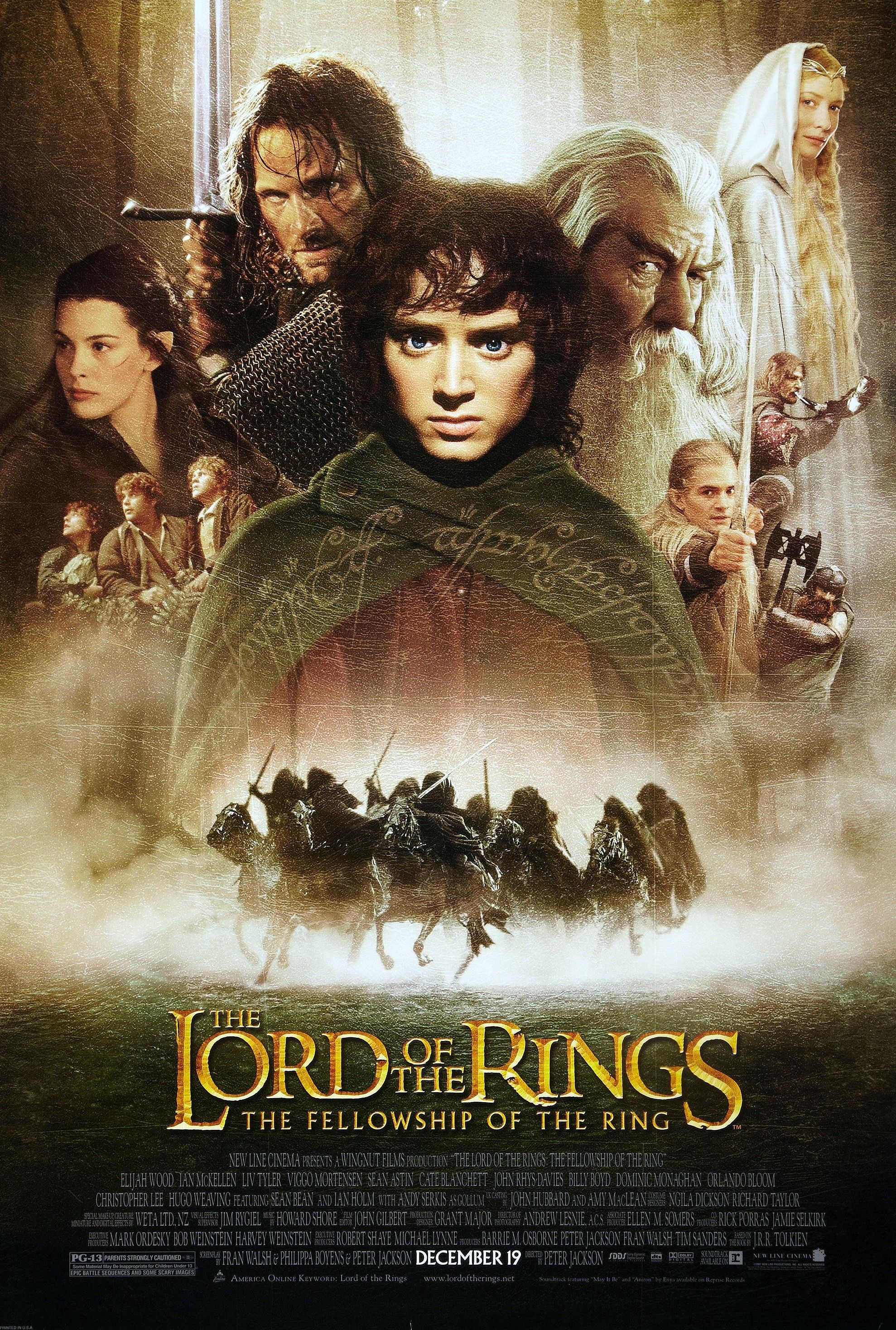
To watch all the "Rings" movies in their entirety, you must navigate two primary trilogies directed by Peter Jackson—The Lord of the Rings and The Hobbit—alongside the 2024 animated feature The War of the Rohirrim and the 2026 live-action release The Hunt for Gollum. These films, supplemented by the 1970s animated classics, form a massive cinematic legendarium based on the works of J.R.R. Tolkien.
The Foundation of Middle-earth Cinema: The Lord of the Rings Trilogy
The centerpiece of the franchise remains the original Lord of the Rings trilogy, released between 2001 and 2003. These films were filmed simultaneously in New Zealand and are widely regarded as one of the greatest achievements in cinematic history. They follow the journey of Frodo Baggins, a Hobbit tasked with destroying the One Ring in the fires of Mount Doom to defeat the Dark Lord Sauron.
The Fellowship of the Ring (2001)
The first installment introduces the peaceful Shire and the burgeoning threat of Mordor. After inheriting a mysterious ring from his uncle Bilbo, Frodo joins a multi-species fellowship including Men, an Elf, a Dwarf, and a Wizard. This film focuses heavily on world-building, establishing the geography of Middle-earth and the psychological weight of the Ring’s corruption. Its narrative strength lies in the intimacy of the characters before the scale of the conflict expands.
The Two Towers (2002)
Following the breaking of the Fellowship, the narrative splits into three distinct paths. Frodo and Samwise Gamgee encounter the creature Gollum, whose obsession with the "Precious" serves as a dark mirror to Frodo's burden. Meanwhile, Aragorn, Legolas, and Gimli join the defense of Rohan. This film is famous for the Battle of Helm’s Deep, which set a new standard for large-scale practical and digital combat sequences.
The Return of the King (2003)
The conclusion to the original trilogy is a cinematic titan, winning all 11 Academy Awards for which it was nominated, including Best Picture. It depicts the final siege of Minas Tirith and the desperate journey through the heart of Mordor. Beyond the spectacle, it offers a profound meditation on sacrifice, trauma, and the end of an era as the Elves depart for the Undying Lands.
The Prequel Expansion: The Hobbit Trilogy
Released a decade later, The Hobbit trilogy (2012–2014) serves as a prequel to the events of The Lord of the Rings. While based on a significantly shorter children's book, Peter Jackson expanded the story by incorporating material from Tolkien’s appendices to bridge the gap between the two eras.
An Unexpected Journey (2012)
Set 60 years before Frodo’s quest, this film follows Bilbo Baggins as he is recruited by the wizard Gandalf and a company of thirteen dwarves led by Thorin Oakenshield. Their goal is to reclaim the Lonely Mountain from the dragon Smaug. The film establishes the lighter, more whimsical tone of the source material while slowly weaving in the darker threads of Sauron’s return.
The Desolation of Smaug (2013)
The middle chapter of the prequel trilogy increases the pace, introducing the Elves of Mirkwood and the Men of Lake-town. The highlight of the film is the interaction between Bilbo and the dragon Smaug, voiced and motion-captured by Benedict Cumberbatch. It ends on a cliffhanger that sets the stage for total war.
The Battle of the Five Armies (2014)
The final Hobbit film focuses almost entirely on the fallout of reclaiming the mountain and the massive military engagement that ensues. It serves as a bridge, concluding Thorin’s arc while showing the initial stages of the White Council's war against the "Necromancer" (Sauron).
The Modern Era and 2026 Developments
As of 2026, the "Rings" cinematic universe has entered a new phase of expansion under Warner Bros. Discovery and New Line Cinema. This era focuses on "untold stories" within the existing continuity of the Peter Jackson films.
The Lord of the Rings: The War of the Rohirrim (2024)
This feature-length anime, directed by Kenji Kamiyama, explores the history of Helm Hammerhand, the legendary King of Rohan. Set roughly 183 years before the original trilogy, it provides crucial context for the construction and significance of Helm’s Deep. By using the medium of animation, the film depicts massive conflicts and supernatural elements that would be difficult to capture in live-action.
The Lord of the Rings: The Hunt for Gollum (2026)
Directed by Andy Serkis and produced by Peter Jackson, this 2026 release returns to the live-action format. It explores the period between Bilbo's birthday party and the Fellowship’s departure from Rivendell. The story follows Gandalf and Aragorn as they track Gollum to learn the truth about the One Ring before he can be captured by the agents of Sauron. This film marks a significant return to the aesthetic and tone of the original 2001–2003 productions.
The Animated Classics (1977–1980)
Long before Peter Jackson, other filmmakers attempted to adapt Tolkien’s complex mythology. While these are often viewed as secondary to the modern films, they remain essential for completionists.
- The Hobbit (1977): An animated musical produced by Rankin/Bass. It is a faithful, albeit condensed, adaptation of the book, featuring a unique watercolor-style art direction.
- The Lord of the Rings (1978): Directed by Ralph Bakshi, this film utilized rotoscoping (tracing over live-action footage). It covers The Fellowship of the Ring and part of The Two Towers but was never finished with a sequel.
- The Return of the King (1980): Another Rankin/Bass production, this was marketed as a sequel to the 1977 Hobbit rather than the Bakshi film, though it covers the final book of the trilogy.
Comparing the Middle-earth Feature Films
The following table summarizes the primary feature films in the franchise, including their directors and the timeline context within Middle-earth’s history.
| Film Title | Release Year | Director | Primary Era | Runtime (Extended) |
|---|---|---|---|---|
| The Hobbit (Animated) | 1977 | Jules Bass, Arthur Rankin Jr. | Third Age (2941) | 77 min |
| The Lord of the Rings | 1978 | Ralph Bakshi | Third Age (3018) | 132 min |
| An Unexpected Journey | 2012 | Peter Jackson | Third Age (2941) | 182 min |
| The Desolation of Smaug | 2013 | Peter Jackson | Third Age (2941) | 186 min |
| The Battle of the Five Armies | 2014 | Peter Jackson | Third Age (2941) | 164 min |
| The War of the Rohirrim | 2024 | Kenji Kamiyama | Third Age (2758) | 130 min (approx) |
| The Hunt for Gollum | 2026 | Andy Serkis | Third Age (3001-3017) | TBA |
| The Fellowship of the Ring | 2001 | Peter Jackson | Third Age (3018) | 208 min |
| The Two Towers | 2002 | Peter Jackson | Third Age (3019) | 223 min |
| The Return of the King | 2003 | Peter Jackson | Third Age (3019) | 252 min |
Recommended Viewing Orders
Deciding how to watch "all the rings movies" depends on whether you value narrative chronology or the evolution of filmmaking technology.
The Chronological Order
Watching the films in the order of events within Middle-earth history allows you to see the rise and fall of Sauron as a continuous narrative.
- The War of the Rohirrim (2024)
- The Hobbit Trilogy (2012–2014)
- The Hunt for Gollum (2026)
- The Lord of the Rings Trilogy (2001–2003)
The Release Order
This is the preferred method for most first-time viewers. Watching the original Lord of the Rings trilogy first provides the emotional foundation and understanding of the stakes that make the prequels more meaningful. It also avoids the "technical regression" of moving from the high-fidelity 2010s/2020s films back to the early 2000s CGI.
Theatrical vs. Extended Editions: A Critical Distinction
One cannot discuss the "Rings" movies without addressing the two versions of the Peter Jackson films. The Theatrical Editions were designed for cinema pacing, while the Extended Editions were created for home media, adding hours of footage that flesh out Tolkien's lore.
For the original trilogy, the Extended Editions add roughly 125 minutes of total footage. These additions include the "Death of Saruman" in The Return of the King, which was a major omission from the theatrical cut. For The Hobbit, the extended versions include more graphic violence (earning The Battle of the Five Armies an R-rating in some territories) and more character beats for the dwarf company.
If you are a first-time viewer, the Theatrical Editions are often recommended for their tighter pacing. However, for a deep-dive "marathon," the Extended Editions are considered the definitive versions by the fanbase.
Technical Specifications and Availability
As of 2026, the primary way to experience these films is through the 4K Ultra HD Remasters. Supervised by Peter Jackson, these versions were released to unify the visual look of the two trilogies. The 4K versions utilize High Dynamic Range (HDR) to improve color depth and include Dolby Atmos soundtracks, which are essential for Howard Shore’s iconic orchestral scores.
Most of these films are available for streaming on platforms like Max (formerly HBO Max), due to Warner Bros.' ownership of the distribution rights. However, the 1977/1980 animated films are often found on separate platforms or require individual digital purchases due to different licensing agreements involving the Tolkien Estate and Saul Zaentz Company.
Frequently Asked Questions
Is the "Rings of Power" TV show a movie?
No, The Lord of the Rings: The Rings of Power is a multi-season television series produced by Amazon Studios. While it is set in the same universe (the Second Age of Middle-earth), it is legally and creatively distinct from the Peter Jackson films. It is not usually included in "all the rings movies" lists, though it covers the history of the Ring's forging.
Why are there two different Hobbit movies from 1977 and 2012?
The 1977 film is an animated musical aimed at families, while the 2012–2014 trilogy is a live-action epic intended to serve as a direct prequel to the Lord of the Rings films. They represent different eras of adaptation and different creative philosophies.
In what year does the new movie "The Hunt for Gollum" take place?
Within the story, it takes place between the years 3001 and 3017 of the Third Age. This is the 17-year gap in the books between Bilbo leaving the Shire and Frodo starting his journey. The 2001 movie condensed this time gap, but the 2026 film expands on the events that occurred during those years.
Who owns the rights to make the Rings movies?
As of 2026, the rights are complex. Embracer Group owns Middle-earth Enterprises, which holds the rights to films, games, and merchandise based on The Hobbit and The Lord of the Rings. They have a multi-year agreement with Warner Bros. Discovery (New Line Cinema) to produce new feature films.
Are the animated movies canon to the Peter Jackson films?
No. The animated movies from the 70s and 80s exist in their own separate continuity. However, The War of the Rohirrim (2024) is designed to be canon specifically to the Peter Jackson cinematic universe, sharing its visual language and design.
Final Recommendation for Viewers
If you are planning to watch all the "Rings" movies in 2026, your best course of action is to start with the Lord of the Rings Trilogy (Theatrical) to establish your love for the world. Follow this with the Hobbit Trilogy (Extended) for a deeper look at the history of the dwarves and Bilbo. Finally, watch the modern additions—The War of the Rohirrim and The Hunt for Gollum—to see how modern technology and diverse storytelling formats are expanding the reach of Tolkien’s timeless legendarium. Always opt for the 4K remasters where available to ensure the best visual consistency across the decades of production.