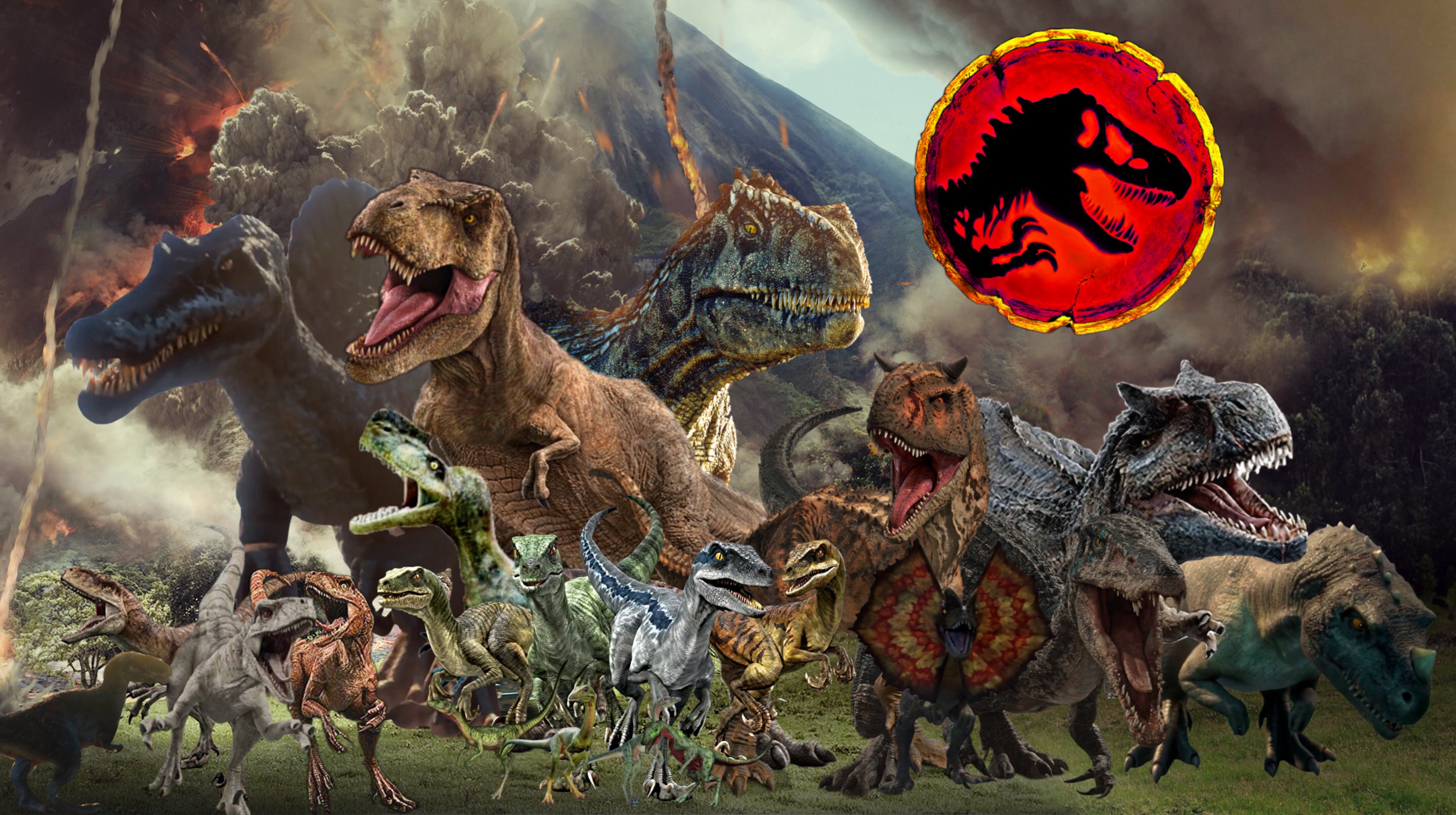
Jurassic World Rebirth features a carefully curated roster of prehistoric species, centered on three "colossal" creatures—the land-based Brachiosaurus, the aquatic Mosasaurus, and the aerial Quetzalcoatlus. These giants are pivotal to the film's plot, as their unique genetic material provides the foundation for a revolutionary, life-saving medical breakthrough.
The 2025 release of Jurassic World Rebirth, directed by Gareth Edwards and written by David Koepp, marked a significant tonal shift for the franchise. Moving away from the global sprawl of Dominion, the film returned to a more grounded, suspenseful atmosphere. As of 2026, the film is celebrated for its "back-to-basics" approach to dinosaur design, emphasizing scale, environmental realism, and the predatory nature of these animals. Set five years after the events of Jurassic World Dominion, the story follows a specialized team—led by Zora Bennett (Scarlett Johansson) and Dr. Henry Loomis (Jonathan Bailey)—venturing into isolated tropical biomes where the planet's remaining dinosaurs have congregated.
The Narrative Role of Dinosaurs in Jurassic World Rebirth
In Rebirth, the dinosaurs are not merely obstacles or spectacles; they are the primary objective. The narrative centers on the discovery that the three largest creatures remaining on Earth possess a specific genetic sequence capable of creating a miraculous drug for human health. This "biological gold rush" drives the conflict between the extraction team and the natural inhabitants of the islands.
Unlike previous entries where dinosaurs were often portrayed with almost human-like intelligence or "hero" arcs, Gareth Edwards opted for a more animalistic portrayal. The creatures in Rebirth are territorial, unpredictable, and perfectly adapted to the humid, lush environments of Southeast Asia (specifically the filmed locations in Thailand). The film explores the "Rebirth" of the species in a world that has largely moved on from the chaos of dinosaurs in suburban environments, focusing instead on these isolated "Sorna-like" pockets where evolution has taken a feral turn.
The Colossal Three: Species Central to the Plot
The core of the film's tension revolves around the "Big Three"—the land, sea, and air giants that hold the key to the medical miracle. These species were chosen for their immense size, which, in the context of the film, correlates with the complexity of the genetic material required for the pharmaceutical synthesis.
The Land Giant: Brachiosaurus
The Brachiosaurus returns to its roots as a symbol of awe and scale. In Jurassic World Rebirth, the design favors the majestic, towering presence seen in the 1993 original. Edwards utilizes low-angle cinematography to emphasize their sheer mass. Within the story, the Brachiosaurus is found in a secluded valley where it thrives on high-canopy vegetation. The extraction of its DNA is a high-stakes sequence, as the team must navigate the animal's massive, defensive movements without causing it—or themselves—fatal harm.
The Sea Giant: Mosasaurus
While the Mosasaurus was a breakout star in the 2015 Jurassic World, its role in Rebirth is far more menacing. No longer confined to a lagoon or the open sea near civilization, this individual has retreated to deep-water tropical trenches. The "Sea Giant" sequence is one of the film's most technically impressive, utilizing practical water effects and dark, claustrophobic underwater photography. The Mosasaurus is depicted as an apex predator of the abyss, requiring the team to use specialized submersibles that are dwarfed by the creature's immense frame.
The Air Giant: Quetzalcoatlus
The Quetzalcoatlus represents the "Air" component of the genetic trinity. First introduced to the mainstream in Dominion, this pterosaur is refined in Rebirth with a more grounded, terrifying design. It is treated as a high-altitude scavenger and opportunistic predator. The sequence involving the "Air Giant" takes place on steep cliffside nests, highlighting the creature’s giraffe-like height when on the ground and its terrifying wingspan when in flight. Its role in the film's climax provides a verticality to the action that the franchise had previously lacked.
Classic Predators and Iconography
No Jurassic film would be complete without the returning icons that defined the series. In Rebirth, these predators are presented with a "feral" aesthetic, looking leaner and more battle-worn than their predecessors.
Tyrannosaurus rex: The Return of the Queen
The Tyrannosaurus rex in Rebirth is a deliberate homage to the 1993 design. Gone are the softer features of the previous trilogy; this T-Rex is scarred, powerful, and undeniably the apex of the island. Its involvement is centered on territorial disputes with the human extraction team. The film treats the T-Rex not as a "save-the-day" hero, but as a force of nature that forces the protagonists to hide and strategize rather than engage. The 2025 production utilized significant animatronic work to bring the T-Rex to life, providing a tangible sense of weight and presence in the jungle sequences.
Velociraptors: Pack Dynamics Reimagined
The Velociraptors in Rebirth are a significant departure from the "Blue" character arc. These are feral animals with no bond to humans. They are depicted as highly efficient, silent stalkers of the tropical undergrowth. Their design features a mix of reptilian scales with subtle, quill-like structures along their necks, nodding to modern paleontological theories while maintaining cinematic continuity. The "long grass" sequence in Rebirth is frequently cited by critics in 2026 as one of the most suspenseful moments in the franchise, leaning into the horror-adjacent roots of David Koepp’s writing.
Supporting Species and Environmental Herbivores
Beyond the plot-critical giants and predators, Jurassic World Rebirth populates its world with a variety of herbivores that ground the ecosystem. These animals serve as the "background" of the island's new hierarchy.
- Gallimimus: Seen in several sweeping shots, the Gallimimus are used to showcase the speed and flocking behavior of the island's inhabitants. They represent the "prey" layer of the ecosystem, often seen fleeing from the larger predators.
- Triceratops: A staple of the series, the Triceratops is shown in a more vulnerable light, dealing with the harsh tropical climate and the encroaching predators. The film highlights their protective parental instincts in a brief but emotional scene.
- Ankylosaurus: Used as a "living tank," the Ankylosaurus provides a moment of high-impact action when a herd is spooked by the extraction team’s heavy equipment.
- Stegosaurus: Present in the densely forested areas, the Stegosaurus design in Rebirth emphasizes its defensive spikes and plates, making it a formidable obstacle for the ground team.
Dinosaur Specifications and Roles in Rebirth
The following table compares the primary species featured in Jurassic World Rebirth based on their narrative importance and ecological role within the 2025 film.
| Species | Category | Primary Role | Key Visual Feature |
|---|---|---|---|
| Tyrannosaurus rex | Apex Carnivore | Territorial Guardian | Classic 1993 "Rexy" aesthetic |
| Brachiosaurus | Colossal Land Giant | Primary DNA Source | Extreme scale and height |
| Mosasaurus | Colossal Sea Giant | Aquatic DNA Source | Deep-sea bioluminescence cues |
| Quetzalcoatlus | Colossal Air Giant | Aerial DNA Source | Terrifying 40-foot wingspan |
| Velociraptor | Pack Predator | Jungle Stalker | Lean, feral, non-domesticated |
| Gallimimus | Herd Herbivore | Ecological World-building | High-speed flocking behavior |
| Triceratops | Heavy Herbivore | Environmental Hazard | Detailed horn and frill textures |
Scientific Accuracy vs. Cinematic Design in 2026
In 2026, the discussion surrounding Jurassic World Rebirth often focuses on the balance between "Movie Monsters" and "Actual Dinosaurs." Gareth Edwards and his design team made a conscious effort to incorporate more "grounded" elements. While they maintained the established silhouettes of the franchise—crucial for brand identity—they added details that reflect modern paleontology, such as more naturalistic skin textures and behaviors based on observed animal biology.
For instance, the Quetzalcoatlus movement on the ground was modeled after the "vaulting" take-off behavior theorized by paleontologists. Similarly, the Tyrannosaurus rex was given a more varied vocal range, moving away from the constant "roar" and toward low-frequency infrasound that vibrates the camera, creating a sense of dread before the animal is even seen. This attention to detail has helped Rebirth stand out as a more "mature" entry in the series, appealing to both casual fans and those with an interest in the real-world science of dinosaurs.
The pharmaceutical plot also adds a layer of "biological realism." The idea that dinosaur DNA could contain unique enzymes or proteins for modern medicine, though speculative, is grounded in the real-world study of "extreme" biology. By making the dinosaurs the source of the cure rather than just a byproduct of a park, the film justifies the continued existence and study of these animals in a way the previous films struggled to after the fall of the theme parks.
Frequently Asked Questions
Are there any new hybrid dinosaurs in Jurassic World Rebirth?
No, Jurassic World Rebirth intentionally moved away from the "hybrid" concept that defined the Jurassic World trilogy (such as the Indominus Rex). Director Gareth Edwards and writer David Koepp opted to focus on real, prehistoric species to bring the franchise back to its roots. The tension in the film comes from the natural behavior and sheer scale of existing dinosaurs rather than genetically engineered monsters.
Why are the "Big Three" dinosaurs so important to the plot?
In the film's 2025 narrative, the three colossal creatures—the Brachiosaurus, Mosasaurus, and Quetzalcoatlus—are found to have the purest genetic sequences for a specific medical breakthrough. Because of their massive size and longevity, their DNA contains unique markers that scientists believe can cure multiple human diseases. This turns the dinosaurs into a vital resource, driving the extraction mission that centers the movie.
How does the T-Rex in Rebirth compare to the one in Dominion?
The T-Rex in Rebirth is portrayed with a more menacing and territorial personality. While the T-Rex in Dominion was often seen as an aging "protagonist," the Rebirth version returns to the role of a dangerous apex predator. Visually, the design is a direct callback to the original 1993 Jurassic Park animatronic, featuring darker tones and a more rugged, lean appearance suited for the tropical Thai jungle setting.
Where does Jurassic World Rebirth take place?
The film is set five years after Dominion and takes place primarily in isolated tropical biomes across Southeast Asia. Much of the filming occurred in Thailand, utilizing natural landscapes like Khao Phanom Bencha National Park and the "Emerald Pool." This setting provides a "Lost World" feel, where dinosaurs have thrived in isolation away from human cities.
Is Blue the Velociraptor in this movie?
No, Blue does not appear in Jurassic World Rebirth. The film serves as a fresh start for the franchise with a new cast and a new approach to the creatures. The Velociraptors shown are entirely feral and have no previous connection to humans, emphasizing the danger and unpredictability of the species in the wild.
Final Recommendation for Fans
For those looking to fully appreciate the dinosaur roster in Rebirth, it is recommended to view the film on the largest screen possible, such as IMAX, to truly feel the scale of the "Colossal Three." As of 2026, the official Jurassic World website offers an interactive "Field Guide" that provides additional genetic data and "in-universe" sightings of the species mentioned in the film. Additionally, the Variety production archives provide excellent behind-the-scenes looks at how the practical effects were used to bring the T-Rex and Brachiosaurus to life for the 2025 release.