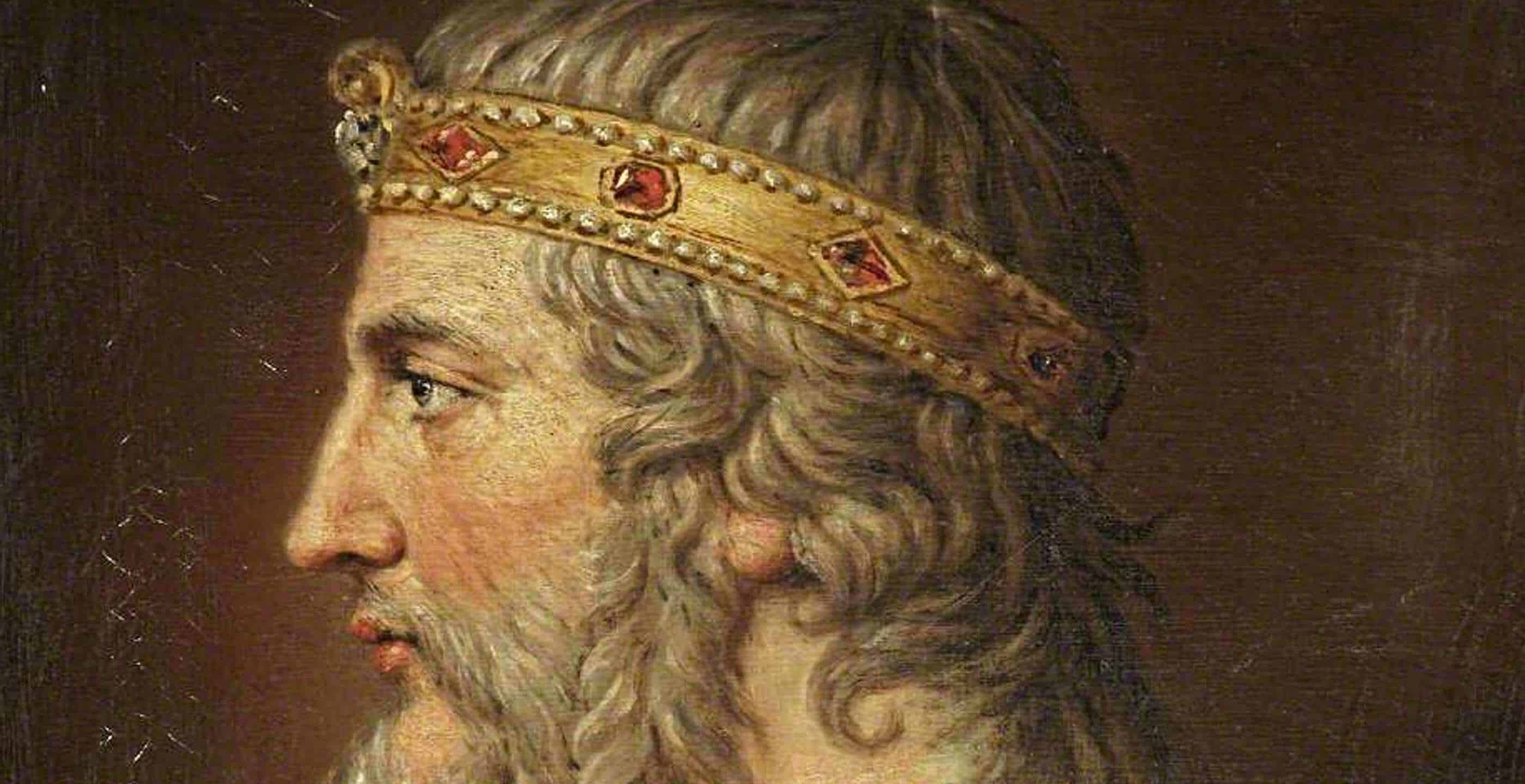
The claim that Alfred the Great was the first King of England is a subject of nuanced historical debate that hinges on how one defines the political entity of "England." While Alfred, who ruled Wessex from 871 to 899 AD, significantly expanded his authority and styled himself "King of the Anglo-Saxons," he did not rule all of the territory known today as England. Historical consensus generally identifies his grandson, Athelstan, as the first true monarch to exert control over the entirety of the Anglo-Saxon lands.
Defining the Sovereignty of Alfred the Great
To understand why Alfred the Great is often credited as the foundational figure of England, one must look at the geopolitical landscape of the late 9th century. During his reign, the British Isles were fractured into several Anglo-Saxon kingdoms—Mercia, Northumbria, East Anglia, and Wessex—most of which had fallen to the Great Heathen Army of Viking invaders.
Alfred’s survival of the Viking onslaught and his subsequent victory at the Battle of Edington in 878 AD represented a turning point. By capturing London in 886 AD, Alfred extended his protection over the Mercian lands that had not been occupied by the Norse. It was this act that led to his adoption of the title Rex Anglorum Saxonum (King of the Anglo-Saxons). This title was revolutionary; it asserted an authority that transcended the traditional boundaries of his ancestral kingdom of Wessex.
However, "King of the Anglo-Saxons" is not synonymous with "King of England." Alfred never governed the northern regions of Northumbria or the areas of the Danelaw held by Viking settlers. His influence was a strategic military and political alliance rather than a centralized national administration. He laid the intellectual and defensive foundations—such as the creation of the burh (fortified settlement) system and the promotion of the Anglo-Saxon Chronicle—but his sovereignty remained geographically limited to the south and west.
The Transition from Wessex to England
The transition from a collection of fragmented kingdoms to a unified nation-state occurred in the generation following Alfred. His son, Edward the Elder, and his grandson, Athelstan, pursued an aggressive policy of reconquest.
Athelstan’s reign, beginning in 925 AD, culminated in the Battle of Brunanburh in 937 AD. This decisive military engagement allowed him to claim dominion over the entirety of the British Isles, effectively uniting the Anglo-Saxon and Danish regions under a single crown. Historians frequently point to the charter evidence from Athelstan’s court, where he is the first to be consistently styled Rex Anglorum (King of the English), as the definitive moment of England’s inception.
Therefore, while Alfred the Great is rightfully considered the architect of the English identity and the military savior of the Anglo-Saxon political structure, the formal status of the "First King of England" belongs to Athelstan. Alfred provided the ideological and territorial nucleus around which England would eventually coalesce, but he remained, by and large, a King of Wessex.
Comparative Timeline of Anglo-Saxon Rule
The following table contrasts the titles and territorial reach of the primary figures involved in the formation of the English monarchy.
| Monarch | Primary Title Used | Territorial Extent | Historical Classification |
|---|---|---|---|
| Alfred the Great | King of the Anglo-Saxons | Wessex and Western Mercia | Architect of English Identity |
| Edward the Elder | King of the Anglo-Saxons | Wessex, Mercia, and East Anglia | Consolidator of Southern England |
| Athelstan | King of the English | All of present-day England | First True King of England |
| Edgar the Peaceful | King of the English | Unified England | King of the Golden Age |
The Role of the Anglo-Saxon Chronicle
One of the primary reasons the public perception often favors Alfred as the first king is the historical documentation he commissioned. The Anglo-Saxon Chronicle was an essential tool in Alfred’s program of cultural restoration. By fostering a standardized written language and a coherent historical narrative, Alfred ensured that his reign was documented as a time of national resurgence.
This emphasis on the English language (Old English) rather than Latin served to unify his subjects under a shared identity. Even if he did not technically rule a unified England, he defined what it meant to be "English." This cultural legacy has contributed to his enduring reputation as the progenitor of the English monarchy, effectively outshining his grandson in the popular imagination despite the latter’s superior political reach.
Legal and Administrative Precedents
Alfred’s legislative efforts, known as his Doom Book (or legal code), drew heavily from previous laws of Wessex, Kent, and Mercia. By synthesizing these regional laws into a cohesive body, Alfred created a common legal framework for his subjects. This was a critical step in the homogenization of the population.
When analyzing his administrative reforms, it is clear that Alfred was attempting to build a state. The burh system required organized taxation, labor, and logistical support that forced different regions to interact under a single command structure. This administrative integration was perhaps more important to the long-term survival of the English state than the specific territorial boundaries of the time. While the administrative infrastructure was a prototype, it provided the blueprint for the more centralized government that Athelstan would later oversee.
Common Misconceptions Regarding the Monarchy
Many readers often confuse "Kingship" with "Unification." It is a common misconception that Alfred’s defeat of the Vikings resulted in a fully formed nation. In reality, the Viking threat remained a constant reality throughout the 9th and early 10th centuries. The "England" that emerged was a volatile, shifting mosaic of military outposts and localized power centers.
Another common error is viewing the transition of the crown as a peaceful or inevitable inheritance. The transition from Alfred to Athelstan was marked by internal rivalries within the royal family and external pressure from the Norse kings of York. The development of England was a process of trial, error, and violent conquest rather than a singular event led by one man. Alfred was the survivor, but Athelstan was the consolidator.
Frequently Asked Questions
Why is Alfred often called the first king if Athelstan was the first to rule all of England? Alfred is often credited because he saved the Anglo-Saxon culture from extinction. His title "King of the Anglo-Saxons" was the first of its kind, and his cultural initiatives established the foundation upon which the later unified English state was built.
What was the Danelaw, and did Alfred rule it? The Danelaw was the territory in Northern and Eastern England controlled by the Danish Vikings. Alfred did not rule the Danelaw; he negotiated treaties (such as the Treaty of Alfred and Guthrum) to define the boundaries between his territory and the Viking-held lands.
Did Alfred create the English language? No, the English language existed prior to Alfred, but he is credited with promoting its use in official records, literature, and education, which helped preserve and standardize it during a period when Latin was the dominant language of the church and law.
What defined "England" in the 9th and 10th centuries? "England" at that time was defined more by the ethnic identity of the "English" (Angles and Saxons) than by modern national borders. It was a shifting region defined by the absence of Viking rule and the extent of the West Saxon dynasty’s influence.
How did the Church influence the legitimacy of these early kings? The Church played a vital role in legitimizing monarchs through the act of coronation and the promotion of the "divine right" to rule. Alfred’s close relationship with the Church was essential for his authority, providing a religious sanction for his leadership that unified his people against the "pagan" Viking threat.
Practical Steps for Historical Research
If you are looking to research the origins of the English monarchy, the following steps will provide the most accurate, evidence-based results:
- Consult Primary Sources: Read the Anglo-Saxon Chronicle. It is the most reliable contemporary source for the events of the 9th and 10th centuries.
- Examine Charters: Look at the digital archives of Anglo-Saxon charters. These documents provide the clearest evidence of how kings officially styled themselves, as they were legal instruments of government.
- Review Archaeological Data: Evidence from excavations of burhs (such as those in Winchester or Wareham) reveals the practical scale of Alfred’s kingdom compared to his successors.
- Engage with Modern Academic Reviews: Academic journals like Anglo-Saxon England provide peer-reviewed analysis that helps clarify the distinctions between the political realities of the 870s versus the 930s.
Understanding the history of the English crown requires separating the legendary status of Alfred the Great from the concrete political achievements of his successors. Alfred provided the survival and the identity, but it was Athelstan who forged the state.