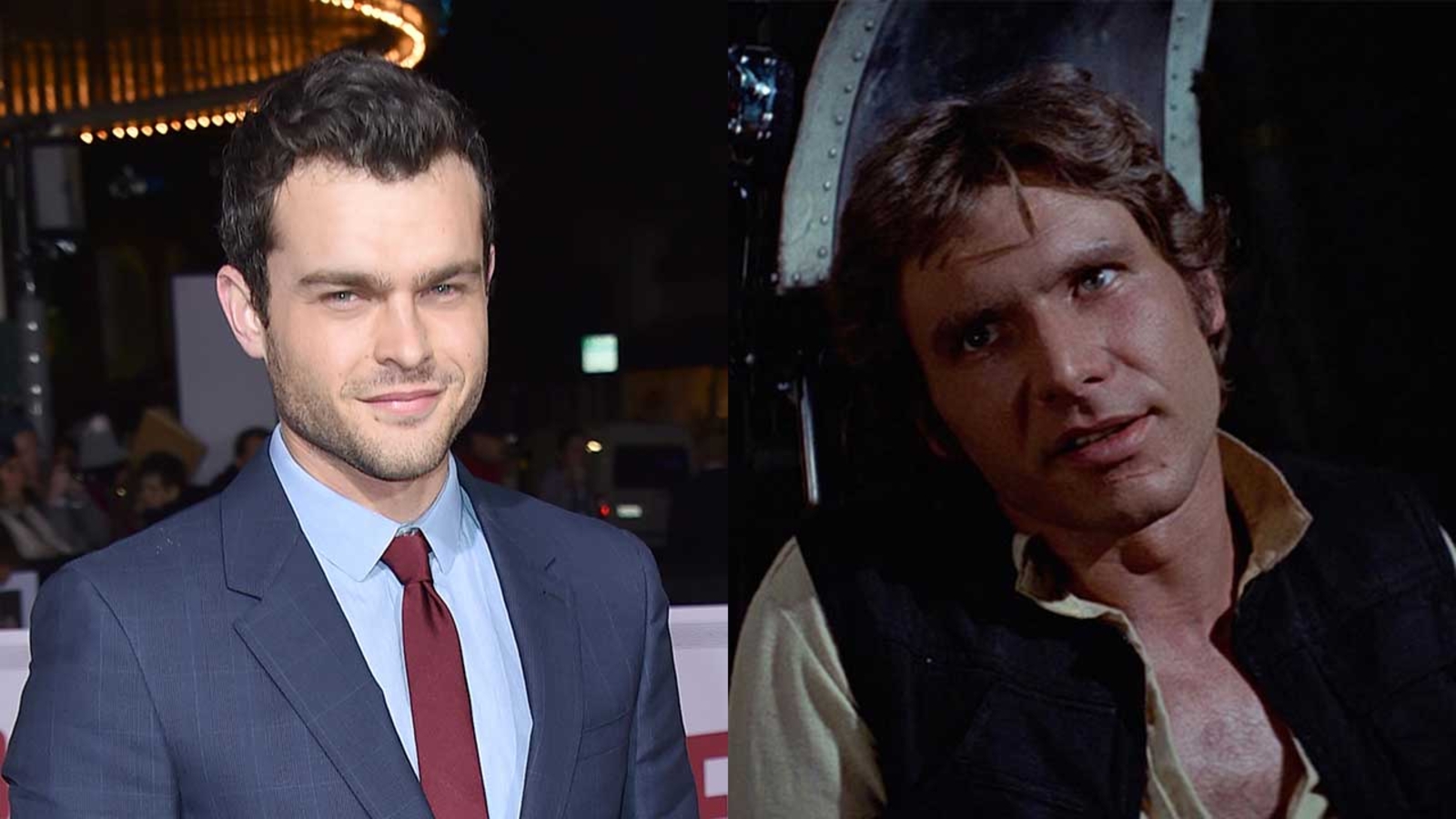
Alden Ehrenreich’s portrayal of Han Solo in the 2018 film Solo: A Star Wars Story remains one of the most discussed casting choices in modern franchise history. Tasked with inhabiting a role synonymous with Harrison Ford, Ehrenreich delivered a performance that prioritized the character’s youthful idealism over mere imitation, anchoring a film that has transitioned from a box-office disappointment to a celebrated cult favorite within the Star Wars community as of 2026.
The Impossible Task: Casting a Young Icon
The search for a young Han Solo was arguably the most scrutinized casting call of the 2010s. Reports indicated that Lucasfilm and the original directing duo, Phil Lord and Christopher Miller, auditioned over 2,500 actors for the role. Names like Taron Egerton, Jack Reynor, and Ansel Elgort were frequently cited in trade publications. However, Alden Ehrenreich was famously the first person to audition for the role.
Casting director Jeanne McCarthy and producer Kathleen Kennedy sought someone who could evoke the "spirit" of the scoundrel without performing a Saturday Night Live-style impression of Harrison Ford. Ehrenreich, who had previously impressed in the Coen Brothers’ Hail, Caesar!, possessed a specific brand of old-school Hollywood charisma—a mixture of vulnerability and bravado—that the producers felt could bridge the gap between the naive pilot and the cynical smuggler seen in A New Hope.
The challenge was twofold: Ehrenreich had to satisfy a legacy fanbase that viewed Ford as irreplaceable, while also providing a performance nuanced enough to carry a standalone origin story. This "deep dive" into his casting reveals a process focused on internal character logic rather than external mimicry, a decision that would define the film's eventual creative identity.
Navigating Production Turmoil: The Director Shift
No discussion of Ehrenreich’s performance is complete without addressing the significant production upheaval that occurred midway through filming. In June 2017, Lord and Miller were replaced by veteran director Ron Howard due to "creative differences" with Lucasfilm and screenwriter Lawrence Kasdan.
The shift in tone was monumental. Lord and Miller favored an improvisational, comedic approach that reportedly drifted too far from Kasdan’s script. Howard, conversely, was brought in to provide a more traditional, structured cinematic experience. For Ehrenreich, this meant navigating two vastly different directing styles while under intense media scrutiny.
During this period, rumors circulated regarding the hiring of an acting coach, Maggie Kiley, to assist Ehrenreich. While some interpreted this as a sign of a struggling lead, industry veterans noted that acting coaches are common on major sets to maintain character consistency across long, fragmented shoots—especially during a change in directors. In hindsight, Howard’s steady hand helped ground Ehrenreich’s performance, allowing the actor to find the "Han" within the script’s specific rhythms rather than getting lost in tonal shifts.
Performance Analysis: Defining the "Spirit" of Solo
Ehrenreich’s Han Solo is not the finished product fans met in the Mos Eisley Cantina. This is a critical distinction that many viewers missed upon the film’s initial release. In Solo, Han is a dreamer, a romantic, and a man who desperately wants to be the "outlaw" he hasn't quite become yet.
The Evolution of the Scoundrel
Ehrenreich captures this transition through subtle physical cues. Early in the film, on Corellia, his movements are frantic and desperate. By the time he reaches the Kessel Run, there is a burgeoning confidence—a swagger that feels earned rather than inherited. He portrays Han as a character who "fake it 'til he makes it," a theme that resonates throughout the screenplay.
Chemistry and Dynamics
The performance is bolstered by Ehrenreich’s chemistry with his co-stars:
- Chewbacca (Joonas Suotamo): The foundation of the film. Ehrenreich treats the Wookiee as an equal partner, and their initial meeting in the "beast pit" is a masterclass in non-verbal communication and physical comedy.
- Lando Calrissian (Donald Glover): The dynamic between the two is electric. While Glover leans into the suave charisma of Billy Dee Williams, Ehrenreich plays the perfect foil—the scrappy underdog who refuses to be intimidated by Lando’s polish.
- Qi’ra (Emilia Clarke): This relationship provides the emotional stakes. Ehrenreich shows us a vulnerable Han, one who believes in a "happily ever after" that the Star Wars galaxy rarely provides.
The Box Office Myth: Why "Solo" Struggled
As we look back from 2026, the narrative that Solo was a "failure" has been largely debunked by financial and cultural context. While it grossed approximately $393 million against a budget inflated by reshoots (estimated at $275 million+), its performance was hampered by factors external to the film’s quality.
| Factor | Impact on Performance |
|---|---|
| Release Timing | Released in May 2018, only five months after The Last Jedi and weeks after Avengers: Infinity War. |
| Marketing Confusion | The director swap led to a delayed trailer launch, hurting the initial hype cycle. |
| Fan Backlash | Lingering divisiveness from The Last Jedi led some segments of the audience to boycott the film. |
| Legacy Burden | The inherent difficulty of selling a "new" version of a character so closely tied to one actor. |
Despite these hurdles, the film found a second life on streaming services. On platforms like Disney+, Solo has consistently ranked as a top performer, with the hashtag #MakeSolo2Happen trending periodically as fans rediscover Ehrenreich’s work and the rich world-building of the Crimson Dawn syndicate.
Production Aesthetics: Visualizing the Underworld
The technical depth of Solo contributed significantly to how Ehrenreich was perceived. Cinematographer Bradford Young used a gritty, naturalistic lighting style that felt distinct from the glossy look of the sequel trilogy. This "lived-in" aesthetic complemented Ehrenreich’s more grounded performance.
The production design by Neil Lamont and the costume design by Glyn Dillon and David Crossman further established the character. Han’s iconic jacket, the evolution of the Millennium Falcon’s interior, and the dusty, industrial landscapes of Mimban all served to validate Ehrenreich as the rightful occupant of that space. The film didn't just look like Star Wars; it looked like the specific corner of Star Wars where Han Solo belongs.
Life After the Millennium Falcon: Ehrenreich’s Career (2018–2026)
In the years following Solo, Alden Ehrenreich took a deliberate step back from the blockbuster spotlight, focusing on prestige television and character-driven cinema. This trajectory has ultimately benefited his reputation, proving his range beyond the cockpit of the Falcon.
- Brave New World (2020): Ehrenreich led the adaptation of Aldous Huxley’s classic as John the Savage. This role allowed him to explore a more intense, brooding side of his acting palette.
- Oppenheimer (2023): His role as the Senate Aide in Christopher Nolan’s biopic was a turning point. Standing toe-to-toe with Robert Downey Jr., Ehrenreich delivered a sharp, controlled performance that reminded critics of his technical precision.
- Fair Play (2023): In this psychological thriller, he received widespread acclaim for portraying a complex, deteriorating relationship in the high-stakes world of finance.
- 2024–2026 Projects: Ehrenreich has moved into more collaborative roles, including independent production, while maintaining a presence in the Marvel Cinematic Universe via Ironheart.
By 2026, he is viewed not as "the guy who replaced Harrison Ford," but as a formidable leading man who happened to take on one of the toughest challenges in film history and survived with his craft intact.
The Future of Han Solo: Will Ehrenreich Return?
The question of whether Ehrenreich will return to the role remains a staple of Star Wars discourse. With the franchise expanding into various timelines on Disney+ (such as Lando or The Mandalorian era), there are numerous narrative avenues for a return.
While Lucasfilm has moved toward "de-aging" technology for some legacy characters (like Luke Skywalker), the "recasting" approach taken with Ehrenreich is now seen by many as more creatively sustainable. A live-action performance provides a depth and soul that digital recreations often lack. If a sequel or a limited series were to focus on the Crimson Dawn storyline or Han's early days with Jabba the Hutt, Ehrenreich remains the logical and preferred choice for the role.
FAQ: Deep Dive into Alden Ehrenreich’s Solo
Why didn't Alden Ehrenreich just copy Harrison Ford's voice?
Copying the voice would have likely resulted in a caricature rather than a character. Ehrenreich worked with a dialect coach to find a middle ground—capturing Ford's specific cadences and dry wit without performing a direct impression. This allowed for more emotional range in the film's dramatic moments.
Was "Solo" intended to be a trilogy?
While Lucasfilm never officially announced a trilogy, Ehrenreich famously confirmed in interviews that he had signed a three-picture deal. This is standard for major franchise leads, ensuring the studio has options if the first film is a massive success. The narrative threads involving Qi'ra and Maul were clearly designed for future exploration.
How did Harrison Ford react to Ehrenreich's performance?
Harrison Ford was famously supportive. He met with Ehrenreich for lunch prior to filming to offer "secret" insights into the character. After seeing the film, Ford reportedly called Ron Howard to say that Alden "killed it" and made the role his own.
What is the #MakeSolo2Happen movement?
This is a fan-led campaign that started shortly after the film's digital release. It advocates for a follow-up story—either as a film or a Disney+ series—to resolve the cliffhangers involving the syndicate Crimson Dawn. The movement highlights the growing appreciation for Ehrenreich’s portrayal.
Did the director change affect Alden Ehrenreich’s acting?
Yes, but largely in a stabilizing way. The shift from Lord and Miller’s improvisational style to Ron Howard’s script-focused approach gave Ehrenreich a clearer roadmap for the character’s arc. While the transition was difficult, it ultimately led to a more cohesive performance.
Practical Recommendation for Star Wars Fans
For those who haven't revisited Solo: A Star Wars Story since its theatrical run, a second viewing in 2026 offers a fresh perspective. Free from the "noise" of the 2018 production drama and the immediate shadow of The Last Jedi, the film stands as a high-quality space western. Pay close attention to the scene where Han wins the Falcon; it serves as the perfect encapsulation of Ehrenreich’s ability to blend Ford’s legacy with his own unique energy. If you are following the broader Star Wars lore, specifically the War of the Bounty Hunters or Crimson Reign comic arcs, Solo serves as essential foundational viewing.