Akamai Technologies has completed a decade-long transformation from a pure-play Content Delivery Network (CDN) into a diversified leader in cloud computing and cybersecurity. By 2026, its "Connected Cloud" architecture has successfully integrated large-scale distributed IaaS with a market-leading security portfolio, allowing the company to capture high-growth demand for decentralized application hosting and zero-trust enterprise protection.
The Historical Context: Moving Beyond the "Content Delivery" Label
For the first two decades of its existence, Akamai was synonymous with the Content Delivery Network. Founded in 1998 out of MIT, the company’s primary mission was to solve the "Middle Mile" problem of the internet. By placing servers inside thousands of Internet Service Provider (ISP) networks, Akamai could deliver web content with lower latency than anyone else. This dominance made Akamai an essential utility for the global internet.
However, by the mid-2010s, the CDN market began to face significant headwinds. Hyperscale cloud providers like Amazon Web Services (AWS) and Microsoft Azure began building their own delivery networks (CloudFront and Azure CDN), while pricing for bandwidth and delivery services became increasingly commoditized. To maintain its market relevance and margins, Akamai initiated a multi-year pivot. This strategy was not merely about adding features; it was a fundamental re-engineering of how the company used its global footprint.
As of 2026, the transformation is no longer a "roadmap" but a finished operational reality. The company’s revenue mix has shifted significantly, with security and cloud compute services now outperforming the traditional delivery business. This shift was fueled by aggressive acquisitions and a technical realization: if you can deliver content from the edge, you can also secure and process data at that same edge.
The Security Pivot: From DDoS Protection to Enterprise-Grade Zero Trust
The most successful leg of Akamai’s transformation has been its evolution into a cybersecurity titan. While Akamai always offered basic protection for the traffic it delivered, its true entry into the security market began with the acquisition of Prolexic in 2014, which provided the infrastructure to scrub massive Distributed Denial of Service (DDoS) attacks.
The Rise of Web Application and API Protection (WAAP)
By 2026, Akamai’s security suite has matured into an integrated Web Application and API Protection (WAAP) platform. As enterprises shifted toward microservices-based architectures, the "perimeter" of the network disappeared. Akamai leveraged its position as the entry point for internet traffic to inspect every request in real-time. This allows for the mitigation of SQL injection, cross-site scripting, and credential stuffing at a scale that localized hardware cannot match.
Microsegmentation and the Guardicore Acquisition
A pivotal moment in this transformation was the 2021 acquisition of Guardicore. This move signaled Akamai’s intent to protect traffic inside the data center, not just traffic entering from the public internet. By 2026, Akamai has integrated microsegmentation into its core offering, providing visibility and control over "East-West" traffic. This is critical for stopping the lateral movement of ransomware within an organization. For many enterprises, Akamai is now viewed as a primary security vendor rather than a bandwidth provider.
Zero Trust Network Access (ZTNA)
The shift to remote and hybrid work necessitated a replacement for traditional VPNs. Akamai’s Zero Trust solutions utilize its global edge to verify users and devices before granting access to internal applications. By 2026, this "Edge-based" security model has proven more performant than centralized VPN hubs, as users connect to the nearest Akamai point of presence (PoP) rather than a distant corporate data center.
Entering the Cloud Compute Market: The Impact of the Linode Acquisition
While security provided the growth engine for the 2010s, the 2020s have been defined by Akamai’s entry into Infrastructure as Code (IaC) and cloud computing. The $900 million acquisition of Linode in 2022 was the catalyst for this change.
Why Linode Changed the Game
Before Linode, Akamai’s "compute" was limited to EdgeWorkers—short-lived functions that ran on the CDN. While useful for simple tasks like header manipulation, they were not a replacement for traditional cloud hosting. Linode brought a mature, developer-friendly IaaS (Infrastructure as a Service) stack.
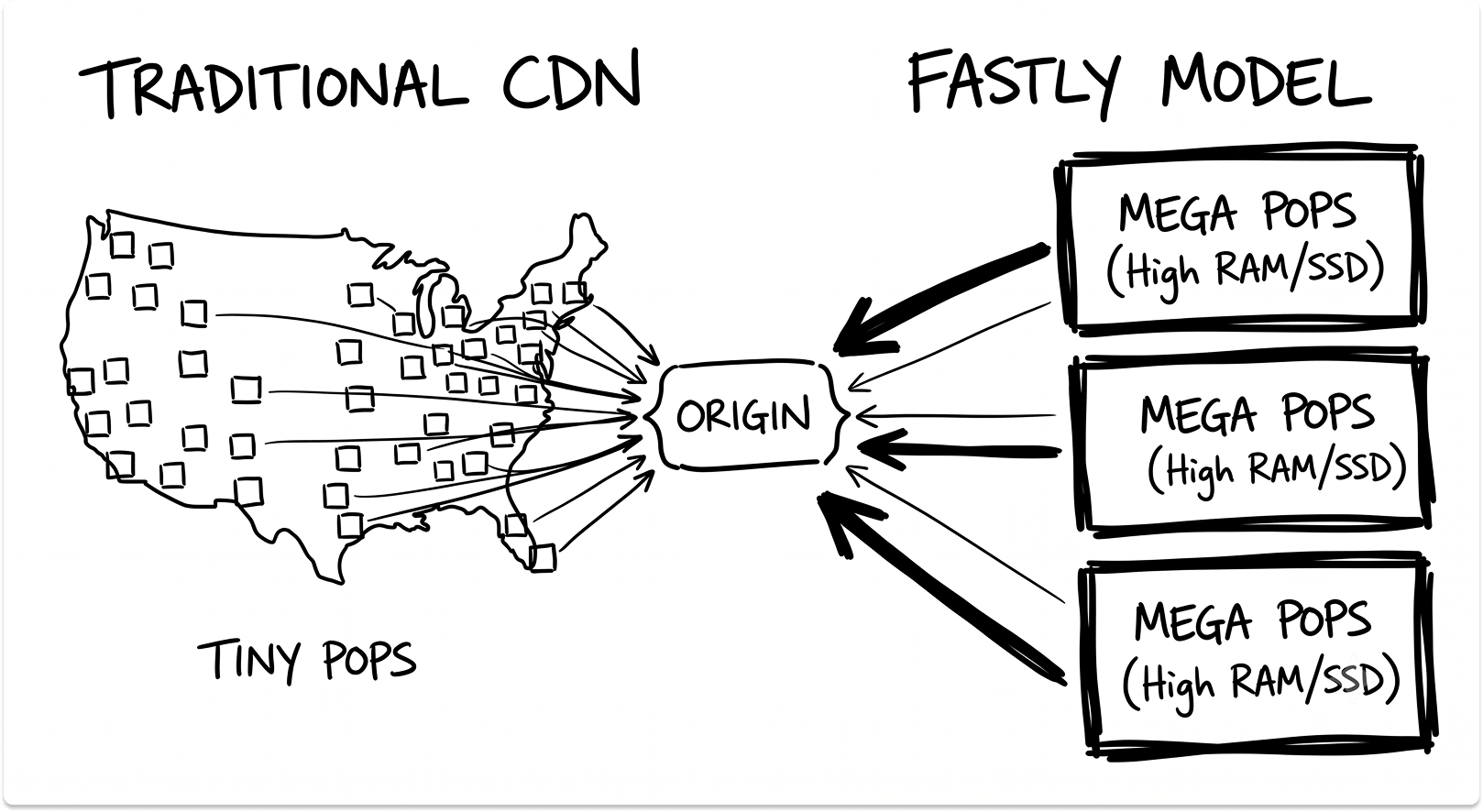
In 2026, this has evolved into the Akamai Connected Cloud. This platform differs from AWS or Azure by being highly distributed. While the hyperscalers focus on a few dozen "Availability Zones" with massive concentrations of hardware, Akamai has deployed compute resources across hundreds of locations globally.
The Distributed Cloud Model
The core value proposition of Akamai’s compute transformation is "proximity to the user." For modern applications like real-time gaming, augmented reality (AR), and IoT data processing, the round-trip time to a central cloud region (like US-East-1) is often too high. Akamai allows developers to build their "Core" infrastructure in centralized hubs while seamlessly deploying "Distributed" workloads to the edge of the network.
Technical Architecture: The Akamai Connected Cloud in 2026
The physical reality of Akamai’s network in 2026 is a tiered architecture designed to balance cost, power, and latency. This architecture is the backbone of its claim to be the "world’s most distributed cloud."
| Component | Function | Geographic Reach | Hardware Density |
|---|---|---|---|
| Core Computing Sites | Heavy-duty IaaS (VMs, Managed Kubernetes, Databases). | 25+ Global Hubs | High density, specialized for long-running workloads. |
| Distributed Sites | Regional compute for lower latency requirements. | 50+ Global Locations | Moderate density, bridges the gap between core and edge. |
| Edge Compute Nodes | Serverless functions (EdgeWorkers) and Security logic. | 4,000+ PoPs | Highly distributed, minimal latency (under 10ms). |
| Global Delivery Layer | Content caching and media optimization. | 135+ Countries | Massive throughput for static and streaming content. |
This tiered structure allows a company to host its primary database in a "Core" site while running its API logic in "Distributed" sites and its security/caching at the "Edge." This unified platform solves the fragmentation problem where developers previously had to manage a cloud provider for servers and a separate CDN for delivery.
Business Implications: Financials and Market Positioning
As we look at the corporate landscape in 2026, Akamai’s financial health reflects its successful transition. For years, investors were concerned that the decline in CDN pricing would erode Akamai’s valuation. However, the high-margin nature of security software and the recurring revenue of cloud compute have created a more stable and profitable business model.
Competitive Landscape
Akamai no longer competes solely with CDN providers like Fastly or Edgio. It now competes on two different fronts:
- Against Hyperscalers (AWS, GCP, Azure): Akamai wins on distributed latency and predictable pricing. While it doesn't offer the 200+ services of AWS, its focus on "core" compute (Linux VMs, Kubernetes, Object Storage) appeals to developers who find the big clouds too complex and expensive.
- Against Security Pure-Plays (Cloudflare, Palo Alto Networks, Zscaler): Akamai wins on the sheer scale of its network. Its ability to absorb the world’s largest DDoS attacks remains unparalleled, and its integration of Guardicore for internal security provides a "defense-in-depth" story that few can match.
Challenges and Considerations for Adoption
Despite the successful transformation, the shift from CDN to a cloud-and-security company has not been without hurdles. Organizations looking to adopt Akamai’s modern stack in 2026 should be aware of several factors.
1. Architectural Complexity: Moving from a simple "caching" setup to a fully distributed cloud architecture requires a shift in engineering mindset. Teams must understand how to manage state and data synchronization across multiple geographic regions.
2. Developer Experience (DevEx): Historically, Akamai was seen as an "Enterprise" tool with complex configurations and long deployment times. The integration of Linode’s developer-centric API has improved this significantly, but legacy workflows still exist within some parts of the Akamai portal.
3. Cost Management: While Akamai’s egress pricing (the cost of moving data out of the cloud) is often more competitive than AWS, the total cost of ownership (TCO) for a distributed security and compute stack can be high. Enterprises must carefully evaluate which workloads truly benefit from the edge versus those that can remain in a cheaper, centralized data center.
Frequently Asked Questions
Is Akamai still a CDN company in 2026?
Yes, Akamai remains the world’s largest CDN by traffic volume. However, the CDN is now viewed as the underlying "plumbing" for its security and cloud compute services. Delivery is no longer the sole focus of the company’s innovation or revenue growth; it is the foundation upon which the higher-value services are built.
How does the Linode acquisition benefit enterprise users?
Linode’s technology has been scaled up to meet enterprise standards, including SOC2 compliance, enhanced SLAs, and integration with Akamai’s global security tools. For enterprise users, this means they can get the simplicity of a developer-friendly cloud with the security and reliability of a Tier-1 global provider.
What is the difference between Akamai’s Edge Computing and Cloud Compute?
Cloud Compute (via the Linode legacy) refers to traditional Virtual Machines (VMs) and Kubernetes clusters where you manage the operating system and long-running processes. Edge Computing (EdgeWorkers) refers to serverless, event-driven functions that run for milliseconds to handle specific requests like redirecting a user or modifying a header.
How does Akamai’s security handle zero-day vulnerabilities?
Akamai uses its global visibility—seeing roughly 30% of all internet traffic—to identify patterns associated with new exploits. When a zero-day vulnerability is discovered, Akamai can push "WAF rules" to its 4,000+ edge nodes in minutes, protecting clients before they even have time to patch their own internal servers.
Can I use Akamai Security without using their CDN or Cloud Compute?
Yes. Akamai’s security portfolio, particularly its Zero Trust and Microsegmentation (Guardicore) products, can be used to protect applications running on-premises, in AWS, in Azure, or in any other environment. You do not have to host your content with Akamai to benefit from its security intelligence.
Recommendation for IT Decision Makers
For organizations operating in 2026, the decision to partner with Akamai should be based on the need for a unified edge strategy. If your application requires low-latency delivery, is a frequent target for cyberattacks, or requires distributed computing to handle global user bases, Akamai offers a compelling "all-in-one" platform.
Next Steps:
- Audit your current cloud egress fees: If you are paying high premiums to move data out of hyperscale clouds, evaluate Akamai’s Connected Cloud for potential savings.
- Assess your ransomware readiness: Look into Akamai’s microsegmentation tools (formerly Guardicore) to see how they can isolate critical assets within your existing network.
- Modernize your remote access: If you are still relying on traditional VPNs, conduct a pilot of Akamai’s ZTNA solution to improve both security posture and employee experience.
Akamai's journey shows that even the most established technology giants can reinvent themselves. By moving from a specialized delivery service to a comprehensive cloud and security provider, Akamai has secured its place as a cornerstone of the 2026 internet infrastructure.