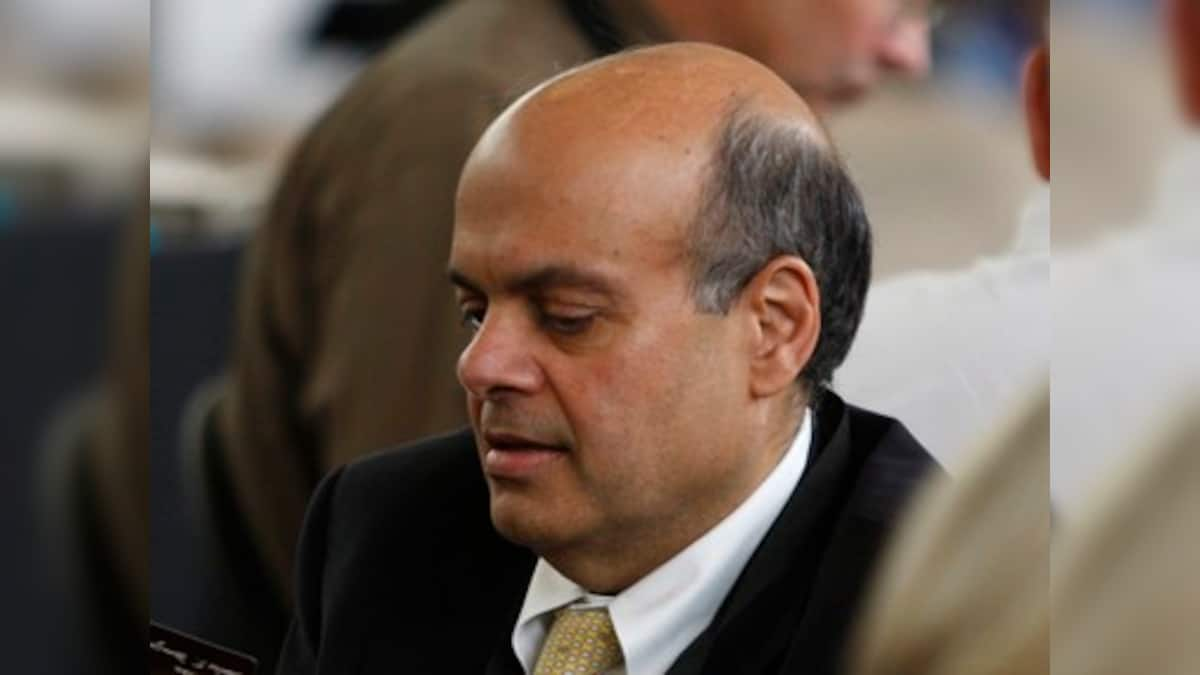
As of 2026, Ajit Jain’s net worth is estimated to be between $200 million and $300 million, primarily derived from his decades-long tenure as a top executive at Berkshire Hathaway. His wealth is largely tied to his holdings of Berkshire Hathaway Class A and Class B shares, significantly influenced by a major liquidation event in late 2024.
Ajit Jain is not merely an employee of Berkshire Hathaway; he is widely considered the architect of the company’s modern insurance empire. While Warren Buffett provided the capital and the investment philosophy, Jain provided the technical brilliance to price risks that no one else would touch. Understanding his net worth requires looking beyond a simple bank balance and examining the specific SEC filings, the 2024 stock sale, and the unique compensation structure that characterizes Berkshire’s top brass.
The Architect of the Insurance Engine
To understand Ajit Jain’s wealth, one must first understand his value to Berkshire Hathaway. Jain joined the company in 1986, and since then, he has overseen the insurance operations that provide the "float"—the pool of money collected as premiums that has not yet been paid out in claims. This float is the engine that allows Warren Buffett to make massive acquisitions and stock purchases.
Jain’s specialty is "super-cat" insurance—policies that cover massive, low-probability but high-impact events like earthquakes, hurricanes, or even satellite launches. Because these risks are difficult to quantify, Jain’s ability to price them accurately has generated billions in underwriting profit. Buffett has famously stated that Ajit Jain has probably made more money for Berkshire shareholders than Buffett himself. In his 2017 annual letter, Buffett remarked that if he, Charlie Munger, and Ajit were on a sinking boat and only one could be saved, "Save Ajit."
This level of importance usually commands a high net worth, but Berkshire Hathaway’s culture is famously frugal regarding executive compensation. Unlike Silicon Valley CEOs who receive massive annual stock grants, Jain’s wealth has been built through steady accumulation and the astronomical growth of Berkshire’s share price over four decades.
The 2024 Liquidation: A Significant Shift in Assets
In September 2024, Ajit Jain made headlines by selling more than half of his personal stake in Berkshire Hathaway. This event was a watershed moment for analysts attempting to calculate his liquid net worth and evaluating the "Ajit Jain Berkshire Hathaway net worth explained" narrative.
According to Form 4 filings with the Securities and Exchange Commission (SEC), Jain sold 200 Class A shares at an average price of approximately $695,417 per share. This single transaction grossed roughly $139 million. Prior to this sale, Jain held a significantly larger portion of the company.
Breakdown of the 2024 Sale
- Total Shares Sold: 200 Class A (BRK.A)
- Average Price: ~$695,417
- Total Proceeds: ~$139.1 million
- Remaining Direct Holdings: 61 Class A shares
- Remaining Indirect Holdings: Approximately 105 Class A equivalents held through family trusts and non-profit corporations.
The sale sparked intense speculation in the financial community. Some viewed it as a signal that Berkshire shares were overvalued, as the price was near an all-time high and trading at a significant multiple of book value. Others, more realistically, pointed to estate planning. Given that Jain was born in 1951, a 2024 liquidation allows for the diversification of assets and the preparation of his estate for future generations.
Current Estimated Holdings and Asset Value in 2026
Even after the 2024 sale, Jain remains one of the largest individual shareholders of Berkshire Hathaway who is not named Buffett. By 2026, the valuation of his remaining shares continues to constitute the bulk of his visible net worth.
Jain’s holdings are split between Class A shares (which carry high voting rights and a high price point) and Class B shares (which are more liquid and affordable). He also holds shares through the Jain Family Foundation and various trusts established for his children.
| Asset Type | Estimated Quantity (Post-2024) | Estimated Value (2026 Market Rates) |
|---|---|---|
| Berkshire Class A (Direct) | 61 Shares | ~$45.7 Million |
| Berkshire Class A (Indirect/Trusts) | 105 Shares | ~$78.7 Million |
| Cash/Liquid Assets (from 2024 sale) | Post-Tax Proceeds | ~$100 Million |
| Other Investments/Real Estate | Estimated | ~$20 - $50 Million |
| Total Estimated Net Worth | $244.4M - $274.4M |
Note: 2026 valuations assume a conservative growth rate for Berkshire Class A shares from their 2024 levels.
Executive Compensation and The "Berkshire Way"
Ajit Jain’s net worth is also a reflection of Berkshire Hathaway’s unique compensation philosophy. Unlike other Fortune 500 companies, Berkshire does not use stock options as a primary incentive. Warren Buffett has long criticized options for being "lottery tickets" that reward executives for market movements rather than personal performance.
Instead, Jain receives a high base salary—reported to be around $16 million to $19 million annually in recent years—along with performance-based bonuses tied specifically to the underwriting profit of the insurance divisions he manages. Because he is paid in cash rather than stock grants, Jain has had to use his own after-tax income to purchase Berkshire shares on the open market, just like any other investor. This explains why his net worth, while substantial, is not in the billions. He effectively "bought in" to the company he helped build.
The Role of Performance Bonuses
Jain's bonuses are historically tied to:
- Underwriting Profit: The difference between premiums collected and claims paid.
- Float Growth: The increase in available capital for Buffett to invest.
- Risk Management: Avoiding "the big one" that could jeopardize Berkshire’s solvency.
In years where catastrophe losses were high, Jain’s compensation reflected those realities, emphasizing a long-term alignment with shareholder interests that is rare in modern corporate governance.
Why Ajit Jain’s Net Worth Matters to Investors
Investors track Ajit Jain’s net worth and his buying/selling activity because he is considered one of the most "informed" insiders in the financial world. His role as Vice Chairman of Insurance Operations gives him a bird’s-eye view of global economic health, inflation (which impacts claim costs), and capital markets.
When Jain sold a significant portion of his net worth in 2024, it raised questions about the "Jain Premium." For decades, Berkshire stock traded at a premium because investors trusted Jain’s ability to manage risk. His decision to diversify was seen by some as the beginning of the "post-Ajit" era, even though he remained in his role as Vice Chairman through 2026.
The Succession Factor
In 2026, as Berkshire Hathaway continues its transition into the leadership of Greg Abel (CEO-successor) and Ajit Jain, the stability of their personal finances is a matter of corporate stability. A high net worth ensures that these executives are not motivated by short-term gains or exit strategies that could harm the company’s long-term "moat." Jain’s remaining stake of over 160 Class A equivalents (valued at over $120 million) ensures he remains deeply incentivized to maintain the insurance division’s profitability.
Factors Influencing Net Worth Fluctuations
Several variables continue to affect Ajit Jain’s net worth in 2026:
- Capital Gains Taxes: The 2024 sale likely triggered a massive tax bill. Depending on his cost basis, Jain may have paid up to 23.8% in federal capital gains taxes, plus any applicable state taxes. This significantly reduced the "net" from his $139 million sale.
- Philanthropy: Jain is known for his involvement in medical research, particularly regarding Limb-Girdle Muscular Dystrophy (LGMD), which affects his family. Contributions to the Jain Foundation directly reduce his personal net worth while funding critical genetic research.
- The "Buffett Factor": As long as Warren Buffett remains involved with Berkshire, the stock price maintains a certain level of support. Any change in Buffett’s status could lead to volatility in the Berkshire shares that comprise the majority of Jain’s wealth.
- Insurance Cycle Trends: As Vice Chairman, Jain’s bonus structure is sensitive to the global insurance cycle. In periods of high competition and low premiums (a "soft market"), his annual income—and thus his ability to accumulate further wealth—may decrease.
Comparing Jain to Other Berkshire Executives
To put Ajit Jain’s net worth in perspective, it is useful to compare him to other key figures within the organization.
- Warren Buffett: Net worth exceeds $100 billion, almost entirely in Berkshire stock.
- Charlie Munger (Legacy): At the time of his passing, Munger’s net worth was estimated at over $2 billion, having been an early partner with significant holdings.
- Greg Abel: The Vice Chairman of Non-Insurance Operations and designated successor to Buffett. Abel also sold a significant portion of his personal holdings in a different entity (Berkshire Hathaway Energy) to consolidate his wealth into Berkshire Hathaway stock, with a net worth estimated in the hundreds of millions.
Jain’s net worth is comparable to Abel’s, reflecting their status as "professional managers" who became wealthy through high-level execution rather than being "founders" or "principals" in the original partnership.
Frequently Asked Questions
Why did Ajit Jain sell his Berkshire stock in 2024?
While Jain did not release a public statement, analysts point to estate planning and diversification as the primary reasons. At 73 years old at the time of the sale, and with Berkshire shares trading at record highs, it was a logical time to realize gains for philanthropic efforts and family trusts.
Is Ajit Jain a billionaire?
No. Based on available SEC filings and historical compensation data, Ajit Jain’s net worth is in the hundreds of millions, but he has not reached the billionaire threshold. This is largely due to Berkshire’s compensation model, which does not provide the massive stock grants common at other large corporations.
How much does Ajit Jain earn per year?
In the years leading up to 2026, Jain’s total compensation has generally ranged between $16 million and $19 million. This includes a base salary and performance bonuses based on the insurance division's success.
What is the "Jain Foundation"?
The Jain Foundation is a non-profit organization founded by Ajit Jain and his family. Its primary mission is to cure Limb-Girdle Muscular Dystrophy 2B (LGMD2B). A portion of Jain's wealth and Berkshire shares are held by or donated to this foundation.
Does Ajit Jain own Class A or Class B shares?
He owns both. Class A shares (BRK.A) represent the bulk of his value due to their high price and voting power, while Class B shares (BRK.B) provide greater liquidity for smaller transactions or charitable donations.
Practical Recommendation for Observers
For those tracking Ajit Jain’s net worth as a proxy for Berkshire Hathaway’s health, the most important metric is not the total dollar amount, but the Form 4 filings. Any further liquidation of his remaining 160+ Class A equivalents would be a significant signal regarding his view on the company's valuation or his impending retirement. Investors should monitor the SEC's EDGAR database for "Berkshire Hathaway Inc." and "Jain Ajit" to see real-time updates on his holdings.
As of 2026, his continued retention of over $120 million in equity suggests a sustained confidence in the insurance operations he spent a lifetime building.